Getting managed, what managers look for

With
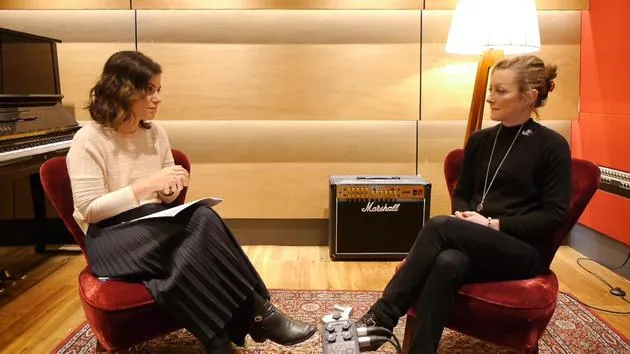
Imogen HeapHow do you get a manager? What do they look for in an artist? Management can initially be a less formal arrangement involving friends and family, but as success grows you will need the experience of a professional, and coping with this transition in your management team is a key early challenge in any artist's career
What's in the course
44 lessons (2h 11m) · 1 free


Lesson transcript
How to Attract a Manager as an Artist
It is always difficult to fight to get a manager. This is the number one question we receive the most.
The Search for Management
There is no direct answer, apart from the one we always quote: A manager will find you. They will discover you if you're good and start drawing crowds or selling music. When you begin making money, that's when people will be attracted to you.
The Importance of Your Digital Profile
What is happening with you online as an artist is becoming increasingly important. Consider:
- Your digital profile
- How engaged you are with your audience
Platforms such as Twitter, Instagram, Facebook, and Vine are crucial. By actively demonstrating initiative, you not only show that you can do things yourself, but you also connect with an audience on a large scale.
Changing Dynamics in A&R
Traditionally, A&R people and managers would go to specific clubs in certain cities to gauge the vibe around an artist. The classic CBGB scenario doesn't happen as much anymore. Now, it's all about online visibility. That's where people are looking for action.
The Financial Reality
Of course, there is a huge issue here: when an artist is starting out, they are typically making no money. Consequently, the manager is also making no money. Thus, a manager must either:
- Have total belief in that artist, hoping to recoup their investment in the future, or
- Be successful in some other way, which is rare.
This often leads to the artist having to manage aspects of their career themselves, which can be uncomfortable.
Roles Within a Band
In a band, you might find that one member is more driven and wants to take on the management role. For a solo artist, this is a bit more difficult.
- Without that driven person, you tend to see friends, parents, or even former band members stepping in to take charge.
- These individuals often say, "I can book the gig, drive the van, sell the merch, and negotiate with promoters."
Growth of Management
This is how many artists get the help they need. Over time, these individuals may grow into proper managers or get replaced by more professional managers when the band starts becoming successful.
The Challenge of Keeping Up
It's difficult, particularly for someone who starts out helping an artist, to keep up with what is needed at various stages of an artist's career. If an artist becomes very successful very quickly, a good person who has been supportive from the beginning will recognize this.
- They may partner with someone more experienced or bring in additional help.
Trust and Relationships
The relationship between the manager and the artist is crucial. If there is trust, they'll work together. However, if whispers arise, suggesting that the manager lacks knowledge or that more help is needed, fractures can appear, and partnerships may dissolve.
In summary, building a successful artist-manager relationship requires patience, a strong digital presence, and an understanding of the evolving landscape of the music industry.
44 lessons
2h 11m of structured video lessons
Advanced video features
Slow down, loop a passage, follow along
Mobile, tablet & desktop
Practise wherever you are
100% satisfaction guarantee
30-day money-back guarantee
Meet your guru
Meet your guru
Imogen Heap is a Grammy-winning English singer, songwriter, producer and technologist whose influence runs through two decades of pop, electronic and film music — and through much of the technology modern artists now take for granted.
Born in London in 1977 and classically trained on piano, cello and clarinet, she released her debut album 'iMegaphone' in 1998 before forming the duo Frou Frou with producer Guy Sigsworth, whose song 'Let Go' reached a global audience through the film Garden State. Her self-written, self-produced album 'Speak for Yourself' (2005) delivered 'Hide and Seek', the a cappella landmark that later powered Jason Derulo's chart-topping 'Whatcha Say' and Ariana Grande's 'Goodnight n Go', and continues to find new generations of listeners.
'Ellipse' (2009) won the Grammy Award for Best Engineered Album, Non-Classical — recorded and engineered in her own home studio — and she went on to co-write and produce 'Clean' on Taylor Swift's Album of the Year-winning '1989'. She also composed the score for the stage play 'Harry Potter and the Cursed Child'.
A relentless innovator, Heap developed the MI.MU gestural gloves — recognised with three honorary doctorates — and founded Mycelia and The Creative Passport, initiatives building a fairer data ecosystem for artists. In 2024 she returned with 'What Have You Done to Me?', created with her AI vocal alter ego Mogen, while a viral resurgence of 'Headlock' brought her music to millions of new fans.