



Blues basado en 'Blue Bash' - Jimmy Smith
Lesson time: (7min 59sec)
Course preview
This lesson is part of the course Toca el órgano Hammond con autenticidad
Watch a preview of the full course below.
Lesson transcript:
Blues Music Lesson
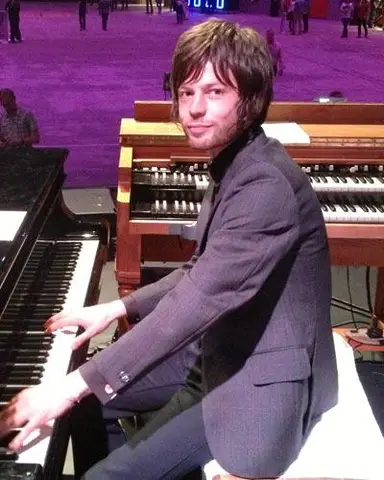
Introduction: Here's a bit of blues for you. I'm loosely using a Jimmy Smith head from "Blue Bash," but it's a bit of blues , swingy, slightly jazzy blues.
Lead Line: This tune you might have worked out already, the lead line there. A lot of the improv was based on the kind of Jimmy Smith jazz setting on this set of drawbars:
- Third harmonic chorus
- Vibrato number three
(Same as we've used before.)
So that's that sound. That's how you achieve it, and that didn't really change up until towards the end.
Sound Variation: I moved on to a completely different sound with a different set of drawbars. You couldn't have a more different sound, really.
- What Jimmy McGriff and Jimmy Smith used was kind of like to oppose that jazz tone with a stop, or they'd be on that sound stop, Leslie, then go fast for a very thin sound and voice things very big.
So, as before, we were playing mostly single notes with a big chunky sound. This, however, is a very thin sound and is voiced very big, wide and open.
Bass Line:
- Obviously, we've got a bass line here.
- So, it's just one hand.
That's how you can get a lot of slides involved. You can answer it with the tone you have on the bottom there. Your bass tone can also serve as a kind of percussion, responding to whatever line you're playing.
Improvisation Tips: If you want to play almost like a horn section line as an improv thing, you can do that. It's a way to punctuate and keep the impetus going, maintaining interest without getting too caught up in one thing.
- It's used a lot, in between lead lines.
- For instance, if you were doing something like the cat, those coughing or choking sounds underneath really help punctuate the phrasing of what you're trying to do.
This approach also aids in pulling the time back and placing things precisely where you want them.
Conclusion: Towards the end of that, after I'd used that sound, I started bringing those drawbars out, thickening the sound, and reaching a climax there, maybe with something repetitive that works really well.
- You could do that over the whole 12 if you wanted to.
- A lot of guys use that kind of thing and employ horn line riffs in big voicing.
Think of it like a horn section. It's quite a good mindset to adopt for that kind of improv.
About the instructor
Joe Glossop es un teclista de Sheffield que se ha hecho un nombre con el órgano Hammond. Actualmente ocupa el puesto de órgano en la banda de gira de Tom Jones, y ha tocado con Van Morrison y James Hunter, además de al piano y al Rhodes. Sus cursos consiguen sacar el auténtico sonido Hammond de cualquier teclado: el registro de drawbars, el Leslie, el bajo caminante de la mano izquierda y el vocabulario de acompañamiento y solos de las tradiciones del órgano soul-jazz, blues y rock, de Jimmy Smith a Booker T. read more