



A Change is Gonna Come' - Sam Cooke
Lesson time: (7min 46sec)
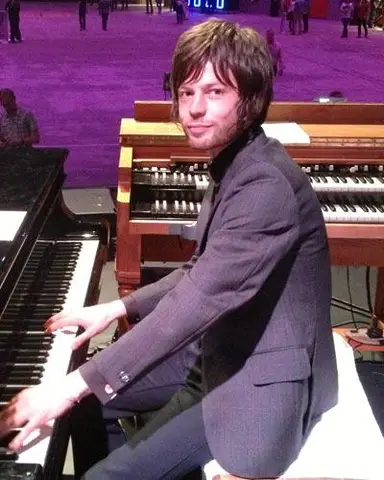
Joe Glossop ajusta los tonos del órgano Hammond detrás de 'A Change Is Gonna Come' de Sam Cooke - un ajuste de percusión al estilo de Jimmy Smith arriba y un pad cálido por debajo.
Course preview
This lesson is part of the course Toca el órgano Hammond con autenticidad
Watch a preview of the full course below.
Lesson transcript:
Lesson on "A Change Is Gonna Come" by Sam Cooke
That was a little snippet of A Change Is Gonna Come by Sam Cooke. You probably know that as Sam Cooke's version. There are a couple of other versions, but I was playing it there with a kind of classic jazz setting on the top, a Jimmy Smith kind of tone, and a pad on the bottom.
Overview of Sound Creation
Sound Setup:
-
Top Manual:
- Percussion set of drawbars
- Third harmonic
- Fast decay
- Soft volume (switched on)
- C3 vibrato setting (both top and bottom on)
-
Bottom Manual:
- Drawbars set to B flat
- For the pad, just the eight drawbar
- This creates a nice, warm pad sound.
I was thinking of answering the line with a little gospel-y feel, using walk-ups in between the lines. This tone is quite useful for that.
Stylistic Considerations
Sort of stylistically:
- The clunky, nice percussion works well with single notes.
- A full sound is achieved with meaty bottom-end bass drawbars.
General Play Tips:
- Keep your pad on the bottom and use single notes for the melody between chords.
- Use passing chords; they work very well in this tone without taking up too much space.
If Jimmy Smith was playing this, he'd probably do it with stop rotors. The reason for this is that he would be playing with a band and covering a bassline. A direct sound is achieved when using stop rotors; this setup prevents excessive movement, especially on the bass rotor, ensuring a focused sound.
Playing Technique
We are going to play slowly, using a pad to underpin the melody.
Organ vs. Piano
- Key Characteristics:
- The organ sustains notes for as long as you want.
- With this tone, it's very full and big, so single notes suffice in the melody.
- The bottom doesn't need a huge sound; it's just underlining everything.
Additional Notes on Playing
- As you press a key down on an organ, you don't get all the tones at once. When all drawbars are out:
- Tones engage gradually as you press down.
- If you play bouncy or percussively, only the higher tones engage first.
This dynamic plays a significant part in your touch. The repetitive nature you often hear in jazz and blues is made possible by the responsive and bouncy action, which always comes back when you want it to.
Pad Voicing
Regarding the pad on the bottom:
- I'm phrasing and voicing it very simply.
- I'm not starting from the root at the bottom; I place it where I want it because of the tone.
Usage Tips:
- The pad works well for passing chords and provides support.
- If you want to speed up the Leslie effect when moving between chords, it'll work effectively.
In summary, you don't need to do a lot with it!
About the instructor
Joe Glossop es un teclista de Sheffield que se ha hecho un nombre con el órgano Hammond. Actualmente ocupa el puesto de órgano en la banda de gira de Tom Jones, y ha tocado con Van Morrison y James Hunter, además de al piano y al Rhodes. Sus cursos consiguen sacar el auténtico sonido Hammond de cualquier teclado: el registro de drawbars, el Leslie, el bajo caminante de la mano izquierda y el vocabulario de acompañamiento y solos de las tradiciones del órgano soul-jazz, blues y rock, de Jimmy Smith a Booker T. read more