



Nord Electro 5D
Lesson time: (6min 17sec)
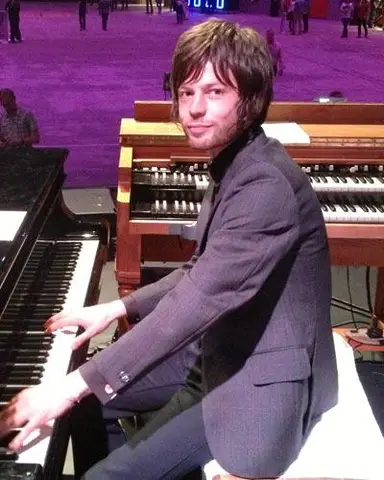
Joe Glossop examina el Nord Electro 5D, uno de los clones digitales del Hammond, y cómo conseguir un sonido de órgano auténtico con él cuando no se dispone de un Hammond real.
Course preview
This lesson is part of the course Toca el órgano Hammond con autenticidad
Watch a preview of the full course below.
Lesson transcript:
Understanding Your Digital Hammond Clone
Okay, so you may not have a real organ, a real Hammond. You might have a clone, a bit like this one. It's a modern digital version. They've done a pretty decent job of modeling the sound and sampling it, putting it into a unit which is small and transportable for small gigs. So, they are a very useful little tool.
Limitations of Your Digital Clone
Obviously, you're limited to:
- One set of drawbars
- One manual
So, that takes away a lot of what you can do straight away, but you can still accomplish a fair amount.
Navigating the Interface
What I've got at the moment, I don't know if you can see this little LCD screen, but down there is the bottom manual, which doesn't really exist in physical form. You get one drawbar section, and you can choose where your split is.
- I've got it split there.
- From here down, I've got just that drawbar, the eight, and this one is just that one out.
- On the top, I've got the sort of jazz setting with the percussion just here:
- Third harmonic percussion
- C3 vibrato
So, we got that kind of Jimmy Smith thing going on.
Tips for Playing
If you're going to do some percussive stuff down here, make sure you get below this light; otherwise, you're going to hit a different sound. So, you're kind of in a bit of peril there, but just keep that in mind.
For example, if you're playing something like "The Cat," you can just about get away with that kind of thing with a bit of percussive action down there.
Realistic Drawbar Engagement
One of the reasons that it works with just one drawbar is that what they haven't managed to do on these modern keyboards is get a progressive engaging of the tones as you go down, like you do in a real organ. In a real organ, you get all the drawbars at once.
So, it's very difficult to do that partial contact thing. If you just go with one drawbar, there's only one to engage, and only one harmonic to engage. Thus, it sounds a lot more like the real thing than if you had more.
Sound Characteristics
It's actually pretty close that they've got the key click sorted out. That little paddy thing on the note, they've got that down quite well. Here are some things you might try and do:
- Using the Split for Percussive Sounds: In terms of a bass line, we looked at that tune "Blue Bash" before. You can try and do that with a bass split, and it works pretty well.
However, the one thing you don't have is the ability to answer yourself with the percussive bit because you don't have the spare keys. You've lowered the octave of the bass to make it low enough, so you can't do the percussive reply. You can't do that up here because you got the percussion sound off, and it's not going to sound very good.
Making the Most of Limitations
So, while you are limited, you can still make it happen. You just have to find other ways of replying to yourself rather than using that sort of little scutch on the keys.
For instance, just doing a little extra with that kind of thing. You just got to make do and make the most of it, really.
Final Thoughts on Sound Quality
One thing with these that I've always found is that the top end can provide quite a good tone, but the Leslie simulation is okay. However, once you go to a full sound, it starts to sound fizzy and digital, too thin.
So, I tend to stay away from really, really full drawbar settings. Just aim for something like:
- That kind of setting
- That kind of setting
- That kind of setting
But stay away from anything too full because it does get a bit digital.
- The percussion is decent but can be a bit toppy.
- The vibrato is very good; the way they modeled that is impressive.
- The Leslie simulation is pretty good as well.
From stop to fast, it will stop, and you can tell they've actually tried to model that the rotor is slowing down and spinning up at different rates. It's very clever, but just limited.
About the instructor
Joe Glossop es un teclista de Sheffield que se ha hecho un nombre con el órgano Hammond. Actualmente ocupa el puesto de órgano en la banda de gira de Tom Jones, y ha tocado con Van Morrison y James Hunter, además de al piano y al Rhodes. Sus cursos consiguen sacar el auténtico sonido Hammond de cualquier teclado: el registro de drawbars, el Leslie, el bajo caminante de la mano izquierda y el vocabulario de acompañamiento y solos de las tradiciones del órgano soul-jazz, blues y rock, de Jimmy Smith a Booker T. read more