



Voix
Avec
Brian Funk
Le contenu du cours
30 leçons (2h 20min) · 1 gratuites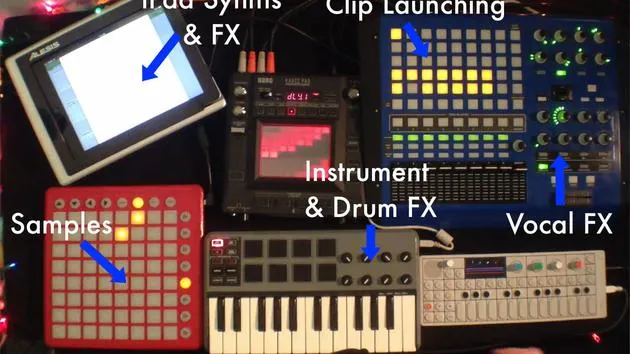
Transcription de la leçon
Exploring Vocals and Effects
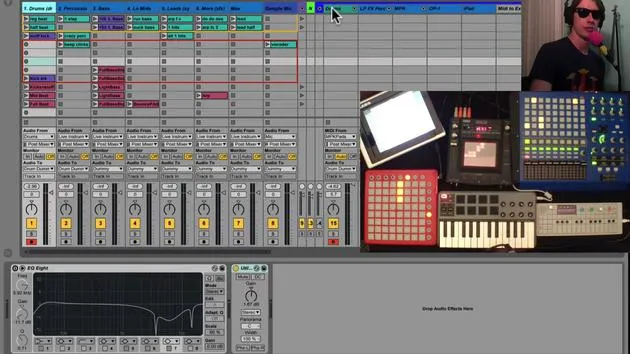
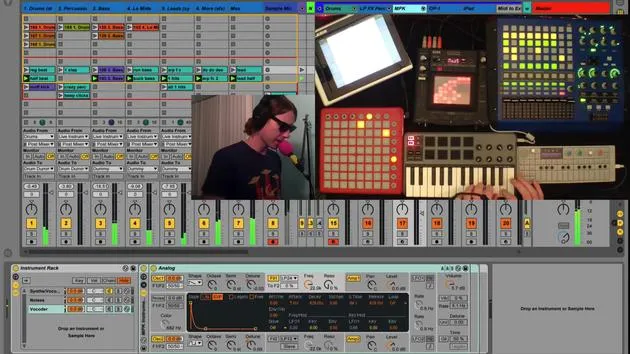
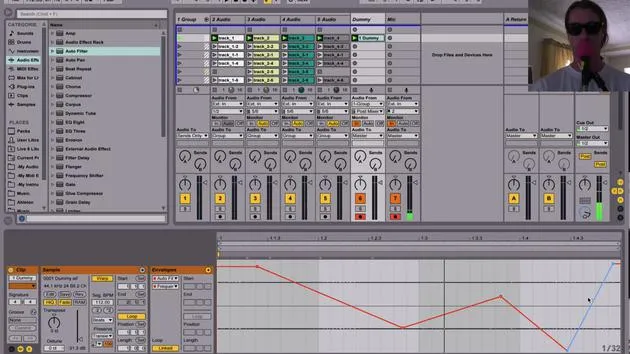
Now let's talk about vocals. Within my little group of instruments, I've got my mic rack here, and this track has a bunch of different things on it. We're going to go through these and show you what I got.
Effects on Vocals
Basically, what I want to be able to do is put lots of different effects on my voice, it's like radio voice. I've got a bunch of different tools:
- Repeat
- Pitch Killer
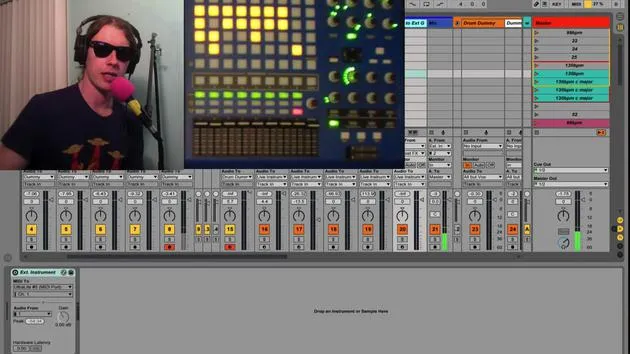
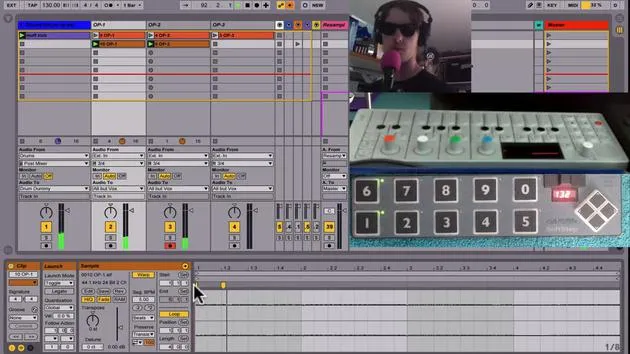
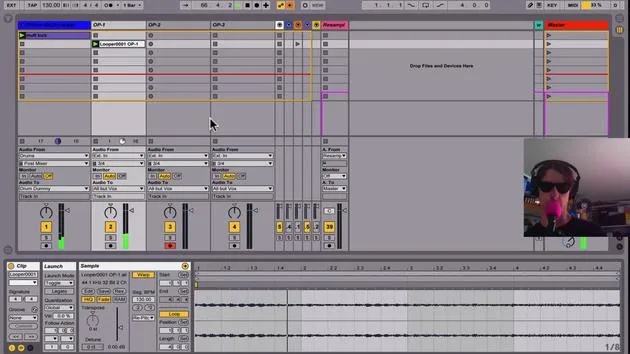
The concept is very similar. I've got external audio in from my interface. I've set it to "input" just because I want to get whatever's inputting all the time.
Track Setup
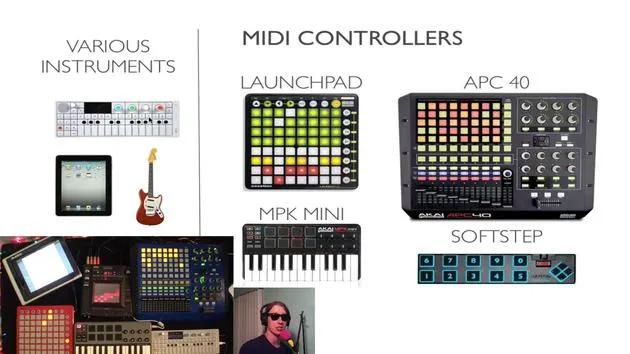
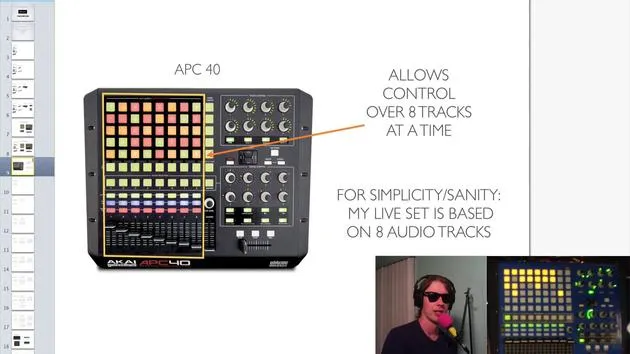
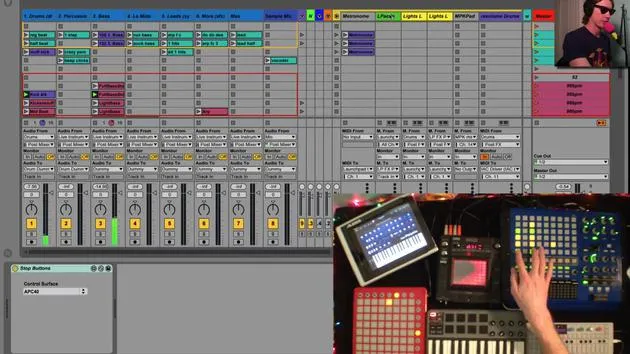
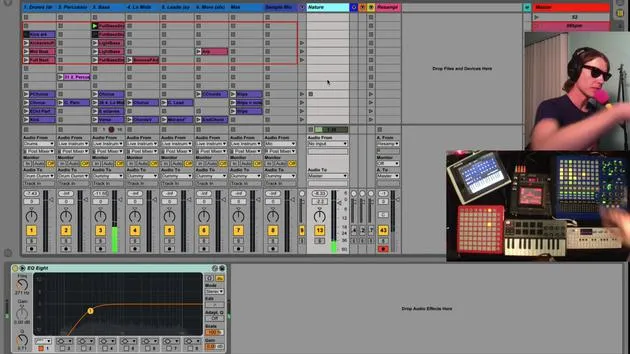
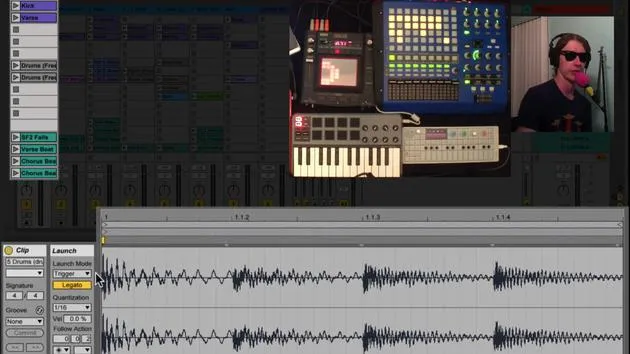
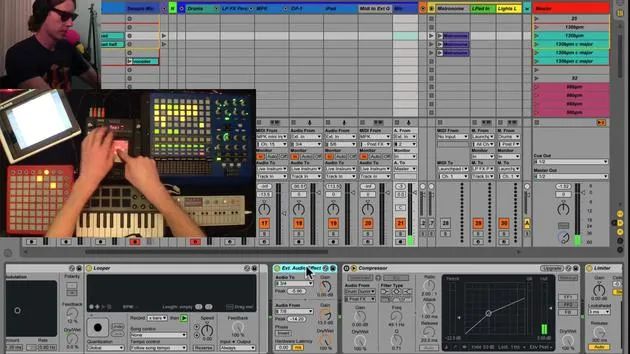
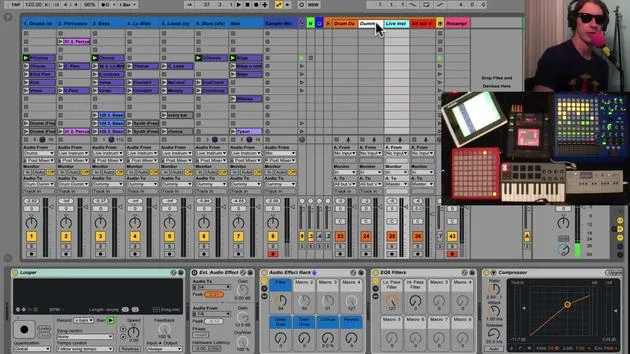
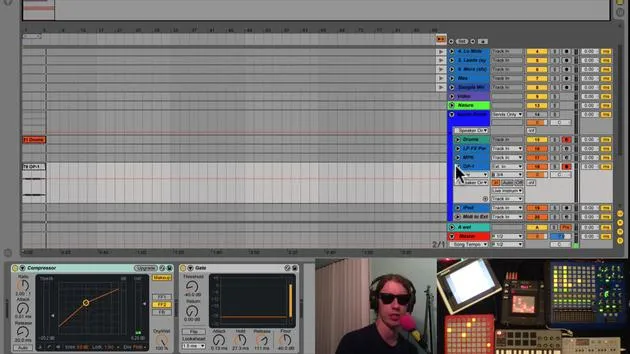
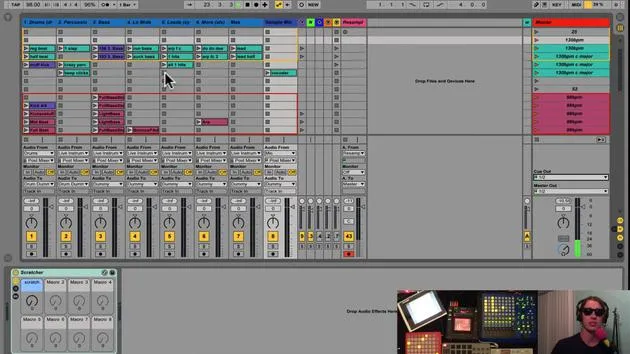
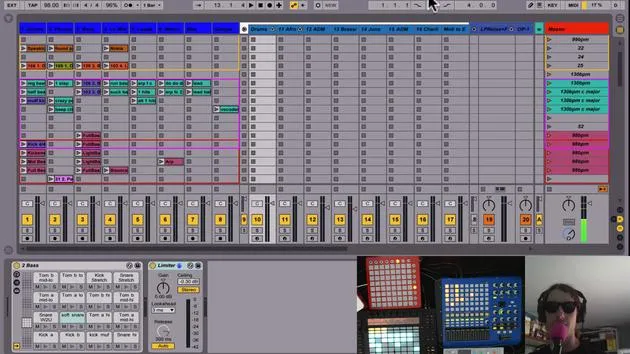
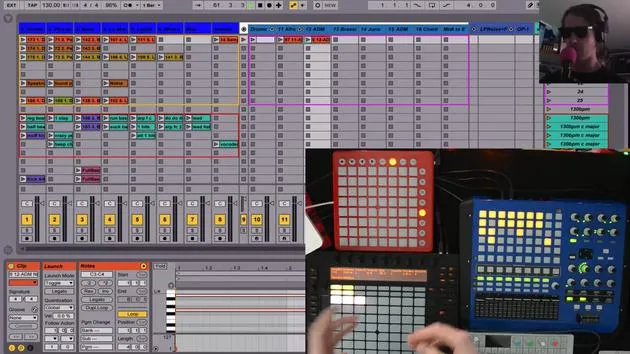
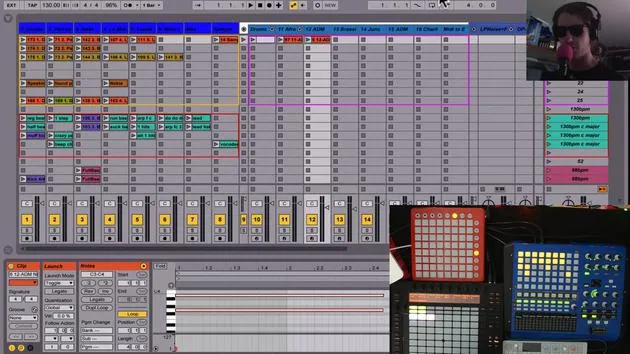
This track here in my Core 8 is mapped with my APC40. It's set to receive audio from my mic. When I record enable this track, I can easily hit record on this clip and start recording one of my vocals.
You'll notice that the track and clip retain any effect that I've put on my voice, which is kind of nice. You can set up some really ambient vocals. For example, I just made a drone noise with lots of reverb, kind of cool!
Vocals Rack and Effects
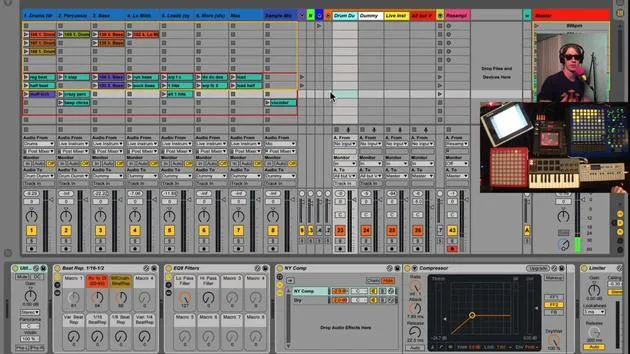
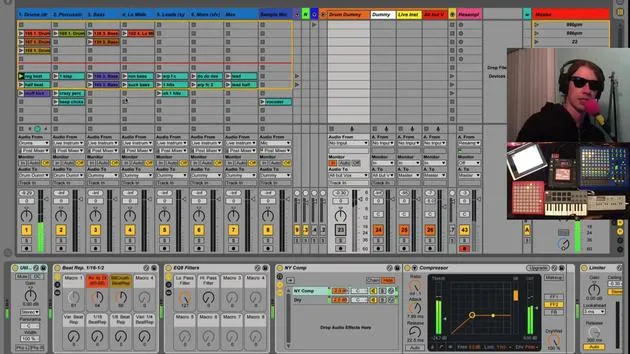
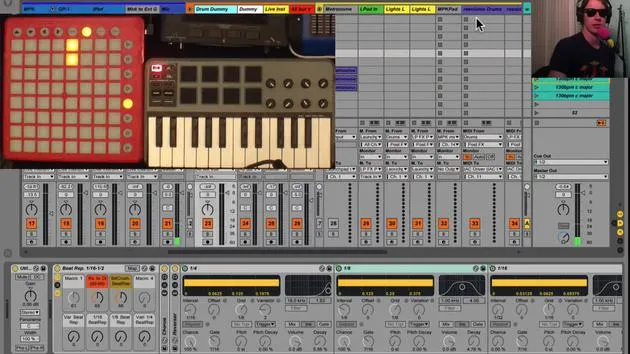
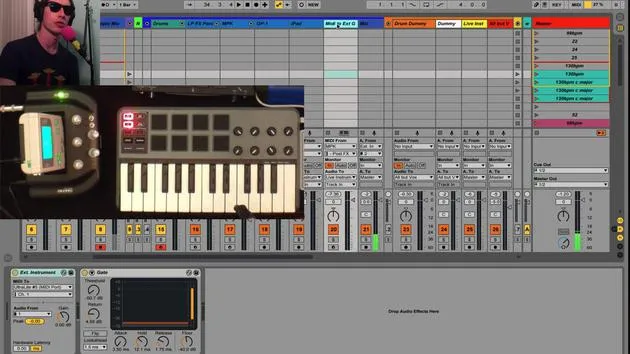
Let me show you what's going on here. I have a vocal rack with a whole bunch of effects really. If I were to open this up, I have:
-
A gate (currently off, but it turns on when I talk)
- Set to a level that's loud enough to pick up my voice but low enough to eliminate feedback from the music during live shows.
-
EQ
- I've cut out a lot of the low frequencies to prevent them from competing with my music.
-
Compression
- This is key for balancing my vocals.
-
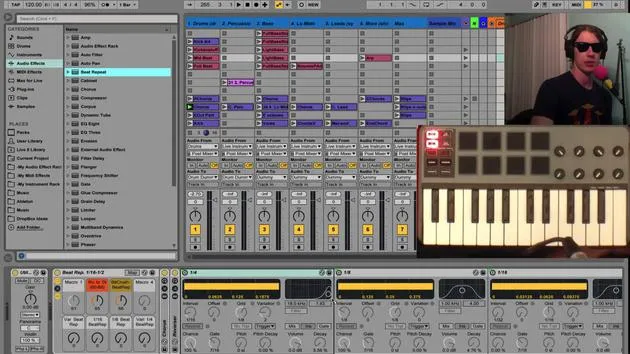
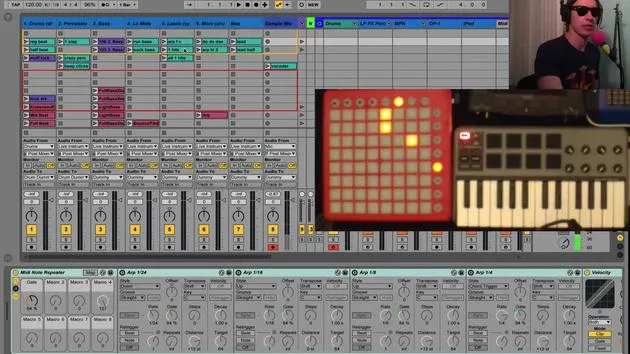
Beat Repeat
-
Pitch Decay
- This is done via a knob, trust me, you can have a lot of fun playing with that!
Auto-Tune Feature
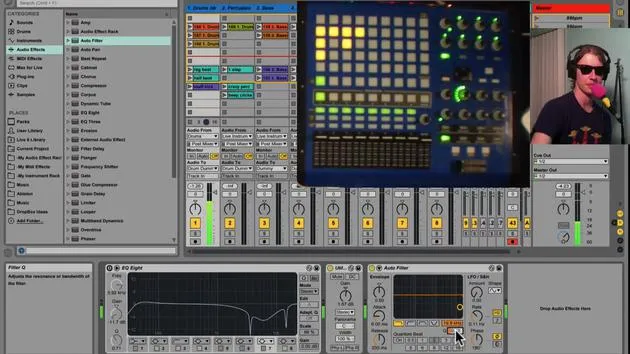
I want to talk about this in a minute, but this is where I have Auto-Tune. This is actually the only non-Ableton plugin I use: Nectar. I use it for the autotune function, which is great when you want to either:
- Not sing out of tune
- Get a kind of robotic sound
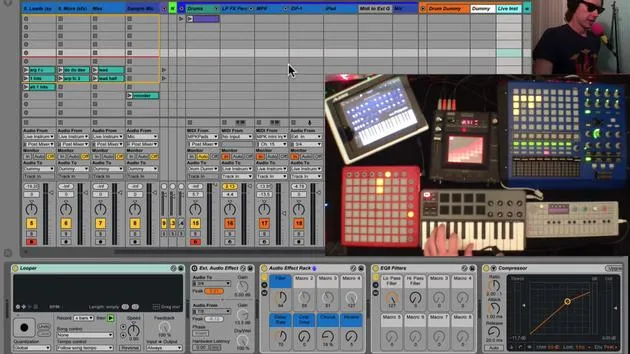
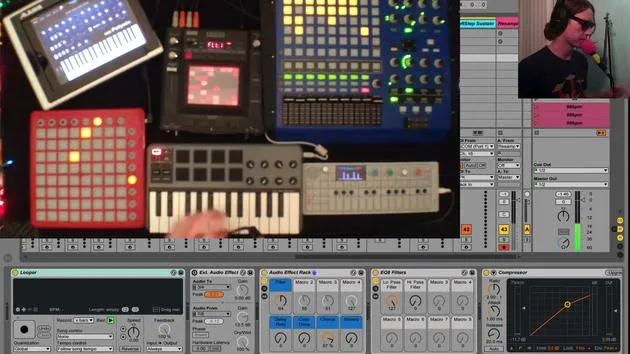
This goes into my reverb and delay, and then you'll notice that I have a looper.
Looper Setup
If you remember from my instrument talk, I like to have the looper first, then the effects. However, for my vocals, I prefer to have:
- Effects, then
- Looper
This way, I can record my voice with all the effects into the looper, and while that's going, I can change my effects and sing on top of that.
Practical Application
Let me give you a little example of what I'm talking about. I'll start playing these tracks for you and record something in my looper.
I have this looper set up to a different pedal on my footswitch. So that loops, and I've got the beat repeat repeating that note. I can add that, creating a little harmony with the looper.
If I wanted to, I could record this into this track, which I'll wait for in the next bar. I only recorded half of it, you get the idea. The looper is handy for capturing all those effects and then changing them afterwards.
Conclusion
So that's generally what I've got on my mic. Again, I have this external audio effect feature, where if I hit that button, I can apply all these effects from my chaos.
Yes, lots of effects, lots of possibilities. It gives it some nice character.
And that's how I do my vocals!
30 leçons
2h 20m de leçons vidéo structurées
Fonctions vidéo avancées
Ralentissez, bouclez un passage, suivez la partition
Mobile, tablette et ordinateur
Pratiquez où vous voulez
Satisfaction garantie à 100 %
Garantie remboursement 30 jours
Rencontrez votre guru
Rencontrez votre guru
Brian Funk est musicien, producteur, auteur-compositeur et Ableton Certified Trainer. Depuis 2014, il enseigne le cours Advanced Music Production with Ableton Live pour le Berklee College of Music. Il a joué de la guitare, de la basse, de la batterie et des synthétiseurs, et chanté dans des groupes de rock en tournée, et il se concentre aujourd'hui sur son set électronique solo, en portant sur scène ses expérimentations de studio.
Brian adore écrire, enseigner et concevoir des sons. Il produit des tutoriels et des Sound Packs pour Ableton Live, et publie des Packs Ableton Live gratuits depuis 2011 : plus de 125 à ce jour. En tant qu'Ableton Certified Trainer, il a donné des cours et des séminaires couvrant chaque étape du processus de production, et écrit régulièrement sur son blog et pour d'autres publications.
Influencé par le rock and roll, les jeux vidéo, le hip hop des débuts, le punk et l'électronica, des Beatles à Neon Indian en passant par Neil Young, Nirvana et Aerosmith, il décrit son propre son comme 'futuriste, et pourtant nostalgique'. Dans son cours MusicGurus, Live Performance in Ableton Live, il te montre comment il transforme des idées de studio en un vrai set live et pratique : sampler des sons pour en faire des instruments jouables, faire passer guitares et synthés dans du matériel électronique, et mixer et composer à la volée tout en jouant en live et en chantant. Tu en ressortiras capable de construire et d'interpréter ton propre set électronique en toute confiance.







