



Pistes principales
Avec
Brian Funk
Le contenu du cours
30 leçons (2h 20min) · 1 gratuites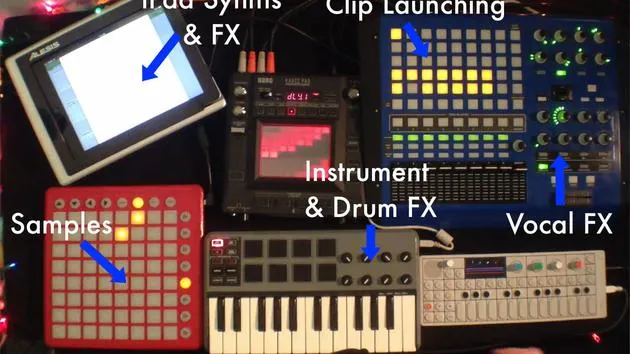
Transcription de la leçon
Using the APC40 for Live Performance
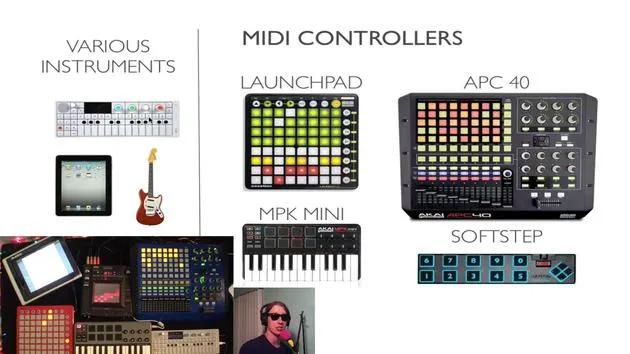
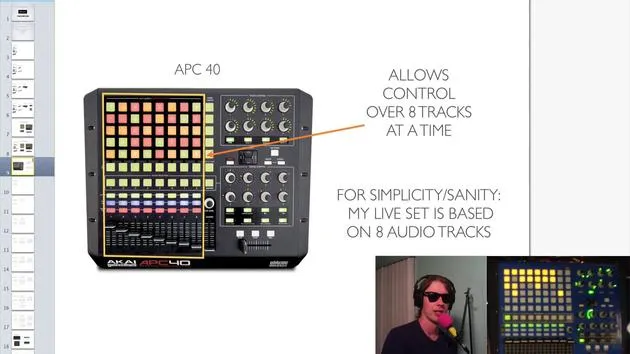
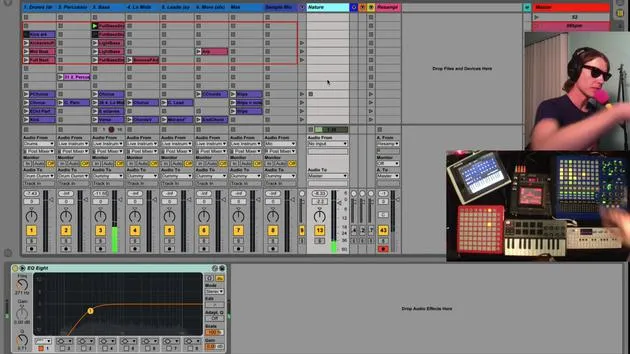
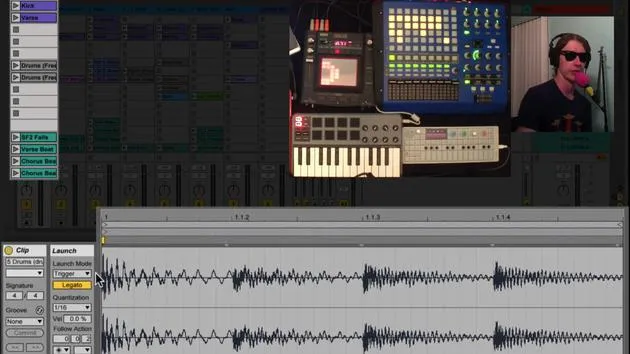
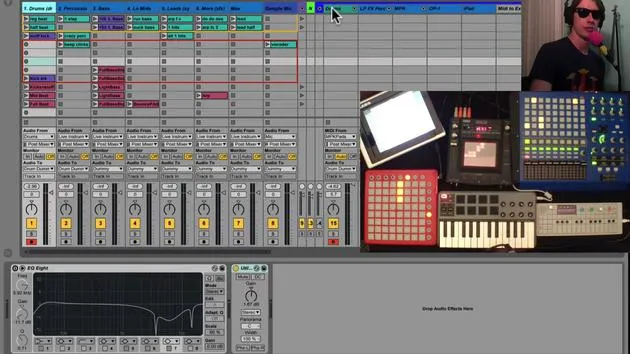
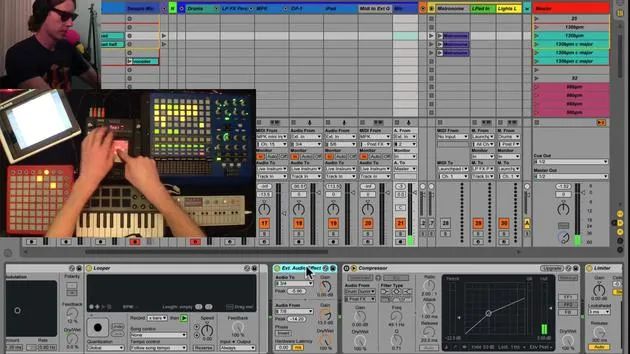
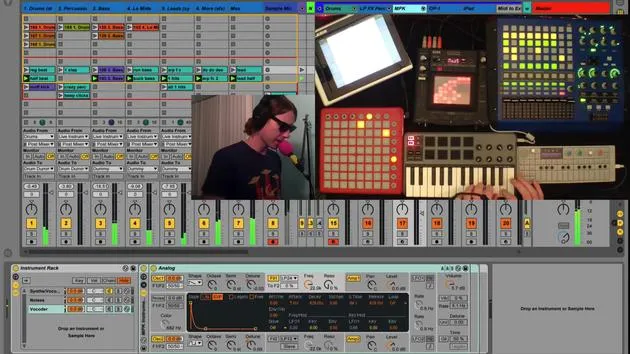
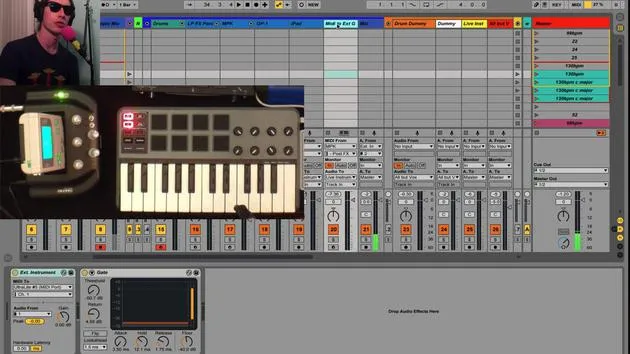
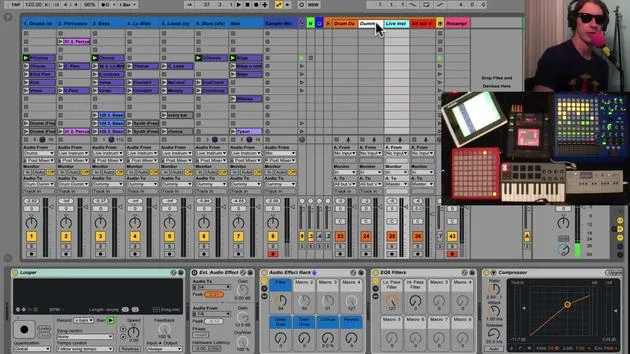
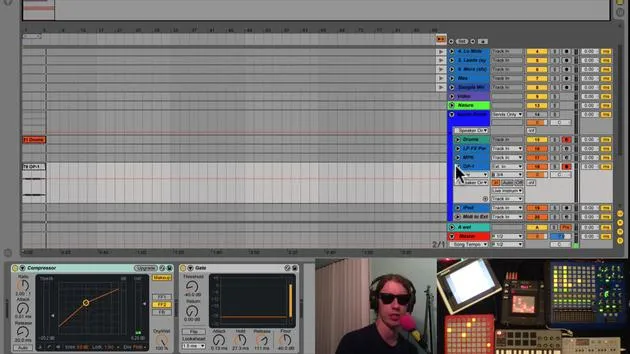
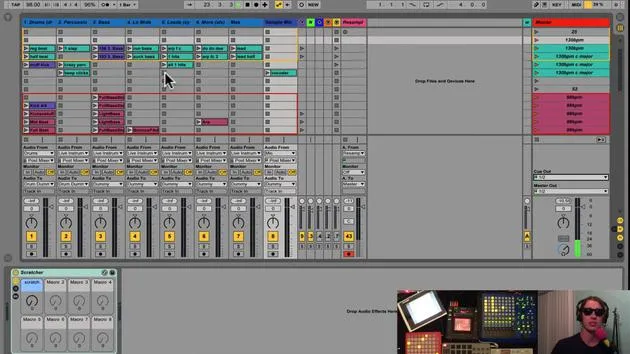
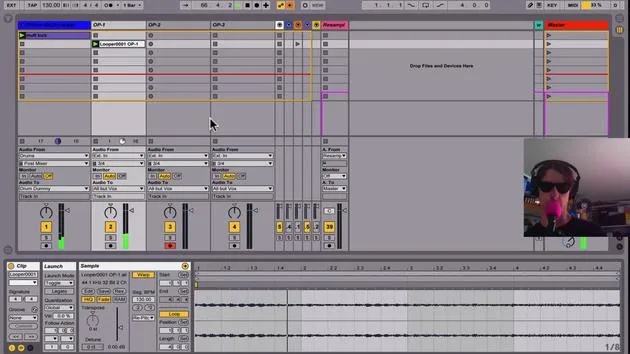
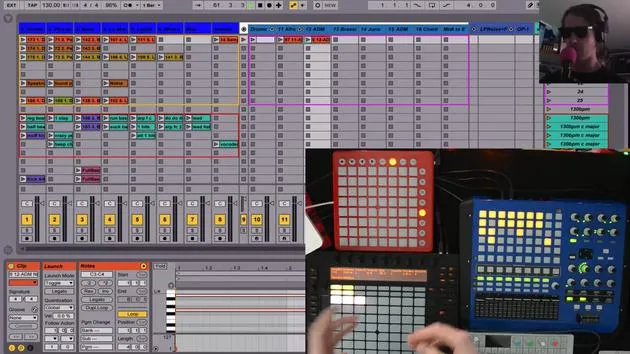
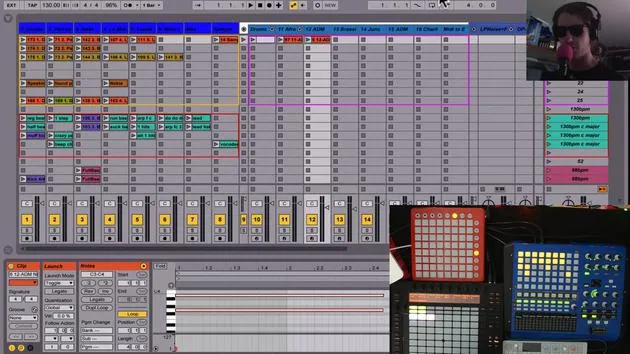
Okay, so the first thing I want to talk about is the way I'm using the APC40 here. The APC40 allows control over eight tracks at a time. They're right here. I got my eight tracks, so it's something to think about.
Track Organization for Simplicity
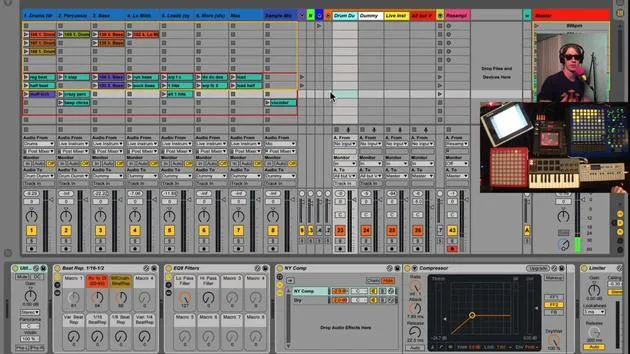
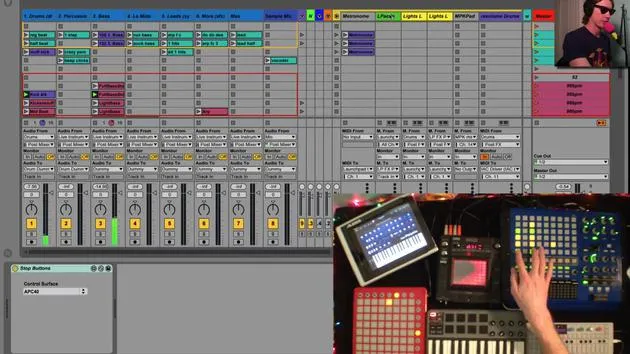
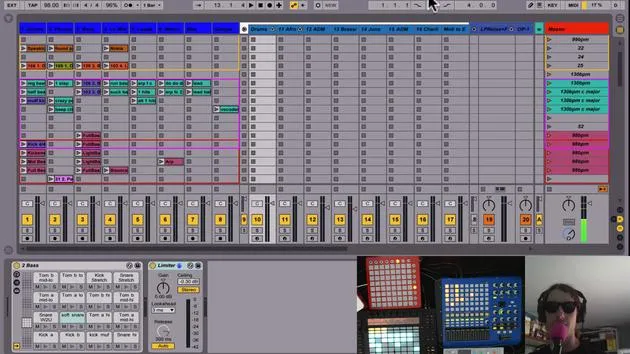
Because it controls eight tracks, I've decided that in my live set, the first eight tracks will all be clips, as I'm going to be using this for launching clips. So, I've decided that I'm only going to have eight audio tracks of clips. The real reason for that is, as I put in here:
"This is for simplicity and sanity."
These are important things to consider when you're playing live. You don't want to be at a live show navigating left and right to all these different tracks. You don't want to get lost and then be scratching your head in the middle of the performance trying to figure out where the heck you are in your set.
So I like to keep it simple and limit myself to eight tracks. Of course, that's not a rule, but this is just an idea I like to use.
Instrument-Specific Tracks
To keep things even simpler, each one of my tracks corresponds to a certain type of instrument:
-
Track 1: Drums
I keep all of my drums in this one track. If I launch this clip here, you'll hear a drum track going. Every single song I have has all the drum beats in this one track. -
Track 2: Percussion
In this example, I do have a drum beat, which acts as a sort of second drum sound. This is mainly my percussion track, where you can see I have some hi-hats going. Those are just nice to drop in separately from the drums. -
Track 3: Basses
So all the low frequency stuff, like my synths, are kept here. I want to know where my bass is at all times. I want to keep it regular, so I always know where to find it. -
Track 4: Low Mids
This isn't quite bass but is a little higher. You can hear the difference as I progress through the tracks. -
Track 5: Leads and Synth Racks
This is where I put my leads, things I want to stand out. If there's an important part, it tends to be on track five. -
Track 6: Particular Sounds
Generally speaking, this has a higher frequency than the tracks before it. -
Track 7: Miscellaneous Sounds
This track is just called "Mas." It might contain a lead or something higher pitched. You won't find too many low-frequency sounds on this track. -
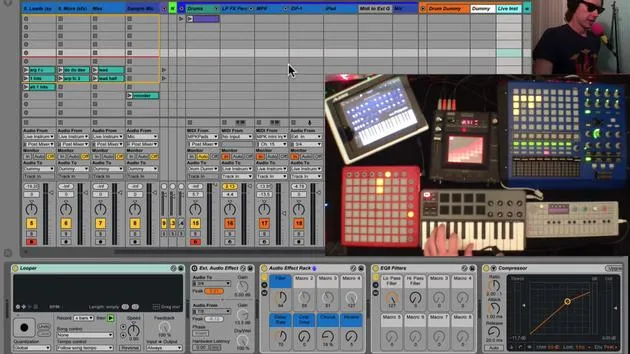
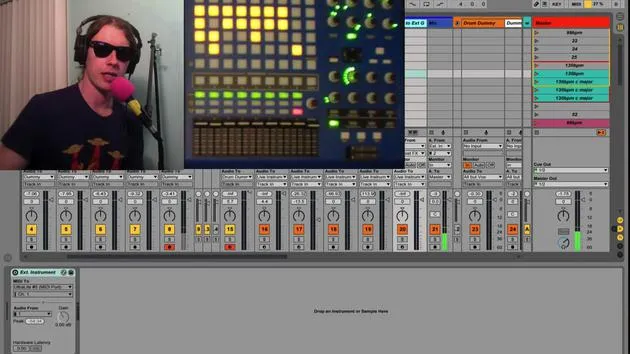
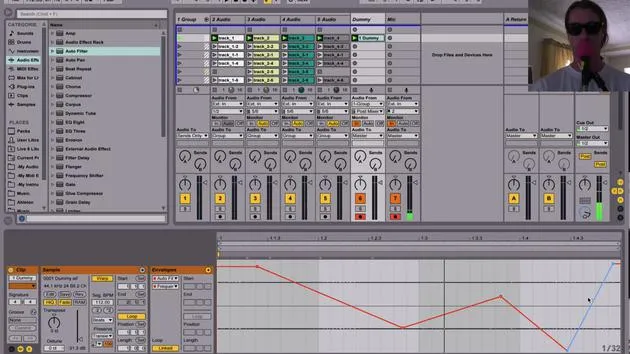
Track 8: Microphone
This track is connected to my microphone and is a place where I can record.
"I can record the sounds that I'm saying. It's a great way to do vocal harmonies."
I can sing a part, then immediately loop it and sing another part.
Conclusion
The reason I do eight clips and eight tracks of clips is because my APC40 has eight tracks. It's just a nice way to work. I always know that these faders apply to the first eight tracks of clips, so I like to keep that separate.
That's how I work with my audio clips.
30 leçons
2h 20m de leçons vidéo structurées
Fonctions vidéo avancées
Ralentissez, bouclez un passage, suivez la partition
Mobile, tablette et ordinateur
Pratiquez où vous voulez
Satisfaction garantie à 100 %
Garantie remboursement 30 jours
Rencontrez votre guru
Rencontrez votre guru
Brian Funk est musicien, producteur, auteur-compositeur et Ableton Certified Trainer. Depuis 2014, il enseigne le cours Advanced Music Production with Ableton Live pour le Berklee College of Music. Il a joué de la guitare, de la basse, de la batterie et des synthétiseurs, et chanté dans des groupes de rock en tournée, et il se concentre aujourd'hui sur son set électronique solo, en portant sur scène ses expérimentations de studio.
Brian adore écrire, enseigner et concevoir des sons. Il produit des tutoriels et des Sound Packs pour Ableton Live, et publie des Packs Ableton Live gratuits depuis 2011 : plus de 125 à ce jour. En tant qu'Ableton Certified Trainer, il a donné des cours et des séminaires couvrant chaque étape du processus de production, et écrit régulièrement sur son blog et pour d'autres publications.
Influencé par le rock and roll, les jeux vidéo, le hip hop des débuts, le punk et l'électronica, des Beatles à Neon Indian en passant par Neil Young, Nirvana et Aerosmith, il décrit son propre son comme 'futuriste, et pourtant nostalgique'. Dans son cours MusicGurus, Live Performance in Ableton Live, il te montre comment il transforme des idées de studio en un vrai set live et pratique : sampler des sons pour en faire des instruments jouables, faire passer guitares et synthés dans du matériel électronique, et mixer et composer à la volée tout en jouant en live et en chantant. Tu en ressortiras capable de construire et d'interpréter ton propre set électronique en toute confiance.







