



Carlito's Tango - leçon
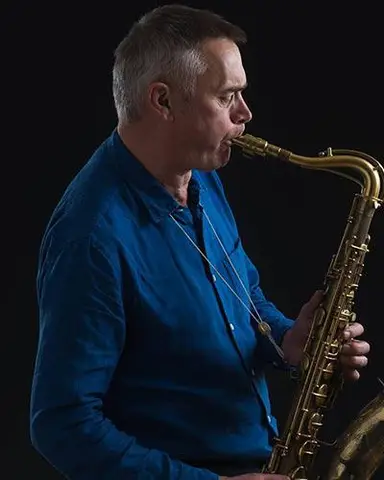
Lesson time: (12min 11sec)
John O'Neill te guide à travers ton premier morceau, 'Carlito's Tango', en réunissant posture, doigté, respiration et coups de langue.
Course preview
This lesson is part of the course The Saxophone Method Vol. 1 : les techniques de base
Watch a preview of the full course below.
Lesson transcript:
Music Lesson: Playing Carlito's Tango
So, now you're finally going to get a chance to play a tune! You've been waiting patiently with that brand new saxophone, or maybe with the second-hand saxophone with the lacquer peeling off, which can look just as good.
Introduction to Carlito's Tango
We're going to play a tune now called Carlito's Tango. This gives you a chance to put everything together that we've been looking at so far in these videos.
Key Areas of Focus:
- How you're standing
- How you're fingering
- How you're breathing
- How you're tonguing
- The kind of sound you're making
I'm going to assume that you've already warmed up. In other words, that you've done those two key exercises:
- The long note exercise
- Some tonguing on single notes
Proper Posture
First, let's look at how I'm standing.
- My feet are evenly balanced on the ground.
- My knees are slightly bent.
- I'm thinking about sitting on that balloon I mentioned, so I feel nice and relaxed and balanced.
- My shoulders are relaxed, creating a nice big triangle between the top of my head and my shoulders.
Remember: The instrument comes to me; I don't go to the instrument. I'm looking down my body height in front of me as I play. If there were a music stand in front of me, it would be set on that line.
Fingering Position
Next, let's check my fingering position:
- My fingers are really nice and relaxed.
- I've got that tennis ball shape in my left hand.
- The fingers are moving with a hammer action, starting at the knuckle joint, and they stay really close to the keys.
- The right hand isn't involved at that moment but is ready to play, with the fingers lightly resting on the keys.
Breathing Technique
Now, let's look at how I'm breathing.
- When I take a breath, it's a very small breath, a "sip," not a big gulp of air.
- I'm not trying to fill my lungs, just topping up.
- Notice that I take the breath through the corners of my mouth. This helps me maintain my embouchure without lifting my head off the top of the mouthpiece.
Practice Rhythm Counting:
If my students have problems with the rhythm, I encourage them to clap the rhythm, counting out loud.
For this piece, in 4/4 time, we would do it like this:
- 1, 2, 3, 4
- 1, 2, 3, 4
- 1, 2, 3, 4
However, when I'm playing, I don't count every beat. I don't recommend that my students count every beat either. For the notes where you play, especially the first beat of each bar, you don't need to count. Instead, fill in the gap by counting in the space. It becomes:
- Play, 2, 3, 4
- Play, 2, 3, 4
Feeling the Rhythm
It's essential to feel the pulse in your body. Although I might seem still while playing, I often make a small movement with my foot, my toe gently tapping inside my shoe. This helps me feel the rhythm.
Movement is Key:
For some, it may involve bigger movements, and that's absolutely fine. Everybody needs to find their own way of feeling the rhythm.
Breathing Patterns
Notice also how often I breathe. Generally, in Western music, it divides in a binary fashion:
- Eight-bar sections
- Four-bar sections
Typically, there will be a breath every two bars. However, you may not always breathe on the bar line, as musical phrases don't always align with bar lines.
In this simple piece, take your breath just before the bar line, breathing at the end of every second bar.
Making Space to Breathe
To breathe effectively:
- Steal from the note before your breath: Shorten the note just before the breath to allow for a little space where you can take a sip of air.
Breathing Exercises
Now, I'll take you through a sequence of exercises to help with taking breath:
-
Set your metronome to 60 beats per minute.
-
Count and breathe on the fourth beat of every second bar like this:
- 1, 2, 3, 4
- 1, 2, 3
- 1, 2, 3, 4
- 1, 2, 3, 1
Next, let's combine this with playing a note on the saxophone.
- Take the note B.
- Play the note on the first beat of the first bar.
- Then again:
- On the first beat of the second bar
- On the fourth beat of the second bar
- Continue this pattern, taking a breath every second bar.
Watch Out! If you're controlling your breath correctly, you should feel like you can continue the exercise comfortably for a long time.
Tips on Breath Control
Be cautious of:
- Hyperventilating: Taking in too much air is a common issue for woodwind players.
- Over-breathing can lead to discomfort. Remember, just take small sips of air.
Visualizing Your Playing
While you see what I'm doing, there's a lot happening that you can't see. I'm imagining drawing a line. Each long note is steady, and every time I tongue, I'm thinking of the "do" syllable.
Continuity in Playing
Notice how, as I transition from one note to another, I don't interrupt the line. The only interruption is when I take a breath every second bar.
Practice Slow:
While the demonstration shows me playing at full speed, I never expect students to start that way. Set your metronome to 50 beats per minute to begin practicing slowly. This gives you more time to think and helps relax your fingers.
Final Thoughts
Now, it's your turn! It may take several practice sessions to master playing this piece.
Keep It Simple:
- Concentrate on:
- Your standing
- Your breathing
- Drawing the line
- Remembering the syllable
If you'd like feedback on your efforts, feel free to record yourself and send it to us. We'll be happy to provide suggestions on how you can progress further!
About the instructor
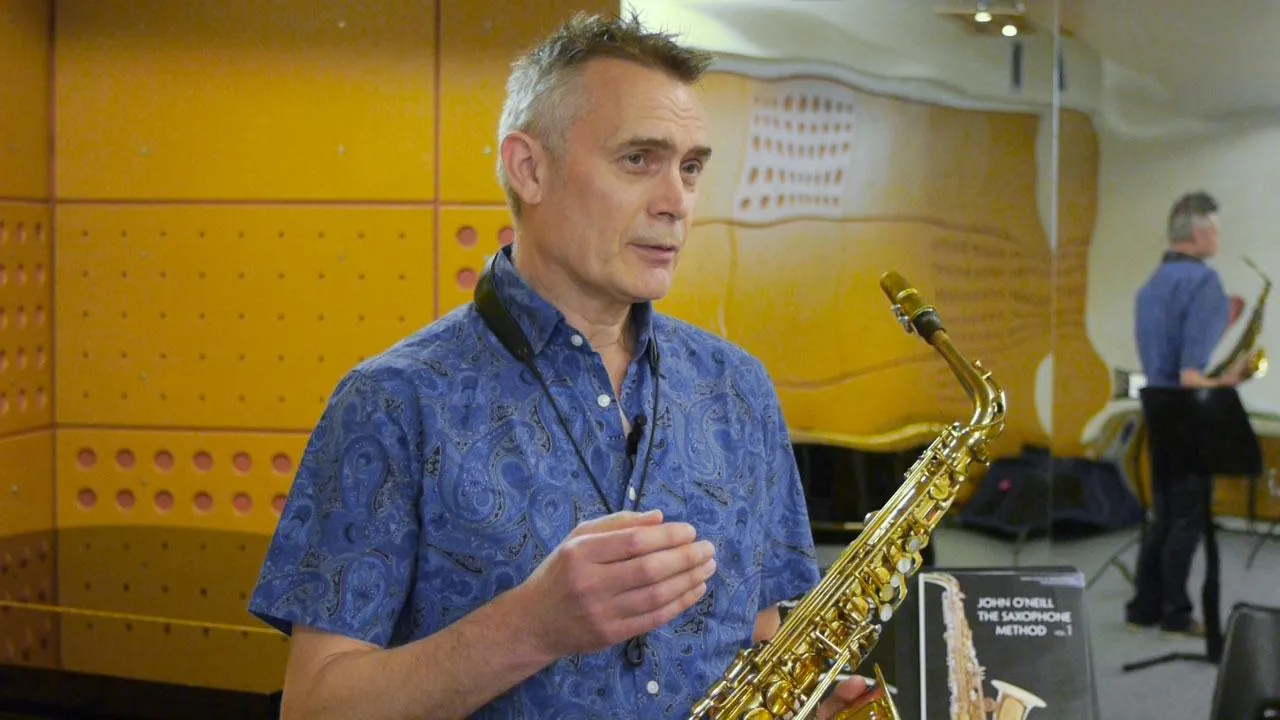
John O'Neill est le saxophoniste à l'origine de The Jazz Method for Saxophone, la série publiée par Schott qui a appris à improviser à toute une génération de musiciens à travers le monde. Publiée pour la première fois en 1991, elle reste l'une des méthodes de jazz les plus vendues jamais écrites, aux côtés de ses méthodes complémentaires pour clarinette et flûte.Il est venu au saxophone à vingt ans, alors qu'il étudiait le français et l'allemand au Trinity College d'Oxford, après avoir entendu John Coltrane. Il a ensuite étudié avec le grand ténor britannique Don Rendell et a appris l'improvisation auprès de Lee Konitz, Warne Marsh et Peter Ind, héritiers directs du légendaire pédagogue Lennie Tristano. Musicien professionnel depuis 1979, il est spécialisé dans le jazz et la bossa nova et s'est produit dans les plus grandes salles de Londres, dont le Ronnie Scott's, tout en composant de la musique pour le cinéma, la télévision, le théâtre et la danse.Enseignant diplômé fort de décennies d'expérience, John a enseigné le saxophone, la clarinette et la flûte en privé et dans des écoles, dans le cadre du cursus de jazz du Trinity College of Music de Londres et lors de stages d'été en Espagne et en République tchèque. Il continue de se produire et d'enseigner depuis son domicile au nord de Londres. read more