



Dépanner ta première note
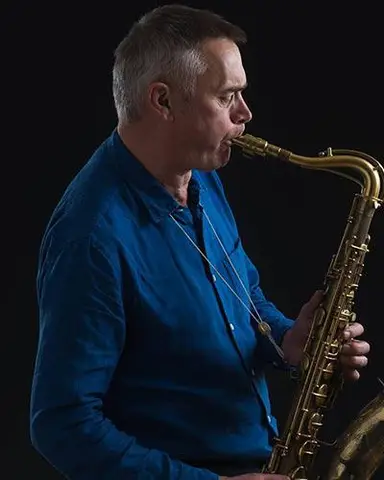
Lesson time: (9min 34sec)
John O'Neill t'aide à corriger une première note qui ne sort pas : vérifie ton soutien du souffle et ton embouchure quand le saxophone reste muet.
Course preview
This lesson is part of the course The Saxophone Method Vol. 1 : les techniques de base
Watch a preview of the full course below.
Lesson transcript:
Saxophone Playing: Focus on Breath and Embouchure
Now, if your first attempt wasn't terribly successful, the first question I'd ask you is:
Did you remember what you learned in the breathing exercises?
Maybe you were so focused on trying to carefully remember the things that I was mentioning in relation to the embouchure that you forgot.
Remember: It's the breath that makes the sound.
This is where it starts to get tricky. It's a bit like spinning plates. You're trying to focus on one thing, and then you forget another thing. And that's going to happen for a while as you make your first notes on the saxophone. Don't worry about it. Just keep trying to focus on these different aspects of playing.
Key Points to Remember
- The Breath: It's the breath that makes the sound, similar to the way you made that "R" sound.
- Mouthpiece Position:
- If you don't put enough mouthpiece in your mouth, the sound will be very muted.
- If you play with too much mouthpiece in your mouth, you risk losing control and may produce a loud but raucous sound.
Practice Tips
-
Warm Air Visualization: When you practice playing your first notes, imagine that you're blowing warm air, as if you were misting up a mirror. You can even visualize the palm of your hand as your mirror and blow onto it.
-
Volume Consistency: Check that the volume of the note remains consistent. Try not to let your note tail off.
-
Avoid Tension: Listen for any unwanted vibration in the sound, which can often be caused by:
- Squeezing too tightly on the mouthpiece.
- Thrusting the chin or jaw forward.
Maintaining Natural Position
Jaw and Bite
-
Jaw Tension: If you move your jaw forward, you may hear the sound vibrating out of control.
- Maintain your natural bite: typically, the upper teeth should be in front of the lower teeth.
-
Avoid Unnatural Movements: Don't lower your jaw unusually or push it into strange positions. Focus on your lips, which should feel like an elastic band sealing around the mouthpiece.
Pressure Sensation
- If you're unsure about the amount of pressure to use, think of whistling.
- It's about the same amount of pressure you use when you whistle: firm but relaxed.
Insights from the Past
I remember my first teacher, Dom Rendell. He was a great saxophonist who played with Billie Holiday, Woody Herman, and Stan Kenton. He had the fortune to meet some of the great saxophone players like Lester Young, John Coltrane, and Coleman Hawkins.
A Key Insight
Coleman Hawkins noted that the lower lip should be like a cushion for the reed, which is a lovely concept; the lip allows the reed to vibrate.
Common Faults in Players
-
Bunching the Chin:
- Often, I see this shape where the lower lip or chin bunches up towards the reed.
- This indicates that you're not working properly with the muscles at the corners of your mouth.
-
Using a Mirror for Feedback:
- If you see your chin bunching, return to the image of whistling. Maintain that space between the lip and the chin.
-
Lip Positioning:
- A slight inward turn of the lower lip is necessary, but don't fold your lip right over, as it complicates the embouchure.
-
Visibility Check:
- You should be able to see a little of the red part of your lower lip while playing. If you tuck it in too much, it disappears.
-
Jaw Thrusting:
- This subtle issue is difficult to correct, but it's essential not to move your jaw forward when you play.
Final Thoughts
Remember, focusing on these aspects will help you achieve a better embouchure and sound quality. Keep practicing, and it will get easier!
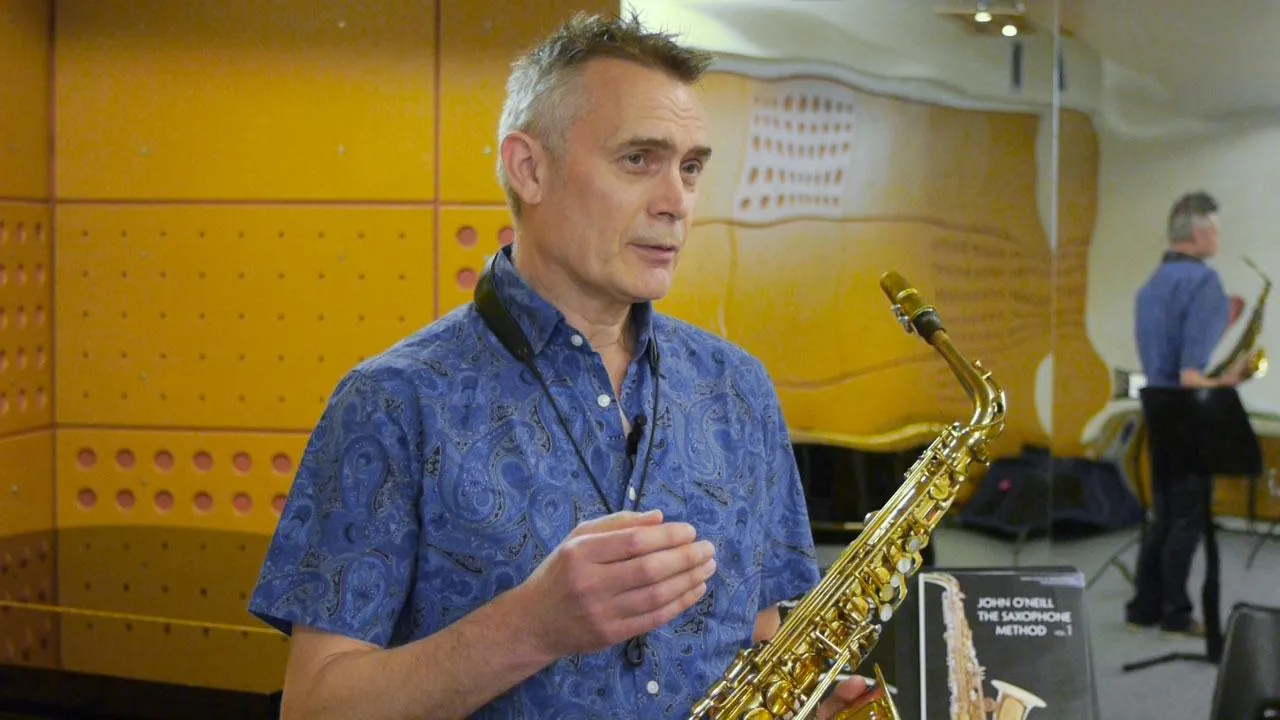
About the instructor
John O'Neill est le saxophoniste à l'origine de The Jazz Method for Saxophone, la série publiée par Schott qui a appris à improviser à toute une génération de musiciens à travers le monde. Publiée pour la première fois en 1991, elle reste l'une des méthodes de jazz les plus vendues jamais écrites, aux côtés de ses méthodes complémentaires pour clarinette et flûte.Il est venu au saxophone à vingt ans, alors qu'il étudiait le français et l'allemand au Trinity College d'Oxford, après avoir entendu John Coltrane. Il a ensuite étudié avec le grand ténor britannique Don Rendell et a appris l'improvisation auprès de Lee Konitz, Warne Marsh et Peter Ind, héritiers directs du légendaire pédagogue Lennie Tristano. Musicien professionnel depuis 1979, il est spécialisé dans le jazz et la bossa nova et s'est produit dans les plus grandes salles de Londres, dont le Ronnie Scott's, tout en composant de la musique pour le cinéma, la télévision, le théâtre et la danse.Enseignant diplômé fort de décennies d'expérience, John a enseigné le saxophone, la clarinette et la flûte en privé et dans des écoles, dans le cadre du cursus de jazz du Trinity College of Music de Londres et lors de stages d'été en Espagne et en République tchèque. Il continue de se produire et d'enseigner depuis son domicile au nord de Londres. read more