



Exercice de coup de langue nº 2
Avec
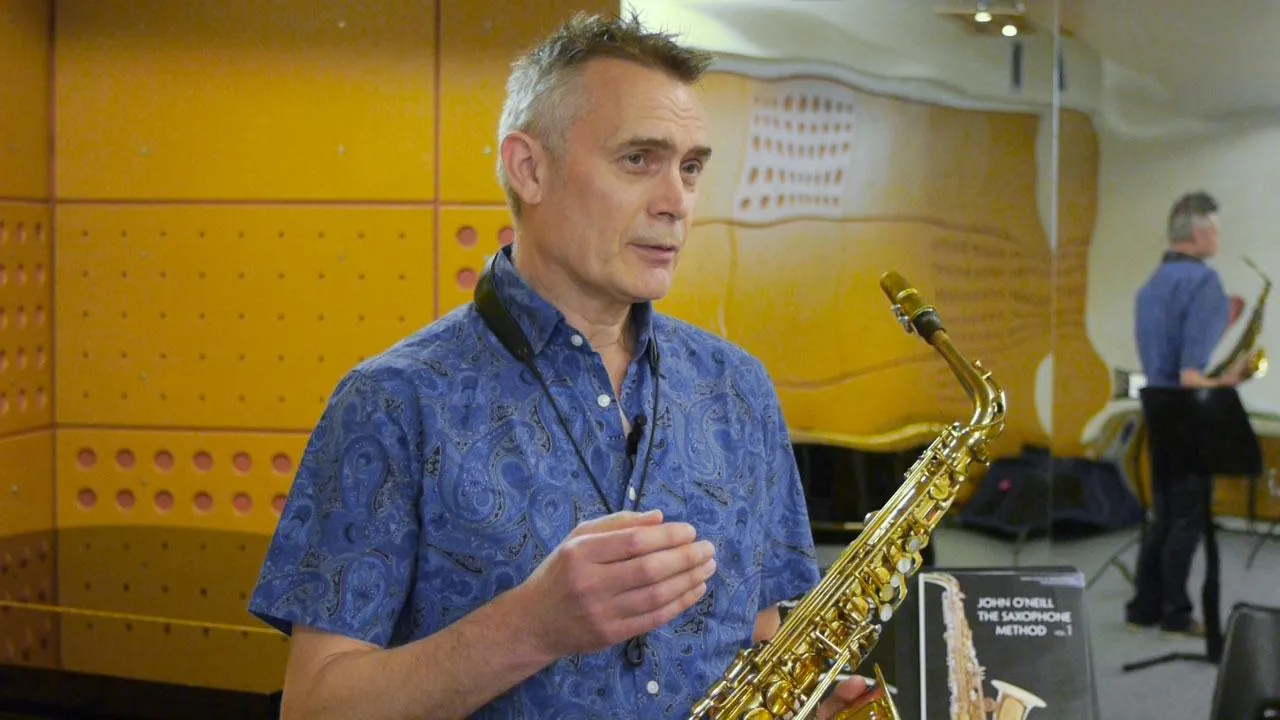
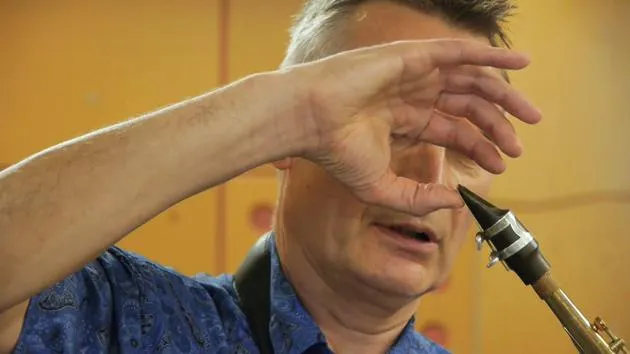
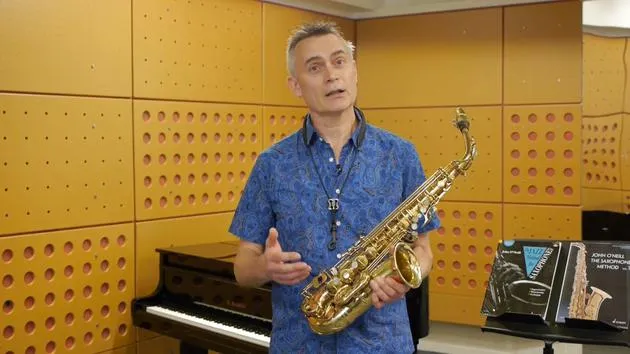
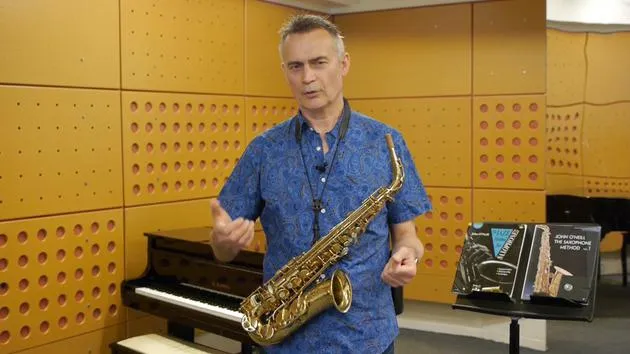
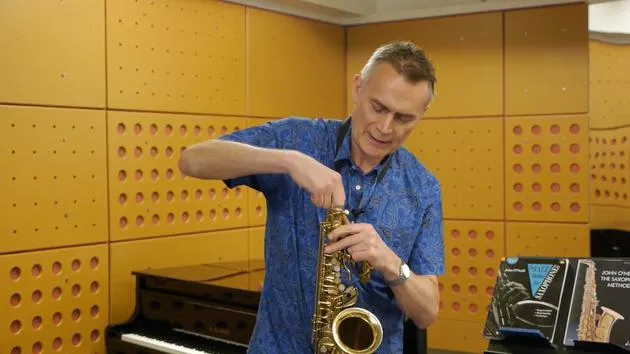
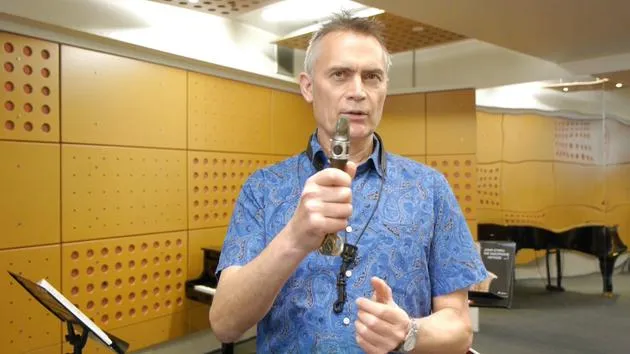
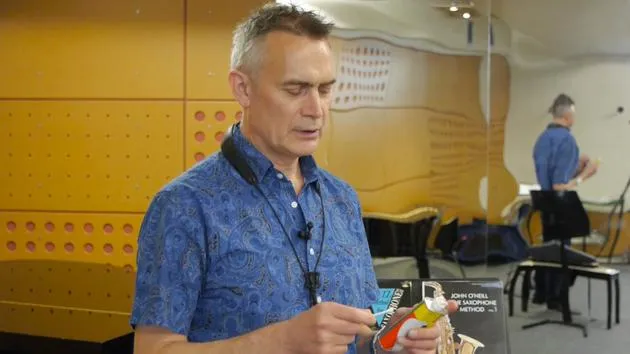
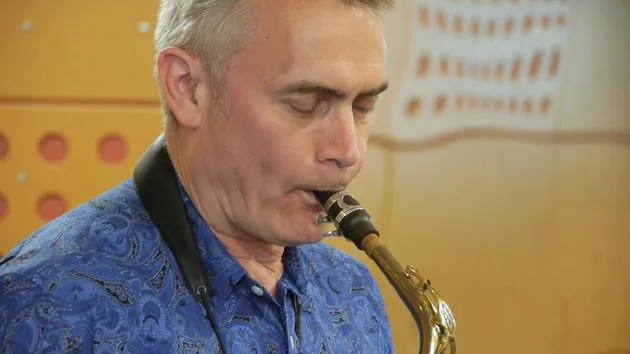
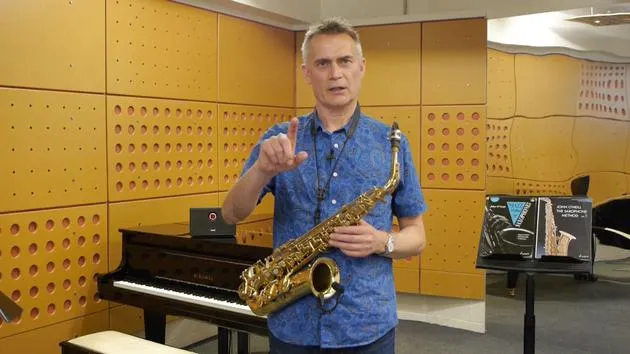
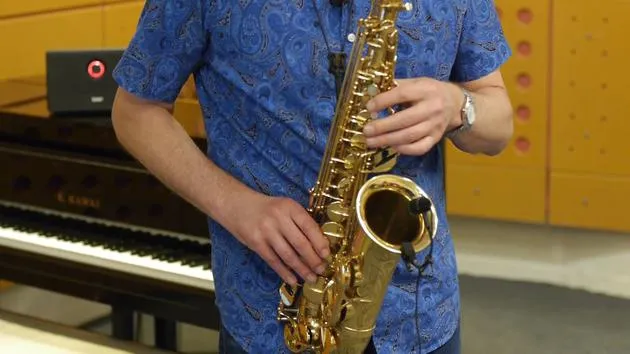
John O'NeillDans cette vidéo, John te montre un deuxième exercice pour travailler le coup de langue et le réussir. N'oublie pas la syllabe "do".
Le contenu du cours
25 leçons (2h 10min) · 1 gratuites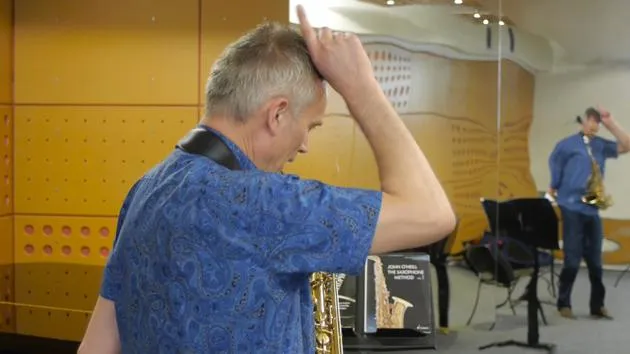
01. Posture
13:20
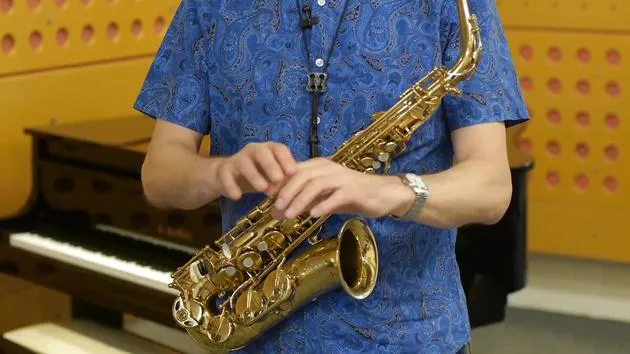
02. Doigté
4:10
03. La respiration
4:12
04. Exercice de respiration n° 1
3:24
05. Exercice de respiration n° 2
4:34
06. Exercice de respiration n° 3
2:29
07. Exercice de respiration n°4
1:27
08. Exercice de respiration n° 5
2:27
09. L'embouchure et ta première note
9:46
10. Dépanner ta première note
9:34
11. Développer ton son
3:43
12. Exercice de coup de langue n°1
4:36
13. Exercice de coup de langue nº 2
Tu es ici6:49
14. Réflexions finales et pratique
1:57
Transcription de la leçon
Applying the Ventriloquist Exercise to the Saxophone
So now we're going to proceed to try to apply this ventriloquist exercise to the saxophone. As you proceed to this next exercise, it's absolutely vital that you remember to imagine the do sound.
What often happens is that when I explain to people how important the sound is, they appear to take it on board, but then just a few minutes later, I ask them, "Are you remembering the do sound?" They look a bit shamefaced and downcast and say, "Oh, actually no, I forgot."
It's absolutely vital that you remember to imagine the sound.
The Exercise
- Stand in front of the mirror.
- Imagine your do sound.
- Start with a few seconds of a long note.
- That very first note is fine if you just breathe into the saxophone as before when you're playing your long note exercises.
- Later on, you can practice starting notes with the tongue, as I describe in the book.
Once you've established a nice steady sound, then start tonguing, imagining the do syllable.
Key Points for the Second Exercise
Here are a few things to note during this second exercise. Some of them I've already touched on in the ventriloquist exercise:
-
Tongue Placement:
- Remember that you're not using the tip of your tongue, but just behind the tip.
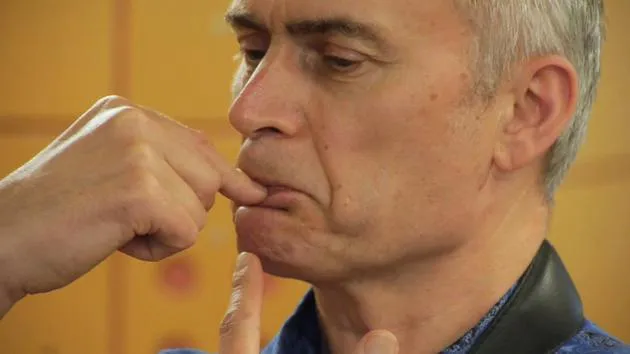
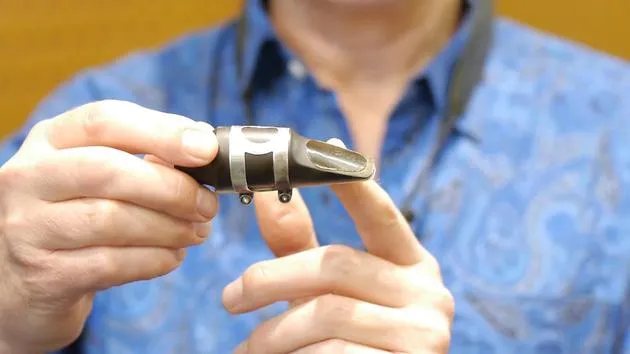
- Imagine that my thumb is my tongue. The contact should be like this, not the tip of the tongue touching the underneath of the reed.
This is a very common fault.
-
Correct Tonguing Technique:
- Touch just behind the tip of the tongue to the very edge of the reed.
- Avoid touching the tip of the tongue to underneath the reed or the flat part of the reed near the tip.
-
Clean Sound:
- For the tonguing to sound clean, it's crucial that you imagine the do syllable. That action should happen naturally.
Common Tonguing Issues
-
A common problem is that when people tongue, they bring the tongue forwards and up instead of allowing it to come up naturally.
-
Keep Tongue Movements Small:
- The tongue should only move a couple of millimeters at most, up to the reed and down again.
- To tongue quickly, the movements need to be very small.
-
Feather-Light Contact:
- It's important to make the contact with the reed feather light.
- When I'm tonguing, I'm hardly aware of the contact between my tongue and the reed.
Observational Check
Good tonguing is often invisible.
- If you're looking in the mirror and noticing large movements around your mouth, that's probably a sign that your tongue isn't moving correctly.
- If your tonguing is correct, it should be nearly invisible, and the tone should remain constant:
- No wavering in the sound.
- No changes of volume.
- No gaps between the notes.
Common Faults in Tonguing
The most common faults that I notice with tonguing are:
- Touching the underneath of the reed (make sure the contact is with the tip).
- Moving the tongue backwards and forwards rather than up and down.
- Not maintaining breath pressure.
However, most of these faults can be corrected if you remember to imagine the syllable.
Importance of the Syllable
The syllable contains everything.
- If you're imagining your do sound:
- The oo part corresponds to keeping the breath steady.
- The D part reminds you to move the tongue in the correct way, very delicately.
Remember, it is a do sound, not a "t" sound, as some teachers might say. The "t" is too heavy. This is a much gentler sound.
25 leçons
2h 10m de leçons vidéo structurées
Fonctions vidéo avancées
Ralentissez, bouclez un passage, suivez la partition
Mobile, tablette et ordinateur
Pratiquez où vous voulez
Satisfaction garantie à 100 %
Garantie remboursement 30 jours
Rencontrez votre guru
Rencontrez votre guru
John O'Neill est le saxophoniste à l'origine de The Jazz Method for Saxophone, la série publiée par Schott qui a appris à improviser à toute une génération de musiciens à travers le monde. Publiée pour la première fois en 1991, elle reste l'une des méthodes de jazz les plus vendues jamais écrites, aux côtés de ses méthodes complémentaires pour clarinette et flûte.
Il est venu au saxophone à vingt ans, alors qu'il étudiait le français et l'allemand au Trinity College d'Oxford, après avoir entendu John Coltrane. Il a ensuite étudié avec le grand ténor britannique Don Rendell et a appris l'improvisation auprès de Lee Konitz, Warne Marsh et Peter Ind, héritiers directs du légendaire pédagogue Lennie Tristano. Musicien professionnel depuis 1979, il est spécialisé dans le jazz et la bossa nova et s'est produit dans les plus grandes salles de Londres, dont le Ronnie Scott's, tout en composant de la musique pour le cinéma, la télévision, le théâtre et la danse.
Enseignant diplômé fort de décennies d'expérience, John a enseigné le saxophone, la clarinette et la flûte en privé et dans des écoles, dans le cadre du cursus de jazz du Trinity College of Music de Londres et lors de stages d'été en Espagne et en République tchèque. Il continue de se produire et d'enseigner depuis son domicile au nord de Londres.







