



Misc Tracks
With
Brian Funk
What's in the course
30 lessons (2h 20m) · 1 free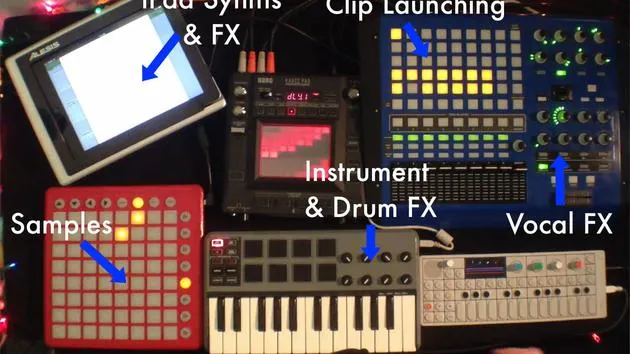
Lesson transcript
Music Lesson
Introduction
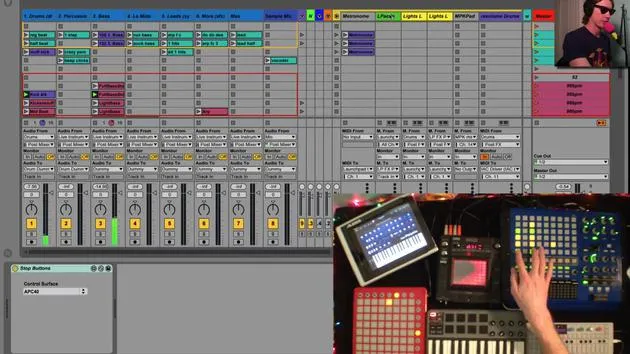
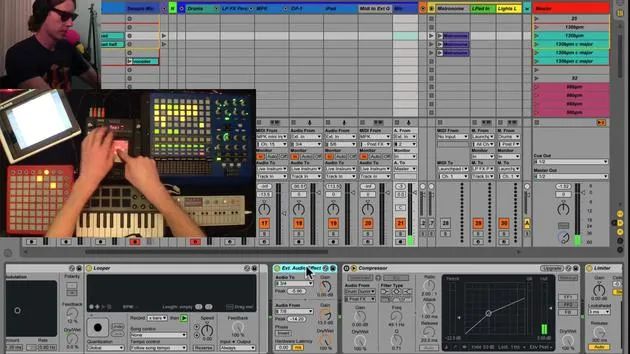
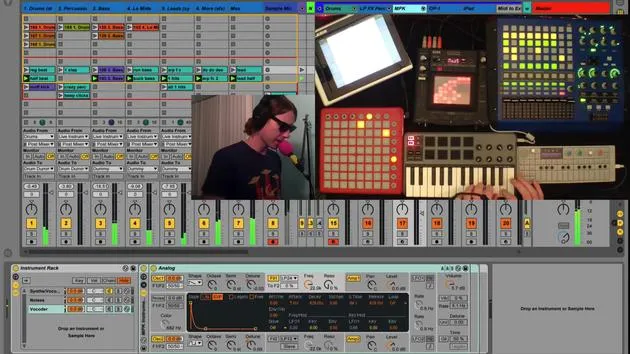
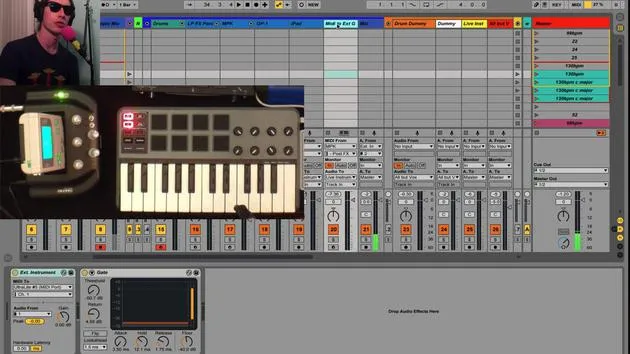
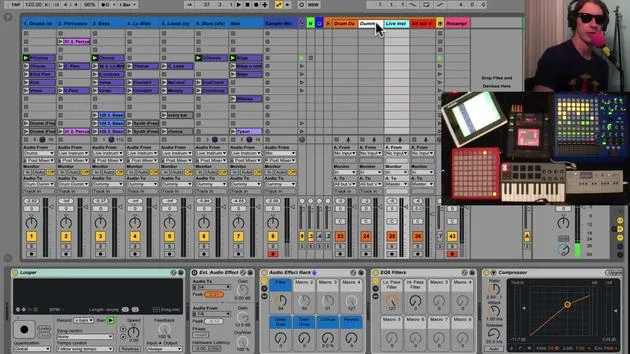
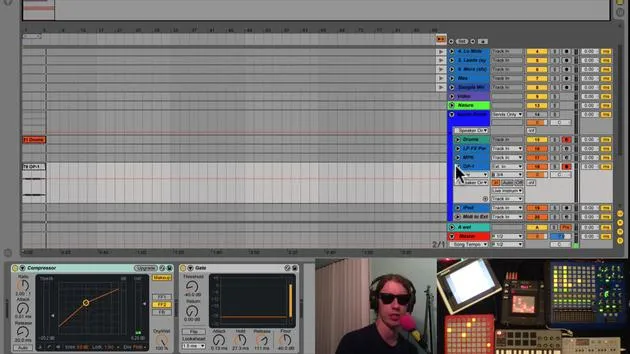
Okay. And lastly, I just want to show you some of the last few tracks that I have going on in here, right here in this group. Just so you guys know what I'm doing, I'm sending MIDI from these tracks to a program called Resolume, which is VJ software for video.
Not really going to get into detail about doing video right now because it involves learning a whole other piece of software. But I would just like to let you know that it is pretty easy to send MIDI from Live to a program that can do visuals for you.
And that's really exciting when you're, you know, maybe controlling a filter on one of your synths, and it's changing the colors of your visuals in the background. That's pretty cool.
Interaction Between Audio and Visual
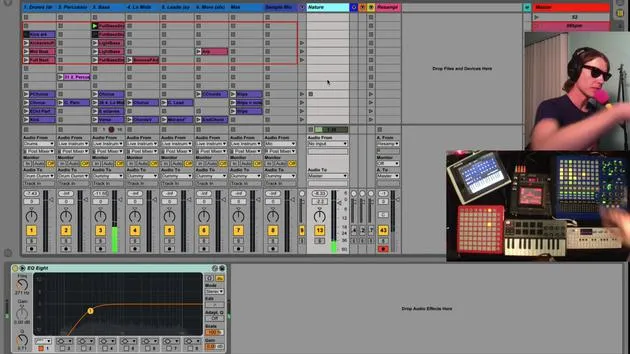
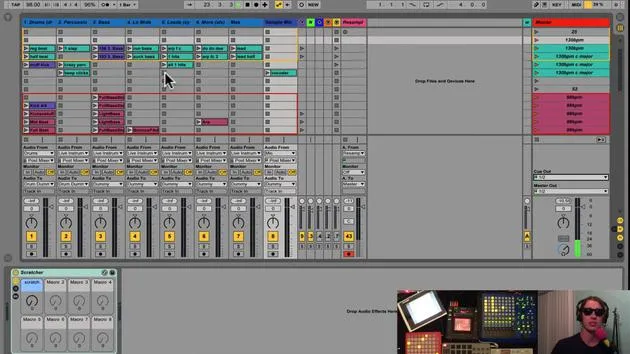
I have another track here that I just called Nature. All the way down at the bottom, I have a few clips that I use, which I can trigger here. They include:
- Rain
- Fireworks
- Birds that I recorded in the morning
- A bunch of geese
- Thunder and lightning
I like these just kind of in the background. It's a cool way to, maybe, just get into your tracks a little bit.
Example
If I might just give you an example, I got thunder and lightning. I can kind of just start a track, and I've now got this nice organic sound going on in the background, which I think is pretty cool.
It gives just some character, some life to it. This thundering light has a very dark, ominous kind of vibe going on. And, you know, I love it for transitional type things.
Track Setup
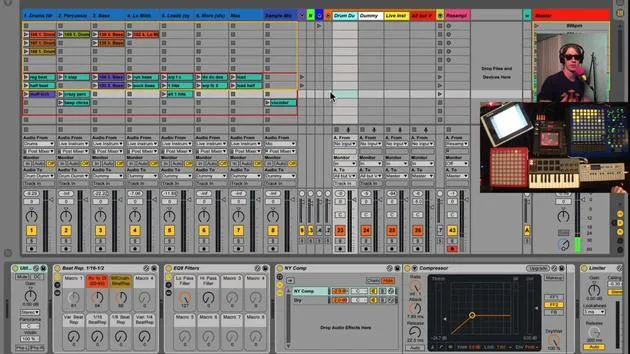
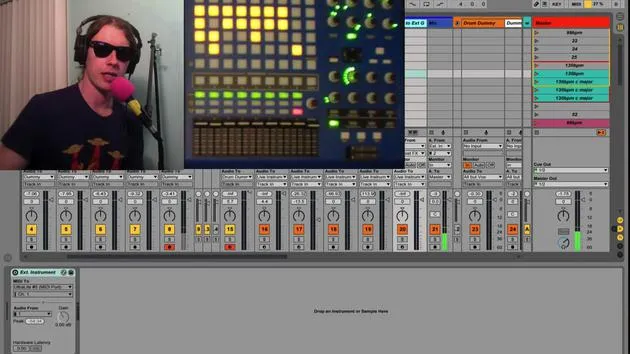
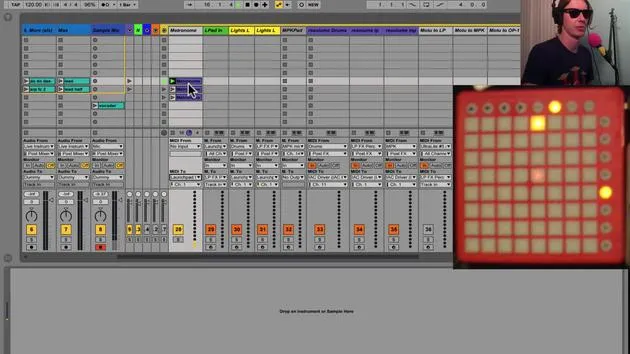
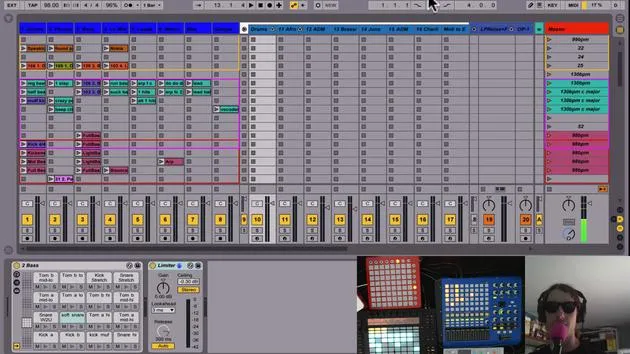
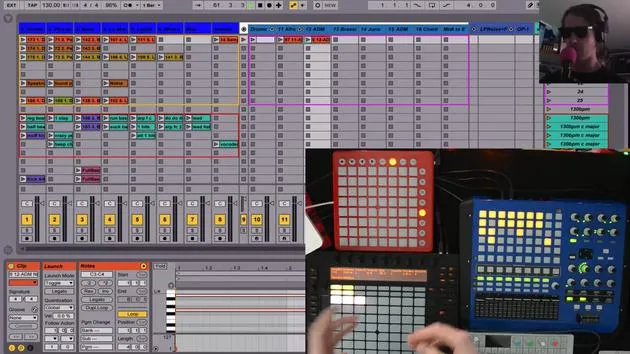
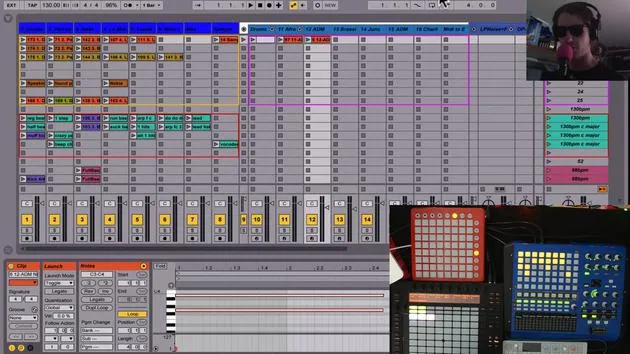
So this track is just a bunch of random stuff that I have set up to my launchpad here. I have a resample track.
Importance of the Resample Track
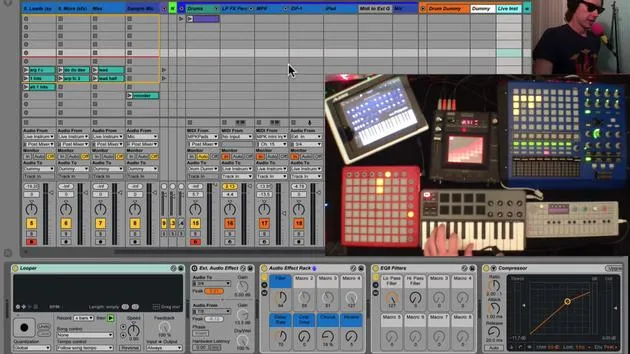
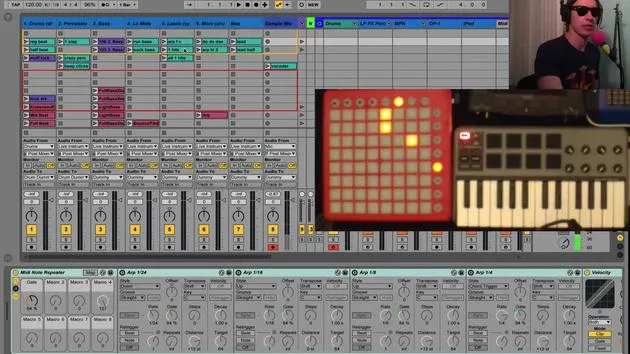
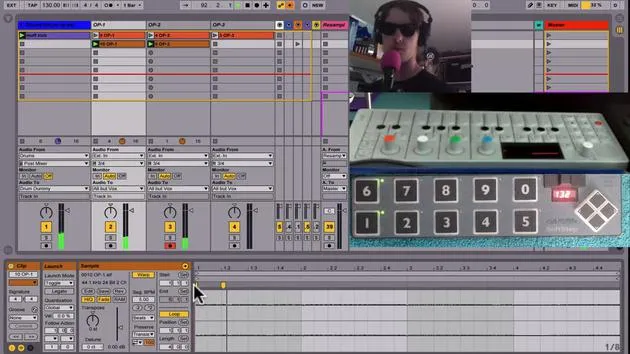
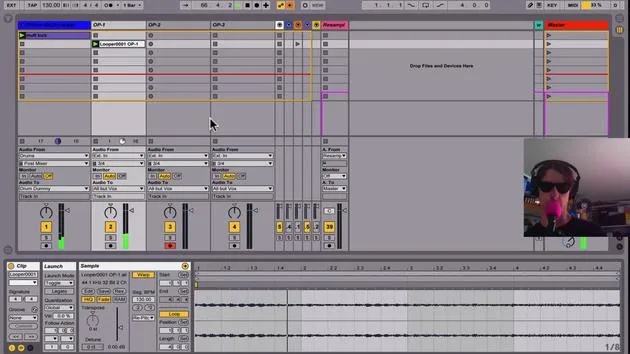
This track is pretty important to me because it will record everything I play. It's set to resample, which means it's going to record my master output onto a clip if I want, or if I go into arrangement view and lock into record, this track here is now recording everything I do.
And that's a nice thing to have because it's just an easy way to capture everything you've got going on. So it's now recording everything I do, and all that nonsense I did before has been recorded to this track, which is great.
Master Track
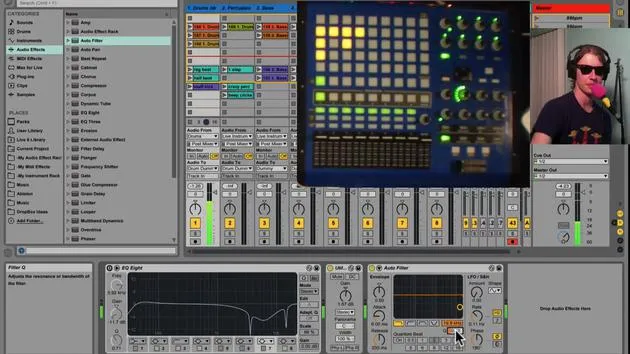
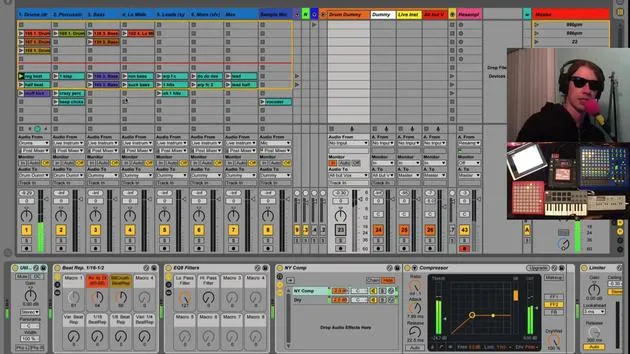
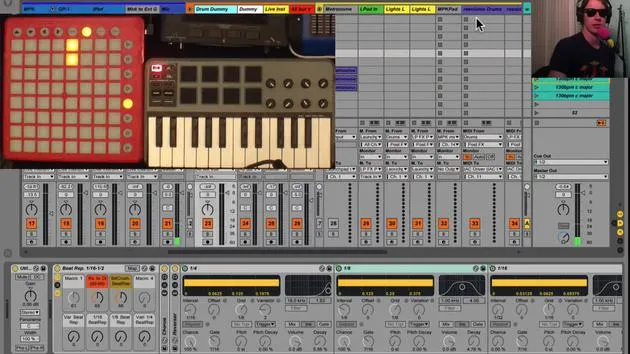
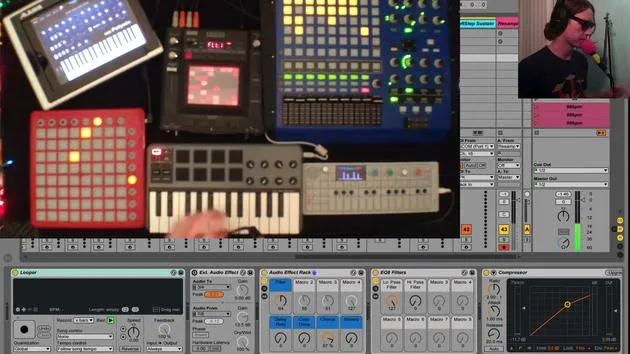
The last thing we have here is my master track where everything is routed. I apply just a few subtle effects, including:
- Some compression
- Rolling off a little bit of the high end if the PA I'm playing through is a little harsh
- A limiter
The limiter is key. You don't want to be going in the red on your master, so this can really help tame things.
Those are some of the final tracks, and from here, we're going to start getting into a little bit more detail about all this stuff.
30 lessons
2h 20m of structured video lessons
Advanced video features
Slow down, loop a passage, follow along
Mobile, tablet & desktop
Practise wherever you are
100% satisfaction guarantee
30-day money-back guarantee
Meet your guru
Meet your guru
Brian Funk is a musician, producer, songwriter and Ableton Certified Trainer. Since 2014 he has taught the Advanced Music Production with Ableton Live course for Berklee College of Music. He has played guitar, bass, drums, synths and sung in touring rock bands, and these days focuses on his solo electronic set - taking his studio experiments to the stage.
Brian loves writing, teaching and sound design. He produces Ableton Live tutorials and Sound Packs, and has released free Ableton Live Packs since 2011 - over 125 so far. As an Ableton Certified Trainer he has given lessons and seminars covering every stage of the production process, and writes regularly on his blog and for other publications.
Influenced by rock and roll, video games, early hip hop, punk and electronica - from The Beatles, Neil Young, Nirvana and Aerosmith to Neon Indian - he describes his own sound as 'futuristic, yet nostalgic'. In his MusicGurus course, Live Performance in Ableton Live, he shows you how he turns studio ideas into a real, hands-on live set: sampling sounds and turning them into playable instruments, running guitars and synths through electronic gear, and mixing and composing on the fly while playing live and singing. You'll come away able to build and perform your own electronic set with confidence.







