



Under the Radar (Indie) - Walkthrough
Avec
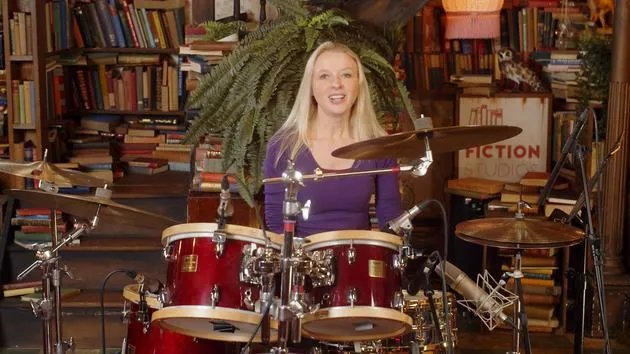
Sophie AllowaySophie Alloway passe en revue 'Under the Radar', un morceau de batterie indie bâti sur un groove rock classique qui s'épure au milieu avant de reprendre de l'ampleur.
Le contenu du cours
114 leçons (3h 47min) · 1 gratuites
01. Introduction à la batterie rock
7:55
02. Exemple 1 - Coups simples
2:44
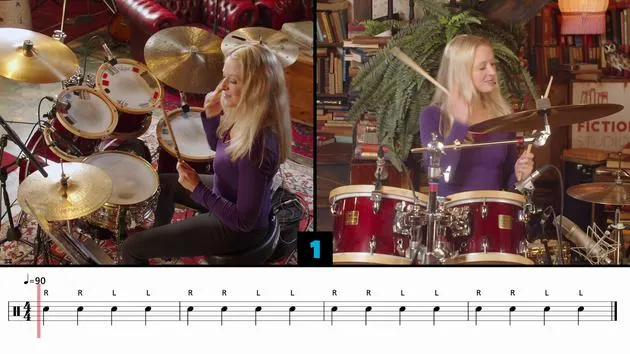
03. Exemple 2 - Doubles coups
1:28
04. Exemple 3 - Paradiddles
2:37
05. Bonus - Combiner simples, doubles et paradiddles
2:22
06. Leçon de rock 2 - Ajouter des silences
1:48
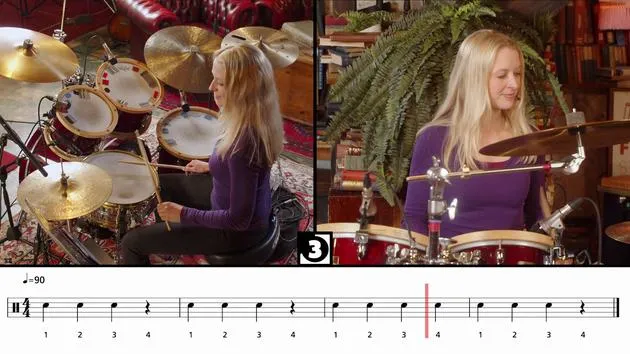
07. Exemple 1 - Silence sur le temps 4
1:56
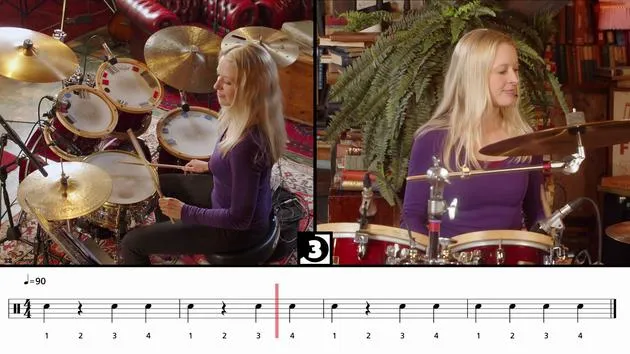
08. Exemple 2 - Silence sur le temps 2
1:36
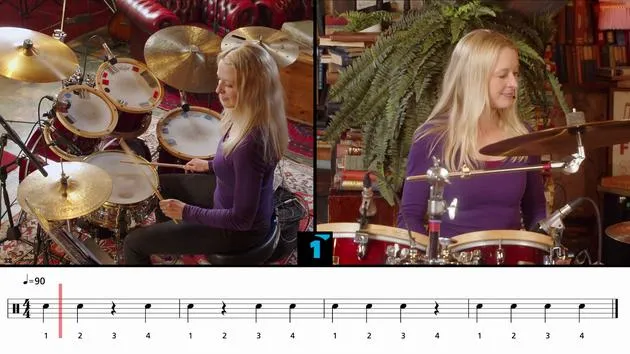
09. Exemple 3 - Silences mobiles
1:05
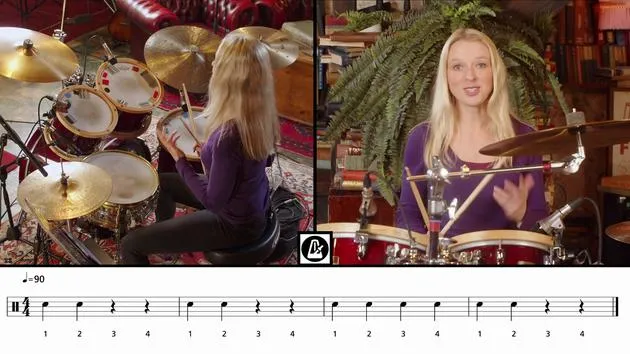
10. Exemple 4 - Piston mesures 12-16
1:56
11. Exercice bonus 1
1:49
12. Exercice bonus 2
1:02
13. Résumé de la section rock
1:50
01. Pop - Ajouter le charleston
1:31
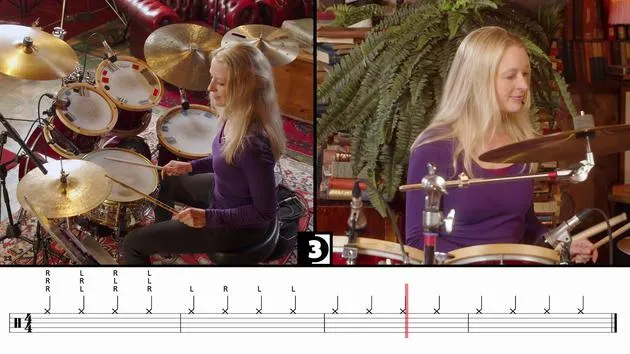
02. Exemple 1 - Noires à la charleston
1:40
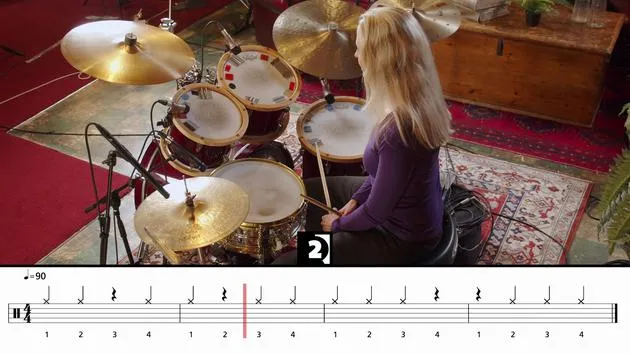
03. Exemple 2 - Silence sur le temps 1
1:42
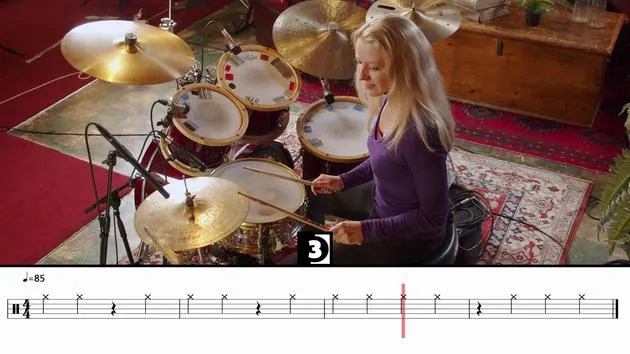
04. Exemple 3 - Deux soupirs consécutifs
1:28
05. Exercice bonus 1
1:11
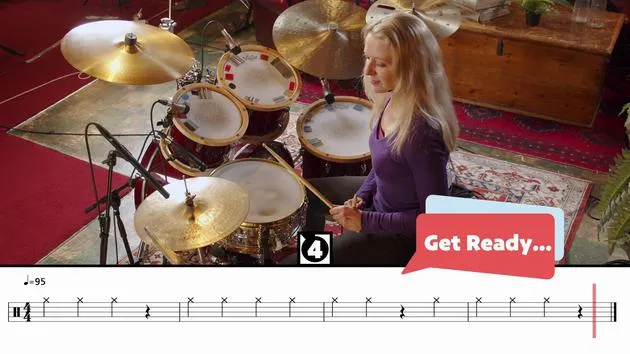
06. Exercice bonus 2
1:10
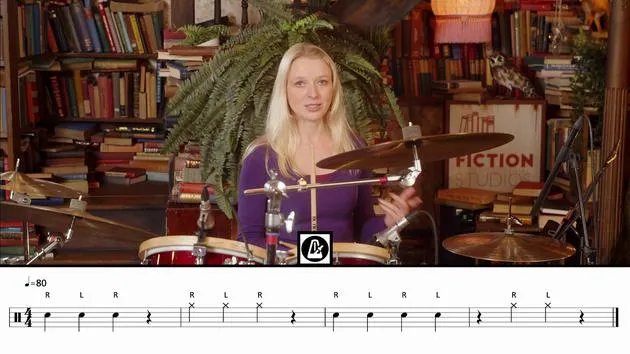
07. Pop Leçon 2 Exemple 1 - Combiner le hi-hat et la snare
1:11
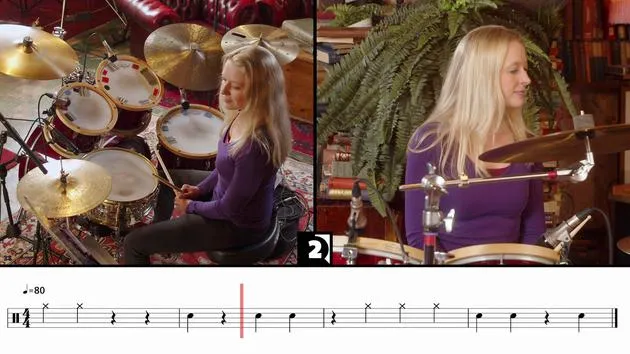
08. Exemple 2 - Se déplacer rapidement entre les voix de la batterie
1:17
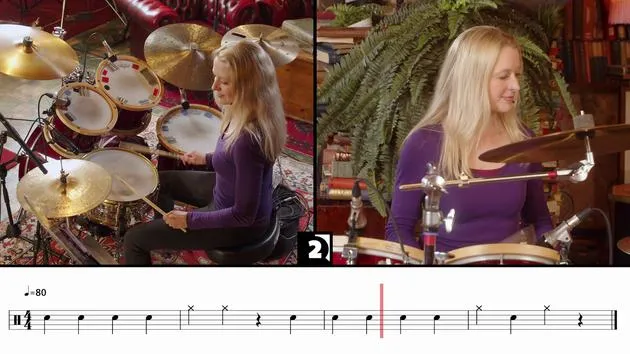
09. Exemple 3 - Deux voix de batterie dans une mesure
0:59
10. Exemple 4 - Take It to the Top, mesures 1-4
1:10
11. Exercice bonus 1
1:08
12. Exercice bonus 2
1:04
13. Résumé de la section musique pop
0:51
01. Introduction à la musique country
4:13
02. Point de contrôle des compétences
1:54
03. Exemple 1 - Demi-soupir de blanche
1:18
04. Exemple 2 - Placement du silence de blanche
1:31
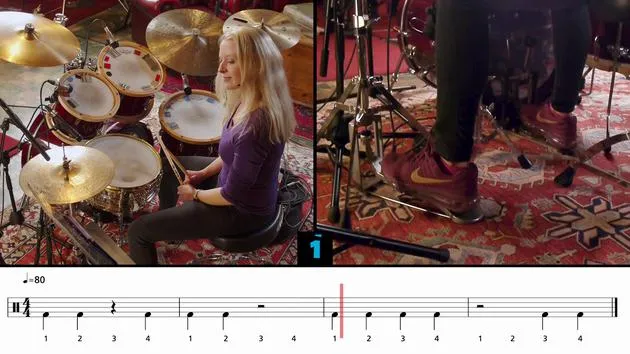
05. Exemple 3 - Phrases de grosse caisse
1:29
06. Exercice bonus 1
1:27
07. Exercice bonus 2
1:10
08. Leçon de country 2 - Combiner grosse caisse, caisse claire et charleston
3:07
09. Exemple 1 - Combiner la grosse caisse et le charleston
1:40
10. Exemple 2 - Ajouter le demi-soupir de blanche à différentes positions
1:10
11. Exemple 3 - Se déplacer rapidement entre les voix de la batterie
1:10
12. Exemple 4 - Borderlands mesures 1-4
1:06
13. Exercice bonus 1
1:30
14. Exercice bonus 2
0:56
15. Résumé de la section musique country
0:26
01. Introduction au metal : jouer deux voix de batterie
3:35
02. Exemple 1 - Se concentrer sur la coordination
2:19
03. Exemple 2 - Variations de grosse caisse
1:16
04. Exemple 3 - Coordonner les mains
1:09
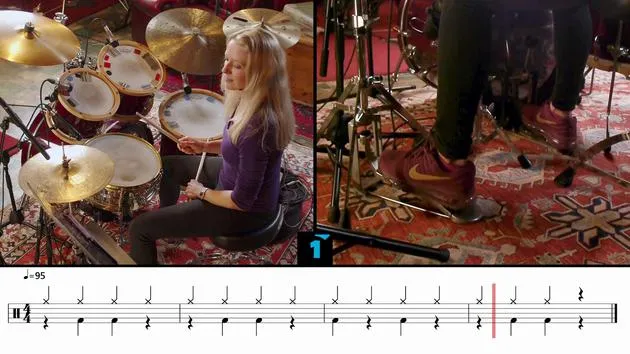
05. Exercice bonus 1
1:05
06. Exercice bonus 2
0:50
07. Résumé de la leçon 1 de metal
0:25
08. Leçon de metal 2 - Jouer ton premier beat complet
1:56
09. Exemple 1 - Motif de charleston pour beat rock de base
1:08
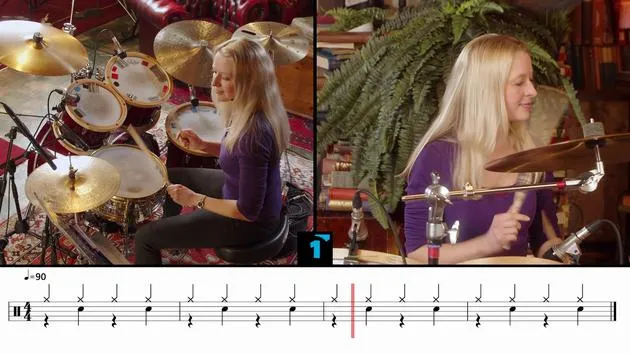
10. Exemple 2 - Ajouter le back beat
0:58
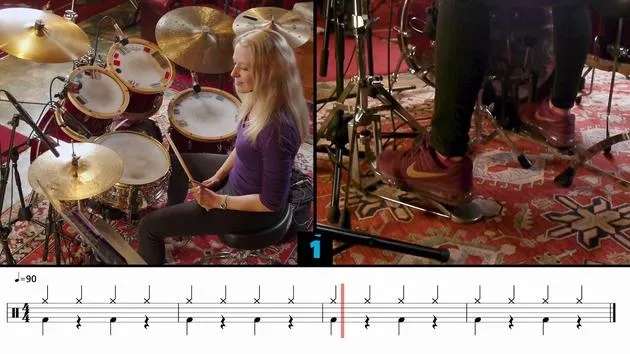
11. Exemple 3 - Ajouter la grosse caisse
0:59
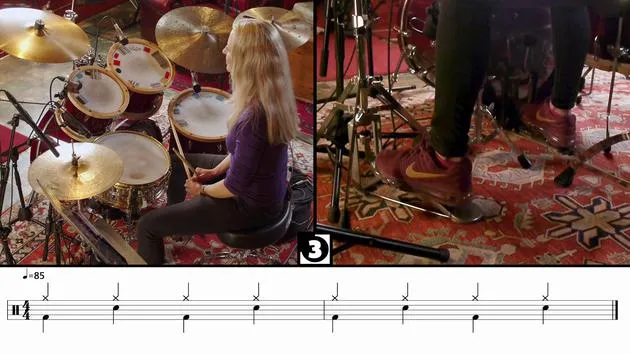
12. Exemple 4 - Power Trip mesures 13-14
1:32
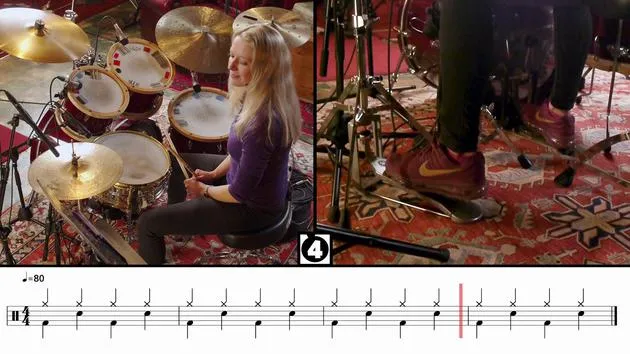
13. Exercice bonus 1
1:10
14. Exercice bonus 2
0:53
15. Résumé de la section metal
1:05
01. Indie - Introduction au style
1:26
02. Exemple 1 - Marquer une pause sur le troisième temps
1:01
03. Exemple 2 - Plus de variations
1:00
04. Exemple 3 - Coordonner les membres
2:16
05. Exercice bonus 1
1:10
06. Exercice bonus 2
0:50
07. Résumé de la leçon 1 indie
0:25
08. Indie Checkpoint : mailloches
2:46
09. Leçon indie 2 - Introduction à la grosse caisse et à la caisse claire en croches
1:25
10. Exemple 1 - Caisse claire en croches
1:36
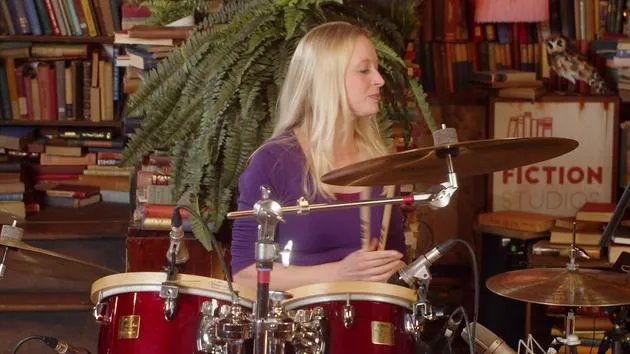
11. Exemple 2 - Grosse caisse en croches
1:04
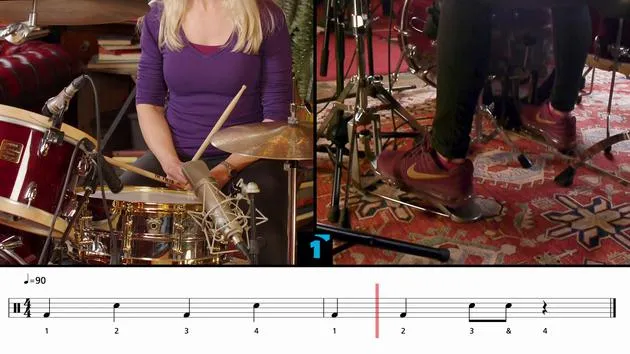
12. Exemple 3 - Phrase en croches
0:59
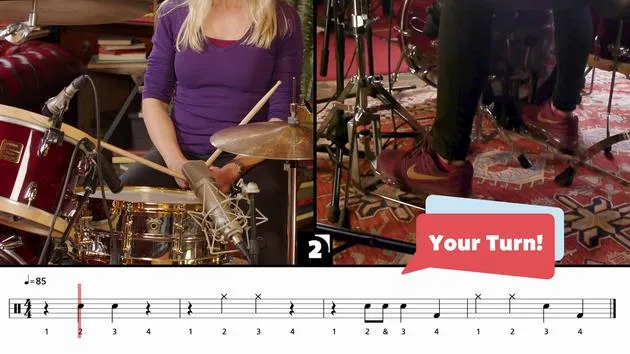
13. Exemple 4 - 'Big Mouth' mesures 1-4
1:48
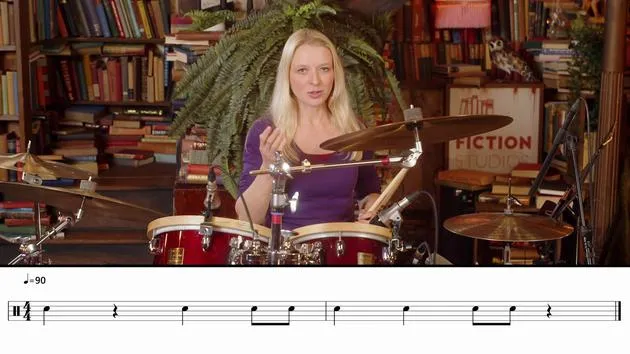
14. Exercice bonus 1
0:38
15. Exercice bonus 2
0:59
16. Récapitulatif de la section indie
0:34
01. Introduction au hip-hop - Beats de base et fills
1:33
02. Exemple 1 - Fill de caisse claire et grosse caisse
1:10
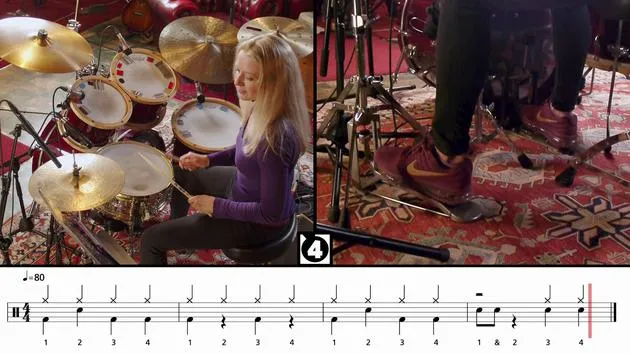
03. Exemple 2 - Fill de caisse claire et charleston
1:08
04. Exemple 3 - Fill avec caisse claire, charleston et grosse caisse
1:09
05. Exercice bonus 1
1:38
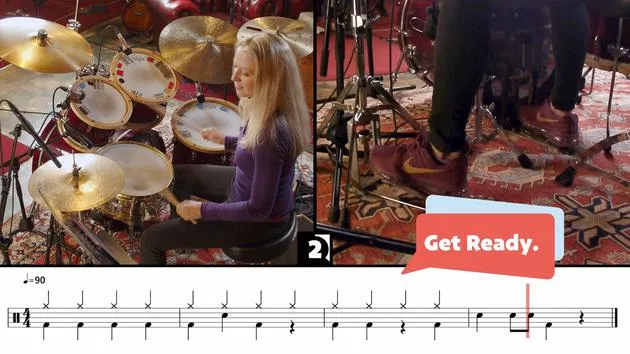
06. Exercice bonus 2
0:47
07. Récapitulatif de la leçon 1 de hip-hop
0:32
08. Leçon de hip hop 2 - Introduction aux beats en croches
3:53
09. Exemple 1 - Le groove de base en croches
1:19
10. Exemple 2 - Variations de caisse claire
1:28
11. Exemple 3 - Variations de grosse caisse
1:09
12. Exemple 4 - 'The Dogg' mesures 13-16
1:56
13. Exercice bonus 1
1:04
14. Exercice bonus 2
1:09
15. Récapitulatif de la section hip-hop
0:32
01. Introduction aux morceaux
1:04
02. Piston (Rock) - Décryptage
4:57
03. Piston (Rock) - Interprétation
0:46
04. Take it to the Top (Pop) - Démonstration détaillée
3:58
05. Take it to the Top (Pop) - Interprétation
0:50
06. Borderlands (Country) - Décryptage
3:49
07. Borderlands (Country) - Interprétation
0:48
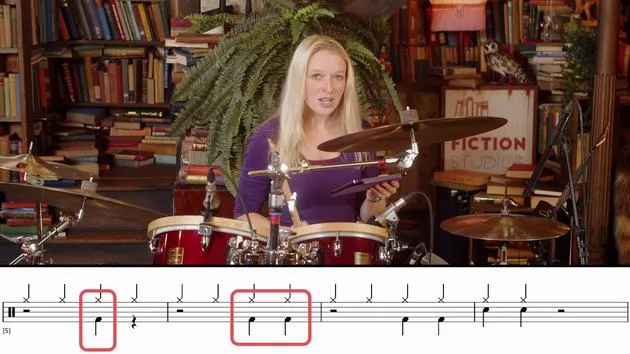
08. Power Trip - Décryptage
5:04
09. Power Trip (Metal) - Interprétation
0:51
10. Big Mouth (Indie) - Décryptage
5:26
11. Big Mouth (Indie) - Performance
0:52
12. The Dogg (Hip Hop) - Décryptage
6:14
13. The Dogg (Hip Hop) - Interprétation
0:51
14. Overload (Rock) - Parcours
5:23
15. Overload (Rock) - Interprétation
0:50
16. Slam (Metal) - Décryptage
4:28
17. Slam (Metal) - Interprétation
0:51
18. Under the Radar (Indie) - Walkthrough
Tu es ici5:02
19. Under the Radar (Indie) - Interprétation
0:50
Transcription de la leçon
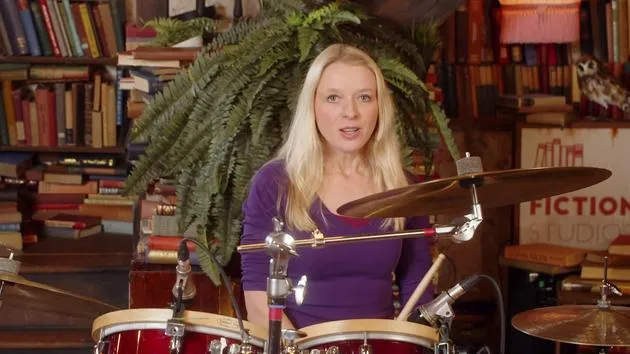
Music Lesson: "Under the Radar" - Classic Rock Groove
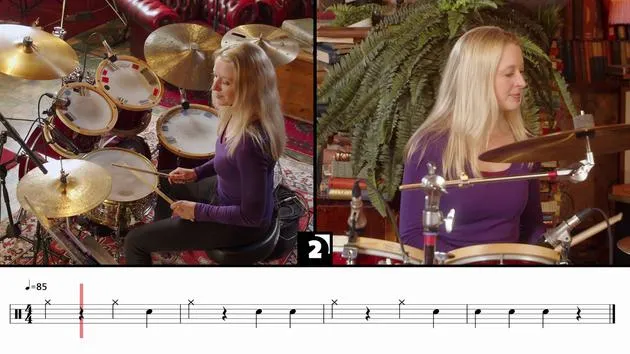
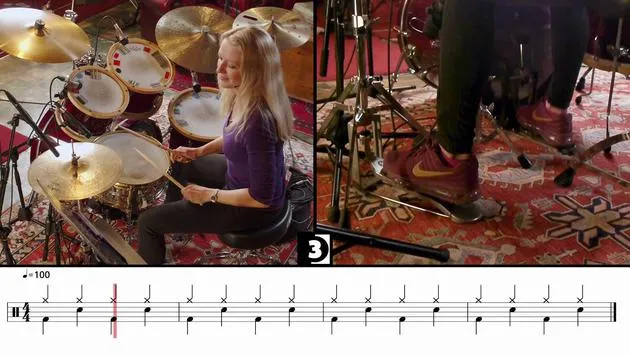
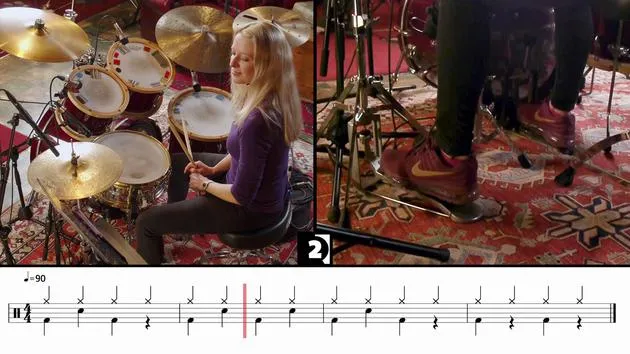
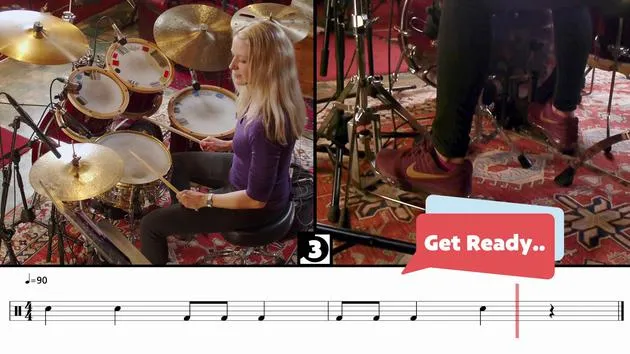
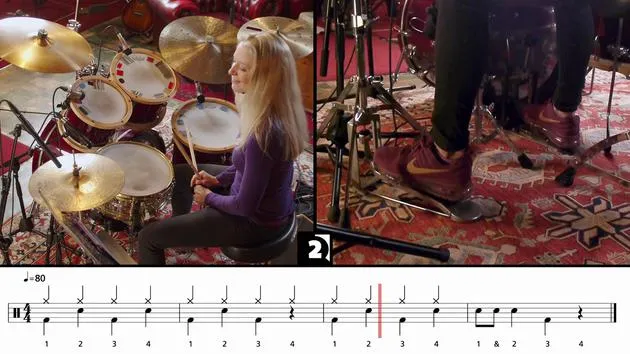
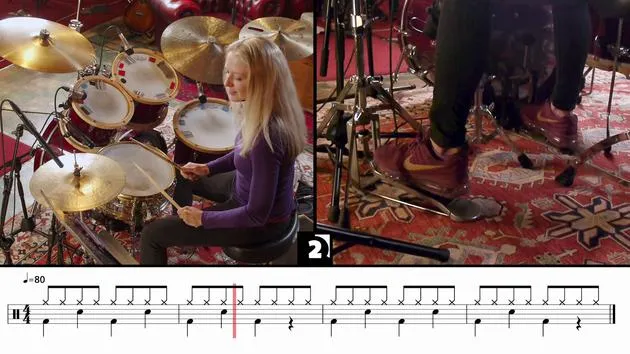
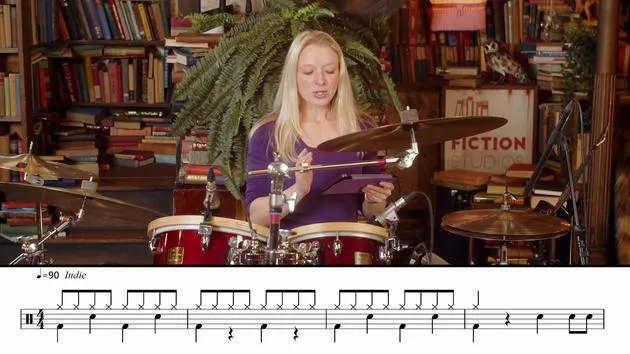
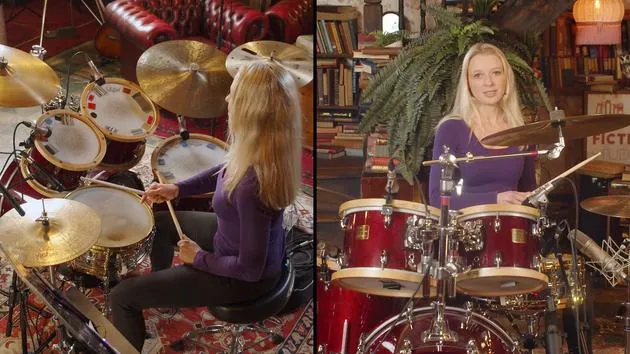
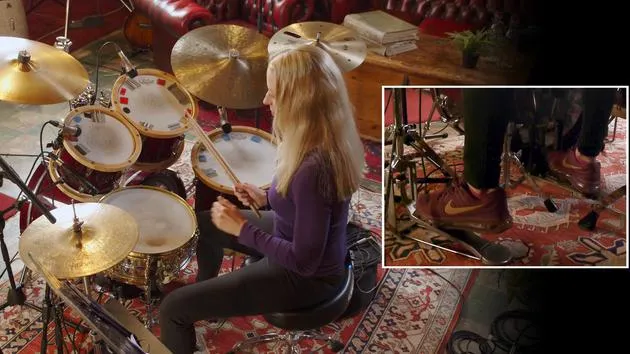
With the indie piece "Under the Radar," we're starting the song and finishing it with quite a classic rock groove.
Basic Groove Structure
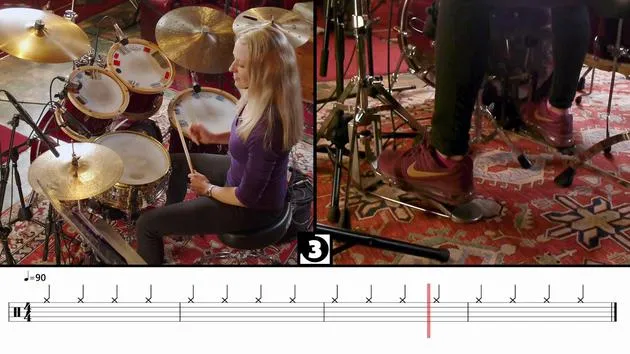
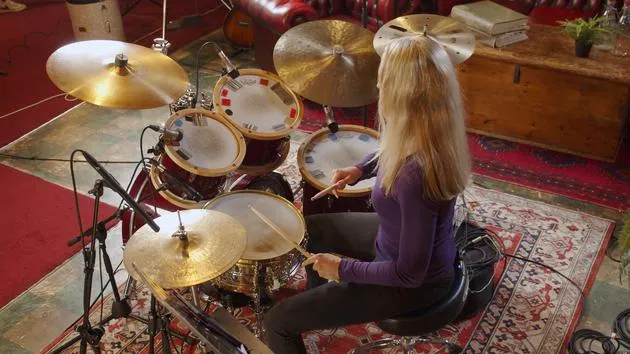
- Hi-hat: Eight notes
- Bass drum: Plays on beats 1 and 3
- Snare drum: Plays on beats 2 and 4
The groove reduces in the middle of the piece to play fewer notes before we build back up to that classic groove. Let’s explore that journey.
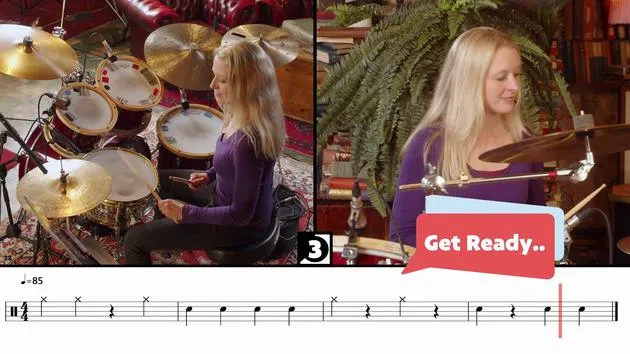
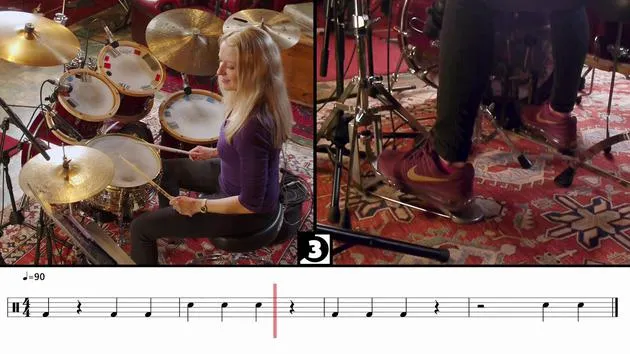
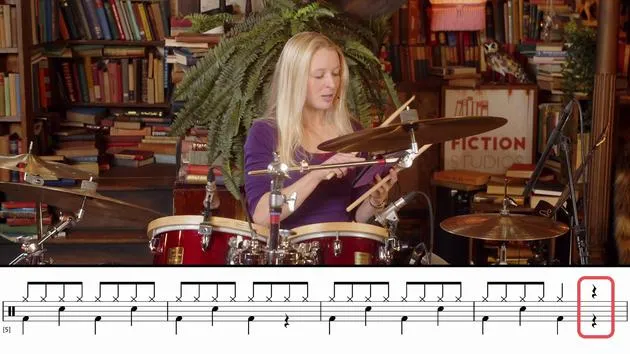
First Line
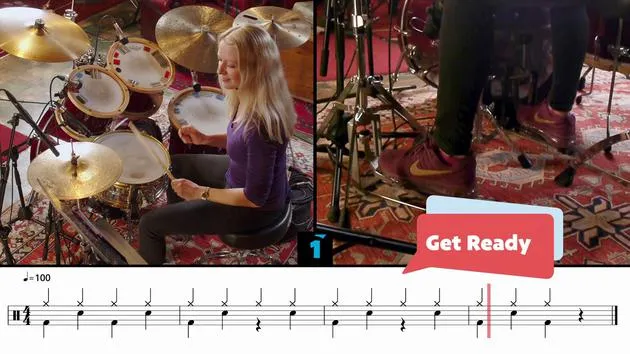
- Bars 1 and 3: Classic rock patterns.
- Bar 2: Snares drop out.
- Bar 4: Features a nice little drum fill.
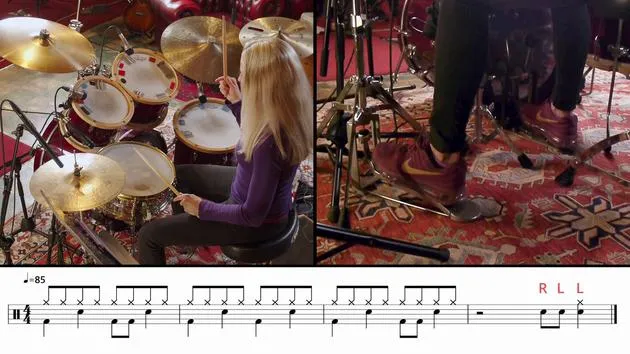
Drum Fill Breakdown:
- Mark beat 1 with the hi-hat and bass drum.
- Follow with a quarter note rest.
- Hit snares on beats 3 and 4.
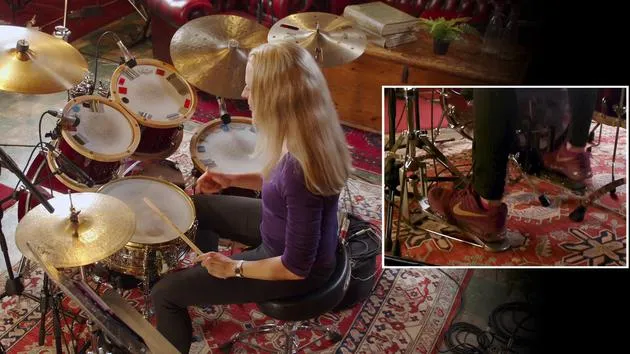
Sticking Patterns
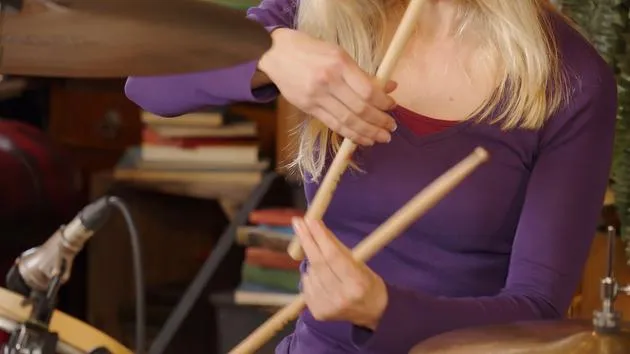
- As a starting point, if you're right-handed:
- Play the numbers with the right hand
- Play the "ands" with the left hand
Counting Example:
1 and 2 and 3 and 4
For variation, try this sticking pattern for the snares in bar 4:
- Beat 3: Left hand
- Beat 4: Right hand
- And of 4: Left hand
Counting for Feel
Try counting as follows to feel the space:
1, 2, 3, 4,
1 and 2 and 3 and 4
Note on Sticking
At this stage, avoid playing three snares in a row with the same stick to work on balance and single strokes.
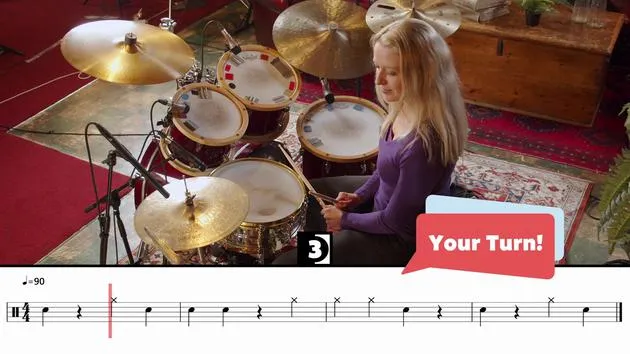
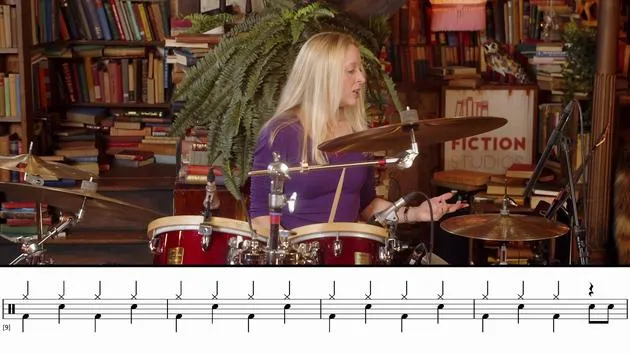
Second Line
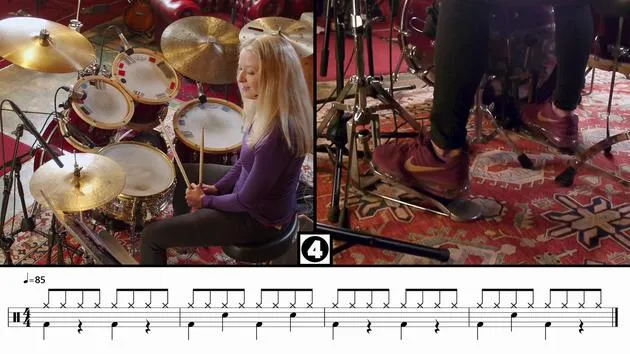
Unusually, the song reduces slightly here:
- From eighth notes to quarter notes.
Snare Activity
- Not much snare activity until bar 4 where we have snares on beats 4 and the “and” of 4.
- Right-handed players: Choose to play those snares right, left to lead back into the hi-hat at the beginning of the third line.
Observations
- There is a lot of space with rests in the snare and bass drum parts.
- Hi-hats serve as the primary timekeeper; not much to flag up in the third line.
- Watch for the reintroduction of the snare in the fourth bar of the third line.
Last Line
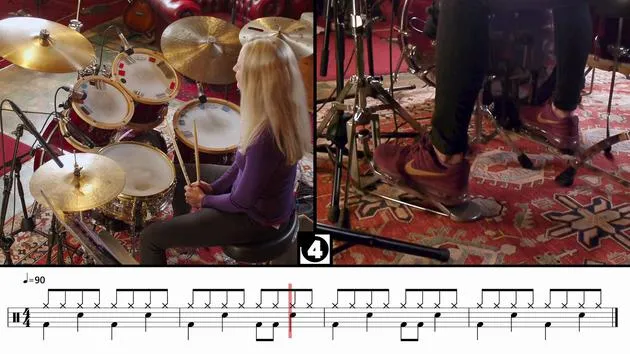
The last line is fairly similar to the first line, but pay attention to:
- End of bar 3: Two snares on beat 4 and the “and” of 4 leading into beat 1 where we finish the piece with the hi-hat and bass drum.
End of Piece Breakdown
Last two bars example:
1, 2, 3, 4
Using Crash Cymbals
If you feel adventurous and your crash cymbals haven't been played much, you can choose to end the last note with a crash cymbal.
- This mimics the sound you'd hear when playing with a band, similar to songs you enjoy.
Ending with Crash:
- Let the crash ring out; mute it with your hand if necessary while talking to someone.
- If playing with a guitarist and bassist, you may want to stop the crash at the same time they finish their phrases.
Mute Technique
To mute the cymbal:
- Use the other hand to stop the vibrations.
Practice example:
- Mute it on beat four:
1, 2, 3, 4
1, 2, 3, 4
Control the length of the crash sound, especially as you incorporate it into your final ending. This could be a nice touch to your performance!
114 leçons
3h 47m de leçons vidéo structurées
Fonctions vidéo avancées
Ralentissez, bouclez un passage, suivez la partition
Mobile, tablette et ordinateur
Pratiquez où vous voulez
Satisfaction garantie à 100 %
Garantie remboursement 30 jours
Rencontrez votre guru
Rencontrez votre guru
Sophie Alloway est une batteuse de studio et de tournée au cœur de la scène jazz londonienne. Elle s'est produite avec Jason Rebello, Yazz Ahmed, Laurence Cottle et Tony Allen, et a notamment joué pour le prince Charles au palais de Buckingham peu avant qu'il ne devienne roi.
Parmi ses tournées figurent Roots Manuva, la comédie musicale Thriller et Paul Stacey (Oasis / The Black Crowes). Elle est également la batteuse du groupe de fusion original Lydian Collective, qui compte plus de six millions d'écoutes sur Spotify.
Sophie a enregistré des sessions aux studios Abbey Road, AIR et Angel, et ses apparitions télévisées incluent Later… with Jools Holland, Glastonbury et deux saisons de la série Ridley d'Adrian Dunbar. Elle figure sur Abbey Road Masters: The Drum Sessions et a joué pour les finalistes du BBC Young Jazz Musician 2024, diffusé sur BBC TV et à la radio. Jon Newey de Jazz FM l'a surnommée la « déesse du groove ».







