



Overload (Rock) - Parcours
Avec
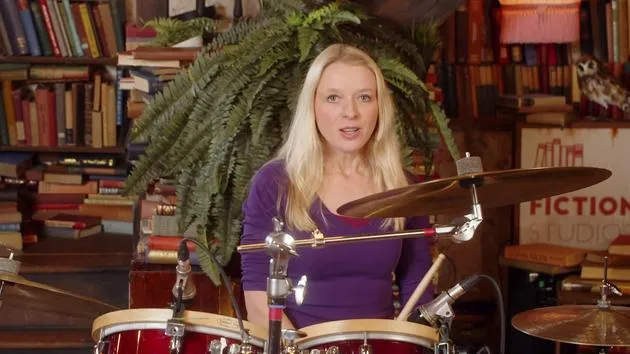
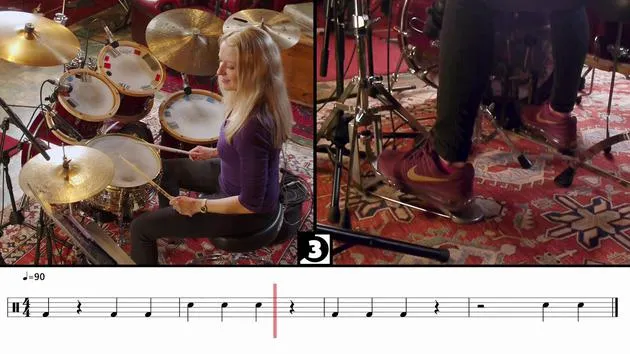
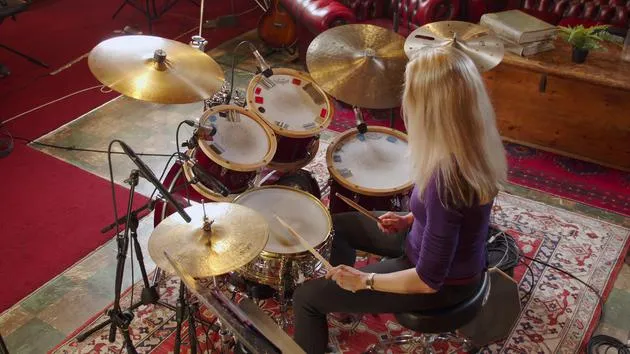
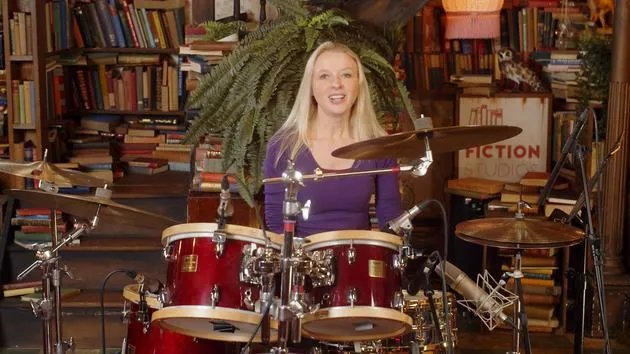
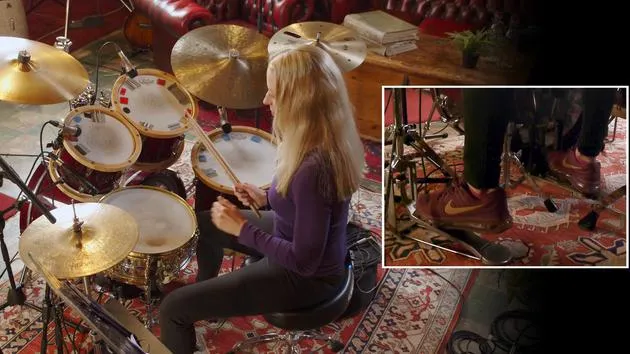
Sophie AllowaySophie Alloway parcourt le morceau de rock 'Overload', en se concentrant sur le fait de laisser de l'espace, de compter pendant les silences de blanche et de tenir un tempo régulier comme si tu étais le batteur d'un groupe live.
Le contenu du cours
114 leçons (3h 47min) · 1 gratuites
01. Introduction à la batterie rock
7:55
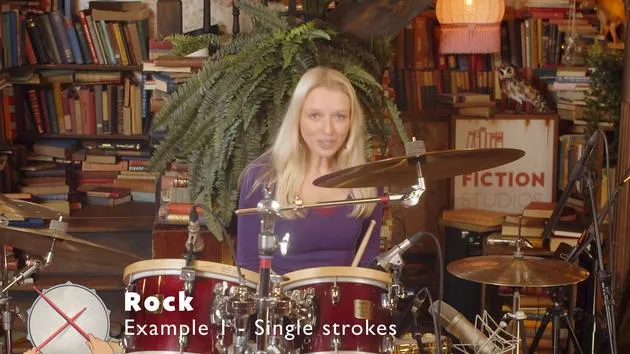
02. Exemple 1 - Coups simples
2:44
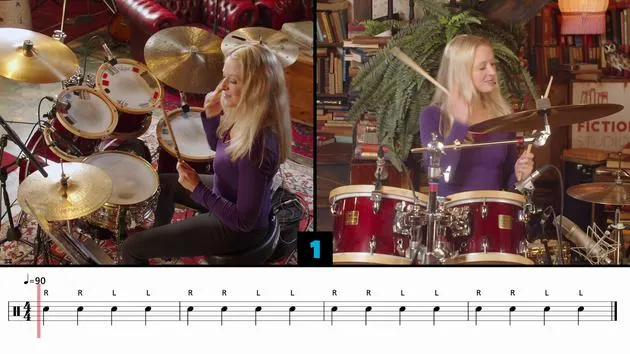
03. Exemple 2 - Doubles coups
1:28
04. Exemple 3 - Paradiddles
2:37
05. Bonus - Combiner simples, doubles et paradiddles
2:22
06. Leçon de rock 2 - Ajouter des silences
1:48
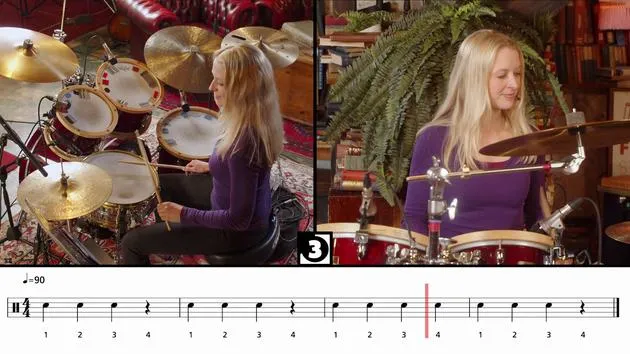
07. Exemple 1 - Silence sur le temps 4
1:56
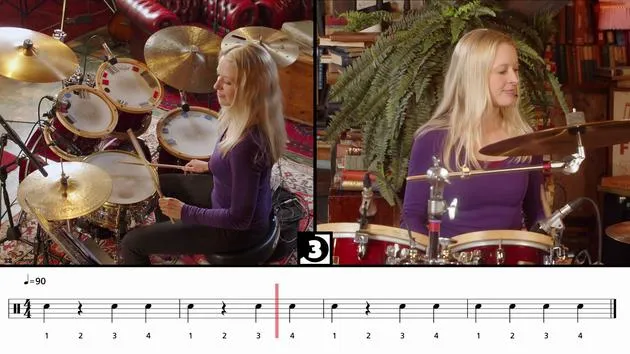
08. Exemple 2 - Silence sur le temps 2
1:36
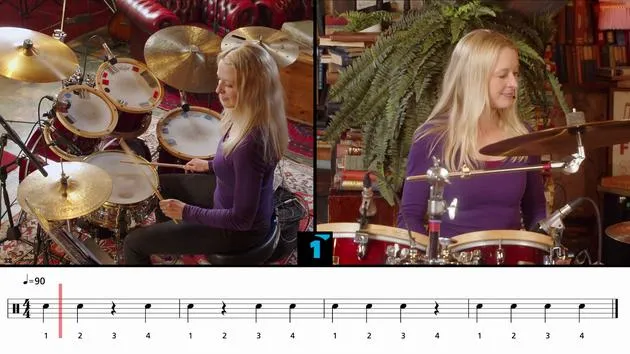
09. Exemple 3 - Silences mobiles
1:05
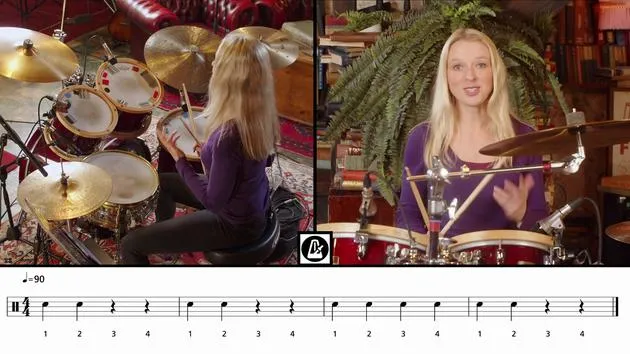
10. Exemple 4 - Piston mesures 12-16
1:56
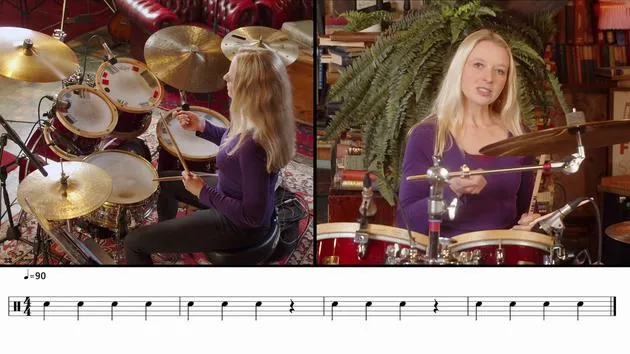
11. Exercice bonus 1
1:49
12. Exercice bonus 2
1:02
13. Résumé de la section rock
1:50
01. Pop - Ajouter le charleston
1:31
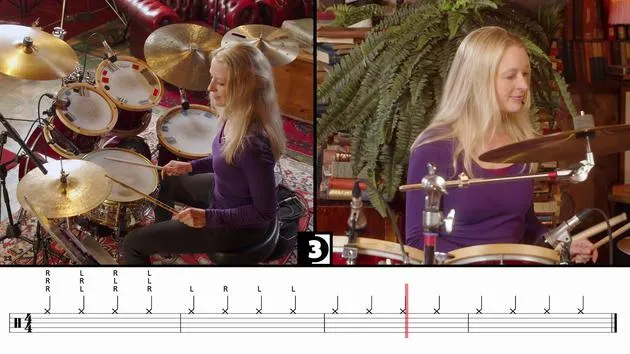
02. Exemple 1 - Noires à la charleston
1:40
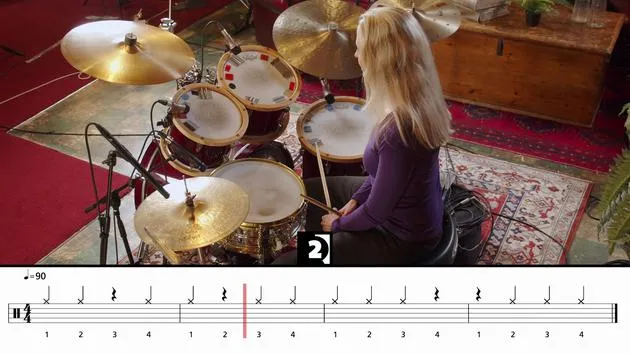
03. Exemple 2 - Silence sur le temps 1
1:42
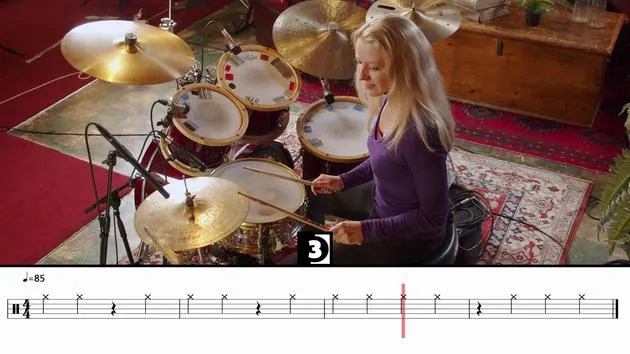
04. Exemple 3 - Deux soupirs consécutifs
1:28
05. Exercice bonus 1
1:11
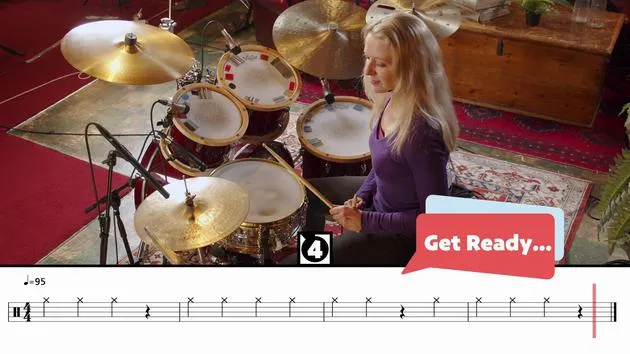
06. Exercice bonus 2
1:10
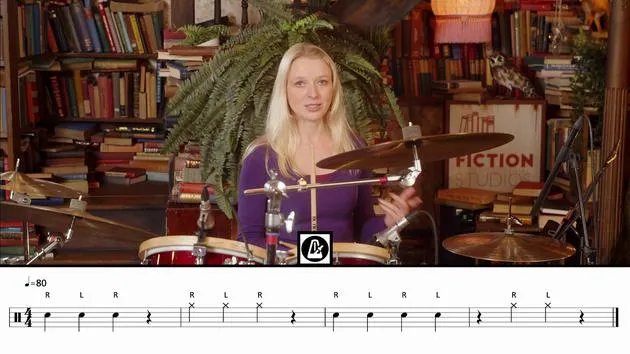
07. Pop Leçon 2 Exemple 1 - Combiner le hi-hat et la snare
1:11
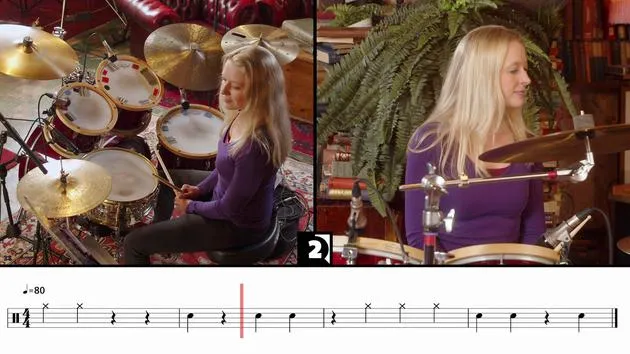
08. Exemple 2 - Se déplacer rapidement entre les voix de la batterie
1:17
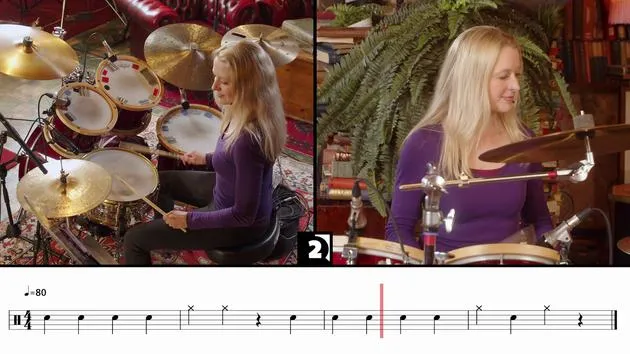
09. Exemple 3 - Deux voix de batterie dans une mesure
0:59
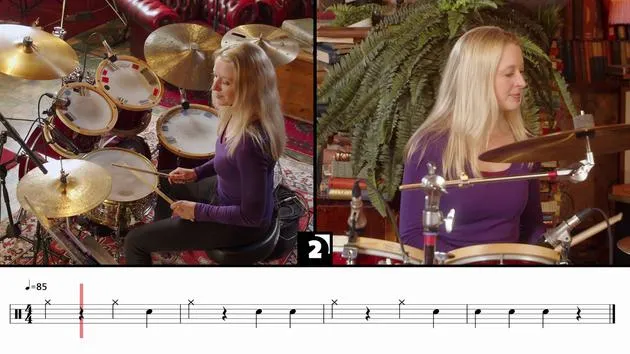
10. Exemple 4 - Take It to the Top, mesures 1-4
1:10
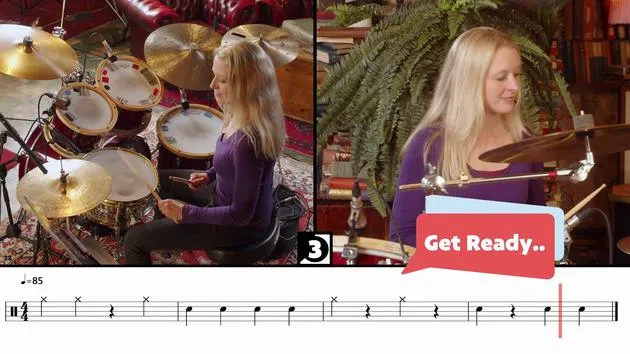
11. Exercice bonus 1
1:08
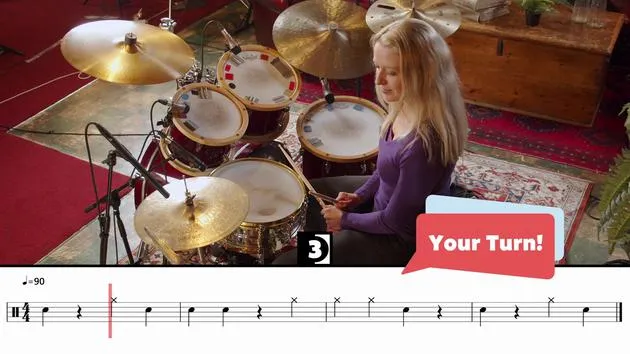
12. Exercice bonus 2
1:04
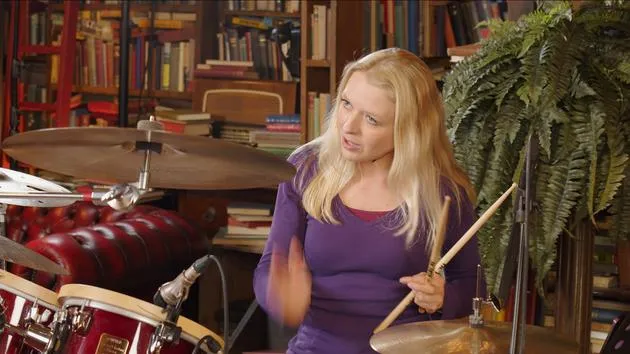
13. Résumé de la section musique pop
0:51
01. Introduction à la musique country
4:13
02. Point de contrôle des compétences
1:54
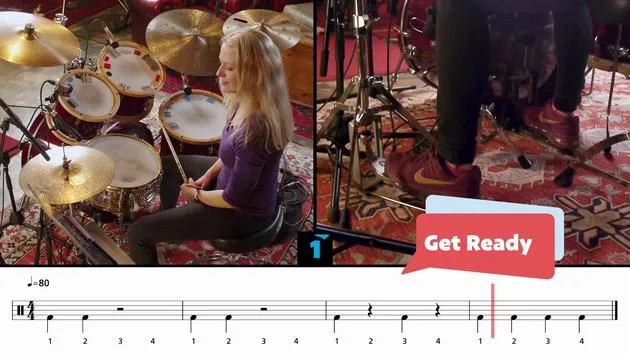
03. Exemple 1 - Demi-soupir de blanche
1:18
04. Exemple 2 - Placement du silence de blanche
1:31
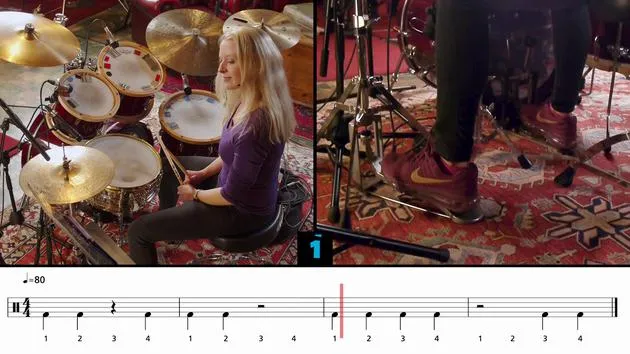
05. Exemple 3 - Phrases de grosse caisse
1:29
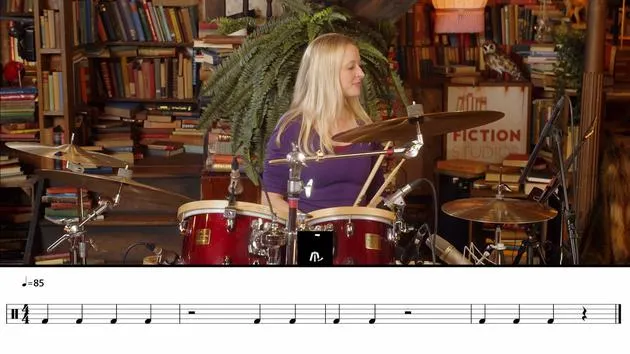
06. Exercice bonus 1
1:27
07. Exercice bonus 2
1:10
08. Leçon de country 2 - Combiner grosse caisse, caisse claire et charleston
3:07
09. Exemple 1 - Combiner la grosse caisse et le charleston
1:40
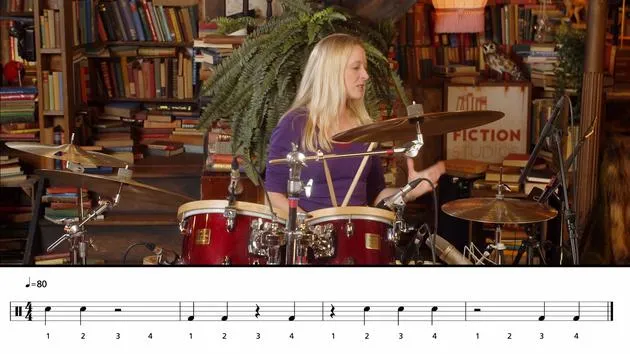
10. Exemple 2 - Ajouter le demi-soupir de blanche à différentes positions
1:10
11. Exemple 3 - Se déplacer rapidement entre les voix de la batterie
1:10
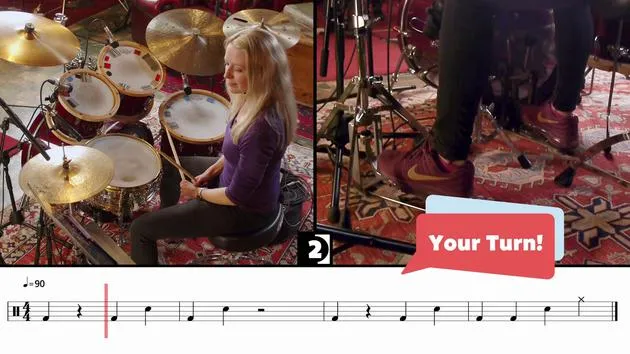
12. Exemple 4 - Borderlands mesures 1-4
1:06
13. Exercice bonus 1
1:30
14. Exercice bonus 2
0:56
15. Résumé de la section musique country
0:26
01. Introduction au metal : jouer deux voix de batterie
3:35
02. Exemple 1 - Se concentrer sur la coordination
2:19
03. Exemple 2 - Variations de grosse caisse
1:16
04. Exemple 3 - Coordonner les mains
1:09
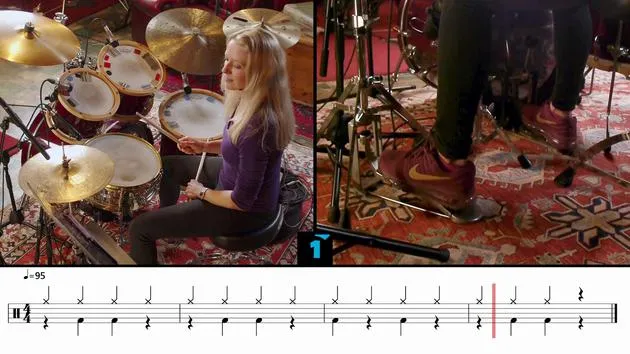
05. Exercice bonus 1
1:05
06. Exercice bonus 2
0:50
07. Résumé de la leçon 1 de metal
0:25
08. Leçon de metal 2 - Jouer ton premier beat complet
1:56
09. Exemple 1 - Motif de charleston pour beat rock de base
1:08
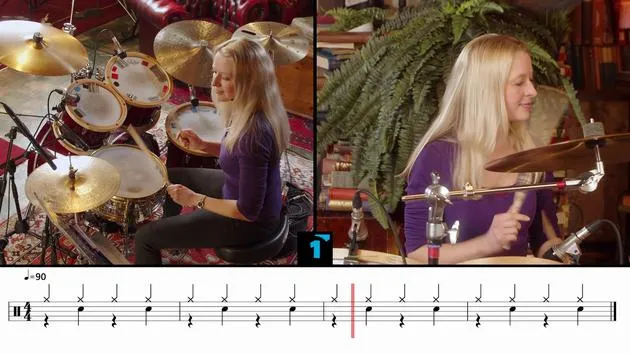
10. Exemple 2 - Ajouter le back beat
0:58
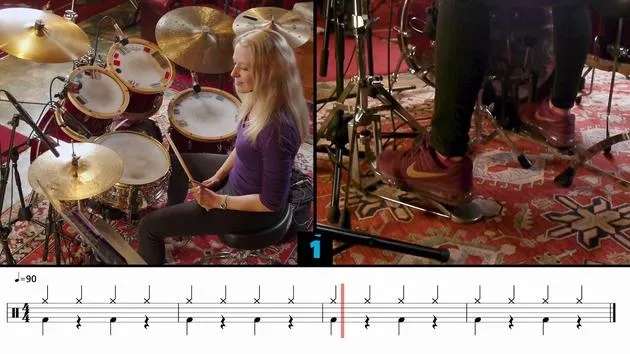
11. Exemple 3 - Ajouter la grosse caisse
0:59
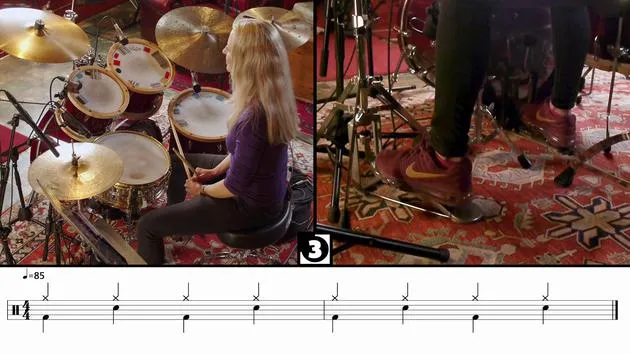
12. Exemple 4 - Power Trip mesures 13-14
1:32
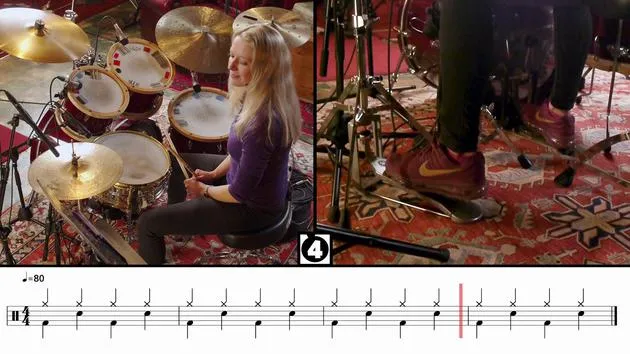
13. Exercice bonus 1
1:10
14. Exercice bonus 2
0:53
15. Résumé de la section metal
1:05
01. Indie - Introduction au style
1:26
02. Exemple 1 - Marquer une pause sur le troisième temps
1:01
03. Exemple 2 - Plus de variations
1:00
04. Exemple 3 - Coordonner les membres
2:16
05. Exercice bonus 1
1:10
06. Exercice bonus 2
0:50
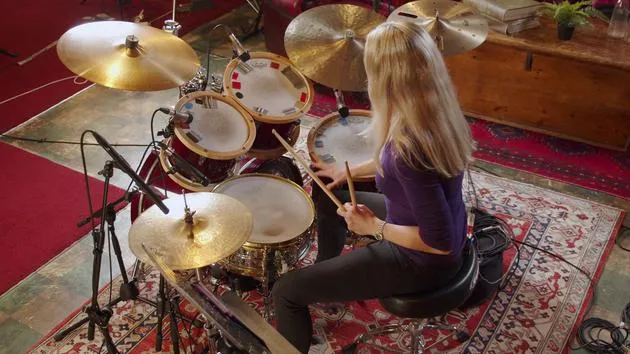
07. Résumé de la leçon 1 indie
0:25
08. Indie Checkpoint : mailloches
2:46
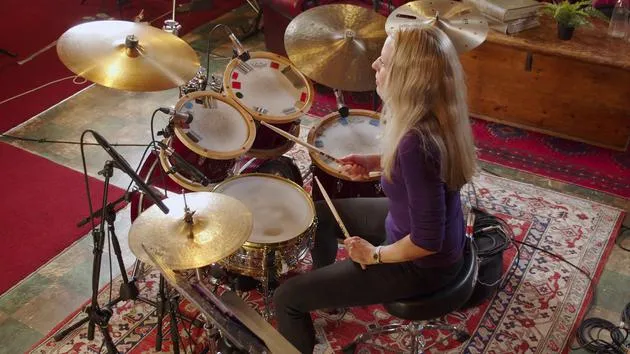
09. Leçon indie 2 - Introduction à la grosse caisse et à la caisse claire en croches
1:25
10. Exemple 1 - Caisse claire en croches
1:36
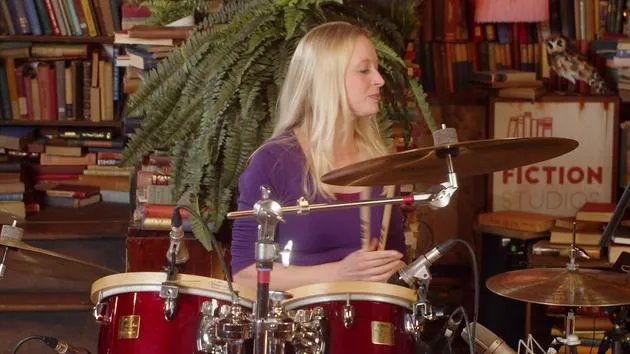
11. Exemple 2 - Grosse caisse en croches
1:04
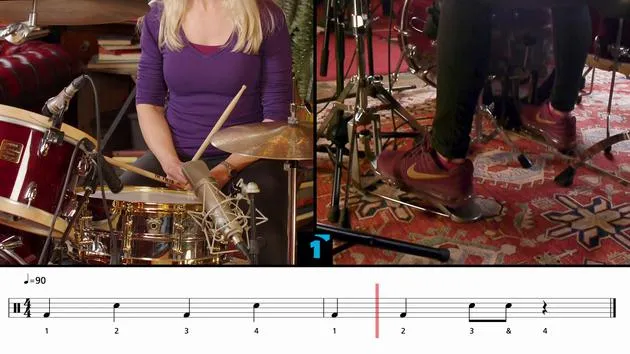
12. Exemple 3 - Phrase en croches
0:59
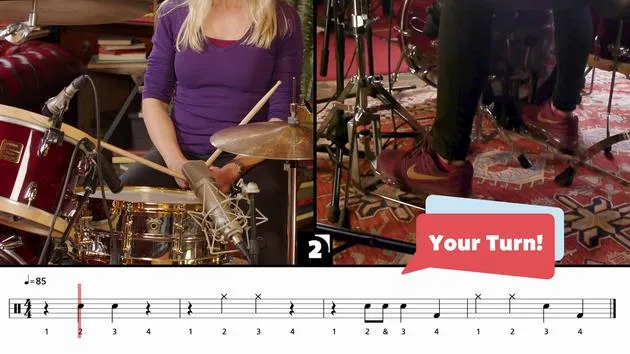
13. Exemple 4 - 'Big Mouth' mesures 1-4
1:48
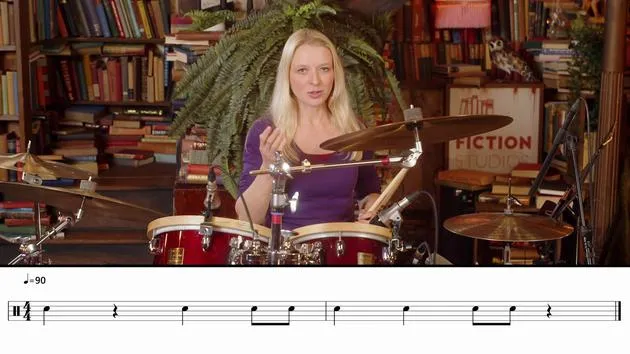
14. Exercice bonus 1
0:38
15. Exercice bonus 2
0:59
16. Récapitulatif de la section indie
0:34
01. Introduction au hip-hop - Beats de base et fills
1:33
02. Exemple 1 - Fill de caisse claire et grosse caisse
1:10
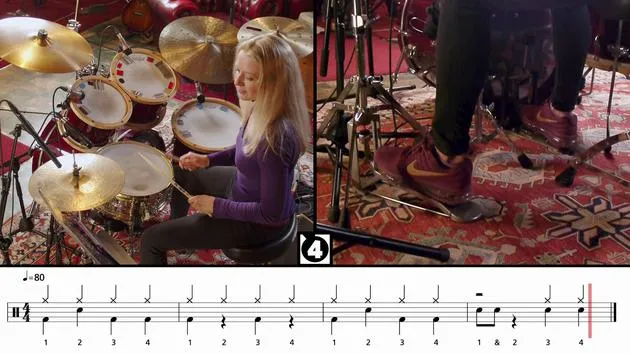
03. Exemple 2 - Fill de caisse claire et charleston
1:08
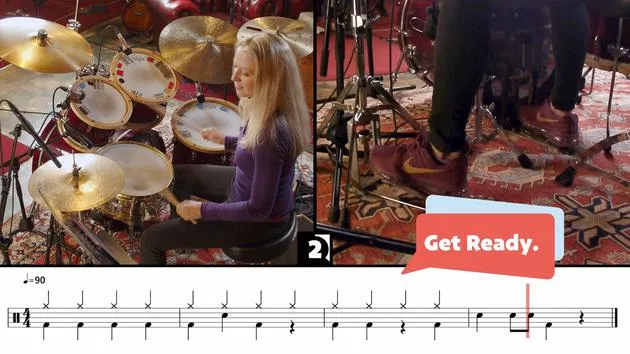
04. Exemple 3 - Fill avec caisse claire, charleston et grosse caisse
1:09
05. Exercice bonus 1
1:38
06. Exercice bonus 2
0:47
07. Récapitulatif de la leçon 1 de hip-hop
0:32
08. Leçon de hip hop 2 - Introduction aux beats en croches
3:53
09. Exemple 1 - Le groove de base en croches
1:19
10. Exemple 2 - Variations de caisse claire
1:28
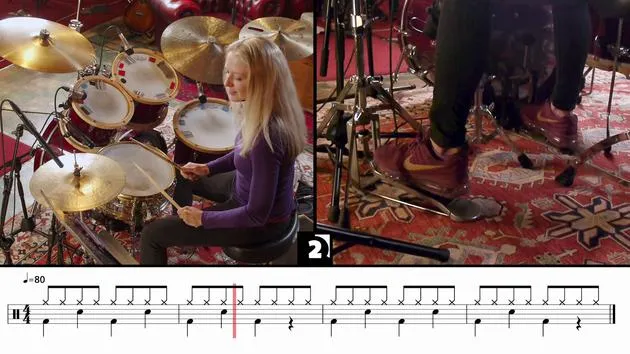
11. Exemple 3 - Variations de grosse caisse
1:09
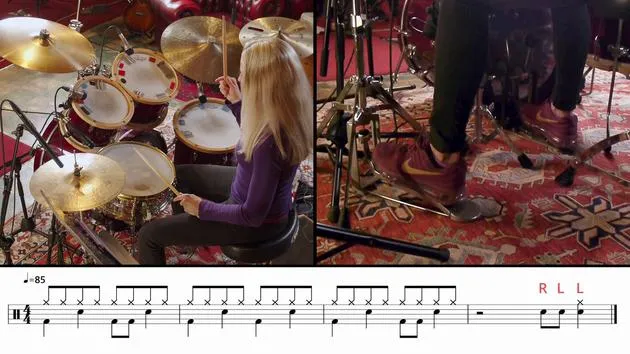
12. Exemple 4 - 'The Dogg' mesures 13-16
1:56
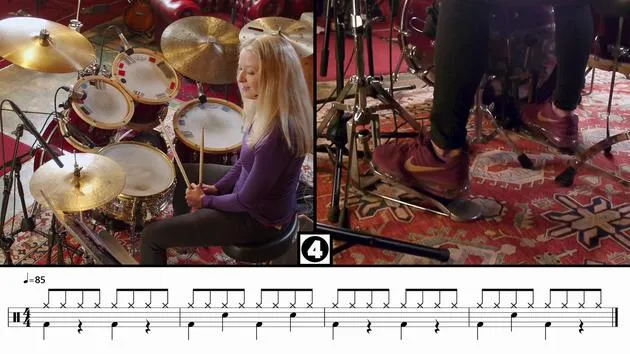
13. Exercice bonus 1
1:04
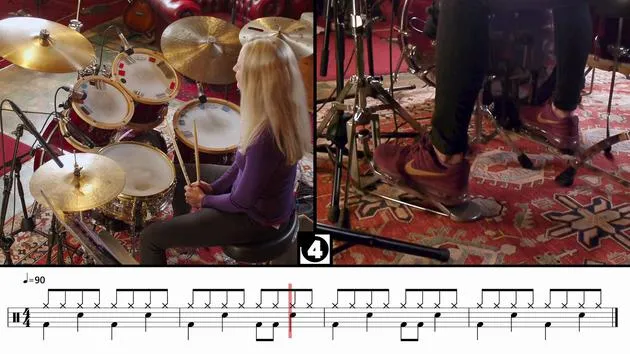
14. Exercice bonus 2
1:09
15. Récapitulatif de la section hip-hop
0:32
01. Introduction aux morceaux
1:04
02. Piston (Rock) - Décryptage
4:57
03. Piston (Rock) - Interprétation
0:46
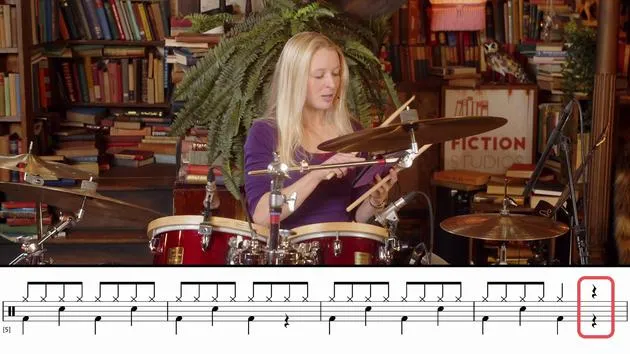
04. Take it to the Top (Pop) - Démonstration détaillée
3:58
05. Take it to the Top (Pop) - Interprétation
0:50
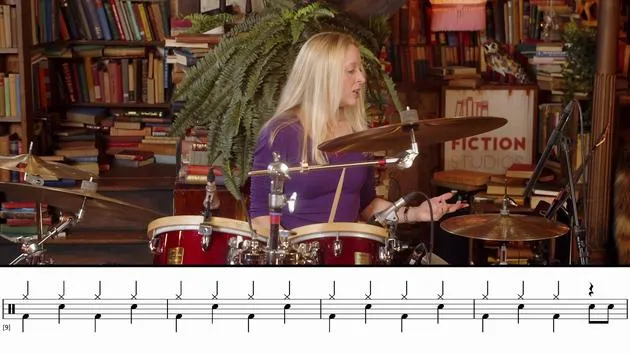
06. Borderlands (Country) - Décryptage
3:49
07. Borderlands (Country) - Interprétation
0:48
08. Power Trip - Décryptage
5:04
09. Power Trip (Metal) - Interprétation
0:51
10. Big Mouth (Indie) - Décryptage
5:26
11. Big Mouth (Indie) - Performance
0:52
12. The Dogg (Hip Hop) - Décryptage
6:14
13. The Dogg (Hip Hop) - Interprétation
0:51
14. Overload (Rock) - Parcours
Tu es ici5:23
15. Overload (Rock) - Interprétation
0:50
16. Slam (Metal) - Décryptage
4:28
17. Slam (Metal) - Interprétation
0:51
18. Under the Radar (Indie) - Walkthrough
5:02
19. Under the Radar (Indie) - Interprétation
0:50
Transcription de la leçon
Music Lesson: Rhythm and Techniques in "Overload"
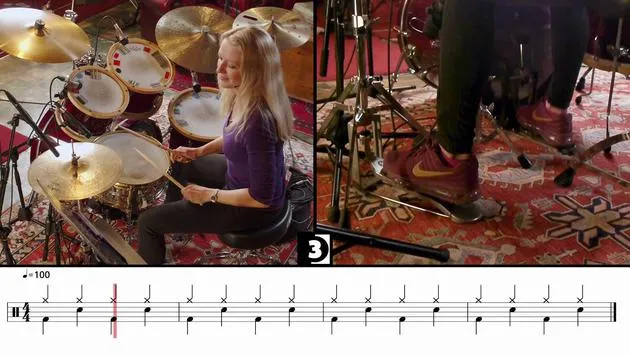
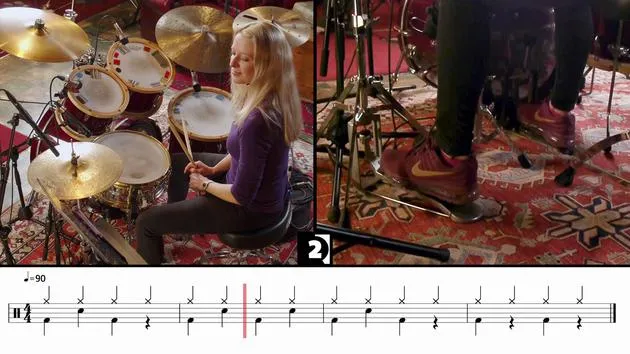
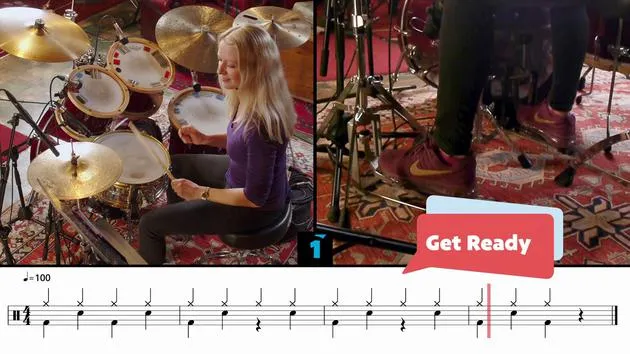
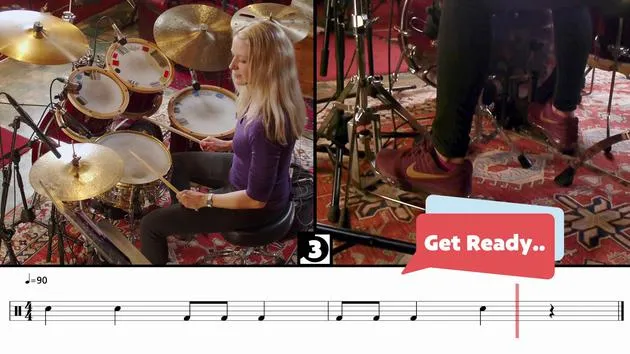
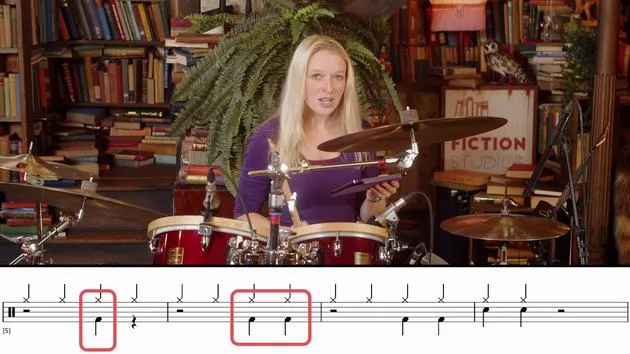
In the rock piece Overload, we need to ensure that we're allowing enough space in the first, second, and third bars in particular.
Space and Timing
- There are half note rests taking up the second half of bars one and three, so keep counting through those.
- I know there's a metronome on the track, but imagine you're playing in a band:
- You are the drummer.
- There’s no metronome, and you're playing live.
- There's all that space after beats 1 and 2.
If you can be counting it or feeling the time, it helps tremendously. Some people nod their heads when they're playing—not just trying to look cool, but for a purpose:
- It’s a way of feeling the pulse and the time.
- Tapping your left foot might lead to hi-hat notes you don’t want.
It’s important to internalize the time if possible. But to begin with, try counting, as I think that will help you the most.
Bar Structure
- First Line:
- Lots of space in the first line.
- In the fourth bar, the hi-hat is introduced:
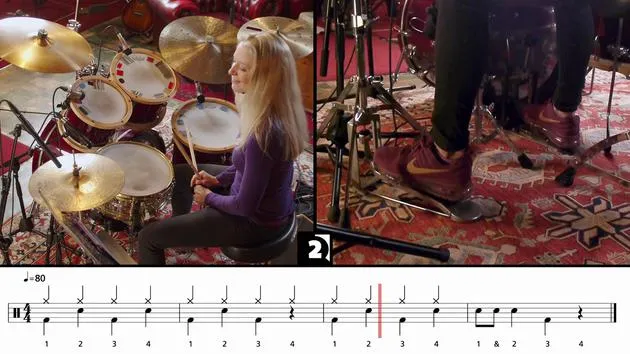
- Hi-hat with bass drum on beat one.
- Count through the rest on beat two.
- Bass drum on beat three and a snare on beat four.
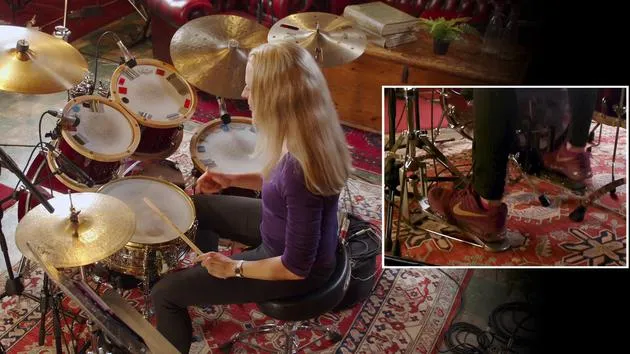
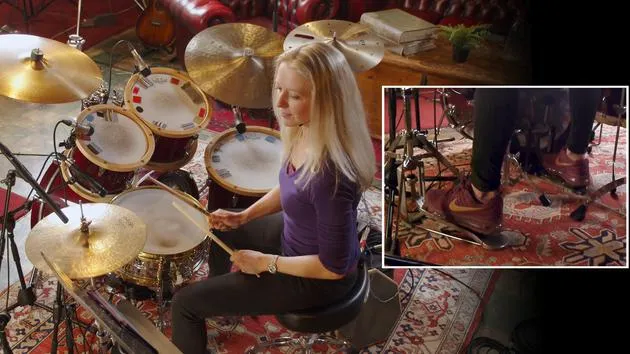
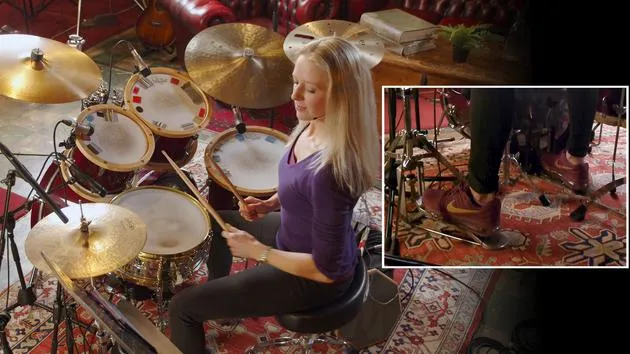
I’m using my left hand for the snare notes, as this sets me up for when the groove kicks in. I will be playing the snares with the left.
- Line Two:
- There’s a conventional indie rock groove:
- Eighth note hi-hats.
- Bass drums on one and three, snares on two and four.
- Don’t get too comfortable, as it changes a bit in the second bar.
- It resolves back to a more standard groove in the third bar and then a variation in the fourth bar of the second line.
- There’s a conventional indie rock groove:
Observing Rest and Groove
- Third Line:
- More of the same groove.
- A variation in the second bar.
- The groove resumes in the third bar.
- A departure in the fourth bar where:
- We have our hands playing together in unison on all the quarter notes.
- Make sure they’re not flamming—they should land together.
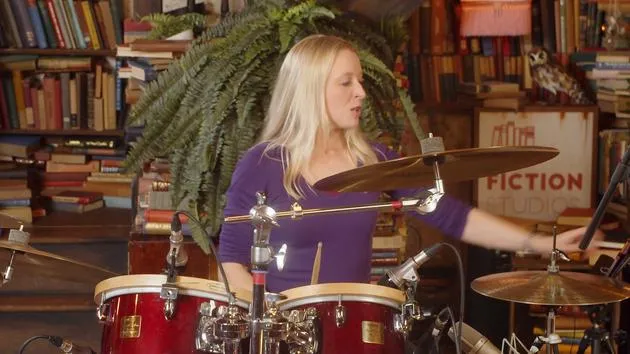
Snare Technique: Rim Shot
Now, let’s talk about a technique you can use across any genre: the rim shot.
- If you have an acoustic drum kit, this works well:
- You can play the snare as you've been doing, or...
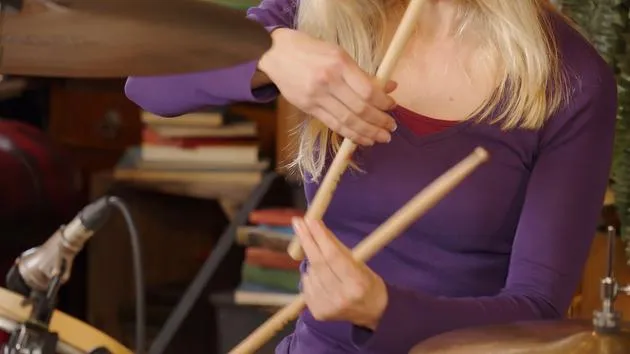
- For more volume, try playing the snare in the middle of the drum while also striking the rim.
If executed correctly, you get a sound with much more attack—a bit more metallic and a sharp snare note.
I try to use this in the fourth bar of the third line to help it cut through more. Don’t feel pressured to do this; it’s just a technique you might consider using in various genres:
- Metal
- Rock
- Indie
- Soften less in country
- Doesn’t work as well in hip hop.
Continuation of the Piece
Back to the piece—by the end of the third line, you've established the quarter note time feel, which continues into the fourth line:
- We’re bringing the bass drums in and dropping down to hi-hats on beats three and four of the first bar.
- The snare comes back in on beat four of the second bar of the last line.
- We lead up to an eighth note fill all the way through three and four of the third bar, landing neatly on beat one of the last bar.
Demonstration
Let me play bars three and four for you of that fourth line:
1, 2, 3, 4.
And again those four snare notes. As it’s towards the end of the piece, consider using this as an opportunity to try the rim shots:
- They also work with the right hand but can be quite hard to get right.
If you miss it, you might get a sound that isn’t what you want. Here’s a demonstration of four rim shots:
- They definitely cut through more than regular hits.
Of course, you can hit the snares harder and not play a rim shot, but I’m just giving you an option, especially as we reach the end of the piece.
114 leçons
3h 47m de leçons vidéo structurées
Fonctions vidéo avancées
Ralentissez, bouclez un passage, suivez la partition
Mobile, tablette et ordinateur
Pratiquez où vous voulez
Satisfaction garantie à 100 %
Garantie remboursement 30 jours
Rencontrez votre guru
Rencontrez votre guru
Sophie Alloway est une batteuse de studio et de tournée au cœur de la scène jazz londonienne. Elle s'est produite avec Jason Rebello, Yazz Ahmed, Laurence Cottle et Tony Allen, et a notamment joué pour le prince Charles au palais de Buckingham peu avant qu'il ne devienne roi.
Parmi ses tournées figurent Roots Manuva, la comédie musicale Thriller et Paul Stacey (Oasis / The Black Crowes). Elle est également la batteuse du groupe de fusion original Lydian Collective, qui compte plus de six millions d'écoutes sur Spotify.
Sophie a enregistré des sessions aux studios Abbey Road, AIR et Angel, et ses apparitions télévisées incluent Later… with Jools Holland, Glastonbury et deux saisons de la série Ridley d'Adrian Dunbar. Elle figure sur Abbey Road Masters: The Drum Sessions et a joué pour les finalistes du BBC Young Jazz Musician 2024, diffusé sur BBC TV et à la radio. Jon Newey de Jazz FM l'a surnommée la « déesse du groove ».







