



The Dogg (Hip Hop) - Décryptage
Avec
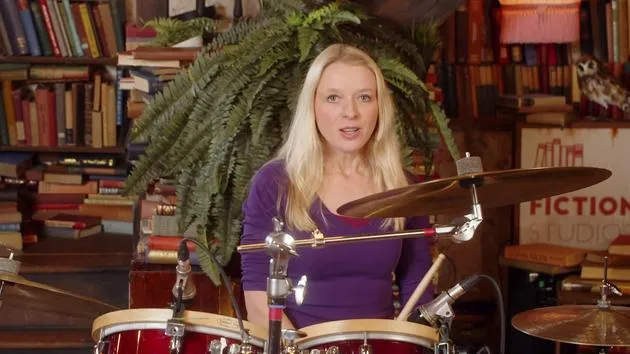
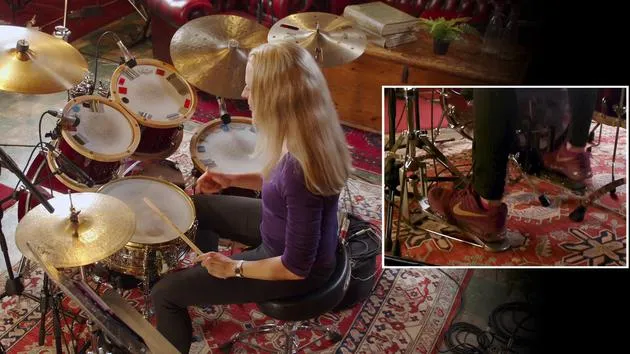
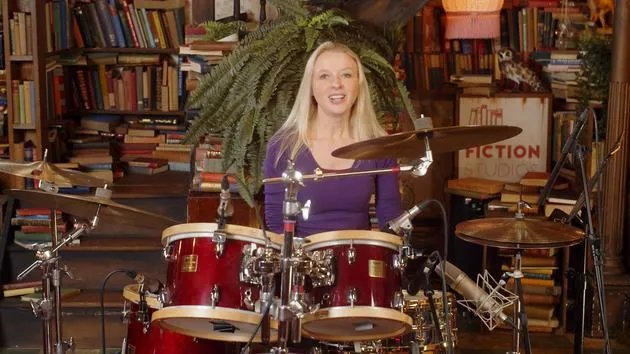
Sophie AllowaySophie Alloway décortique le groove hip-hop de The Dogg, en expliquant son feel half-time et la caisse claire unique sur le troisième temps.
Le contenu du cours
114 leçons (3h 47min) · 1 gratuites
01. Introduction à la batterie rock
7:55
02. Exemple 1 - Coups simples
2:44
03. Exemple 2 - Doubles coups
1:28
04. Exemple 3 - Paradiddles
2:37
05. Bonus - Combiner simples, doubles et paradiddles
2:22
06. Leçon de rock 2 - Ajouter des silences
1:48
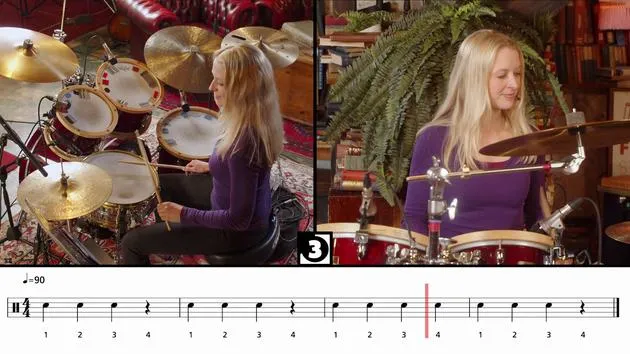
07. Exemple 1 - Silence sur le temps 4
1:56
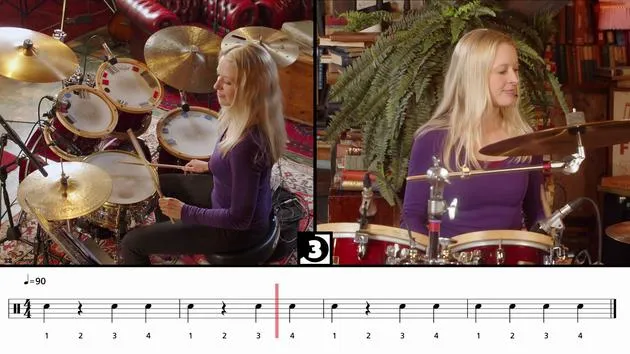
08. Exemple 2 - Silence sur le temps 2
1:36
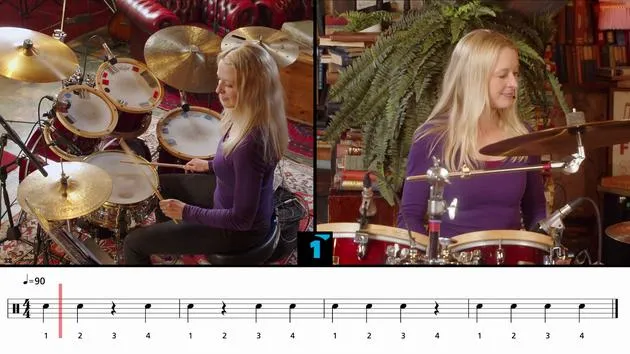
09. Exemple 3 - Silences mobiles
1:05
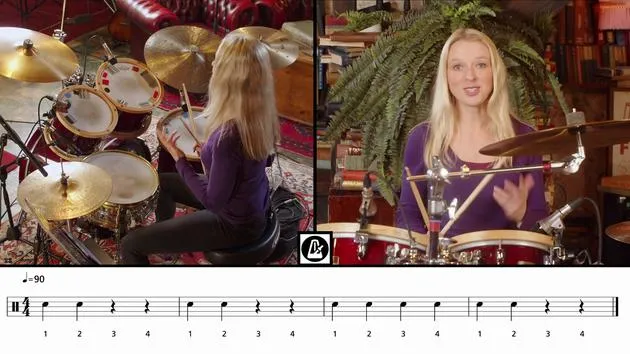
10. Exemple 4 - Piston mesures 12-16
1:56
11. Exercice bonus 1
1:49
12. Exercice bonus 2
1:02
13. Résumé de la section rock
1:50
01. Pop - Ajouter le charleston
1:31
02. Exemple 1 - Noires à la charleston
1:40
03. Exemple 2 - Silence sur le temps 1
1:42
04. Exemple 3 - Deux soupirs consécutifs
1:28
05. Exercice bonus 1
1:11
06. Exercice bonus 2
1:10
07. Pop Leçon 2 Exemple 1 - Combiner le hi-hat et la snare
1:11
08. Exemple 2 - Se déplacer rapidement entre les voix de la batterie
1:17
09. Exemple 3 - Deux voix de batterie dans une mesure
0:59
10. Exemple 4 - Take It to the Top, mesures 1-4
1:10
11. Exercice bonus 1
1:08
12. Exercice bonus 2
1:04
13. Résumé de la section musique pop
0:51
01. Introduction à la musique country
4:13
02. Point de contrôle des compétences
1:54
03. Exemple 1 - Demi-soupir de blanche
1:18
04. Exemple 2 - Placement du silence de blanche
1:31
05. Exemple 3 - Phrases de grosse caisse
1:29
06. Exercice bonus 1
1:27
07. Exercice bonus 2
1:10
08. Leçon de country 2 - Combiner grosse caisse, caisse claire et charleston
3:07
09. Exemple 1 - Combiner la grosse caisse et le charleston
1:40
10. Exemple 2 - Ajouter le demi-soupir de blanche à différentes positions
1:10
11. Exemple 3 - Se déplacer rapidement entre les voix de la batterie
1:10
12. Exemple 4 - Borderlands mesures 1-4
1:06
13. Exercice bonus 1
1:30
14. Exercice bonus 2
0:56
15. Résumé de la section musique country
0:26
01. Introduction au metal : jouer deux voix de batterie
3:35
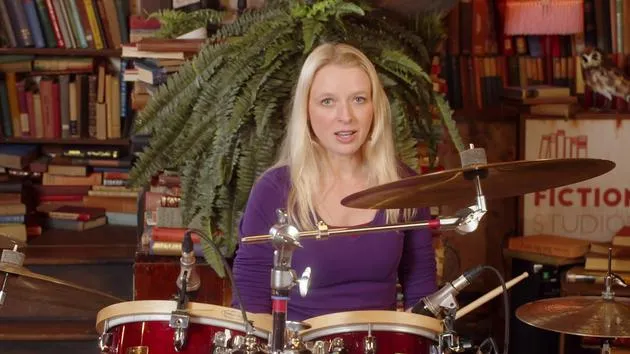
02. Exemple 1 - Se concentrer sur la coordination
2:19
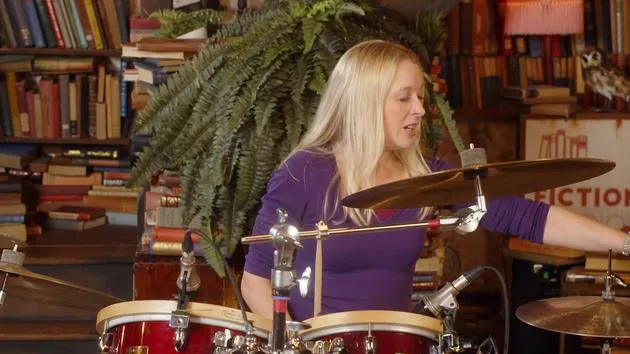
03. Exemple 2 - Variations de grosse caisse
1:16
04. Exemple 3 - Coordonner les mains
1:09
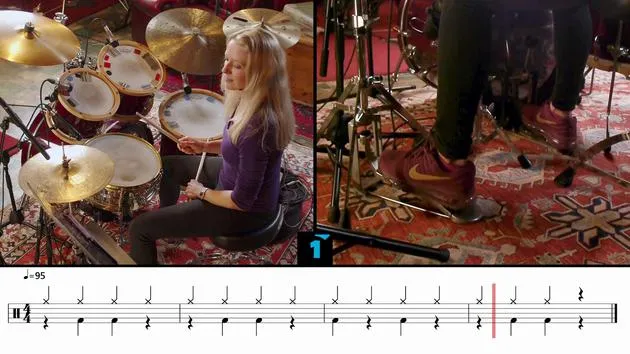
05. Exercice bonus 1
1:05
06. Exercice bonus 2
0:50
07. Résumé de la leçon 1 de metal
0:25
08. Leçon de metal 2 - Jouer ton premier beat complet
1:56
09. Exemple 1 - Motif de charleston pour beat rock de base
1:08
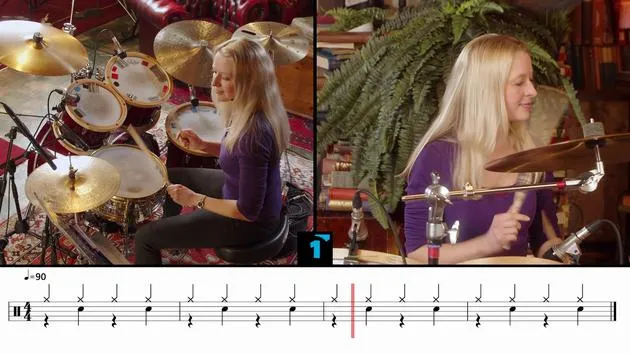
10. Exemple 2 - Ajouter le back beat
0:58
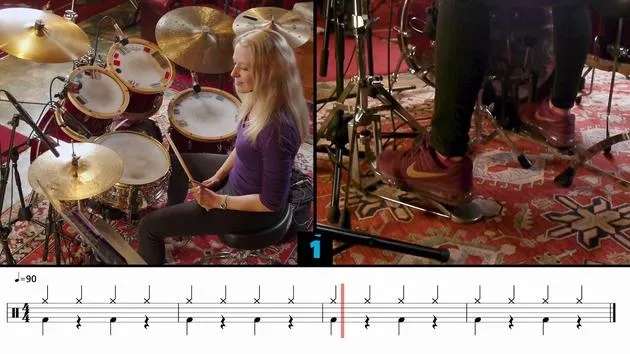
11. Exemple 3 - Ajouter la grosse caisse
0:59
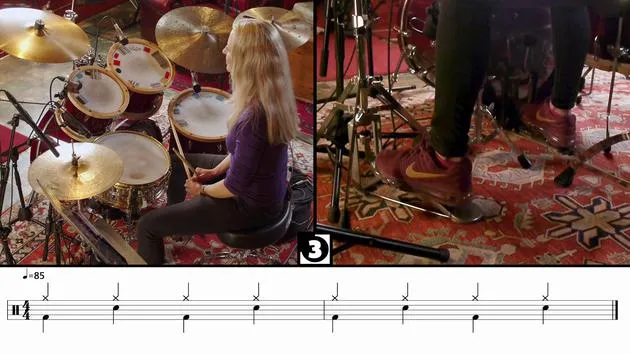
12. Exemple 4 - Power Trip mesures 13-14
1:32
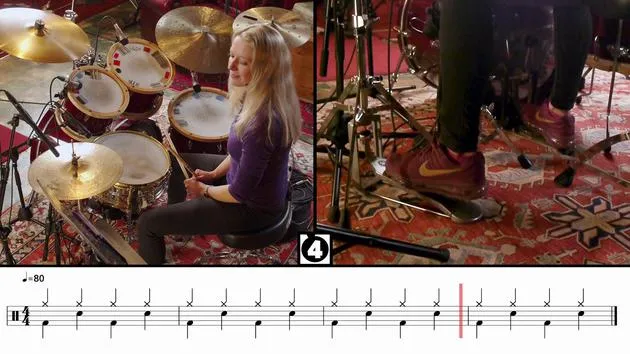
13. Exercice bonus 1
1:10
14. Exercice bonus 2
0:53
15. Résumé de la section metal
1:05
01. Indie - Introduction au style
1:26
02. Exemple 1 - Marquer une pause sur le troisième temps
1:01
03. Exemple 2 - Plus de variations
1:00
04. Exemple 3 - Coordonner les membres
2:16
05. Exercice bonus 1
1:10
06. Exercice bonus 2
0:50
07. Résumé de la leçon 1 indie
0:25
08. Indie Checkpoint : mailloches
2:46
09. Leçon indie 2 - Introduction à la grosse caisse et à la caisse claire en croches
1:25
10. Exemple 1 - Caisse claire en croches
1:36
11. Exemple 2 - Grosse caisse en croches
1:04
12. Exemple 3 - Phrase en croches
0:59
13. Exemple 4 - 'Big Mouth' mesures 1-4
1:48
14. Exercice bonus 1
0:38
15. Exercice bonus 2
0:59
16. Récapitulatif de la section indie
0:34
01. Introduction au hip-hop - Beats de base et fills
1:33
02. Exemple 1 - Fill de caisse claire et grosse caisse
1:10
03. Exemple 2 - Fill de caisse claire et charleston
1:08
04. Exemple 3 - Fill avec caisse claire, charleston et grosse caisse
1:09
05. Exercice bonus 1
1:38
06. Exercice bonus 2
0:47
07. Récapitulatif de la leçon 1 de hip-hop
0:32
08. Leçon de hip hop 2 - Introduction aux beats en croches
3:53
09. Exemple 1 - Le groove de base en croches
1:19
10. Exemple 2 - Variations de caisse claire
1:28
11. Exemple 3 - Variations de grosse caisse
1:09
12. Exemple 4 - 'The Dogg' mesures 13-16
1:56
13. Exercice bonus 1
1:04
14. Exercice bonus 2
1:09
15. Récapitulatif de la section hip-hop
0:32
01. Introduction aux morceaux
1:04
02. Piston (Rock) - Décryptage
4:57
03. Piston (Rock) - Interprétation
0:46
04. Take it to the Top (Pop) - Démonstration détaillée
3:58
05. Take it to the Top (Pop) - Interprétation
0:50
06. Borderlands (Country) - Décryptage
3:49
07. Borderlands (Country) - Interprétation
0:48
08. Power Trip - Décryptage
5:04
09. Power Trip (Metal) - Interprétation
0:51
10. Big Mouth (Indie) - Décryptage
5:26
11. Big Mouth (Indie) - Performance
0:52
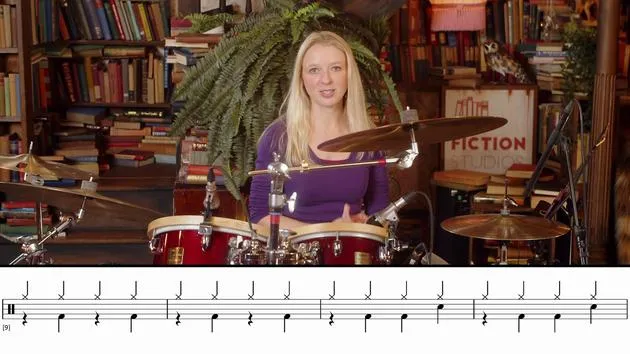
12. The Dogg (Hip Hop) - Décryptage
Tu es ici6:14
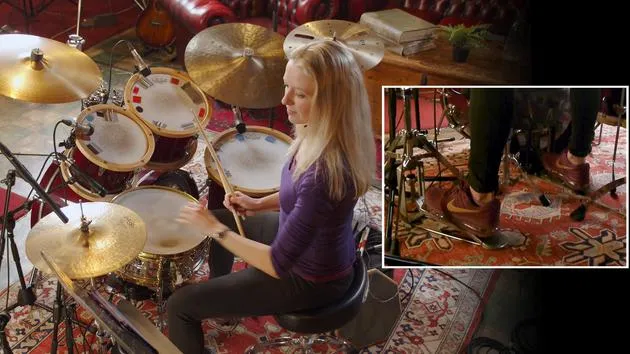
13. The Dogg (Hip Hop) - Interprétation
0:51
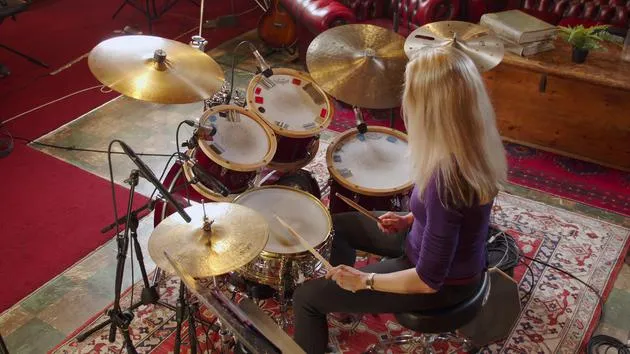
14. Overload (Rock) - Parcours
5:23
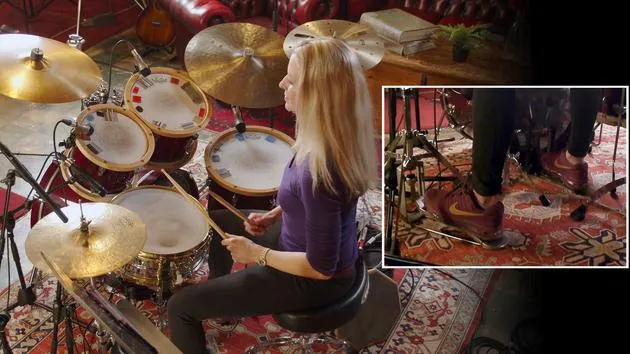
15. Overload (Rock) - Interprétation
0:50
16. Slam (Metal) - Décryptage
4:28
17. Slam (Metal) - Interprétation
0:51
18. Under the Radar (Indie) - Walkthrough
5:02
19. Under the Radar (Indie) - Interprétation
0:50
Transcription de la leçon
Music Lesson: Hip Hop Drum Patterns in "The Dog"
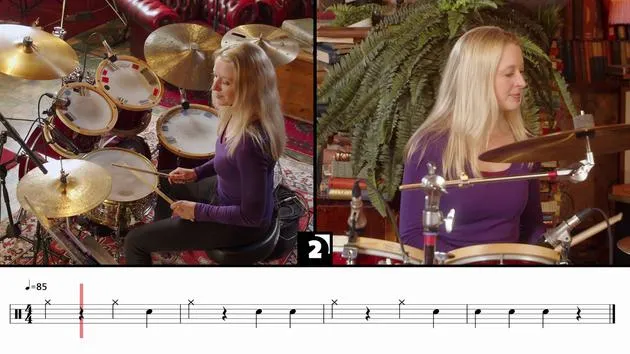
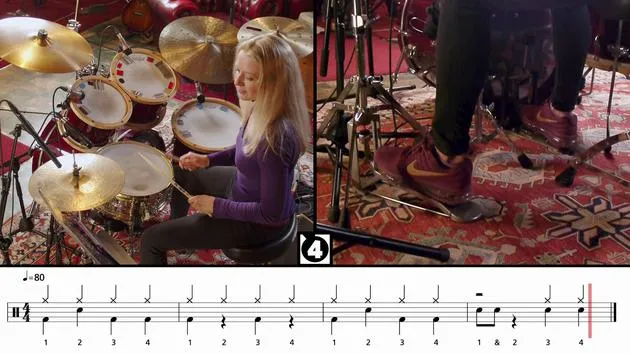
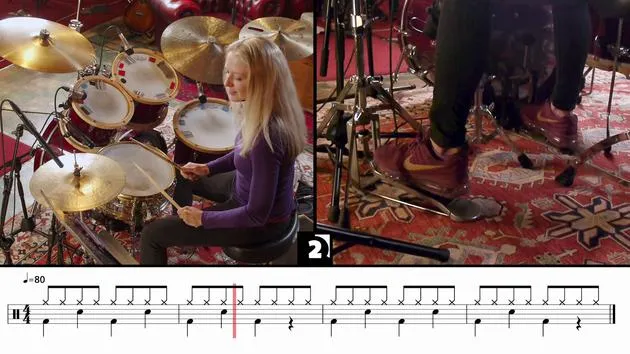
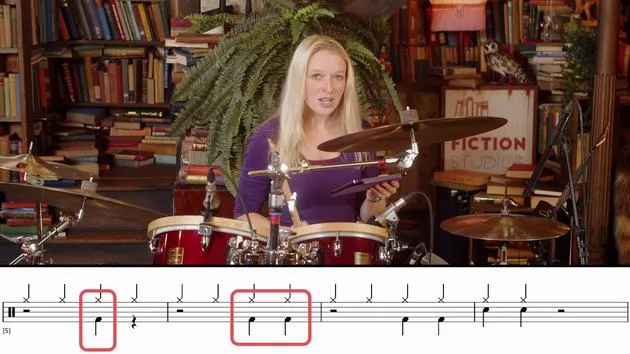
In the hip hop piece "The Dog," there are a couple of things I just want to draw your attention to because it's quite an unusual drum part that's been written.
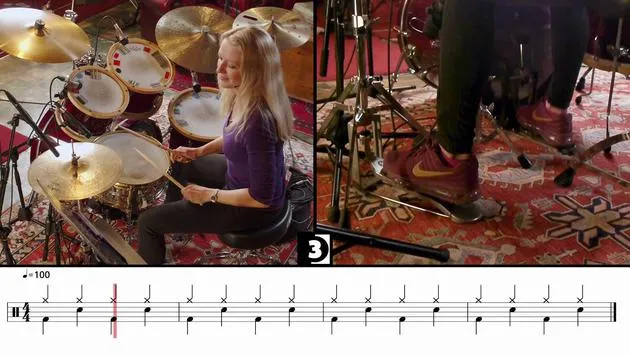
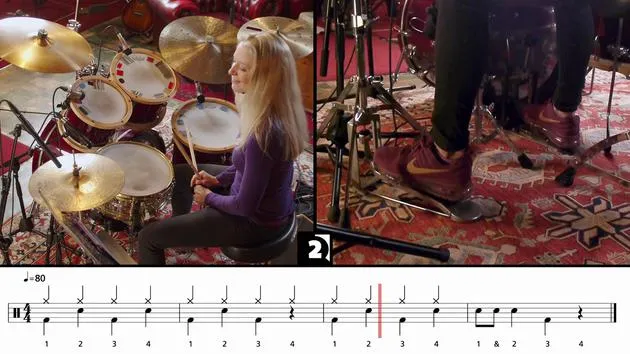
Bar One: Half Time Feel
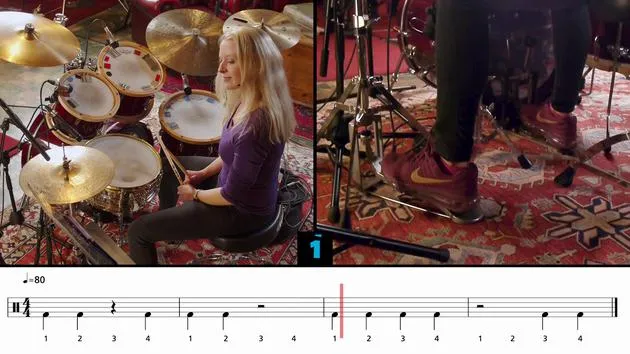
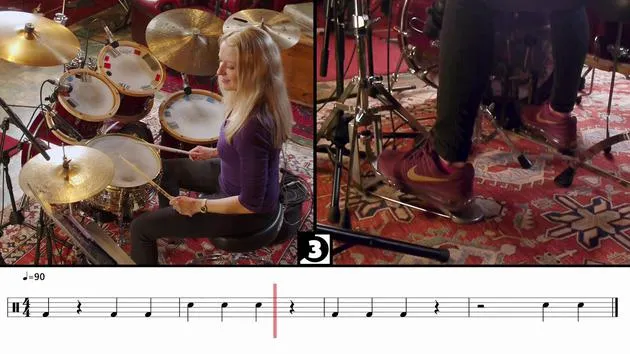
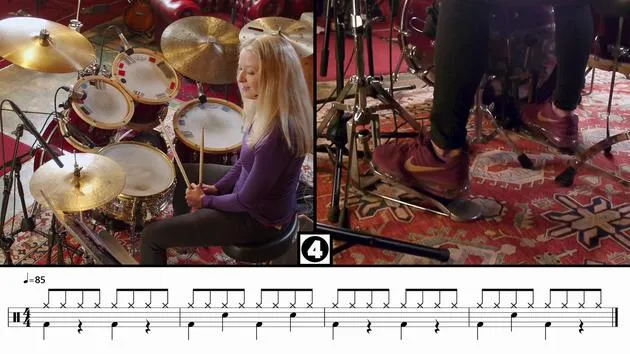
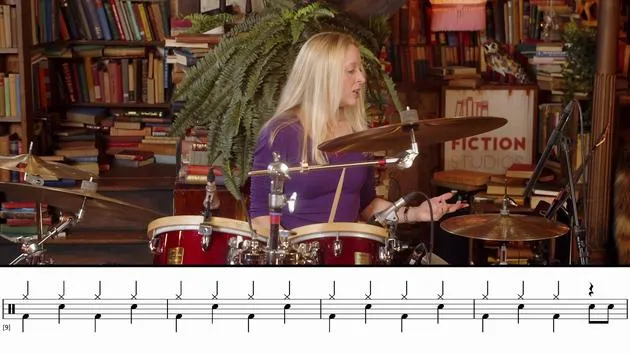
- The first bar has one snare on beat three, which creates a half-time feel.
- Normally, snares are on beats two and four, but when there's only one snare, we call it a half-time feel.
Demonstration
-
To demonstrate:
- Normal groove: Snares on 2 and 4.
- Half-time groove: Snares reduced to just beat three.
-
I changed the bass drum as well, as moving only the snare wouldn't yield the same feel. The half-time approach has a whole different feel.
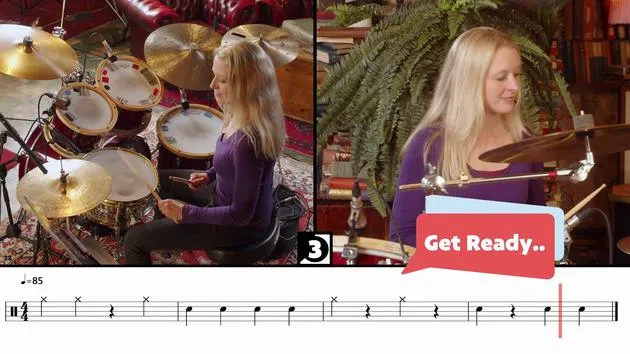
Bar Two: Groove Revolution
-
By the second bar, it feels like the groove has turned on its head:
- Snare on beat one.
- Snare on beat three.
- Bass drum on beat two.
-
This keeps us on our toes; we can’t relax too much because of all these changes.
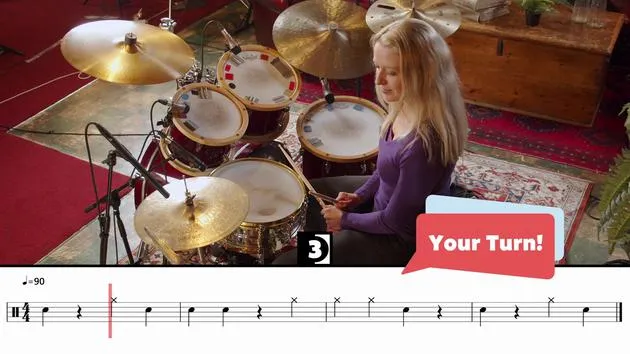
Bar Three: Hi-Hat Fill
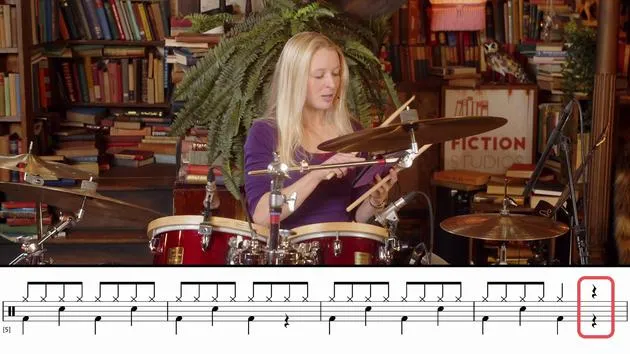
- The third bar resembles the first bar, but there's a hi-hat fill in the fourth bar of the first line that we need to watch for:
- I instinctively want to play on beat three, but there's a rest there, so I'm trying hard not to.
Execution
-
Observe the rest and come in with a bass drum on beat four.
-
Here’s how it sounds:
1, 2, 3, 4. -
It feels a bit strange having a quarter note rest after two eighth note hi-hats and then a bass drum on beat four, but it's good practice to tackle challenges.
Line Two: Moving Away from Half-Time
-
In the second line, we have:
- A heavy bass drum playing on beats 1, 2, and 3.
- Hi-hat with snare on beat four.
-
This means we're losing the backbeat on beats two for these bars.
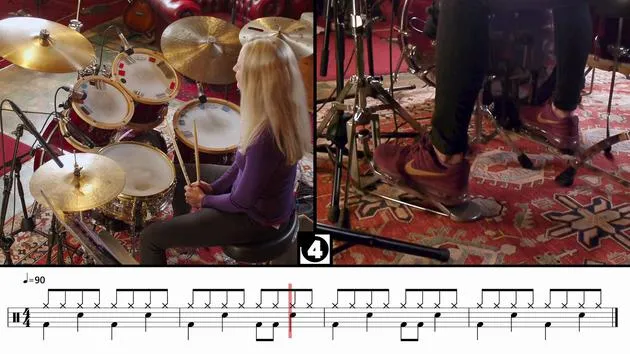
Snare Fill
- There’s a snare fill halfway through bar three leading into bar four.
- I’ll play the whole line for you so you can hear it.
- For the snare fill, I favor Right, Left, Right, Right, Left, Right.
- I’ll play both hi-hats with the right hand, as they lock in well with the bass drum.
Line Three: Return to Funk Elements
- You might think we’re leading into a bass drum with a hi-hat on beat one of the third line, but we are not.
- The bass drum is on beats two and four for the first two bars.
Funk Influence
-
This kind of feel is often heard at the beginning of funk or disco tunes.
-
To demonstrate without moving too far from this piece:
- A drummer might play 16th notes on the hi-hat at the start of a solo funk tune, with the bass drum on beats 2 and 4.
- Example: 1, 2, 3, 4.
-
Many hip hop drumming techniques originated from funk and soul tunes, with drummers from those pieces often sampled in hip hop.
Continuation and Conclusion
- When we reach the third bar of the third line, we reintroduce the snare on beat four.
- Bar four of the third line remains the same.
Final Line
- In the last line of this piece, there’s a more conventional drum groove, involving eighth notes on the hi-hat.
- The snare returns to its normal place on beats two and four, with bass drums alternating between quarter notes and eighth notes.
Last Bar
-
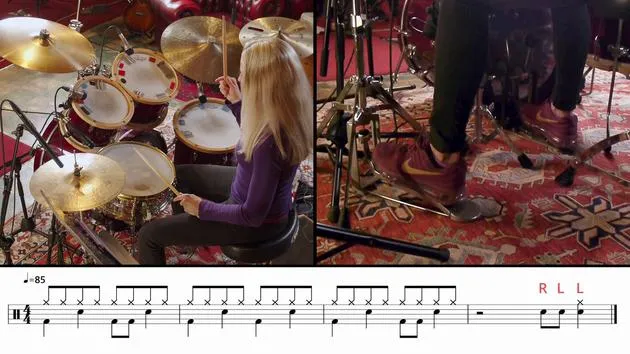
The last bar starts with a half note rest, occupying the first half of the bar, so count through to hit beats three, the end of three, and four in the right place.
-
Here’s how the last bar sounds:
1, 2, 3, 4, 1 and 2 and 3 and 4. -
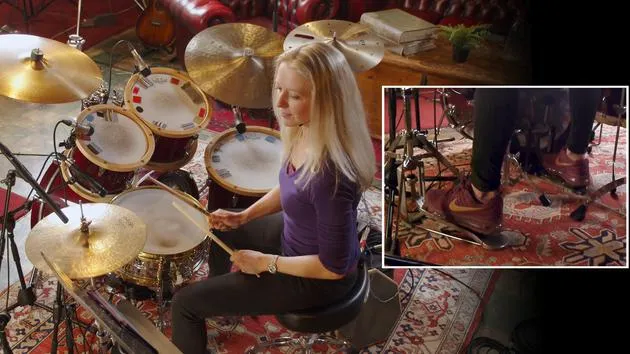
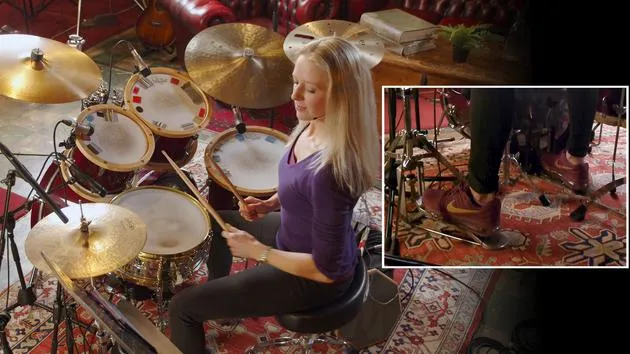
There are three snares in a row. You can play them differently; I choose to go to the hi-hat.
Sticking Pattern
- I will play the snares Right, Left, Left, leaving my right hand free to play the hi-hat on the last note.
114 leçons
3h 47m de leçons vidéo structurées
Fonctions vidéo avancées
Ralentissez, bouclez un passage, suivez la partition
Mobile, tablette et ordinateur
Pratiquez où vous voulez
Satisfaction garantie à 100 %
Garantie remboursement 30 jours
Rencontrez votre guru
Rencontrez votre guru
Sophie Alloway est une batteuse de studio et de tournée au cœur de la scène jazz londonienne. Elle s'est produite avec Jason Rebello, Yazz Ahmed, Laurence Cottle et Tony Allen, et a notamment joué pour le prince Charles au palais de Buckingham peu avant qu'il ne devienne roi.
Parmi ses tournées figurent Roots Manuva, la comédie musicale Thriller et Paul Stacey (Oasis / The Black Crowes). Elle est également la batteuse du groupe de fusion original Lydian Collective, qui compte plus de six millions d'écoutes sur Spotify.
Sophie a enregistré des sessions aux studios Abbey Road, AIR et Angel, et ses apparitions télévisées incluent Later… with Jools Holland, Glastonbury et deux saisons de la série Ridley d'Adrian Dunbar. Elle figure sur Abbey Road Masters: The Drum Sessions et a joué pour les finalistes du BBC Young Jazz Musician 2024, diffusé sur BBC TV et à la radio. Jon Newey de Jazz FM l'a surnommée la « déesse du groove ».







