



Créer et utiliser un modèle de mixage pour démarrer rapidement

Lesson time: (7min 37sec)
Goetz présente son modèle Pro Tools (disponible en téléchargement fourni avec ce cours). Il explique ce qu'il préfère dans ses presets, effets et plugins favoris, tels que les compresseurs, delays et reverbs.
Course preview
This lesson is part of the course Mixer la pop commerciale
Watch a preview of the full course below.
Lesson transcript:
Mixing Preparation and Techniques
Right, this is. We're going to move into the more geeky part of the mixing now and preparation.
Mix Template
When I start a mix, I already work from a mix template. I basically put all my favorite effects, compression groups, and master bus inserts into the session. This way, when I do the mixing, I don't have to spend ages:
- Making channels
- Putting plugins on
- Creating delays
It's already there, so if I have an idea, I can just go straight to it and bang, there it is.
Drum Compression and Delay
Drum Buses
I like to do drum compression and parallel compression. At the top here, I've got two drum buses that I use:
- Compressor: One of my favorite compressors for drums is the API plugin from Waves. There are different versions, but it's a good go-to compressor for the drums.
Delays
Then I've got a whole bunch of delays here. Any sort of delay you could think of, like:
- 8/4
- Dub delay
- Slap delay
They all basically sit there ready to go, so when I want to use one, I can just dial it up quickly.
My favorite delay plugin is the Echo Boy from Soundtoys. I'm a big fan of Soundtoys; their stuff sounds amazing. It has different styles of delays:
- Tape delay
- Space echo
- Digital delay
So, as far as delays go, it's got everything you could possibly want.
Reverbs
Plate Reverbs
Next, we have my reverbs. I have some plate reverbs, including:
- Convolution Reverb: A classic 480 that a lot of engineers use.
- Altiverb: I use a plugin called Space, which is an Avid plugin (similar to convolution reverb).
This one actually emulates a plate reverb.
I also use another reverb unit that not many people have, only Bix Studios, which is the TC6000. It's a state-of-the-art reverb for film mixing. It does very good surround sound and provides four reverb units in one box.
Other Effects
At the bottom here, there are a few slightly more exotic things:
- Soundtoys Crystallizer: Great for big reverb tails or interesting sounds.
- Decapitator: Adds distortion.
- Pitch Widening Harmonizer: Widens sound, creating double effects on lead vocals.
- A3000: Interfaces with my Eventide.
- Tremulator: And a few other little things.
Mix Bus
At the bottom of the session, we have my mix bus, which is another really important aspect of the mixing process. I like using Slate Digital plugins:
- Virtual Channel
- Virtual Mix Bus: This makes your mix sound more analog.
This plugin actually makes it sound like my SSL. There are different settings available:
- Brit 4K: Emulates SSL.
- Brit N: Emulates Neve.
- USA: Emulates API desk.
EQ and Compression
After that, I have an EQ. Mixers always need more top end, so I add a bit of top end before I even start:
- Around 12K: I add about 3 to 6dB.
- A little bit of bottom: About 2 or 3dB at 80Hz, set to lower shelf and high shelf.
This serves as a good starting point.
Next is our bus compressor. Again, I'm an SSL man, so I have my SSL compressor on the mix bus.
Settings:
- Attack: Shouldn't be too fast (3 to 10 milliseconds).
- Release: I usually go for the fastest release or auto.
Sometimes, I put a tape emulator on there as well. Again, the Slate Digital is quite good.
Tape Emulation
We'll have a look at that virtual tape machine. Here's our Virtual Tape Machine by Slate Digital. It provides a nice tone, making the mix sound like it's been recorded to an analog tape machine.
If you don't have Slate, there's also a WAVES option called Kramer Tape, which I also like. It has quite a lot of settings to play with.
Final Touches
Don't be afraid to use a little bit of tape on your mix bus.
Loudness and Limiting
Last but not least, this is another area that's really important. When you send out your mix, it has to be nice and loud because when somebody puts it in iTunes, they don't want it to be half the volume of all the other songs in there.
You have to put a limiter on it, which is basically another word for maximizer, to make your mix nice and loud when it goes out. However, remember to take that off when you print your master mix, as it's something that will be done in mastering.
So, before you print your mix, take off the limiter, but for sending it out to clients, always have it on.
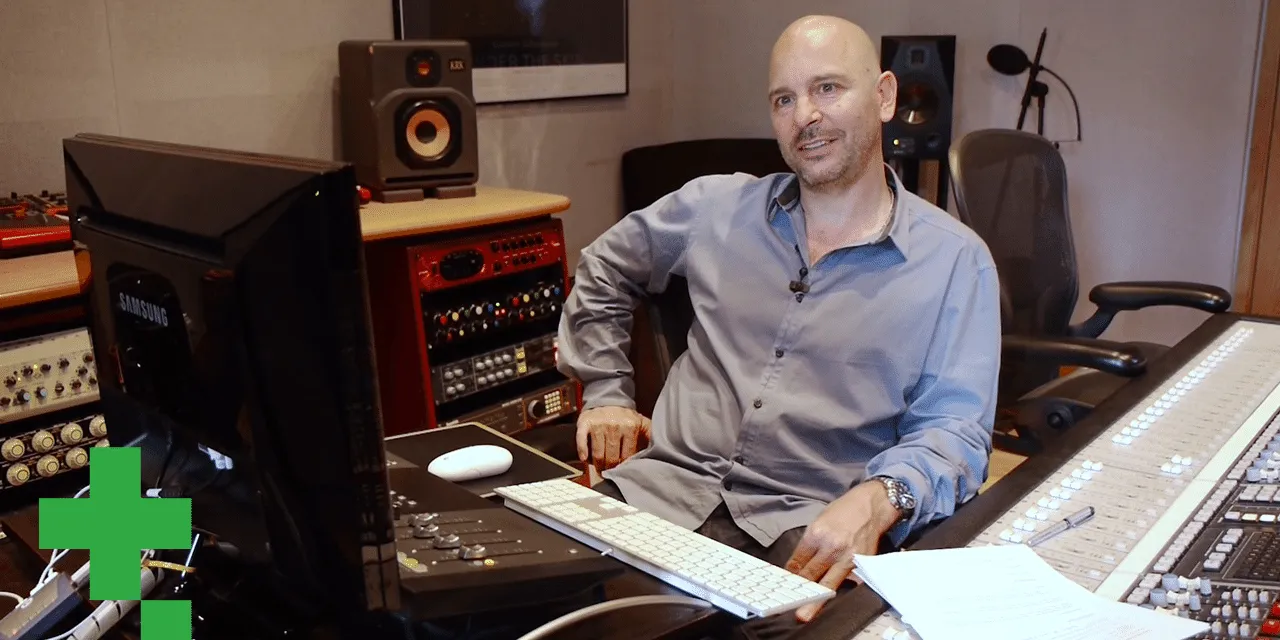
About the instructor
Au début des années quatre-vingt-dix, Goetz Botzenhardt s'est formé aux Swanyard Recording Studios, assistant des producteurs de premier plan comme Flood, Alan Moulder et Tom Lord-Alge, et a fait ses armes en enregistrant et en mixant les groupes de dance et d'acid jazz des années 90 : Incognito, Galliano, Soul II Soul et bien d'autres.À Swanyard, il rencontre Rollo Armstrong et tous deux nouent rapidement un partenariat créatif, à l'origine de nombreux grands disques de dance et remixes et, peu après, de l'enregistrement et du mixage des deux premiers albums acclamés de Faithless et du multi-platine 'No Angel' de Dido.Naviguant entre les genres, il a enregistré et mixé le premier album des Sugababes, 'One Touch', dont leur premier tube 'Overload', et a mixé pour The Cardigans, Bjork, The Cinematic Orchestra, Craig David, les Pet Shop Boys et Hikaru Utada, l'une des artistes les plus populaires du Japon.Plus récemment, il s'est étendu au cinéma et à la télévision, collaborant étroitement avec les compositeurs Christian Henson, Martin Phipps et Anne Nikitin, et mixant la musique de Daniel Pemberton, nommée aux Golden Globes, pour 'Steve Jobs', réalisé par Danny Boyle. En dehors du cinéma, il a produit 'Closer to the People' de Tanita Tikaram, mixé des titres pour Sigala, Ella Eyre, Breton, Planet Funk et Tito Jackson, et en 2016 il a mixé l'album de Peabo Bryson avec Jimmy Jam et Terry Lewis. La liste complète de ses travaux figure sur ses pages de discographie et de filmographie sur goetz-botzenhardt.com.Goetz travaille depuis son propre studio et sa salle de mixage, articulés autour d'une console SSL E4044, d'un monitoring surround Adam 5.1, d'un système Pro Tools HDX 48 canaux et d'un outboard de choix. Dans ses cours, il te fait entrer dans cette pièce pour montrer comment il mixe dans deux univers très différents : dans Mixing for Film & TV Score, comment il équilibre et façonne des musiques orchestrales et hybrides au service de l'image ; et dans Mixing Commercial Pop Music, comment il construit des mixes pop percutants et prêts pour la radio à partir du multipiste. read more