



Entretien avec Goetz Botzenhardt
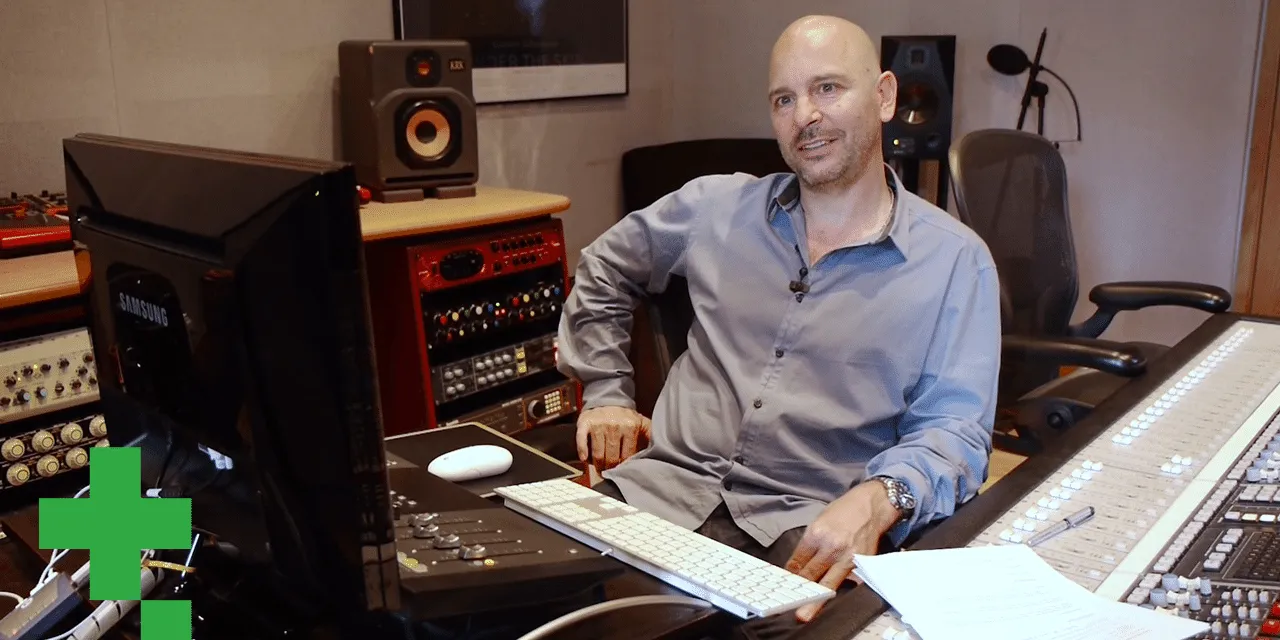
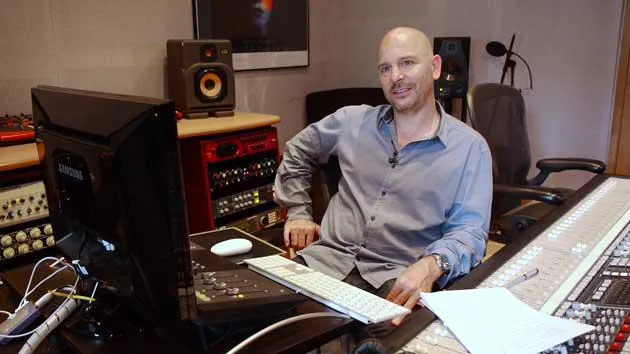
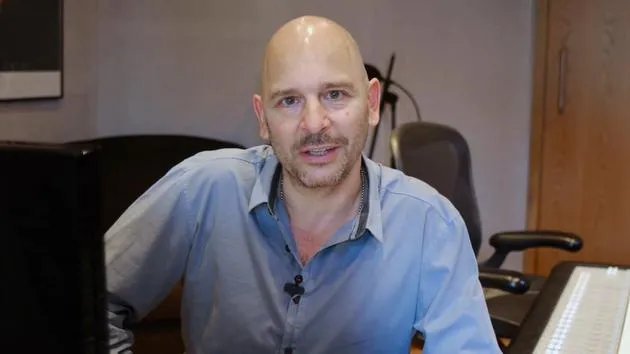
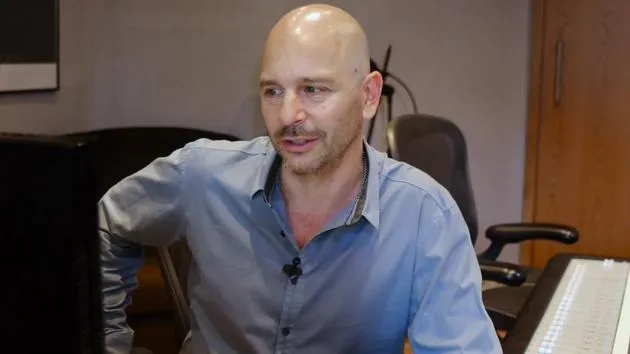
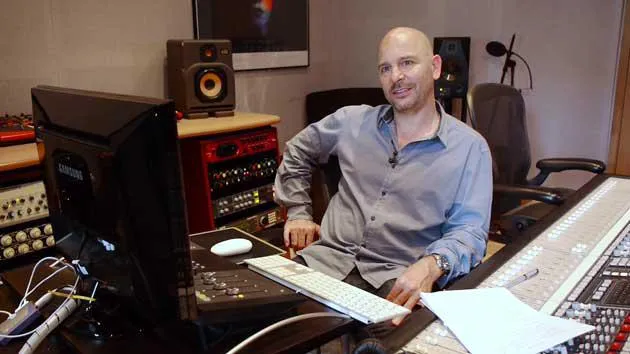
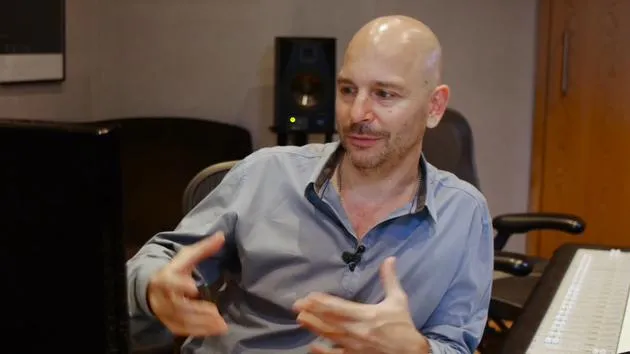
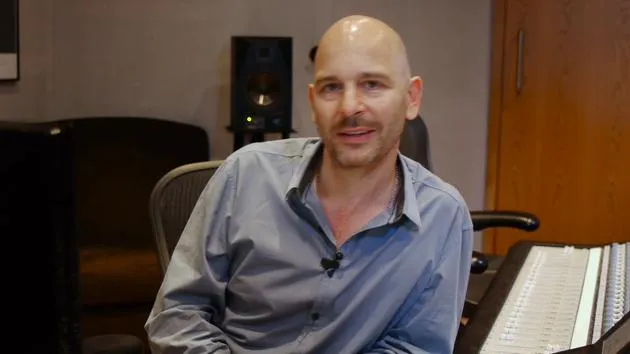
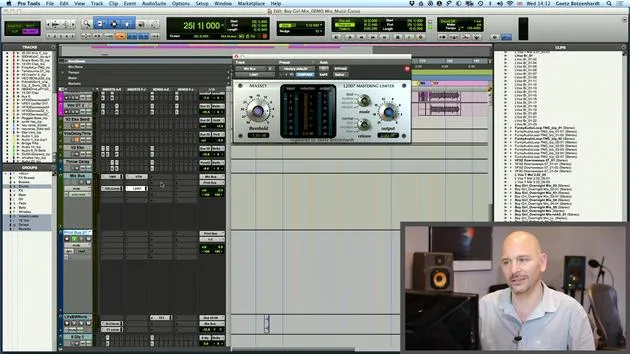
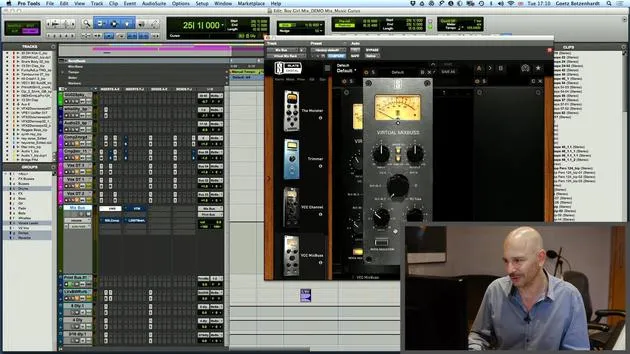
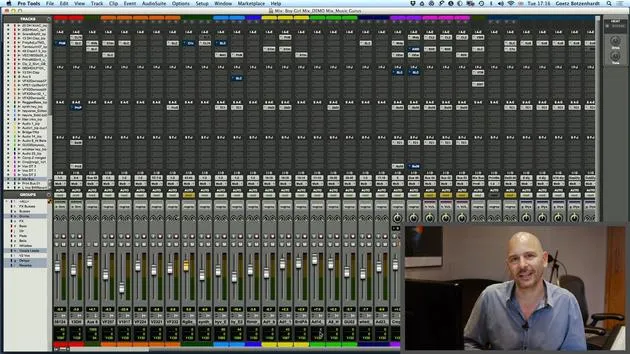
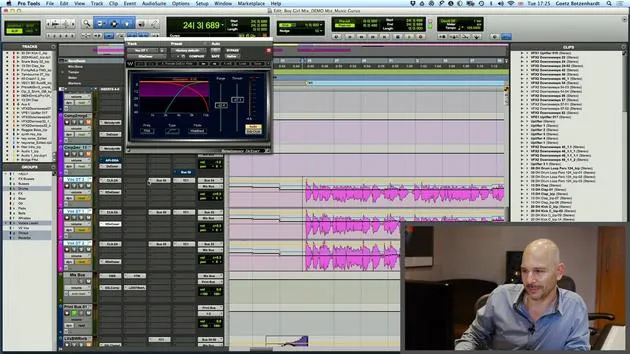
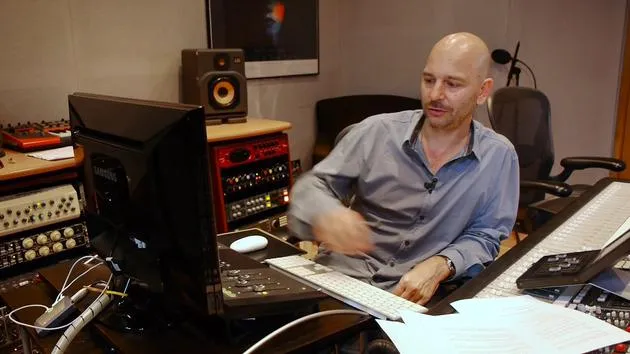
Le producteur Goetz Botzenhardt revient sur sa carrière et fait visiter sa salle de mixage aux Tileyard Studios, articulée autour d'une console SSL et d'un système Pro Tools HDX.
Le contenu du cours
23 leçons (2h 35min) · 1 gratuites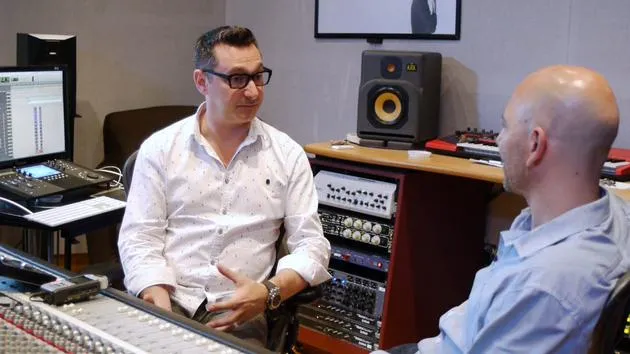
01. Entretien avec Goetz Botzenhardt
Tu es ici20:19
02. L'installation du studio de Goetz
14:02
03. Préparation avant de se mettre au mixage
7:29
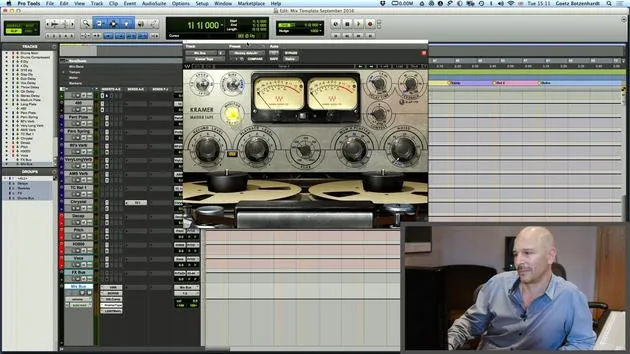
04. Créer et utiliser un modèle de mixage pour démarrer rapidement
7:37
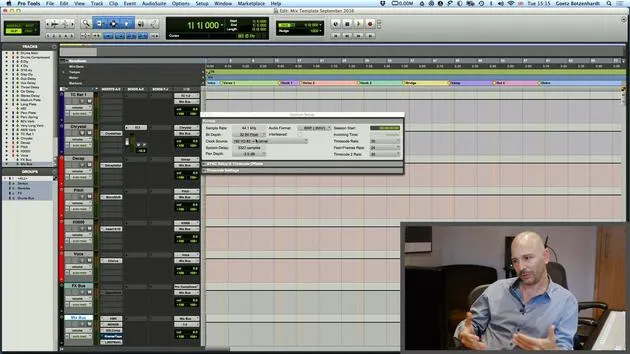
05. Comprendre les bus et les réglages de projet
3:19
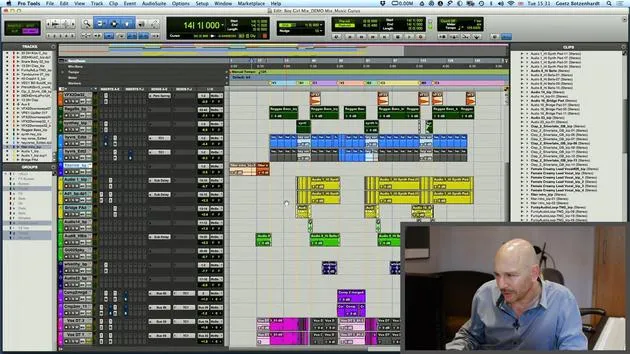
06. EXERCICE N° 1 : CRÉE UNE SESSION DE MIX
0:41
01. Charger des samples dans ton projet de mixage
5:28
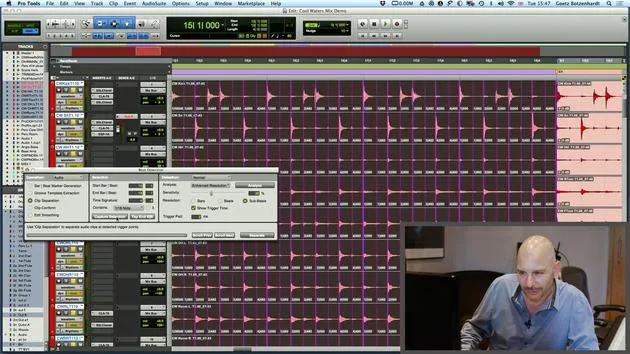
02. Inspecter le matériel - La batterie
7:06
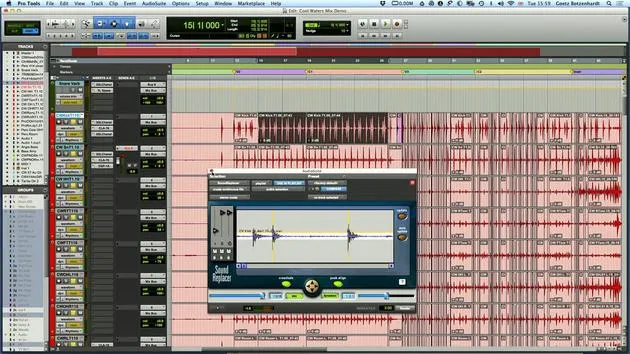
03. Resserrer la batterie avec Sound Replacer
5:14
04. Inspecter et préparer les voix
3:40
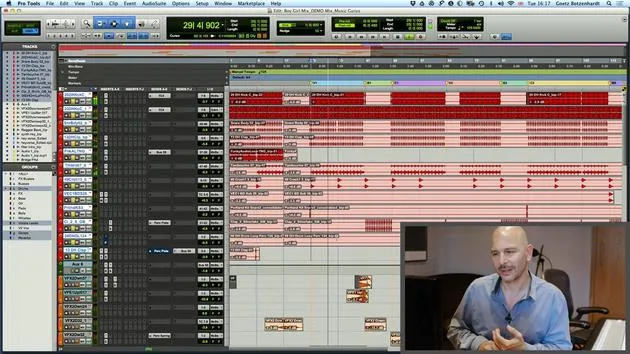
05. Assembler le mix
10:36
06. Ajouter plus d'éléments au mix
3:21
07. EXERCICE #2 : REMPLACER LA GROSSE CAISSE ET LA CAISSE CLAIRE
1:04
Transcription de la leçon
Music Lesson with Gertz
Introduction
So. Hi, Gertz.
Hello.
Hi. Welcome. Thank you. I'm very excited to hear more about yourself and your journey.
Background and Musical Beginnings
- You originally come from Stuttgart?
Yes, from near Stuttgart. A place called Tubingen.
Early Music Experience
- As a young kid growing up and getting into music, you obviously learned some instruments, did you?
Yes, I learned. I started with a recorder. Amazing.
Yeah, yeah. And then the flutes for a while. That's how I learned to read music and basically did all this sort of more boring, you know, playing.
Recording Local Bands
- But you started to record bands locally as well, didn't you, originally? Was it on four track and eight track?
Yeah, yeah, yeah. So, yeah. Basically, once I had enough of the flute, I picked up the guitar.
My brother was a drummer and we had a rehearsal room in the basement where we could make a lot of noise, and that's what we did.
Eventually, I started recording some of that noise on a four track and then eight track. First, I had a four track little cassette thing and then an eight track, which was amazing at the time, a real to real recorder.
Yeah, and then I started making recordings and recording, you know, other than our band, also recording other local bands.
People eventually came knocking on my door, saying, "We want to make a demo. Can you help us?"
Pivotal Moment
- There was, I suppose, quite a pivotal moment for you when you decided around about the late 80s to move to London. You ended up in a studio in Islington, I believe.
That's right, yeah. I came to London in 1989. I trained here. I did a sound engineering course for a year.
I was lucky enough to get a job as an assistant engineer in a studio in Islington called Swanyard. At the time, it was quite happening. They had a record label as well, a publishing company, and they had Technotronic and Incognito and Galliano, sort of a lot of these great bands from the acid jazz and dance music scenes.
The studio had two big SSL rooms and a smaller studio where my colleagues and I could cut our teeth as recording engineers.
I assisted a lot of the greats at the time as well, for people like Flood and Alan Molder.
That's how you really learn your trade, isn't it? By watching the masters do it.
Meeting Key Collaborators
- I believe it was at that studio that you originally met up with people like Soul to Soul and then Faithless.
Yeah, absolutely. I sort of became the house engineer of that studio.
Eventually, Rollo, who was the producer for Faithless, walked through the door. He just had a big hit with Felix called "Don't You Want Me?" and he didn't want his engineer anymore.
I was lucky enough to be there at the right place and the right time, and I stepped in. The first thing we did was a remix for U2, which they liked a lot.
When you work with people and it's a success, you become part of the team. That's what happened.
We went on to make all of the Faithless records, and "Insomnia" became a big hit, so I was lucky too.
Transition to Film Scoring
- Now, this particular course we're here to talk about is mixing Fulfillment TV score. You've done a separate course on mix for bands and commercial pop music.
But let's discuss where you got your first break into film, considering you had a lot of hits with commercial dance records. Where did the film aspect begin?
Basically, it started with a band. I did an album with a producer named Joe Henson, a good friend. Joe has a brother called Christian Henson, a reasonably well-known film composer who also owns a company called Spitfire.
Ah, the audio samples!
Exactly, yeah. Best samples in the world. I recommend them.
A lot of people talk about using those in films and albums as well, right?
Yeah, exactly. They're used all over the place because they are the best samples around.
Working with Christian Henson
- Christian had just parted ways with his engineer, so he was looking for someone new. He needed someone who could handle film scores but who was also good at mixing electronic and pop music.
A lot of his stuff combines both elements, the classical and the modern.
I started working with Christian, and it was quite a fruitful relationship. That's how I really learned film score mixing.
Projects with Christian Henson
- You did a number of films with him, right?
Yeah, we did many films together, probably between 15 and 20. There was also quite a lot of TV stuff.
That's how I got involved in that area.
Then, I changed my management as well, moving from my old management, which was purely for pop music, to Air Management.
Air Studios is one of the biggest studios in London that handles film recording and orchestral projects. When Hans Zimmer comes to record there, they manage me now, which opens up films and bigger commissions.
Notable Projects
- Through Air, you've worked on bigger films like the Oscar and Golden Globe-nominated "Steve Jobs," "Under the Skin," "The Imposter," and things like "War and Peace" for the BBC.
That's right, yeah. With a composer called Martin Phipps, who just got a nomination for an Emmy.
It's like the Oscars for TV.
So it's primarily that management company that's helped open the doors to these bigger works and bigger commissions?
Exactly, yeah. It's the management, but also contacts and word of mouth, that's always the most important way to get work in this industry. Knowing people and being recommended is crucial, so you need to make sure you always do a good job.
Project Insight: War and Peace
- Take for example one of these bigger projects, "War and Peace." That must be quite epic, right? About 10 hours worth of film, I imagine?
Yeah, amazing. How do you take on a project like that initially? Were they looking for a piece of music within one of the ten sequences, or were they looking for the whole thing?
Well, I'm not the composer, so the composer has to worry about that mainly. I come in at various stages to help him along the way and to help craft the finished mixes.
On "War and Peace," Martin went for that sort of Russian choir that was actually Latvian.
It's quite Eastern sounding. I helped him mix that, and there was also the Welsh BBC orchestra that played all the music.
I helped him sift through the takes and make it presentable.
Discussion on Steve Jobs
- "Steve Jobs" has quite a different approach, right?
Yes, I got that job because I handle electronic music. In "Steve Jobs," there's a lot of electronic stuff to represent the different eras of where the film is set, going from the 80s to the 90s to the noughties.
Again, there's a lot of electronic music combined with orchestras, which is what I specialize in. That's why people come to me.
Advice for Aspiring Professionals
- Speaking of niches, the Internet has opened up many niche communities, especially in independent film.
Do you have advice for aspiring professionals on how they might build a showreel or get themselves noticed? - For producers or mixers or composers, it's about going out, meeting people. I know a lot of composers go to film schools to talk to new directors and offer their services for free.
When someone comes out of film school, they make short films on a shoestring budget. If that director already has a composer providing free music, you can tag along.
Hope that the person you work for for free will become successful and loyal. You need to get your work out there.
You can write the greatest music or do the best mix ever, but if it just sits on your disk drive, it's pointless.
Equipment and Mixing for Film
-
Can we discuss some of the equipment or plugins you prefer when mixing for film and TV? Let's start with this.
This is my pride and joy: my TC System 6000, the best industry-standard reverb around. It works in 5.1, which is important.
One preset that everybody uses is called "large wormhole," which gives great reverb on strings. I use it all the time; it holds a central position. -
What about your mixing desk?
Here's my SSL mixing desk. I don't use it often enough for film mixing, just because the logistics of it can be a bit difficult.
Mixing film often involves mixing to lots of different buses and stems. Most of the time, everything happens in Pro Tools. -
What do you use for monitoring?
Let's get to that next. The loudspeakers are really important. I have a 5.1 surround system with Adams speakers, three at the front and two for surround, plus a subwoofer.
The ".1" refers to the subwoofer. Does it go higher than that?
Yes, there's 7.1, which just adds another pair of surround speakers. -
What about checking your mixes?
I usually use NS10s for stereo checks since they're not very flattering, but if it sounds good on those, it's likely to sound good on most speakers.
The aura tones are for checking in mono, mainly for pop and radio. I also have KRK speakers that I like using. -
Can we talk about your outboard gear?
Absolutely! Here's more of my analog gear. For example, the Manley EQ sounds amazing on strings. The GML is a great EQ for pop music that adds an expensive sound to the mix.
The distressors are my favorite compressors, very versatile, fitting for lead vocals and instruments. Then there's the Neve 1073 mic preamps, which sound great on almost any mic, and the Tyco H2000 for wackier effects.
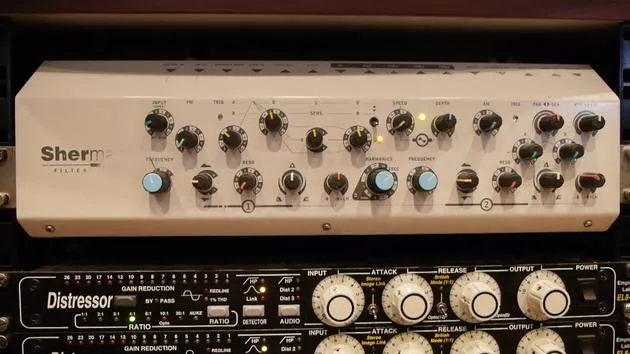
I also have the Sherman Filter Bank for crunching up sounds and drum loops.
Mixing Approach for Film vs. Pop Music
-
Do you find yourself experimenting a lot with sounds to fit unusual images?
Unfortunately, with mixing film scores, there's never much time for that. When I mix a film score, I have to do several cues every day.
Cues are one piece of music, basically. So film score work happens more quickly; there's less time for experimentation. -
Would you say you must make quick decisions when mixing film scores?
Very much so, yeah. It's crucial. -
Does that speed help with mixing for commercial pop music as well?
It's a completely different approach, but having the ability to do things quickly always helps.
Differences in Dynamics
- What's the most different about mixing for film versus an album?
First of all, the dynamics. In film music, you have lots of dynamics, whereas in pop music, there's not much dynamic range.
Final Thoughts on Mixing
-
What else do you want to mention?
There are the DBX120s. They are subharmonic synthesizers that generate lower frequencies. If you have a bass note around 200 hertz, these will create subharmonics like 150 and 125 hertz.
They can shake the room in a cinema. -
Did you ever use that on big club tracks as well?
Yes, I have. They are great for club mixes, but not so good for radio due to the added compression.
Course Structure Overview
-
What are you going to be taking our viewers through today in this course?
I'll take you through the process of mixing a film score, including the politics and the people involved, and the general philosophy of mixing. -
What example are we using?
We'll use a film score mix I did a couple of years ago with a composer named Ann Nikitin for a German film called "Sanctuary."
It features lovely music recorded at AIR Studios and in Bratislava with an orchestra. I'll go through it step by step so everyone gets a sense of the mixing process.
Conclusion
Well, let's get into it. I'm looking forward to it!
Right, let's do it.
23 leçons
2h 35m de leçons vidéo structurées
Fonctions vidéo avancées
Ralentissez, bouclez un passage, suivez la partition
Mobile, tablette et ordinateur
Pratiquez où vous voulez
Satisfaction garantie à 100 %
Garantie remboursement 30 jours
Rencontrez votre guru
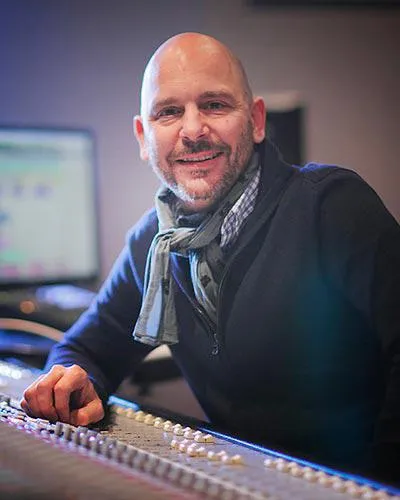
Rencontrez votre guru
Au début des années quatre-vingt-dix, Goetz Botzenhardt s'est formé aux Swanyard Recording Studios, assistant des producteurs de premier plan comme Flood, Alan Moulder et Tom Lord-Alge, et a fait ses armes en enregistrant et en mixant les groupes de dance et d'acid jazz des années 90 : Incognito, Galliano, Soul II Soul et bien d'autres.
À Swanyard, il rencontre Rollo Armstrong et tous deux nouent rapidement un partenariat créatif, à l'origine de nombreux grands disques de dance et remixes et, peu après, de l'enregistrement et du mixage des deux premiers albums acclamés de Faithless et du multi-platine 'No Angel' de Dido.
Naviguant entre les genres, il a enregistré et mixé le premier album des Sugababes, 'One Touch', dont leur premier tube 'Overload', et a mixé pour The Cardigans, Bjork, The Cinematic Orchestra, Craig David, les Pet Shop Boys et Hikaru Utada, l'une des artistes les plus populaires du Japon.
Plus récemment, il s'est étendu au cinéma et à la télévision, collaborant étroitement avec les compositeurs Christian Henson, Martin Phipps et Anne Nikitin, et mixant la musique de Daniel Pemberton, nommée aux Golden Globes, pour 'Steve Jobs', réalisé par Danny Boyle. En dehors du cinéma, il a produit 'Closer to the People' de Tanita Tikaram, mixé des titres pour Sigala, Ella Eyre, Breton, Planet Funk et Tito Jackson, et en 2016 il a mixé l'album de Peabo Bryson avec Jimmy Jam et Terry Lewis. La liste complète de ses travaux figure sur ses pages de discographie et de filmographie sur goetz-botzenhardt.com.
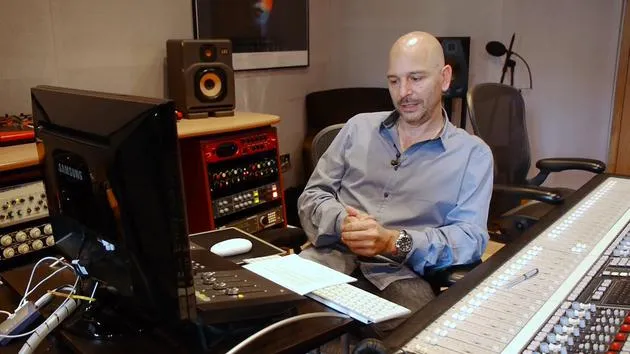
Goetz travaille depuis son propre studio et sa salle de mixage, articulés autour d'une console SSL E4044, d'un monitoring surround Adam 5.1, d'un système Pro Tools HDX 48 canaux et d'un outboard de choix. Dans ses cours, il te fait entrer dans cette pièce pour montrer comment il mixe dans deux univers très différents : dans Mixing for Film & TV Score, comment il équilibre et façonne des musiques orchestrales et hybrides au service de l'image ; et dans Mixing Commercial Pop Music, comment il construit des mixes pop percutants et prêts pour la radio à partir du multipiste.







