



Assembler le mix

Lesson time: (10min 36sec)
Course preview
This lesson is part of the course Mixer la pop commerciale
Watch a preview of the full course below.
Lesson transcript:
Welcome Back to Mixing
Alright, so yes, welcome back. Now we are ready to start the actual mixing. Everything's wonderful, in time, in tune. You know what you want your mix to sound like. Everything is nicely color-coded and laid out in your session. You've got your effects channels ready, and your samples triggered in.
Starting with the Drums
The first thing I do with the actual mixing is start with the drums.
- I'll throw in the kick drum and the snare drum, along with other elements like tambourines and claps.
- Basically, put in one element at a time.
Setting Your Levels
- On pop records, the drums will be pretty static throughout.
- You don't want to be too adventurous with dynamics or level changes now.
If we listen to our drums, the kick drum is quite dominant because it's a dance track.
"The kick drum has to be dominant and drive it."
I level all that up using EQ and compression where needed.
My Favorite Plugins
- One of my favorite plugins for basic stuff is the SSLE Channel, which mirrors what I've got on the mixing desk.
- I also like the CLA 76 compressor, a Waves plugin that's a copy of the classic 1176 compressor.
That's usually what I use to make my drums sound punchy.
Additional Drums Advice
A few more bits of advice for working on your drums:
- Use EQ and compression where needed.
- Make sure the bottom end is nice and tight. If it's too flabby, apply compression.
Checking Drum Balance
I check my drums and drum balance on different speakers:
- Play it loud on your big speakers for the bottom end.
- Also, check on your NS10s or Oratones.
- I have computer speakers that sit on either side of the screen, which I'll demonstrate shortly.
It's important because, unfortunately, a lot of people listen to music from PCs and play it on lesser quality speakers.
Reverb on Drums
Regarding reverb on drums:
- I usually only use short reverbs, rooms or maybe a short plate.
- Nothing too long; otherwise, it gets washed out.
"The only time I would use a long reverb is if it emphasizes a sound."
Example of Long Reverb
I can quickly show where a long reverb is used. After the intro, there's a clap that comes in:
Let's listen to that.
I'll turn it up so we can hear it properly.
Equilibrium of Elements
Your drums need to groove in all departments:
- Kick drum handles the bottom end.
- Claps and snares usually fill the middle.
- Tambourines and hi-hats address the top frequencies.
Make sure you apply nice EQs on all of them.
Parallel Compression
Lastly, you can try parallel compression. It's always a good trick, especially with real drums, to get a nice compressed sound.
- However, for this song, I didn't include it because I didn't need it for a dance track.
Adding Bass and Checking Levels
Next, I'll chuck in the bass and percussion.
- Check it on all your different speakers and systems.
- Ensure the bass and the kick drum work well together without interfering with each other.
Side Chaining Technique
One thing worth trying is to put a side chain on the bass if it interferes too much with the kick.
- I set up a channel where the kick drum plays all the way through and link it to a side chain bus.
- Then, I can apply that to the bass.
"Side chaining means compressing one instrument with another."
Sidechain Implementation
In this case:
- The compressor is triggered by the kick drum.
- Every time the kick drum hits, the bass level gets reduced, allowing for a punchier kick.
Side chaining is widely used in dance mixes, creating a "sucking" sound that adds excitement.
Listening and Adjusting
Now that we have all our rhythmical instruments in the mix, let's play it.
- Listen to see if it grooves well and covers all frequencies nicely.
- If it isn't right, we'll adjust the levels and work on it until it sounds good.
Trusting Your Ears
This part requires using your ears to balance everything out; there's no precise formula.
"The real objective is to create a good rhythm track."
Always remember to listen until you really like it. Your goal is to get something people can dance to, a solid groove in all departments.
Let's take that side chain off because I don't like it on this one.
I'll switch it on different speakers and keep working until I'm happy with it.
About the instructor
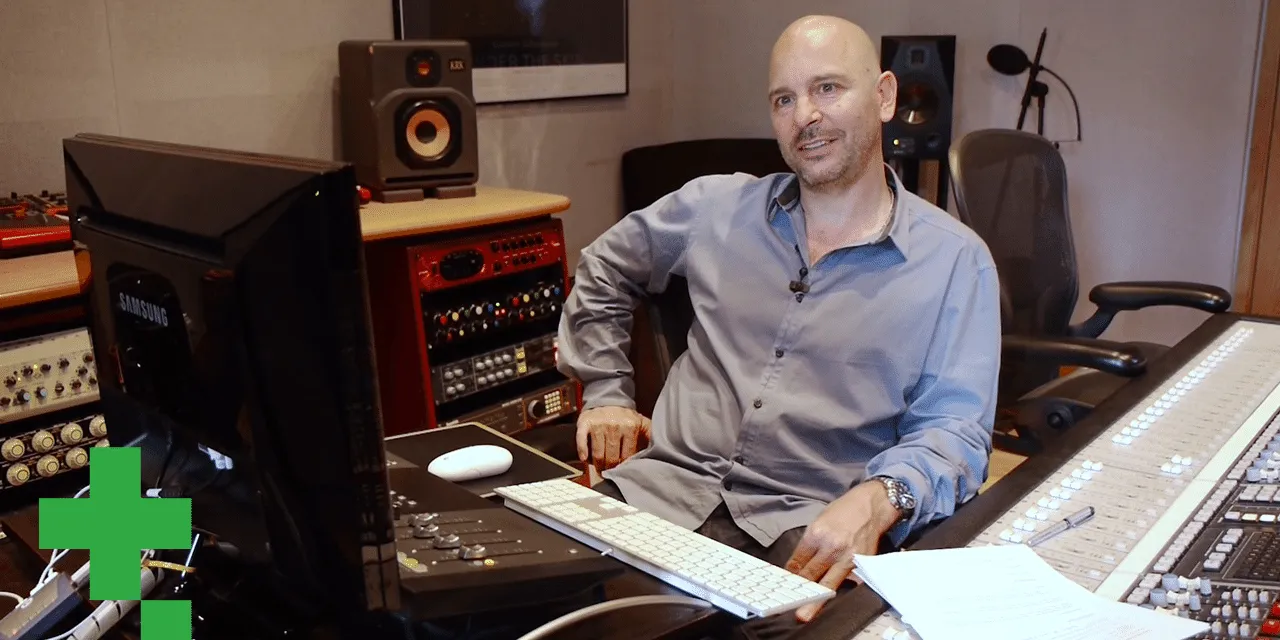
Au début des années quatre-vingt-dix, Goetz Botzenhardt s'est formé aux Swanyard Recording Studios, assistant des producteurs de premier plan comme Flood, Alan Moulder et Tom Lord-Alge, et a fait ses armes en enregistrant et en mixant les groupes de dance et d'acid jazz des années 90 : Incognito, Galliano, Soul II Soul et bien d'autres.À Swanyard, il rencontre Rollo Armstrong et tous deux nouent rapidement un partenariat créatif, à l'origine de nombreux grands disques de dance et remixes et, peu après, de l'enregistrement et du mixage des deux premiers albums acclamés de Faithless et du multi-platine 'No Angel' de Dido.Naviguant entre les genres, il a enregistré et mixé le premier album des Sugababes, 'One Touch', dont leur premier tube 'Overload', et a mixé pour The Cardigans, Bjork, The Cinematic Orchestra, Craig David, les Pet Shop Boys et Hikaru Utada, l'une des artistes les plus populaires du Japon.Plus récemment, il s'est étendu au cinéma et à la télévision, collaborant étroitement avec les compositeurs Christian Henson, Martin Phipps et Anne Nikitin, et mixant la musique de Daniel Pemberton, nommée aux Golden Globes, pour 'Steve Jobs', réalisé par Danny Boyle. En dehors du cinéma, il a produit 'Closer to the People' de Tanita Tikaram, mixé des titres pour Sigala, Ella Eyre, Breton, Planet Funk et Tito Jackson, et en 2016 il a mixé l'album de Peabo Bryson avec Jimmy Jam et Terry Lewis. La liste complète de ses travaux figure sur ses pages de discographie et de filmographie sur goetz-botzenhardt.com.Goetz travaille depuis son propre studio et sa salle de mixage, articulés autour d'une console SSL E4044, d'un monitoring surround Adam 5.1, d'un système Pro Tools HDX 48 canaux et d'un outboard de choix. Dans ses cours, il te fait entrer dans cette pièce pour montrer comment il mixe dans deux univers très différents : dans Mixing for Film & TV Score, comment il équilibre et façonne des musiques orchestrales et hybrides au service de l'image ; et dans Mixing Commercial Pop Music, comment il construit des mixes pop percutants et prêts pour la radio à partir du multipiste. read more