



Under the Radar (Indie) - Walkthrough
Sophie Alloway repasa 'Under the Radar', una pieza de batería indie construida sobre un groove de rock clásico que se despoja en la parte central antes de volver a crecer.
Qué incluye el curso
114 lecciones (3h 47m) · 1 gratis
01. Introducción a la batería rock
7:55
02. Ejemplo 1 - Golpes simples
2:44
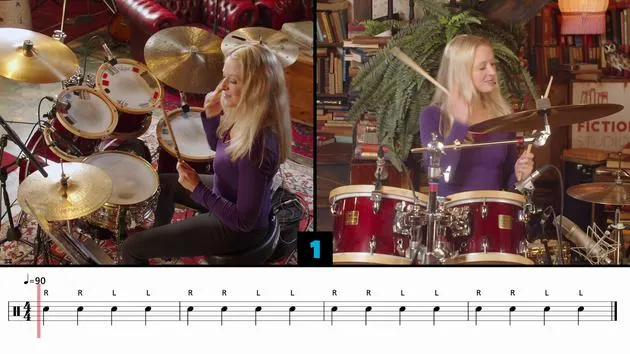
03. Ejemplo 2 - Golpes dobles
1:28
04. Ejemplo 3 - Paradiddles
2:37
05. Bonus - Combinar golpes simples, dobles y paradiddles
2:22
06. Lección de rock 2 - Añadir silencios
1:48
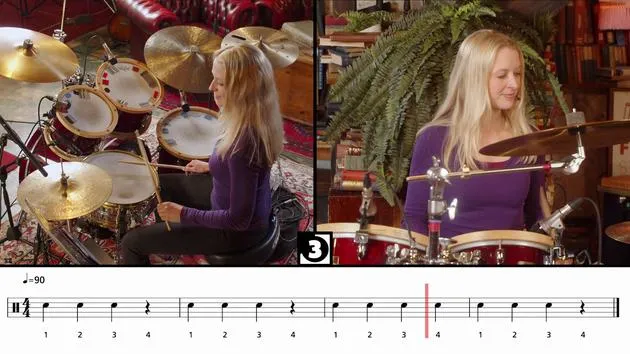
07. Ejemplo 1 - Silencio en el tiempo 4
1:56
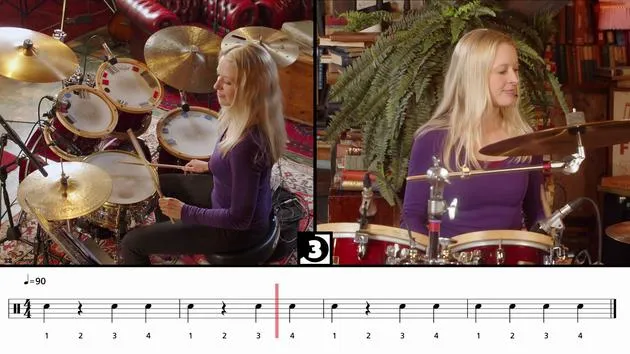
08. Ejemplo 2 - Silencio en el tiempo 2
1:36
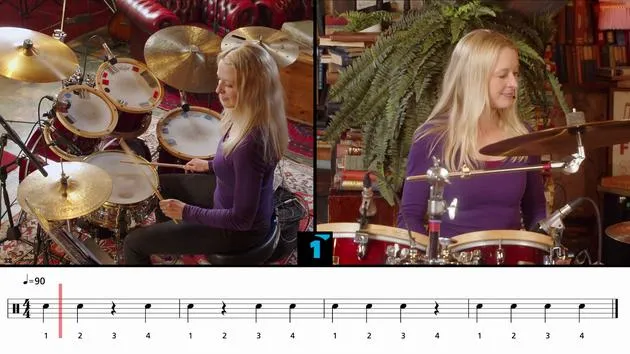
09. Ejemplo 3 - Silencios que se mueven
1:05
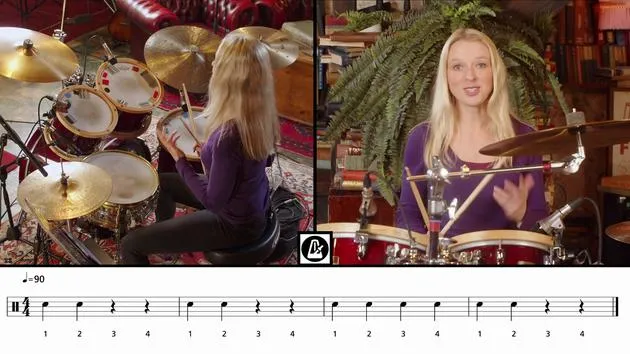
10. Ejemplo 4 - Piston compases 12-16
1:56
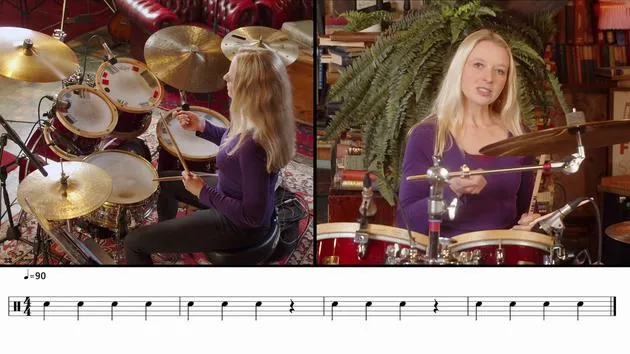
11. Ejercicio extra 1
1:49
12. Ejercicio extra 2
1:02
13. Resumen de la sección de rock
1:50
01. Pop - Añadir el charles
1:31
02. Ejemplo 1 - Negras en el hi-hat
1:40
03. Ejemplo 2 - Silencio en el tiempo 1
1:42
04. Ejemplo 3 - Dos silencios de negra consecutivos
1:28
05. Ejercicio extra 1
1:11
06. Ejercicio extra 2
1:10
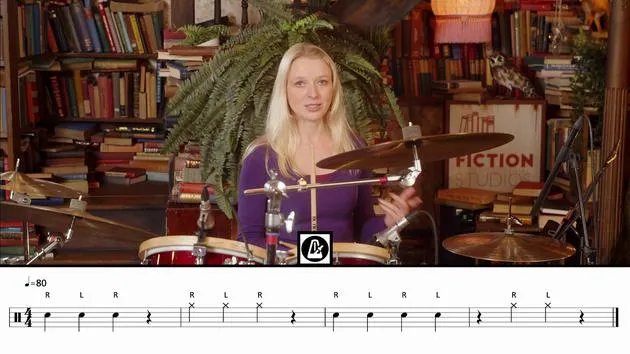
07. Pop Lección 2 Ejemplo 1 - Combinar el hi-hat y la caja
1:11
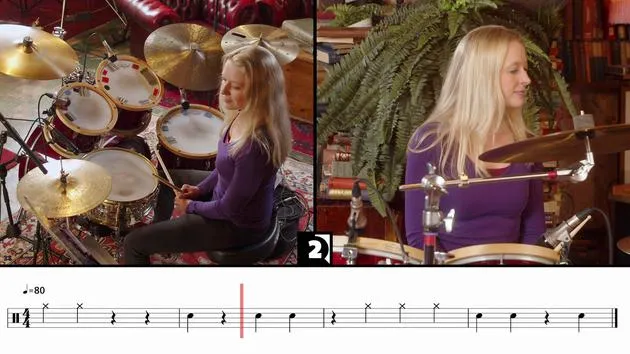
08. Ejemplo 2 - Moverse rápidamente entre las voces de la batería
1:17
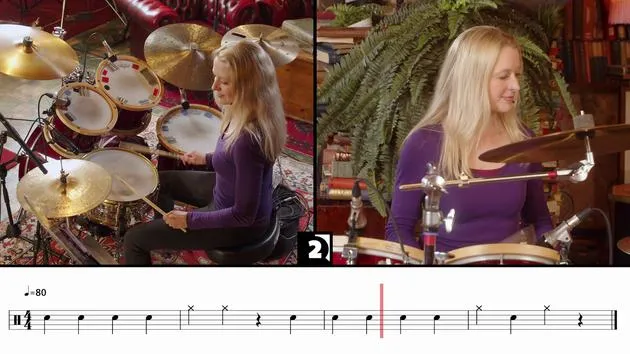
09. Ejemplo 3 - Dos voces de batería en un compás
0:59
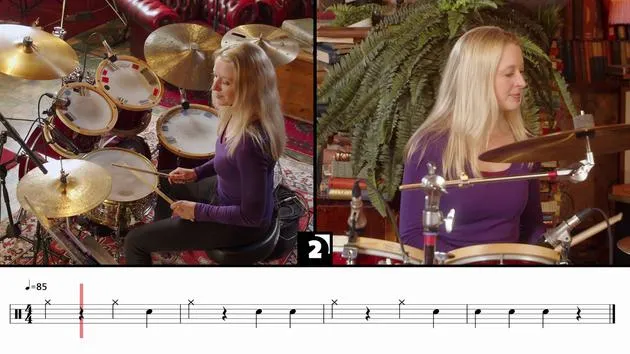
10. Ejemplo 4 - Take It to the Top, compases 1-4
1:10
11. Ejercicio extra 1
1:08
12. Ejercicio extra 2
1:04
13. Resumen de la sección de música pop
0:51
01. Introducción a la música country
4:13
02. Punto de control de habilidades
1:54
03. Ejemplo 1 - Silencio de blanca
1:18
04. Ejemplo 2 - Colocación del silencio de blanca
1:31
05. Ejemplo 3 - Frases de bombo
1:29
06. Ejercicio extra 1
1:27
07. Ejercicio extra 2
1:10
08. Lección de country 2 - Combinar bombo, caja y charles
3:07
09. Ejemplo 1 - Combinar el bombo y el charles
1:40
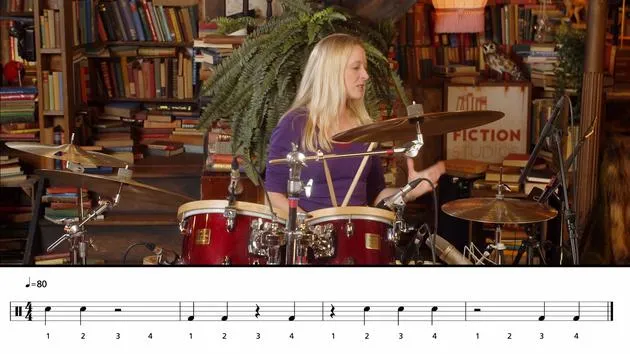
10. Ejemplo 2 - Añadir el silencio de blanca en distintas posiciones
1:10
11. Ejemplo 3 - Moverse rápido entre voces de la batería
1:10
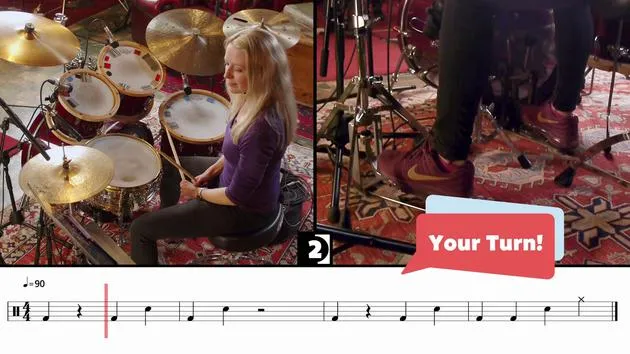
12. Ejemplo 4 - Borderlands compases 1-4
1:06
13. Ejercicio extra 1
1:30
14. Ejercicio extra 2
0:56
15. Resumen de la sección de música country
0:26
01. Introducción al metal: tocar dos voces de batería
3:35
02. Ejemplo 1 - Centrarse en la coordinación
2:19
03. Ejemplo 2 - Variaciones de bombo
1:16
04. Ejemplo 3 - Coordinar las manos
1:09
05. Ejercicio extra 1
1:05
06. Ejercicio extra 2
0:50
07. Resumen de la lección 1 de metal
0:25
08. Lección de metal 2 - Tocar tu primer ritmo completo
1:56
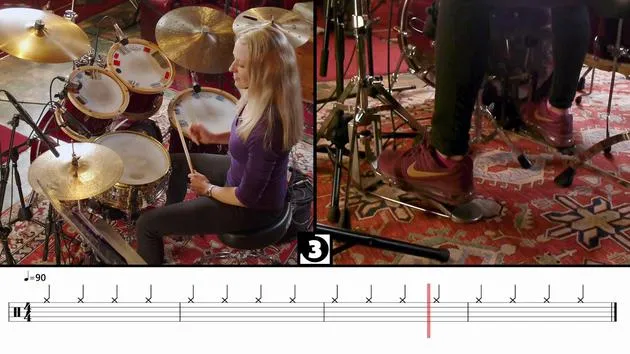
09. Ejemplo 1 - Patrón básico de hi-hat para ritmo de rock
1:08
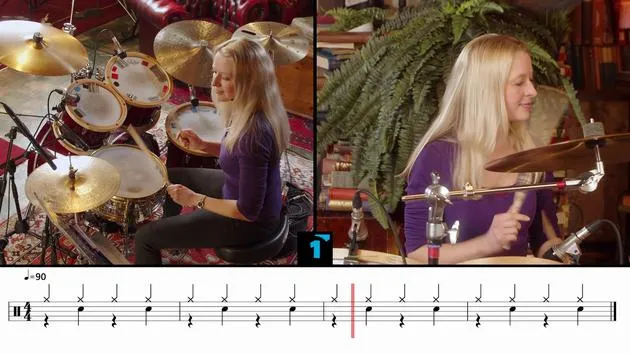
10. Ejemplo 2 - Añadir el back beat
0:58
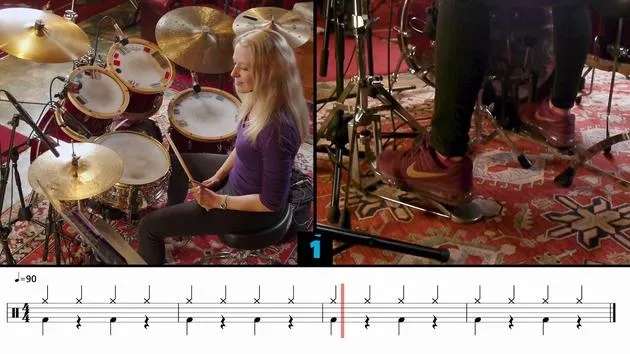
11. Ejemplo 3 - Añadir el bombo
0:59
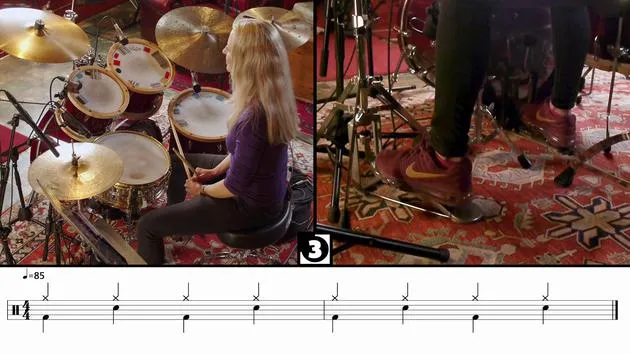
12. Ejemplo 4 - Power Trip compases 13-14
1:32
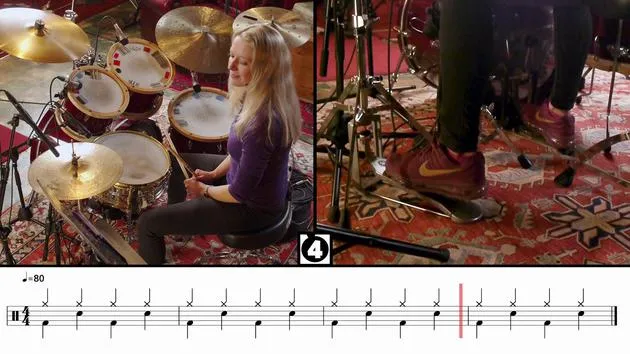
13. Ejercicio extra 1
1:10
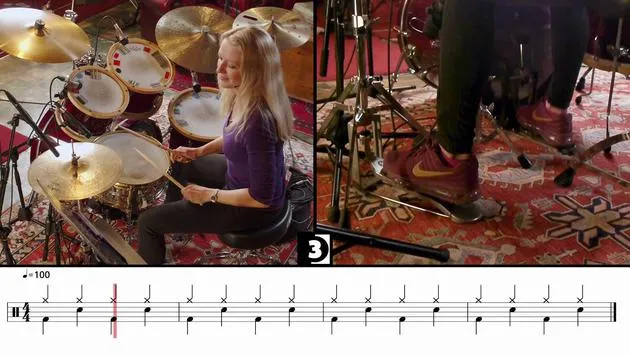
14. Ejercicio adicional 2
0:53
15. Resumen de la sección de metal
1:05
01. Indie - Introducción al estilo
1:26
02. Ejemplo 1 - Descansar en el tercer tiempo
1:01
03. Ejemplo 2 - Más variaciones
1:00
04. Ejemplo 3 - Coordinar las extremidades
2:16
05. Ejercicio extra 1
1:10
06. Ejercicio extra 2
0:50
07. Resumen de la lección 1 de indie
0:25
08. Indie Checkpoint: mazas
2:46
09. Lección de indie 2 - Introducción al bombo y la caja en corcheas
1:25
10. Ejemplo 1 - Caja con corcheas
1:36
11. Ejemplo 2 - Bombo en corcheas
1:04
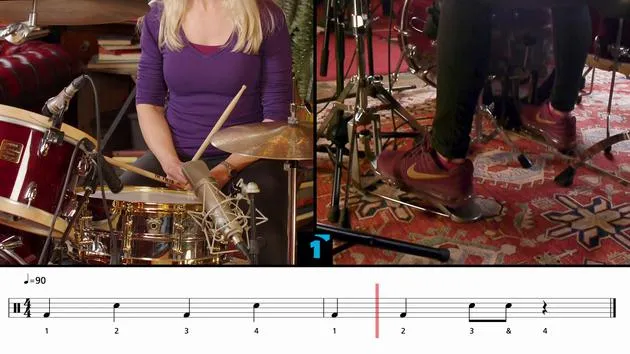
12. Ejemplo 3 - Frase de corcheas
0:59
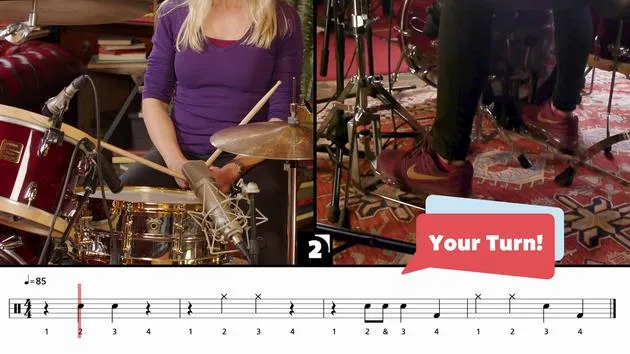
13. Ejemplo 4 - 'Big Mouth' compases 1-4
1:48
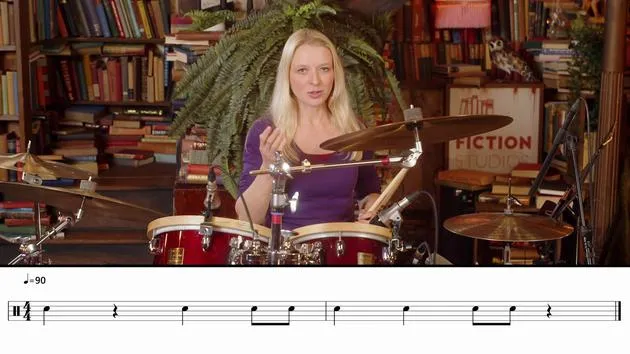
14. Ejercicio extra 1
0:38
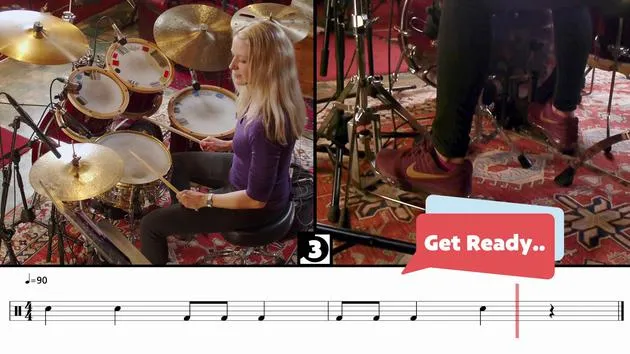
15. Ejercicio extra 2
0:59
16. Resumen de la sección de indie
0:34
01. Introducción al hip-hop - Ritmos básicos y fills
1:33
02. Ejemplo 1 - Fill de caja y bombo
1:10
03. Ejemplo 2 - Fill de caja y charles
1:08
04. Ejemplo 3 - Fill con caja, charles y bombo
1:09
05. Ejercicio extra 1
1:38
06. Ejercicio extra 2
0:47
07. Resumen de la lección 1 de hip-hop
0:32
08. Lección de hip hop 2 - Introducción a los beats de corcheas
3:53
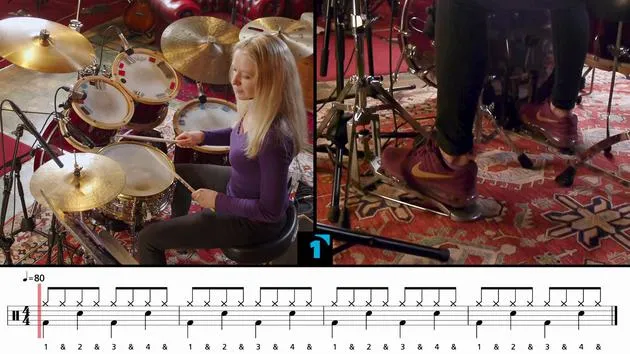
09. Ejemplo 1 - El ritmo básico de corcheas
1:19
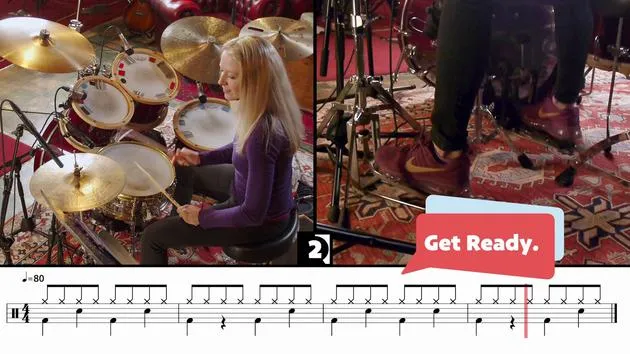
10. Ejemplo 2 - Variaciones de caja
1:28
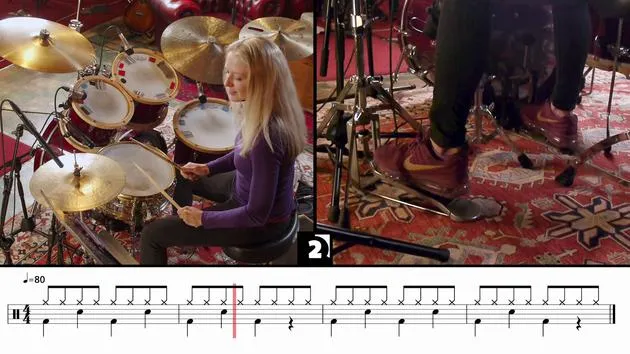
11. Ejemplo 3 - Variaciones de bombo
1:09
12. Ejemplo 4 - 'The Dogg' compases 13-16
1:56
13. Ejercicio extra 1
1:04
14. Ejercicio adicional 2
1:09
15. Resumen de la sección de hip-hop
0:32
01. Introducción a las piezas
1:04
02. Piston (Rock) - Recorrido
4:57
03. Piston (Rock) - Interpretación
0:46
04. Take it to the Top (Pop) - Guía paso a paso
3:58
05. Take it to the Top (Pop) - Interpretación
0:50
06. Borderlands (Country) - Guía paso a paso
3:49
07. Borderlands (Country) - Interpretación
0:48
08. Power Trip - Recorrido
5:04
09. Power Trip (Metal) - Interpretación
0:51
10. Big Mouth (Indie) - Recorrido
5:26
11. Big Mouth (Indie) - Interpretación
0:52
12. The Dogg (Hip Hop) - Guía paso a paso
6:14
13. The Dogg (Hip Hop) - Interpretación
0:51
14. Overload (Rock) - Recorrido
5:23
15. Overload (Rock) - Interpretación
0:50
16. Slam (Metal) - Recorrido
4:28
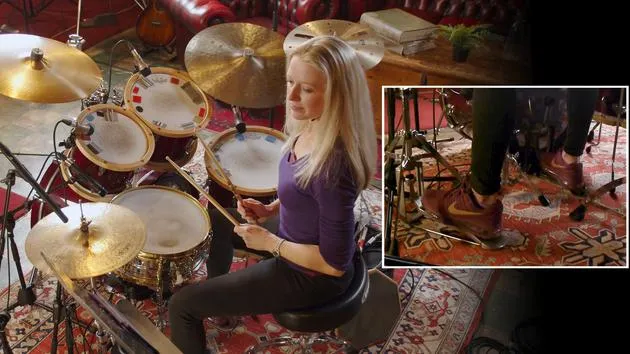
17. Slam (Metal) - Interpretación
0:51
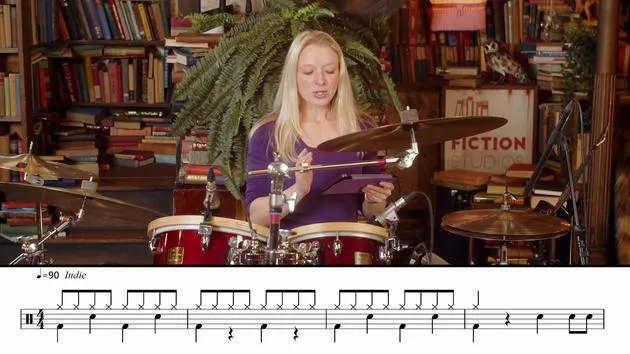
18. Under the Radar (Indie) - Walkthrough
Estás aquí5:02
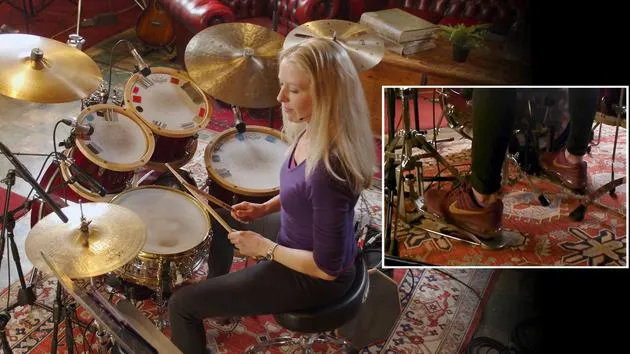
19. Under the Radar (Indie) - Interpretación
0:50
Transcripción de la lección
Music Lesson: "Under the Radar" - Classic Rock Groove
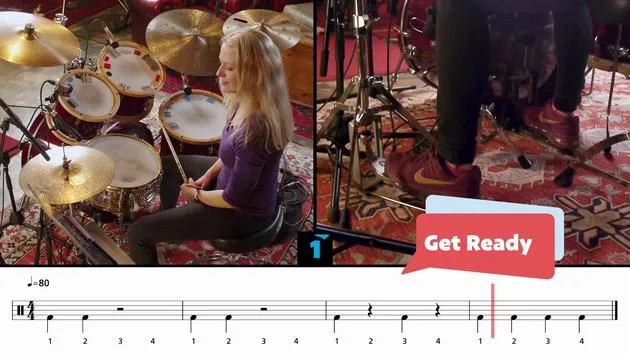
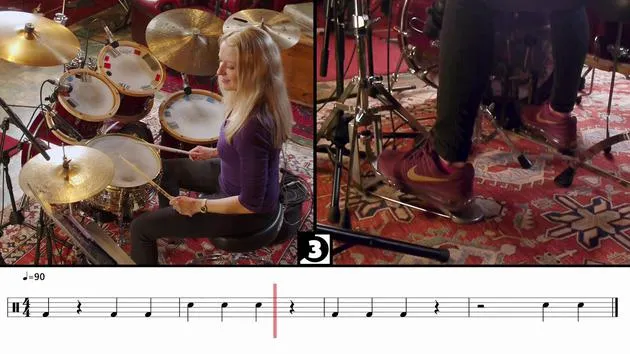
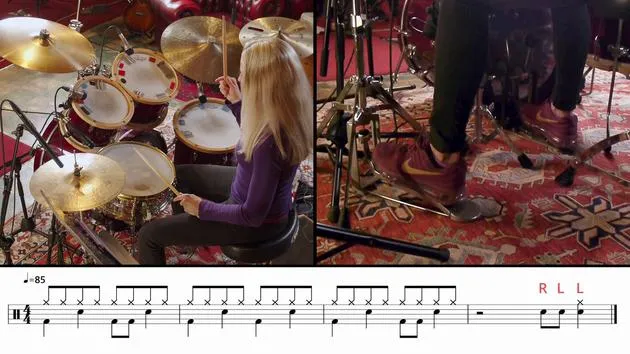
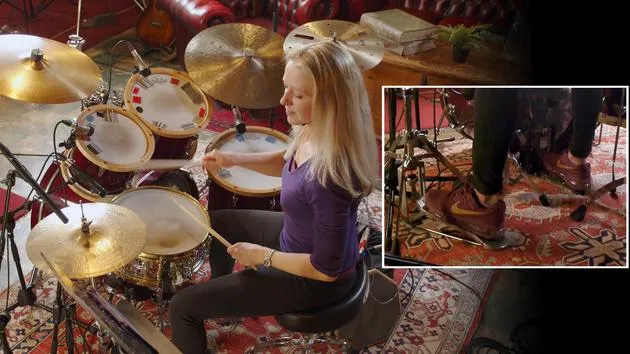
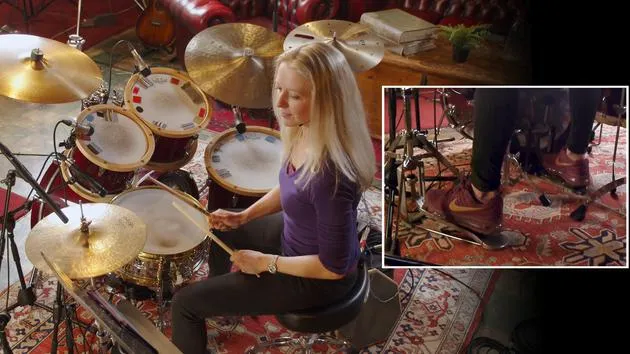
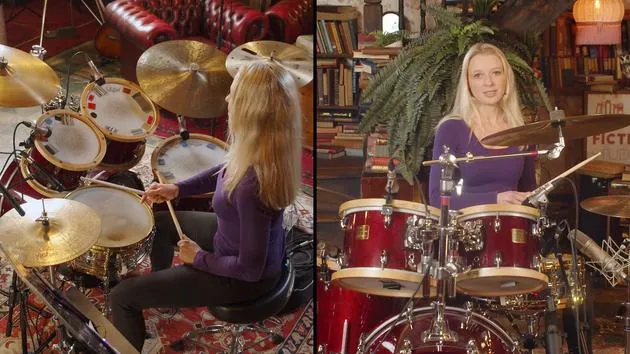
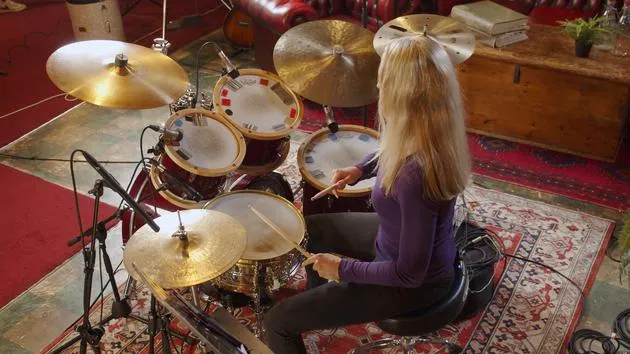
With the indie piece "Under the Radar," we're starting the song and finishing it with quite a classic rock groove.
Basic Groove Structure
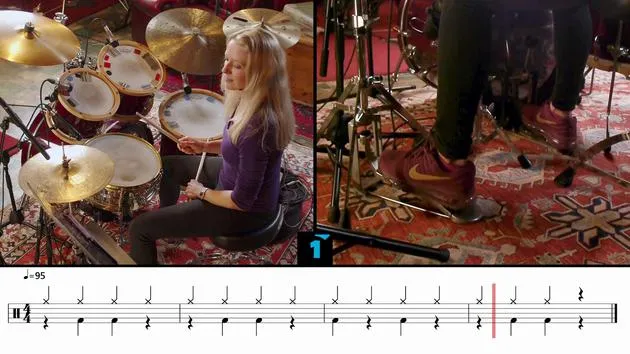
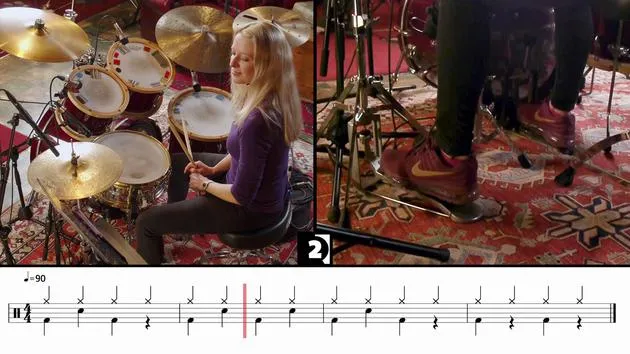
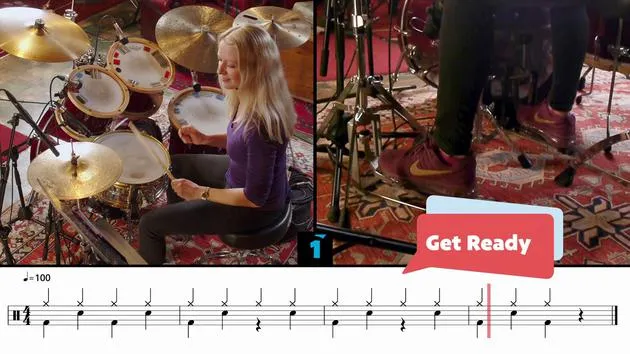
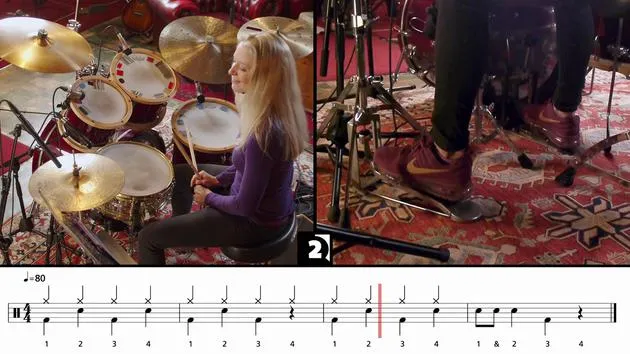
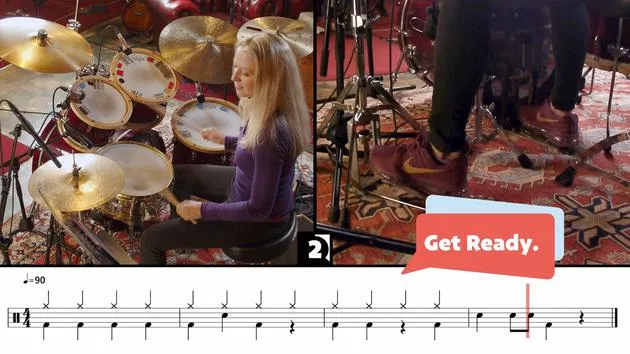
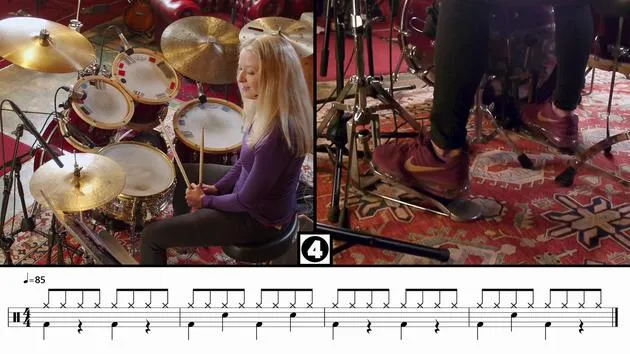
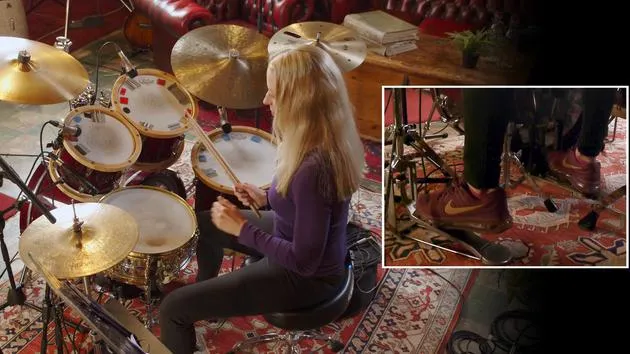
- Hi-hat: Eight notes
- Bass drum: Plays on beats 1 and 3
- Snare drum: Plays on beats 2 and 4
The groove reduces in the middle of the piece to play fewer notes before we build back up to that classic groove. Let’s explore that journey.
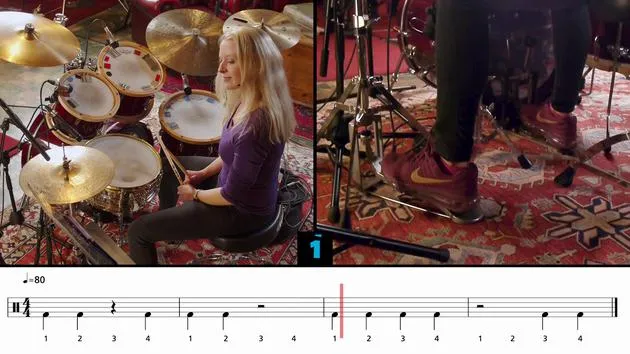
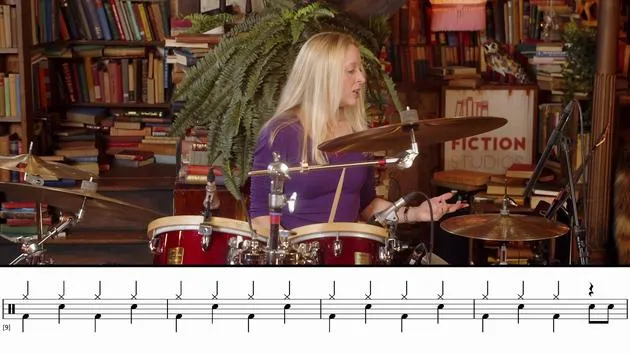
First Line
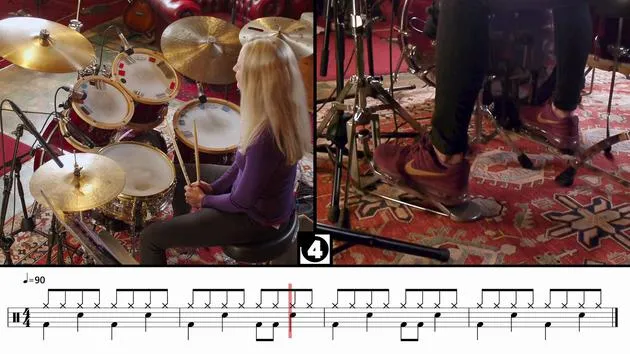
- Bars 1 and 3: Classic rock patterns.
- Bar 2: Snares drop out.
- Bar 4: Features a nice little drum fill.
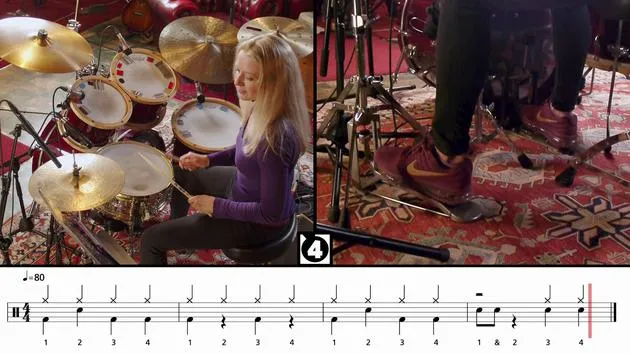
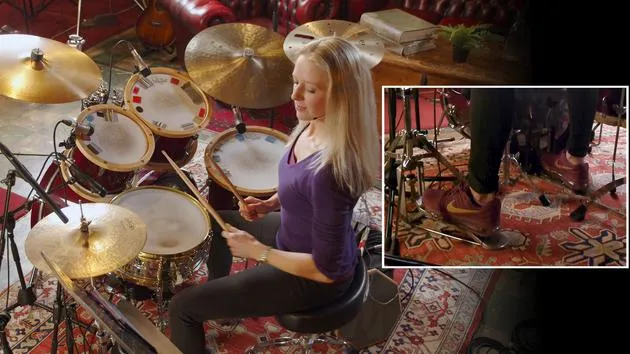
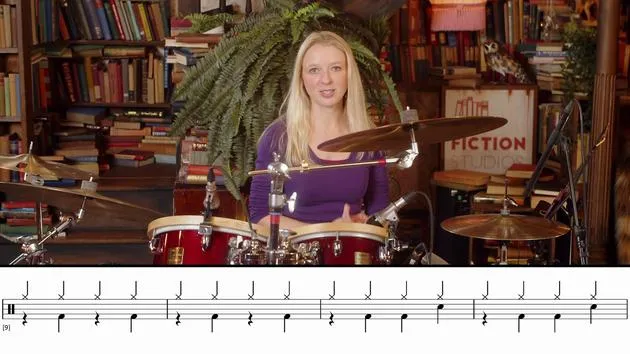
Drum Fill Breakdown:
- Mark beat 1 with the hi-hat and bass drum.
- Follow with a quarter note rest.
- Hit snares on beats 3 and 4.
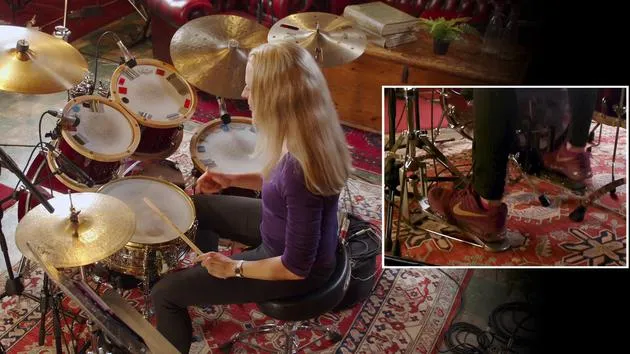
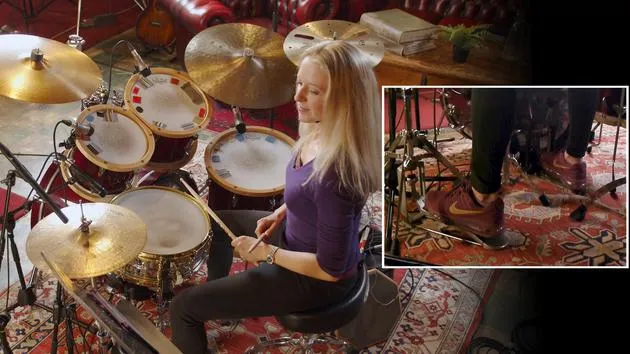
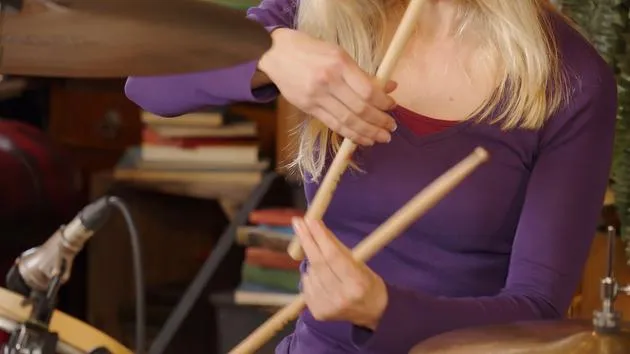
Sticking Patterns
- As a starting point, if you're right-handed:
- Play the numbers with the right hand
- Play the "ands" with the left hand
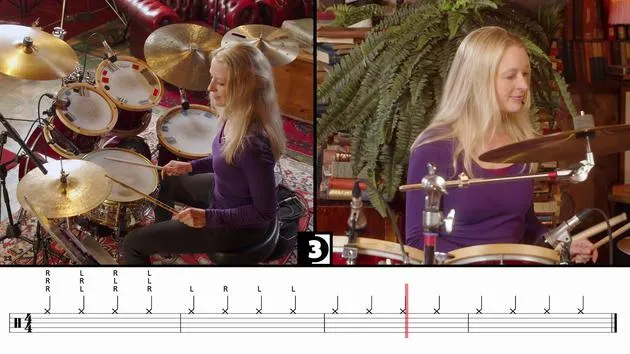
Counting Example:
1 and 2 and 3 and 4
For variation, try this sticking pattern for the snares in bar 4:
- Beat 3: Left hand
- Beat 4: Right hand
- And of 4: Left hand
Counting for Feel
Try counting as follows to feel the space:
1, 2, 3, 4,
1 and 2 and 3 and 4
Note on Sticking
At this stage, avoid playing three snares in a row with the same stick to work on balance and single strokes.
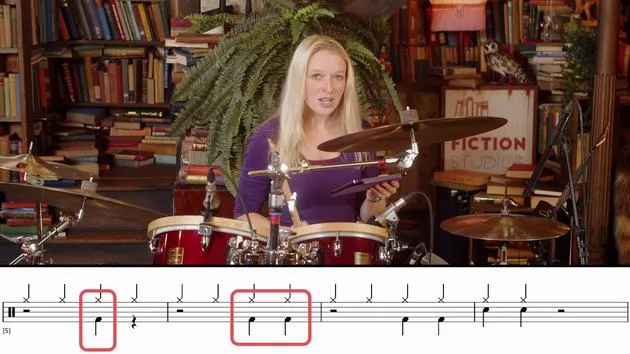
Second Line
Unusually, the song reduces slightly here:
- From eighth notes to quarter notes.
Snare Activity
- Not much snare activity until bar 4 where we have snares on beats 4 and the “and” of 4.
- Right-handed players: Choose to play those snares right, left to lead back into the hi-hat at the beginning of the third line.
Observations
- There is a lot of space with rests in the snare and bass drum parts.
- Hi-hats serve as the primary timekeeper; not much to flag up in the third line.
- Watch for the reintroduction of the snare in the fourth bar of the third line.
Last Line
The last line is fairly similar to the first line, but pay attention to:
- End of bar 3: Two snares on beat 4 and the “and” of 4 leading into beat 1 where we finish the piece with the hi-hat and bass drum.
End of Piece Breakdown
Last two bars example:
1, 2, 3, 4
Using Crash Cymbals
If you feel adventurous and your crash cymbals haven't been played much, you can choose to end the last note with a crash cymbal.
- This mimics the sound you'd hear when playing with a band, similar to songs you enjoy.
Ending with Crash:
- Let the crash ring out; mute it with your hand if necessary while talking to someone.
- If playing with a guitarist and bassist, you may want to stop the crash at the same time they finish their phrases.
Mute Technique
To mute the cymbal:
- Use the other hand to stop the vibrations.
Practice example:
- Mute it on beat four:
1, 2, 3, 4
1, 2, 3, 4
Control the length of the crash sound, especially as you incorporate it into your final ending. This could be a nice touch to your performance!
114 lecciones
3h 47m de lecciones en vídeo estructuradas
Funciones de vídeo avanzadas
Ralentiza, repite un pasaje, sigue la partitura
Móvil, tablet y ordenador
Practica donde quieras
Garantía de satisfacción 100%
30 días de garantía de devolución
Conoce a tu gurú
Conoce a tu gurú
Sophie Alloway es una batería de sesión y de gira en el corazón de la escena del jazz londinense. Ha actuado con Jason Rebello, Yazz Ahmed, Laurence Cottle y Tony Allen, y destaca por haber tocado para el príncipe Carlos en el Palacio de Buckingham poco antes de que se convirtiera en rey.
Entre sus créditos de gira figuran Roots Manuva, el musical Thriller y Paul Stacey (Oasis / The Black Crowes). También es la batería de la banda original de fusión Lydian Collective, con más de seis millones de reproducciones en Spotify.
Sophie ha grabado sesiones en los estudios Abbey Road, AIR y Angel, y entre sus apariciones televisivas se cuentan Later… with Jools Holland, Glastonbury y dos temporadas del drama Ridley, de Adrian Dunbar. Aparece en Abbey Road Masters: The Drum Sessions y tocó para los finalistas del BBC Young Jazz Musician 2024, emitido en BBC TV y radio. Jon Newey, de Jazz FM, la apodó la "diosa del groove".







