



Tonguing exercise #1
With
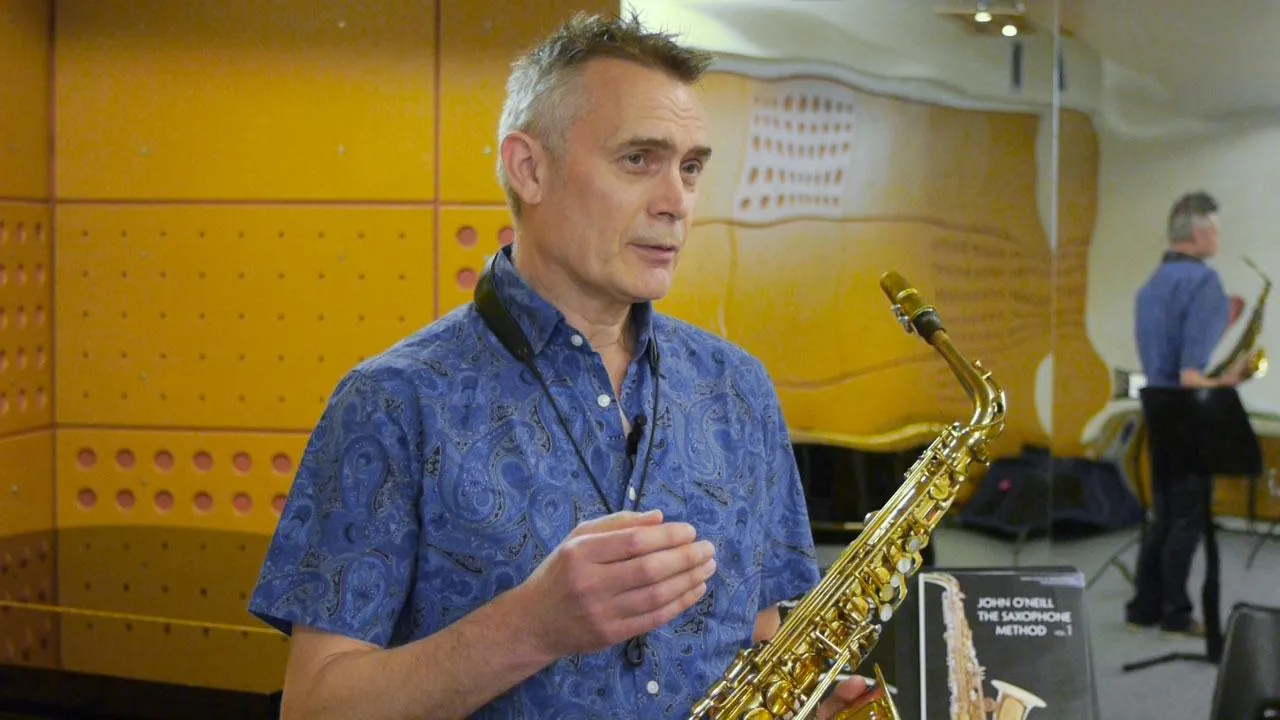
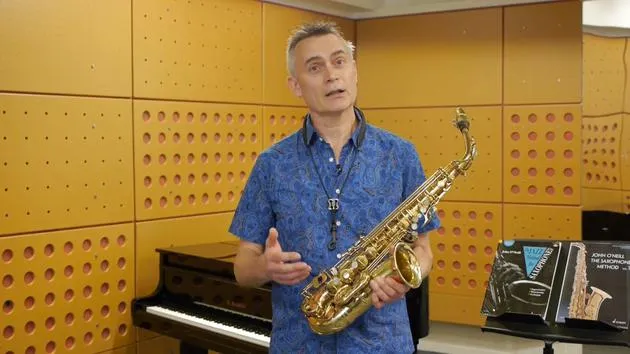
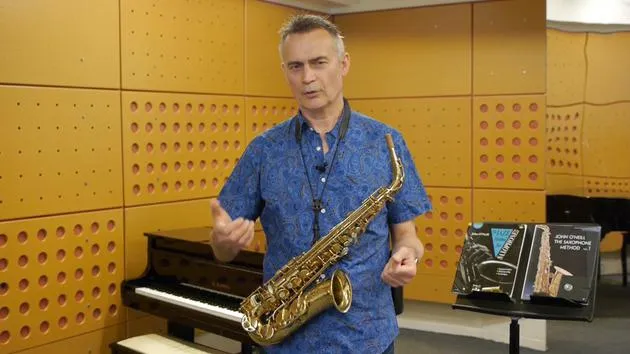
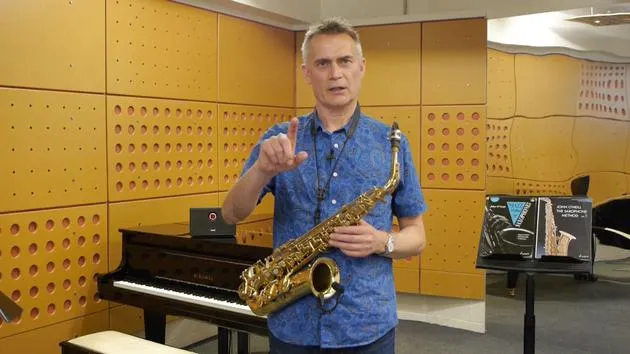
John O'NeillJohn O'Neill introduces tonguing, the saxophone player's equivalent of the violinist's bow, used to start notes precisely and shape your phrasing, and one of the hardest skills to master.
What's in the course
25 lessons (2h 10m) · 1 free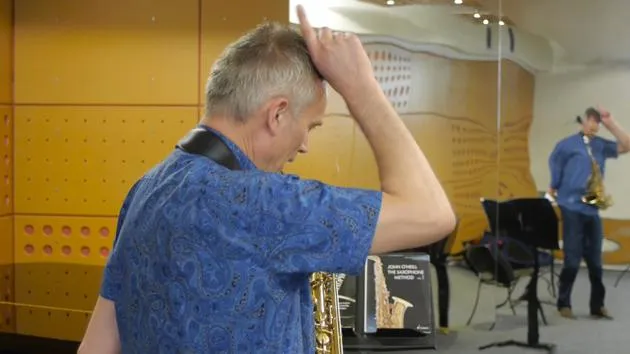
01. Posture
13:20
02. Fingering
4:10
03. The breath
4:12
04. Breathing exercise #1
3:24
05. Breathing exercise #2
4:34
06. Breathing exercise #3
2:29
07. Breathing exercise #4
1:27
08. Breathing exercise #5
2:27
09. Embouchure & your first note
9:46
10. Troubleshooting your first note
9:34
11. Developing your sound
3:43
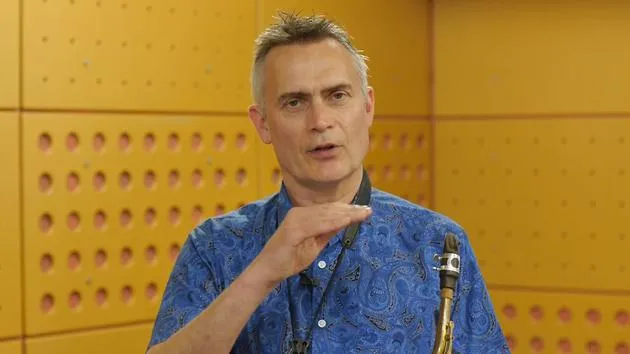
12. Tonguing exercise #1
You are here4:36
13. Tonguing exercise #2
6:49
14. Final thoughts & practising
1:57
Lesson transcript
Mastering Tonguing for Saxophone Players
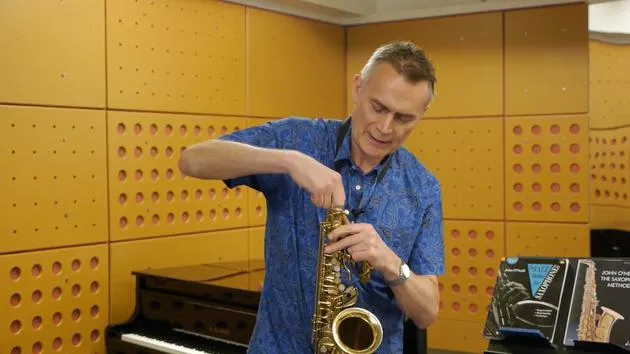
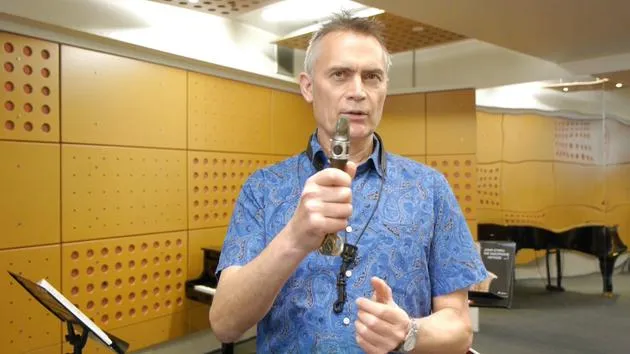
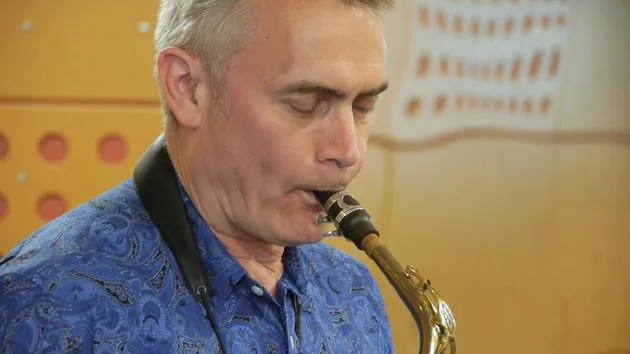
Tonguing is one of the most important skills to master for every saxophone player. The tongue is like the saxophone player's equivalent of the violinist's bow. It enables you to:
- Start notes precisely
- Repeat notes quickly and efficiently
- Create subtle variations of phrasing
Unfortunately, it's also one of the most difficult skills to acquire. Part of the reason for that is that you can't see what I'm doing, and I can't see what you're doing. We're both kind of working with our eyes shut. However, over the years that I've been teaching, I have devised an effective way of teaching people to tongue.
The Ventriloquist Exercise
My first teacher, Don Rendell, used to tell me that tonguing was like ventriloquism, and he was absolutely right. When I first started teaching, I would go into all kinds of complicated descriptions of what the tongue was doing. As the years went by, I came back to Don's idea of tonguing being like ventriloquism.
Here's the exercise:
-
Stand in front of a mirror.
-
Take a note, let's say the B that we've been playing already.
-
Sing that note as if you were a ventriloquist:
- Attempt to do this without moving your lips, teeth, or jaw.
"Do, do, do, do, do."
Using the mirror, observe how much movement there is. It may be impossible to have no movement, but try to keep it to an absolute minimum.
Notable Points During the Exercise:
- The "do" sound is produced not by the tip of your tongue, but just behind the tip.
- The tongue moves as little as possible.
- The tongue moves as gently as possible, so it's not like this: "do, do, do," but more like: "do, do, do."
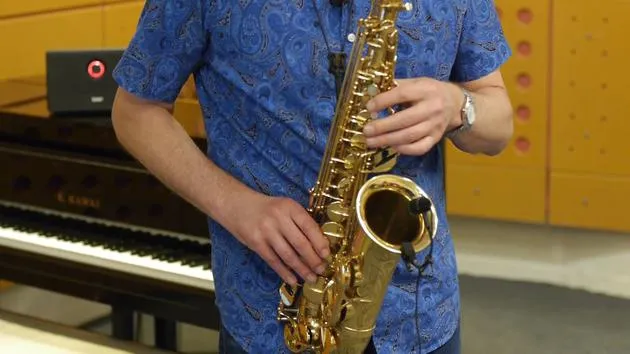
I'm moving my hand across to remind myself to maintain the line. Earlier, when we were playing long notes, I talked about the importance of drawing a line. Keep that in mind as you do the ventriloquist exercise:
"Do, do, do, do."
Final Thoughts
Although you hear distinct notes, I want you to think of this as one breath because it is one breath. It's almost like thinking of it as one continuous sound.
Don't confuse trying to keep the action of the tongue gentle with playing or singing more quietly. This is a common misunderstanding. The gentleness of the tongue's action is completely distinct from the volume of the sound, whether you're singing or playing.
25 lessons
2h 10m of structured video lessons
Advanced video features
Slow down, loop a passage, follow along
Mobile, tablet & desktop
Practise wherever you are
100% satisfaction guarantee
30-day money-back guarantee
Meet your guru
Meet your guru
John O'Neill is the saxophonist behind The Jazz Method for Saxophone - the Schott series that has taught a generation of players around the world to improvise. First published in 1991, it remains one of the best-selling jazz tutors ever written, alongside his companion methods for clarinet and flute.
He came to the saxophone at twenty, while reading French and German at Trinity College, Oxford, after hearing John Coltrane. He went on to study with British tenor great Don Rendell, and took improvisation from Lee Konitz, Warne Marsh and Peter Ind - direct heirs of the legendary teacher Lennie Tristano. A professional musician since 1979, he specialises in jazz and bossa nova and has played London's leading venues, including Ronnie Scott's, while also writing music for film, television, theatre and dance.
A qualified teacher with decades of experience, John has taught saxophone, clarinet and flute privately and in schools, on the jazz course at Trinity College of Music in London, and at summer schools in Spain and the Czech Republic. He still performs and teaches from his home in North London.







