



Caring for your sax

With
John O'Neill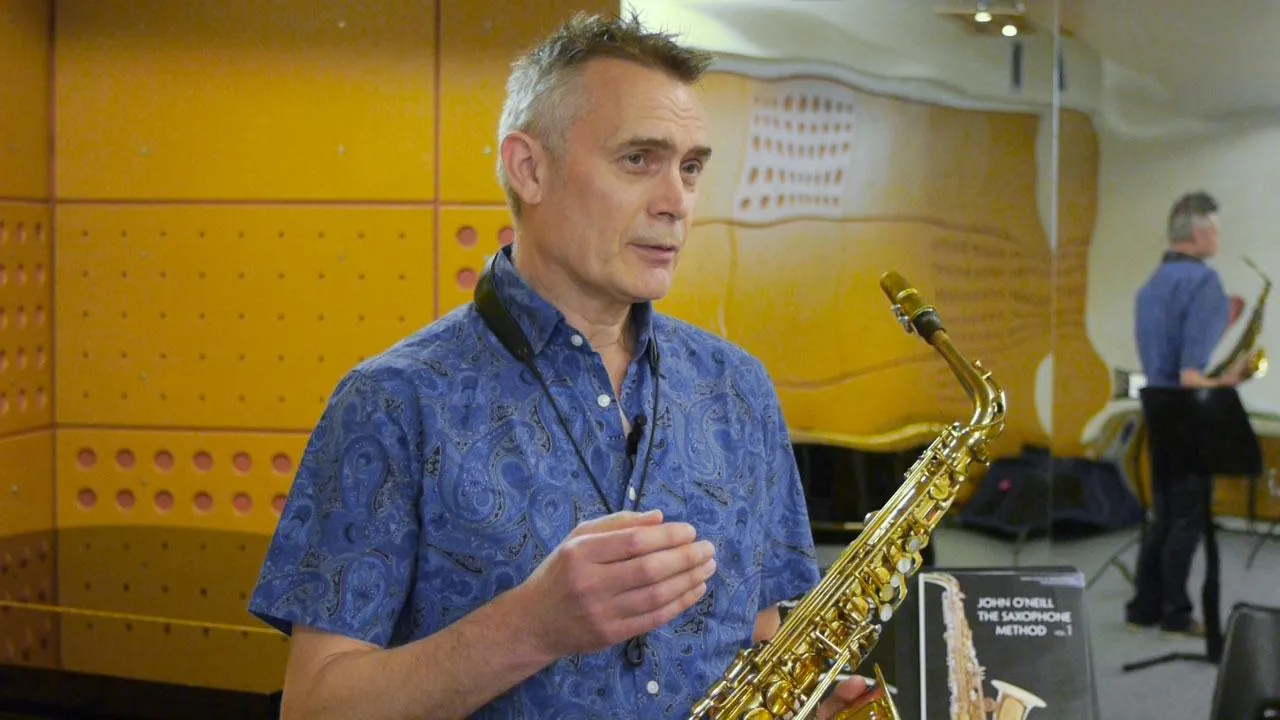
What's in the course
25 lessons (2h 10m) · 1 free
01. Posture
13:20
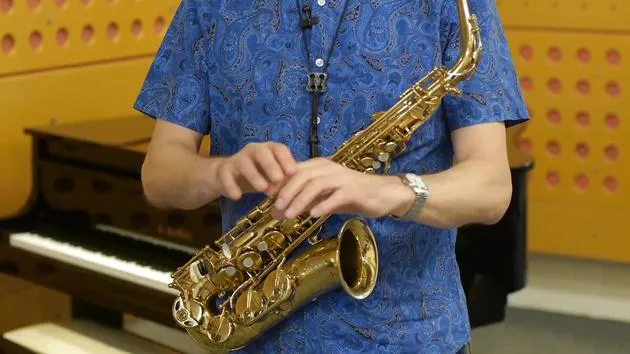
02. Fingering
4:10
03. The breath
4:12
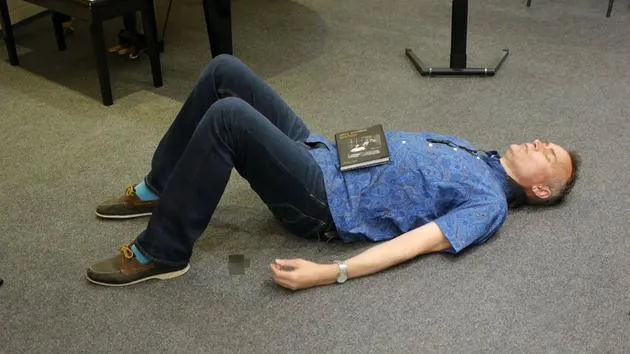
04. Breathing exercise #1
3:24
05. Breathing exercise #2
4:34
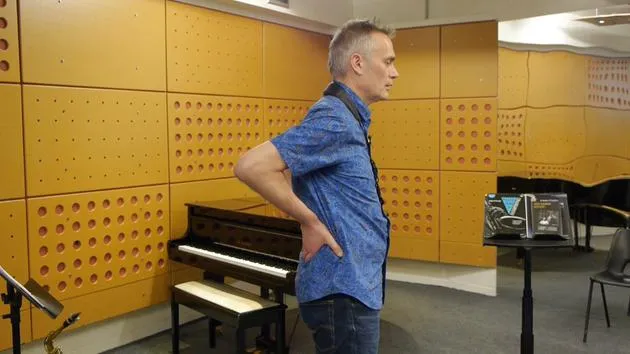
06. Breathing exercise #3
2:29
07. Breathing exercise #4
1:27
08. Breathing exercise #5
2:27
09. Embouchure & your first note
9:46
10. Troubleshooting your first note
9:34
11. Developing your sound
3:43
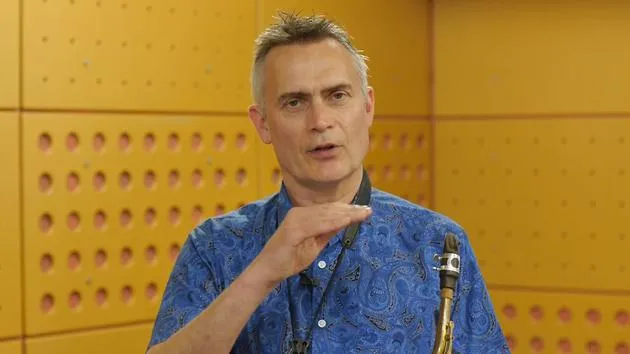
12. Tonguing exercise #1
4:36
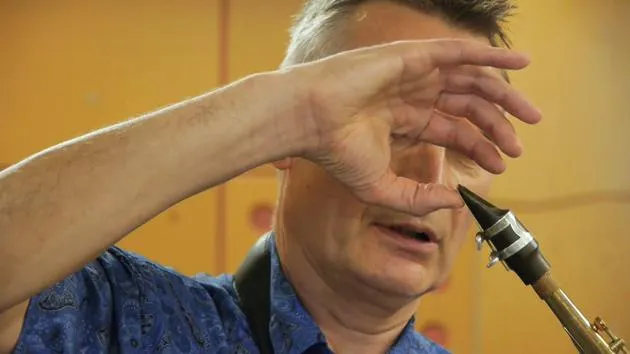
13. Tonguing exercise #2
6:49
14. Final thoughts & practising
1:57
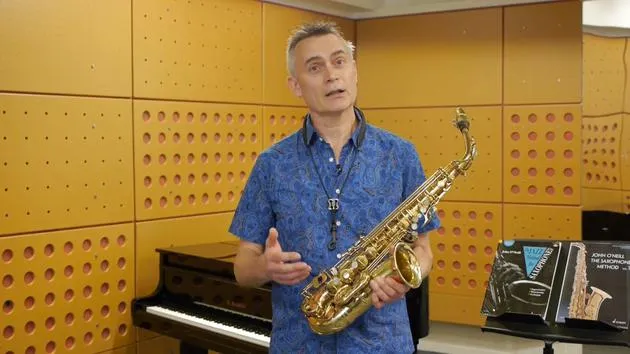
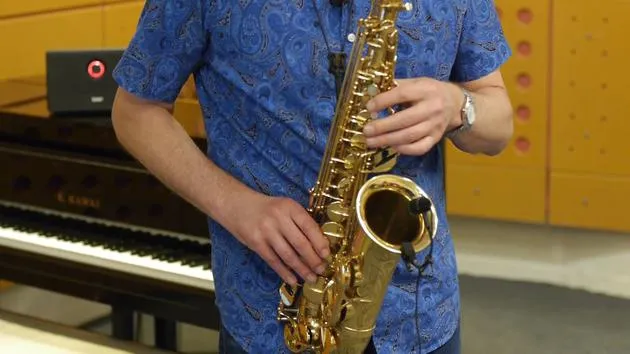
Lesson transcript
Caring for Your Saxophone
Cleaning the Mouthpiece
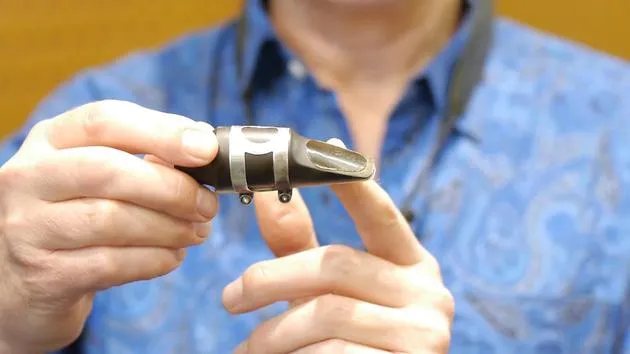
What's important is to clean out the inside of the mouthpiece with a tissue.
- While you're playing, your saliva will accumulate in the mouthpiece if you leave it there.
- Over time, all kinds of gunge accumulates, which is not very hygienic.
- A simple thing to do when you finish playing is to get a tissue and clean out the inside of the mouthpiece.
- Keep a few tissues in your case so that you're always prepared for this.
Removing Moisture
-
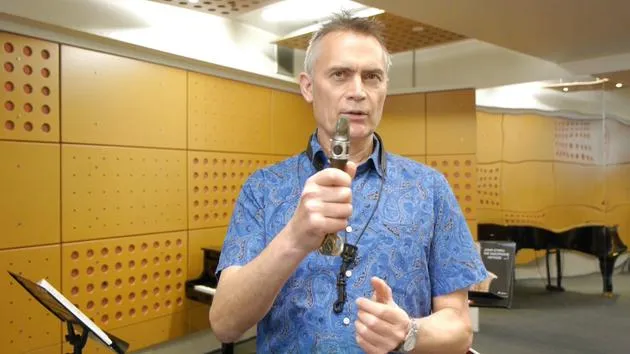
Remove the crook and then remove the moisture from the inside of the saxophone using a pull-through.
- This is a pull-through; they have different designs, some with brushes.
- The way it works: there's a weight on the end. You drop that weight into the bell, and as it comes out the other end, you pull it through.
- This process removes the excess moisture from inside the saxophone, allowing it to be put back in its case.
-
Don't forget to use your end plug.
- The end plug protects this part of the saxophone.
- Sometimes people forget about them or lose them, but they are a crucial part of the equipment.
- The end plug ensures that the saxophone fits snugly inside the case.
Avoiding Cleaning Mops
One thing that's marketed for the inside of your saxophone are these big cleaning mops.
- I really don't recommend using those, as they sit inside the instrument wet.
- The whole point of a cleaning system is to get the moisture out of the saxophone; please avoid those cleaning mops.
Maintaining the Crook
- You can use a brush for the crook; a simple bottle brush will do.
- You don't necessarily have to do this every time you play, but it's good to do occasionally.
Dealing with Sticky Keys
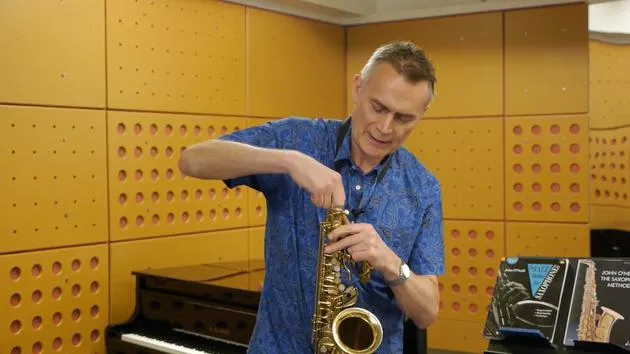
A common problem, particularly with smaller saxophones like the alto and soprano, is a sticky G sharp key.
- This is the G sharp key.
- Unlike most keys, which are naturally open, this one remains shut most of the time.
- The low C sharp key is connected to it, so when you move the G sharp key, the low C sharp key moves too.
Preventing and Fixing Stickiness
-
To prevent the G sharp key from sticking:
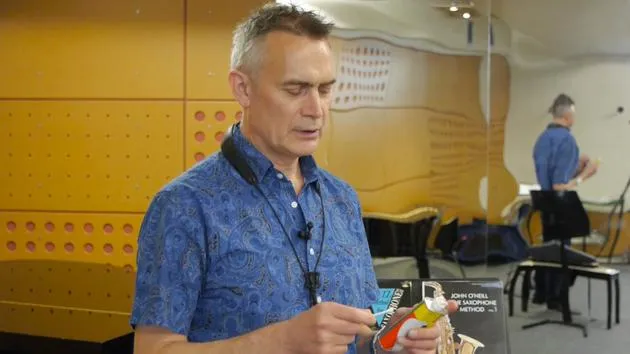
- Get a small piece of card (very thin) and place it under the key after playing. This will help lift it and prevent stickiness.
-
If you already have a sticky G sharp key or any other sticky keys:
- The best way to clean them is with lighter fluid.
- Use a cotton bud to apply a little lighter fluid and clean around the pad and tone hole.
Additional Cleaning Tips
-
Use a soft cloth to keep the outside of the saxophone clean.
- Be cautious with products; usually, a soft cloth is all you need.
- For marks, just moisten the cloth slightly to remove them.
-
For hard-to-reach places, again, use a cotton bud.
- They fit nicely in small areas underneath the keys.
General Care of Your Instrument
Please try to keep the instrument in its case.
- Often, people leave the instrument on a stand, thinking it's easy to grab and play.
- However, if you leave your saxophone assembled for long periods, it can lead to several issues:
- Wearing down of the cork if the mouthpiece is left on.
- The crook may not fit properly, leading to potential tightness.
- The instrument collects dust and dirt and becomes more vulnerable to damage, like being knocked off its stand.
- However, if you leave your saxophone assembled for long periods, it can lead to several issues:
It doesn't take long to assemble your saxophone. Once you're used to it, you can put it together in a minute or two.
So please get into the habit of storing your instrument back in its case!
25 lessons
2h 10m of structured video lessons
Advanced video features
Slow down, loop a passage, follow along
Mobile, tablet & desktop
Practise wherever you are
100% satisfaction guarantee
30-day money-back guarantee
Meet your guru
Meet your guru
John O'Neill is the saxophonist behind The Jazz Method for Saxophone - the Schott series that has taught a generation of players around the world to improvise. First published in 1991, it remains one of the best-selling jazz tutors ever written, alongside his companion methods for clarinet and flute.
He came to the saxophone at twenty, while reading French and German at Trinity College, Oxford, after hearing John Coltrane. He went on to study with British tenor great Don Rendell, and took improvisation from Lee Konitz, Warne Marsh and Peter Ind - direct heirs of the legendary teacher Lennie Tristano. A professional musician since 1979, he specialises in jazz and bossa nova and has played London's leading venues, including Ronnie Scott's, while also writing music for film, television, theatre and dance.
A qualified teacher with decades of experience, John has taught saxophone, clarinet and flute privately and in schools, on the jazz course at Trinity College of Music in London, and at summer schools in Spain and the Czech Republic. He still performs and teaches from his home in North London.







