



Ejercicio de respiración n.º 3
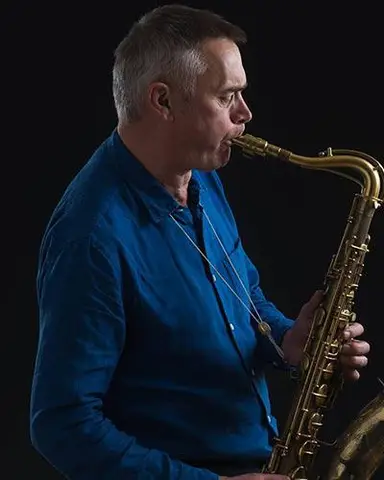
Lesson time: (2min 29sec)
Un tercer ejercicio de respiración: con las palmas en la zona lumbar, John O'Neill muestra cómo sentir cómo la respiración se expande hacia la espalda para lograr un tono de saxofón más estable.
Course preview
This lesson is part of the course The Saxophone Method Vol. 1: Técnicas fundamentales
Watch a preview of the full course below.
Lesson transcript:
Breathing Exercise for Saxophone
So in this next exercise, we're doing the same thing again, but this time I'm positioning my hands so the palms of my hands are on my back like so.
Breathing Technique
-
Breathe In:
- Again, I should feel that my hands are being pushed out.
- This is a little bit more difficult to feel for some people.
-
Feel the Breath:
- You should feel that you're breathing into your hands.
Reflection on Learning
When I first started playing the saxophone, I was always down at the library seeing if I could find any books that would help me understand better what was going on.
A Memorable Book
I remember finding a book called "The Foundations of Singing" by Franklin Kelsey.
- Background:
- This was a book written in the 1920s.
- Franklin Kelsey recommended that when you sing, you imagine that you're breathing in through two holes in the back of your waistcoat.
Of course, that was an age when all gentlemen wore waistcoats, but that image really stuck in my mind.
Visualization Technique
So, you imagine you've got two holes just here, and you're actually taking the breath in through those two holes.
And actually, that really works for me. I can really feel that it's as if I was breathing in through my back. Let me demonstrate that for you just one more time.
-
Breath In:
- Taking the breath in again through the mouth, feeling the hands pushed out.
-
Sound Production:
- Then making your loud, whispered R sound.
Encouragement
And don't be discouraged if when you start doing this, you can't hold your sound for as long as I can. Don't forget, I've been doing this for over 40 years, so I've got pretty good breath control. But you'll get there. Just keep at it. Stay with the exercises.
About the instructor
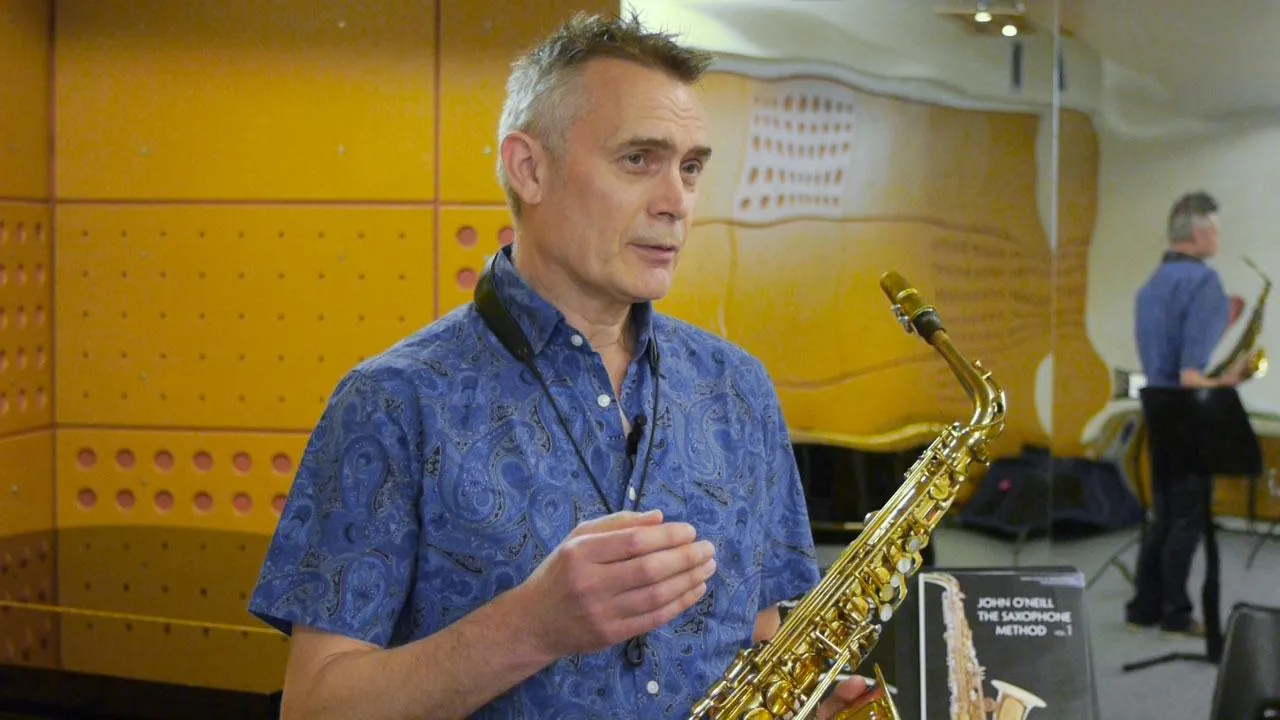
John O'Neill es el saxofonista detrás de The Jazz Method for Saxophone, la serie de Schott que ha enseñado a improvisar a toda una generación de intérpretes en todo el mundo. Publicada por primera vez en 1991, sigue siendo uno de los métodos de jazz más vendidos jamás escritos, junto a sus métodos complementarios para clarinete y flauta.Llegó al saxofón a los veinte años, mientras estudiaba francés y alemán en el Trinity College de Oxford, tras escuchar a John Coltrane. Después estudió con el gran tenor británico Don Rendell y aprendió improvisación con Lee Konitz, Warne Marsh y Peter Ind, herederos directos del legendario maestro Lennie Tristano. Músico profesional desde 1979, está especializado en jazz y bossa nova y ha tocado en las principales salas de Londres, incluido el Ronnie Scott's, además de componer música para cine, televisión, teatro y danza.Profesor titulado con décadas de experiencia, John ha enseñado saxofón, clarinete y flauta de forma privada y en escuelas, en el curso de jazz del Trinity College of Music de Londres y en cursos de verano en España y la República Checa. Sigue actuando y enseñando desde su casa en el norte de Londres. read more