



La correa y los accesorios
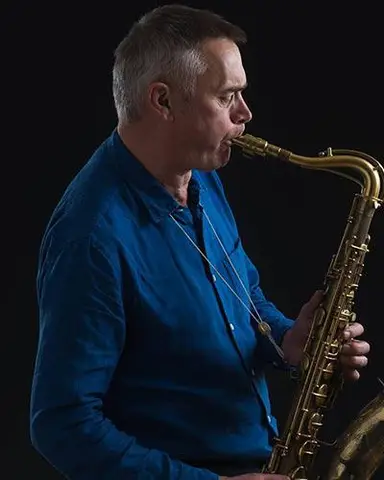
Lesson time: (3min 24sec)
John O'Neill muestra la correa de cuello que prefiere y qué buscar al comprar una, además de los accesorios que siempre lleva: grasa para el corcho, un destornillador y un estuche para cañas.
Course preview
This lesson is part of the course The Saxophone Method Vol. 1: Técnicas fundamentales
Watch a preview of the full course below.
Lesson transcript:
Important Equipment for Saxophone Playing
The Strap
Another really important piece of your equipment is the strap.
This strap is made by a company called Cebula. I really like it because it has a very comfortable, padded neck piece.
Features of a Good Strap
-
Easy to Adjust: It doesn't slip and it doesn't strangle me either.
-
Comfort: Some straps, due to their wide band, can feel constrictive around your neck if raised too high.
- Having a piece of cord here at the side makes it feel much more comfortable.
- This is really important for me.
Alternative Strap Options
- Harness Straps: Small children often find a harness strap much more comfortable. A harness strap distributes the weight over your shoulders. Even adults often favor using a harness strap, so don't feel that your strap has to be of a specific type.
Caution on Strap Types
I advise against buying elasticated straps.
-
Misconception: Some straps on the market are elasticated and are marketed on the basis that they make the saxophone feel lighter. However, it's pretty obvious that whether something's suspended by elastic or not, it will weigh the same.
-
Why I Dislike Them:
- It's important to anchor your teeth on the top of the mouthpiece. The issue with elasticated straps is that as you nod your head down onto the saxophone, the elastic gives, causing the saxophone to feel like it's moving. I believe it's vital to have the saxophone stable.
Additional Features of the Strap
Another thing I like about this strap is that it has a clip. This is really important because:
- Sometimes, if your strap only has a hook, it can easily unhook from the little ring, leading to situations where the saxophone falls on the floor.
- A clip helps prevent this.
Essential Accessories
A couple of other important accessories to have in your case:
-
Cork Grease: This is used to apply to the cork on the crook so that the mouthpiece fits better.
-
Small Screwdrivers: Sometimes, even with a new saxophone, screws can work loose and protrude from the pillars.
- It's useful to have some small screwdrivers to attend to that.
- Important Note: When tightening screws on a saxophone, they should never be overtightened as this can damage the thread. Just tighten until you feel resistance.
By keeping your equipment and accessories in good condition, you'll ensure a better playing experience.
About the instructor
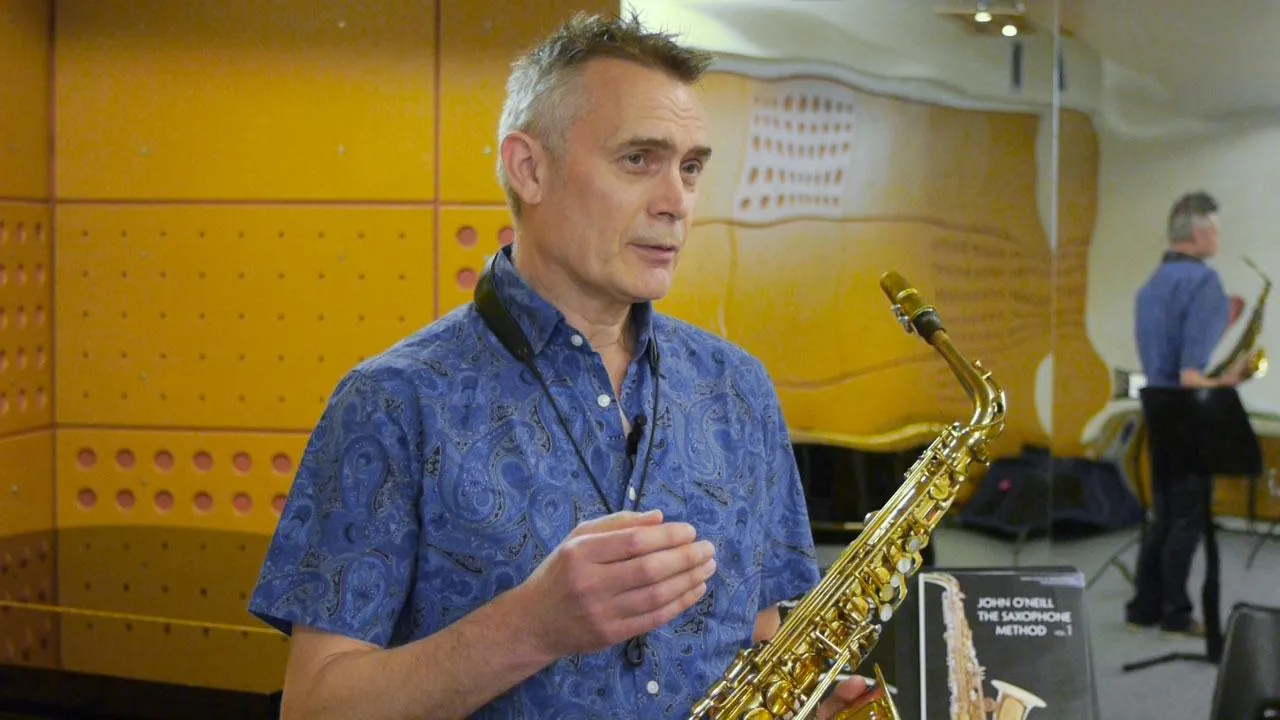
John O'Neill es el saxofonista detrás de The Jazz Method for Saxophone, la serie de Schott que ha enseñado a improvisar a toda una generación de intérpretes en todo el mundo. Publicada por primera vez en 1991, sigue siendo uno de los métodos de jazz más vendidos jamás escritos, junto a sus métodos complementarios para clarinete y flauta.Llegó al saxofón a los veinte años, mientras estudiaba francés y alemán en el Trinity College de Oxford, tras escuchar a John Coltrane. Después estudió con el gran tenor británico Don Rendell y aprendió improvisación con Lee Konitz, Warne Marsh y Peter Ind, herederos directos del legendario maestro Lennie Tristano. Músico profesional desde 1979, está especializado en jazz y bossa nova y ha tocado en las principales salas de Londres, incluido el Ronnie Scott's, además de componer música para cine, televisión, teatro y danza.Profesor titulado con décadas de experiencia, John ha enseñado saxofón, clarinete y flauta de forma privada y en escuelas, en el curso de jazz del Trinity College of Music de Londres y en cursos de verano en España y la República Checa. Sigue actuando y enseñando desde su casa en el norte de Londres. read more