



Ejercicio de picado n.º 2
Con
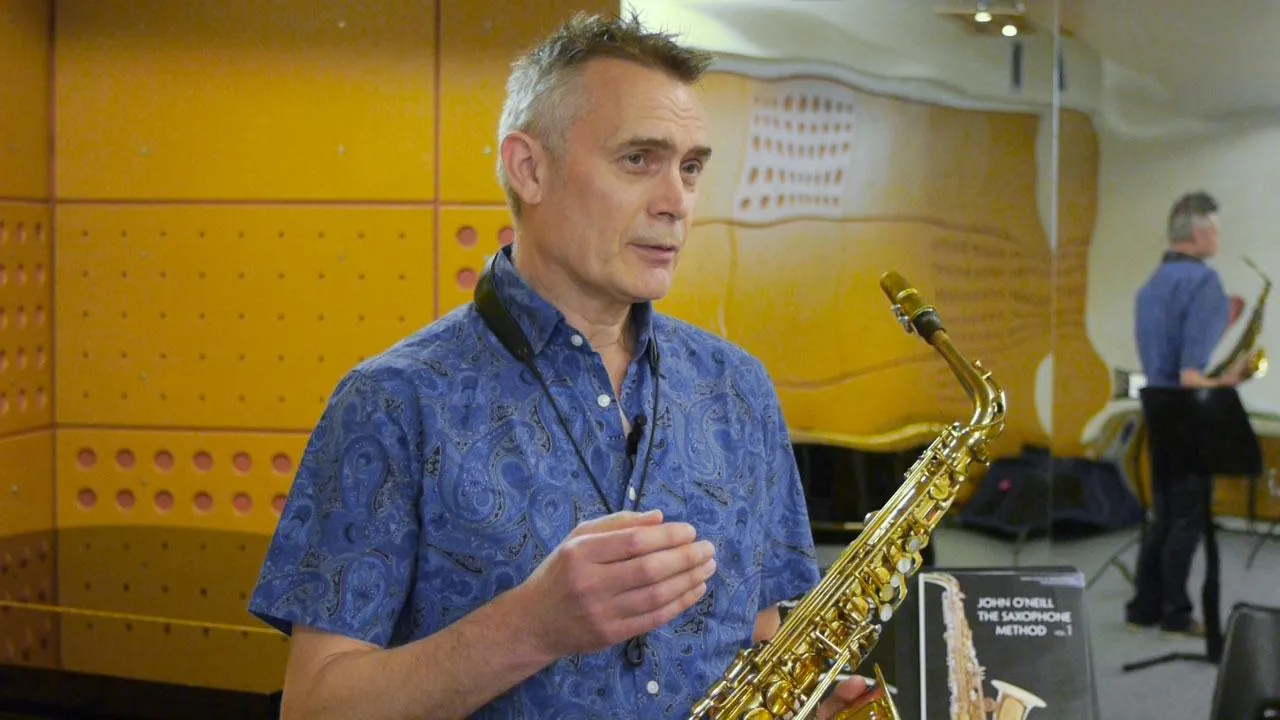
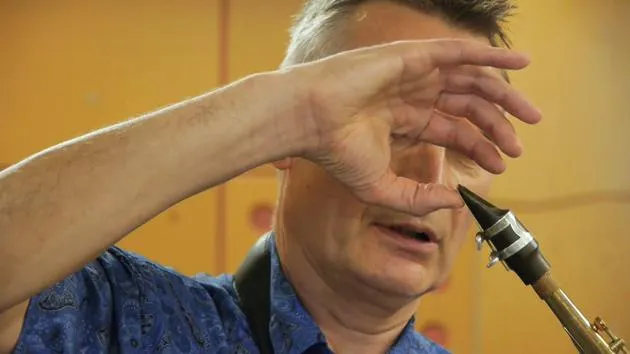
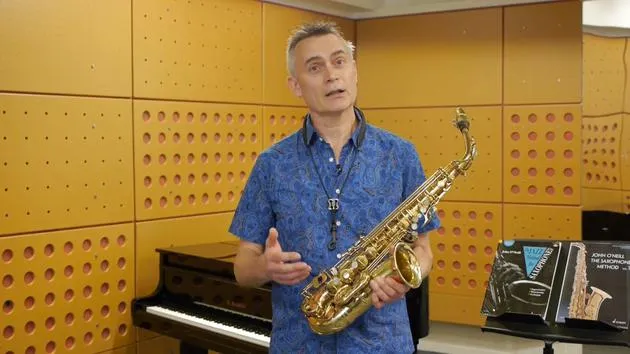
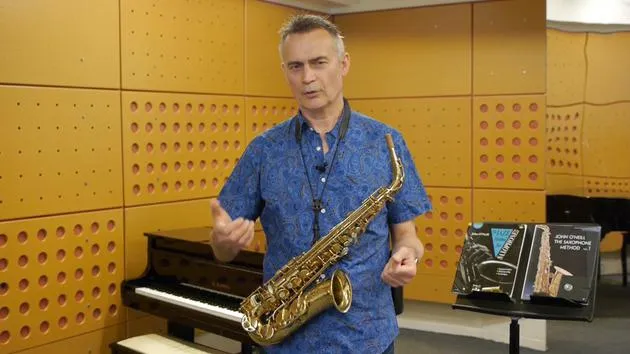
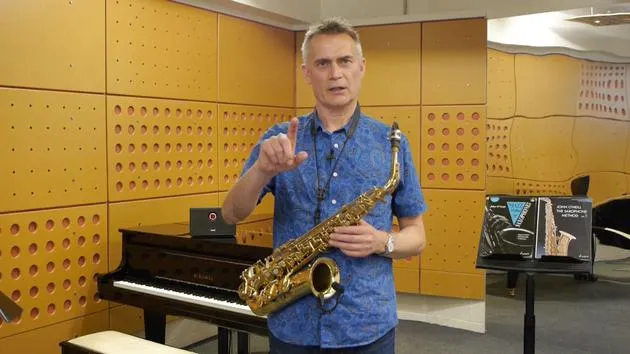
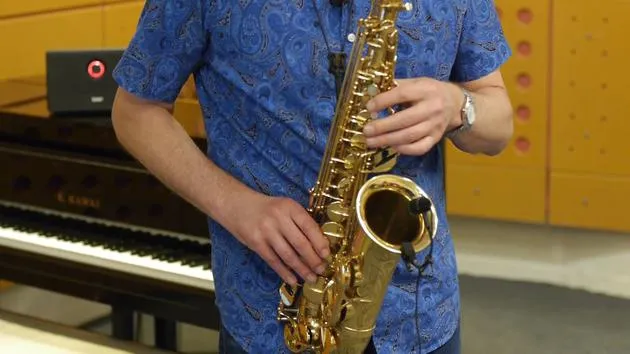
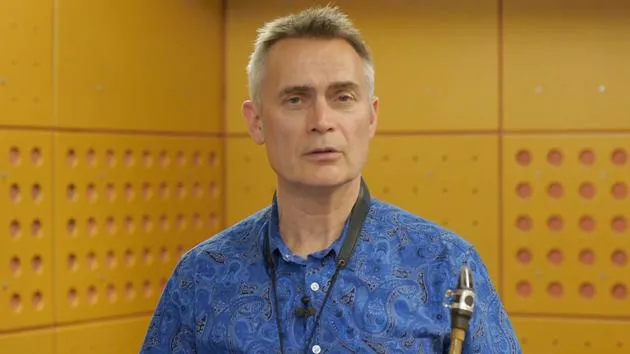
John O'NeillEn este vídeo, John te muestra un segundo ejercicio para practicar el picado y hacerlo bien. No olvides la sílaba "do".
Qué incluye el curso
25 lecciones (2h 10m) · 1 gratis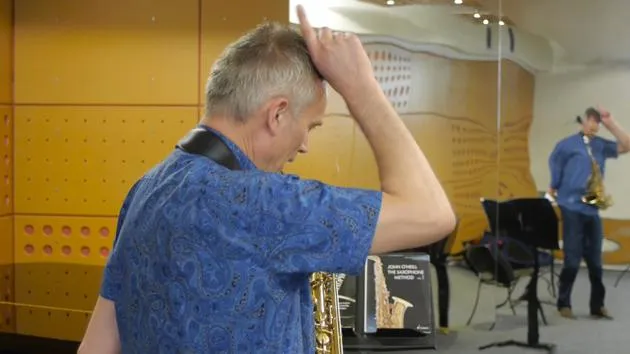
01. Postura
13:20
02. Digitación
4:10
03. La respiración
4:12
04. Ejercicio de respiración n.º 1
3:24
05. Ejercicio de respiración n.º 2
4:34
06. Ejercicio de respiración n.º 3
2:29
07. Ejercicio de respiración n.º 4
1:27
08. Ejercicio de respiración n.º 5
2:27
09. La embocadura y tu primera nota
9:46
10. Solucionar problemas con tu primera nota
9:34
11. Desarrollar tu sonido
3:43
12. Ejercicio de picado n.º 1
4:36
13. Ejercicio de picado n.º 2
Estás aquí6:49
14. Reflexiones finales y práctica
1:57
Transcripción de la lección
Applying the Ventriloquist Exercise to the Saxophone
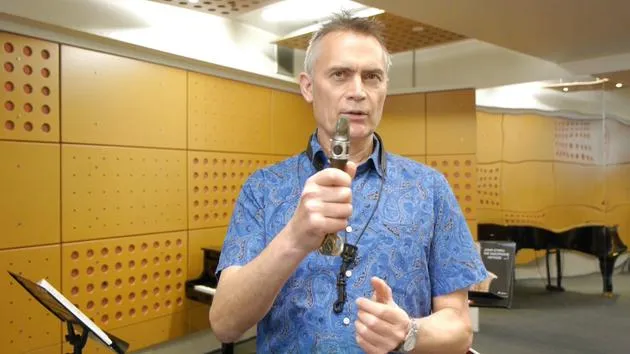
So now we're going to proceed to try to apply this ventriloquist exercise to the saxophone. As you proceed to this next exercise, it's absolutely vital that you remember to imagine the do sound.
What often happens is that when I explain to people how important the sound is, they appear to take it on board, but then just a few minutes later, I ask them, "Are you remembering the do sound?" They look a bit shamefaced and downcast and say, "Oh, actually no, I forgot."
It's absolutely vital that you remember to imagine the sound.
The Exercise
- Stand in front of the mirror.
- Imagine your do sound.
- Start with a few seconds of a long note.
- That very first note is fine if you just breathe into the saxophone as before when you're playing your long note exercises.
- Later on, you can practice starting notes with the tongue, as I describe in the book.
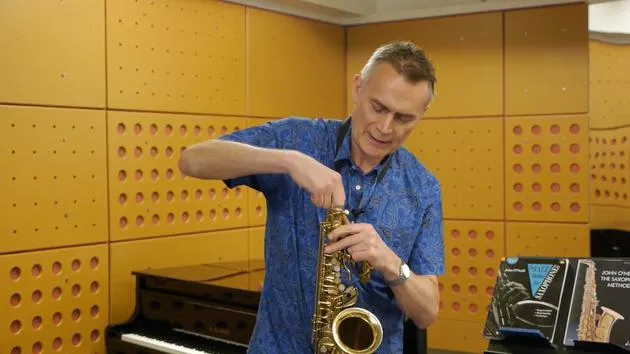
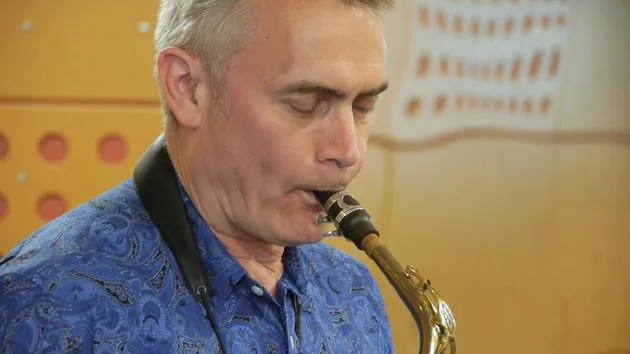
Once you've established a nice steady sound, then start tonguing, imagining the do syllable.
Key Points for the Second Exercise
Here are a few things to note during this second exercise. Some of them I've already touched on in the ventriloquist exercise:
-
Tongue Placement:
- Remember that you're not using the tip of your tongue, but just behind the tip.
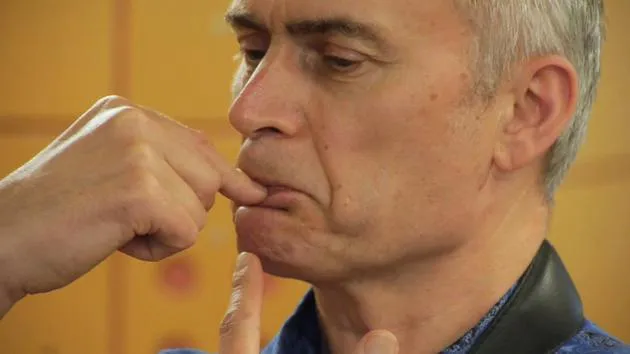
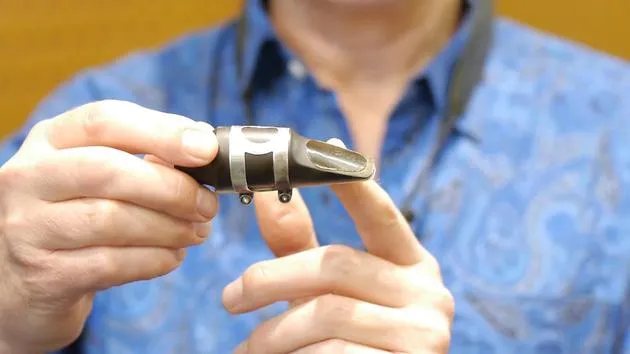
- Imagine that my thumb is my tongue. The contact should be like this, not the tip of the tongue touching the underneath of the reed.
This is a very common fault.
-
Correct Tonguing Technique:
- Touch just behind the tip of the tongue to the very edge of the reed.
- Avoid touching the tip of the tongue to underneath the reed or the flat part of the reed near the tip.
-
Clean Sound:
- For the tonguing to sound clean, it's crucial that you imagine the do syllable. That action should happen naturally.
Common Tonguing Issues
-
A common problem is that when people tongue, they bring the tongue forwards and up instead of allowing it to come up naturally.
-
Keep Tongue Movements Small:
- The tongue should only move a couple of millimeters at most, up to the reed and down again.
- To tongue quickly, the movements need to be very small.
-
Feather-Light Contact:
- It's important to make the contact with the reed feather light.
- When I'm tonguing, I'm hardly aware of the contact between my tongue and the reed.
Observational Check
Good tonguing is often invisible.
- If you're looking in the mirror and noticing large movements around your mouth, that's probably a sign that your tongue isn't moving correctly.
- If your tonguing is correct, it should be nearly invisible, and the tone should remain constant:
- No wavering in the sound.
- No changes of volume.
- No gaps between the notes.
Common Faults in Tonguing
The most common faults that I notice with tonguing are:
- Touching the underneath of the reed (make sure the contact is with the tip).
- Moving the tongue backwards and forwards rather than up and down.
- Not maintaining breath pressure.
However, most of these faults can be corrected if you remember to imagine the syllable.
Importance of the Syllable
The syllable contains everything.
- If you're imagining your do sound:
- The oo part corresponds to keeping the breath steady.
- The D part reminds you to move the tongue in the correct way, very delicately.
Remember, it is a do sound, not a "t" sound, as some teachers might say. The "t" is too heavy. This is a much gentler sound.
25 lecciones
2h 10m de lecciones en vídeo estructuradas
Funciones de vídeo avanzadas
Ralentiza, repite un pasaje, sigue la partitura
Móvil, tablet y ordenador
Practica donde quieras
Garantía de satisfacción 100%
30 días de garantía de devolución
Conoce a tu gurú
Conoce a tu gurú
John O'Neill es el saxofonista detrás de The Jazz Method for Saxophone, la serie de Schott que ha enseñado a improvisar a toda una generación de intérpretes en todo el mundo. Publicada por primera vez en 1991, sigue siendo uno de los métodos de jazz más vendidos jamás escritos, junto a sus métodos complementarios para clarinete y flauta.
Llegó al saxofón a los veinte años, mientras estudiaba francés y alemán en el Trinity College de Oxford, tras escuchar a John Coltrane. Después estudió con el gran tenor británico Don Rendell y aprendió improvisación con Lee Konitz, Warne Marsh y Peter Ind, herederos directos del legendario maestro Lennie Tristano. Músico profesional desde 1979, está especializado en jazz y bossa nova y ha tocado en las principales salas de Londres, incluido el Ronnie Scott's, además de componer música para cine, televisión, teatro y danza.
Profesor titulado con décadas de experiencia, John ha enseñado saxofón, clarinete y flauta de forma privada y en escuelas, en el curso de jazz del Trinity College of Music de Londres y en cursos de verano en España y la República Checa. Sigue actuando y enseñando desde su casa en el norte de Londres.







