



Desarrollar tu sonido
Lesson time: (3min 43sec)
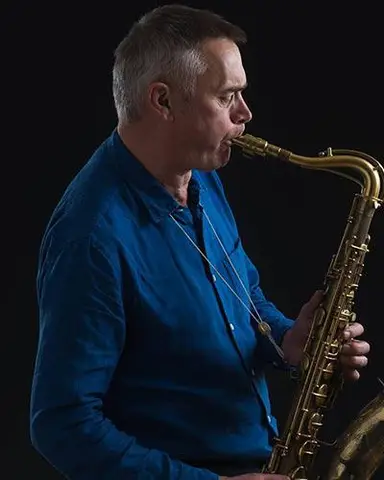
John O'Neill muestra cómo construir el tono del saxofón desde el primer día, empezando cada sesión de práctica con ejercicios de respiración y unos minutos de notas largas.
Course preview
This lesson is part of the course The Saxophone Method Vol. 1: Técnicas fundamentales
Watch a preview of the full course below.
Lesson transcript:
Starting Your Practice Session
I recommend that you start every practice session with long notes in this way: a minimum of two minutes and a maximum of five minutes.
Typically, you might begin with a few minutes of breathing exercises and then follow on to playing the long notes. This approach helps you take what you've learned in the breathing exercises into your playing of the long notes.
Remember: You mustn't forget the importance of the breath and breath control as you go into trying to make your first sounds.
Playing Long Notes
You can do this same exercise of playing long notes by changing the note that you play. Once you're feeling comfortable with B, by all means, try playing a C, A, or G. I wouldn't go any lower than G to begin with.
Tone Production
There's another thing to say about tone production and the quality of the sound that you get. It's really important to listen to as many saxophone players as you can. Sometimes people neglect that, forgetting that you'll only ever produce on the saxophone what you're able to imagine.
When we listen to great players, it helps us to develop a concept of how we want to sound.
Notable Jazz Players
For example, if you listen to some of the most famous jazz players, you'll hear a variety of sounds. Here are a few notable players to consider:
- Johnny Hodges
- Benny Carter
- Charlie Parker
- Lee Konitz
- Art Pepper
- Paul Desmond
- Phil Woods
- Cannonball Adderley
- Ornette Coleman
- David Sanborn
They all make really quite distinctive sounds on the saxophone. Part of your journey is going to be listening to as many different players as possible.
Listening to Classical Players
Don't forget, it's also important to listen to some of the really fine classical players. I could mention people like:
- John Harle
- Martin Robertson
Remember, the saxophone is not just a jazz instrument. Listening to all these different players is going to help you develop your own concept of how you want to sound on the saxophone.
Expanding Your Listening
Additionally, I'd say that it's helpful not just to listen to saxophone players but to listen to good tone on any instrument, especially if it's one that has a roughly similar register to the alto saxophone.
For example:
- Listening to great trumpet players
- Listening to good singers
One of my favorites is Ella Fitzgerald. I think she makes just an incredible sound with her voice, and her voice has a kind of lower-pitched female quality which corresponds with the register of an alto saxophone.
So, listening to Ella can be an inspiration for me in trying to produce a better sound on the saxophone.
About the instructor
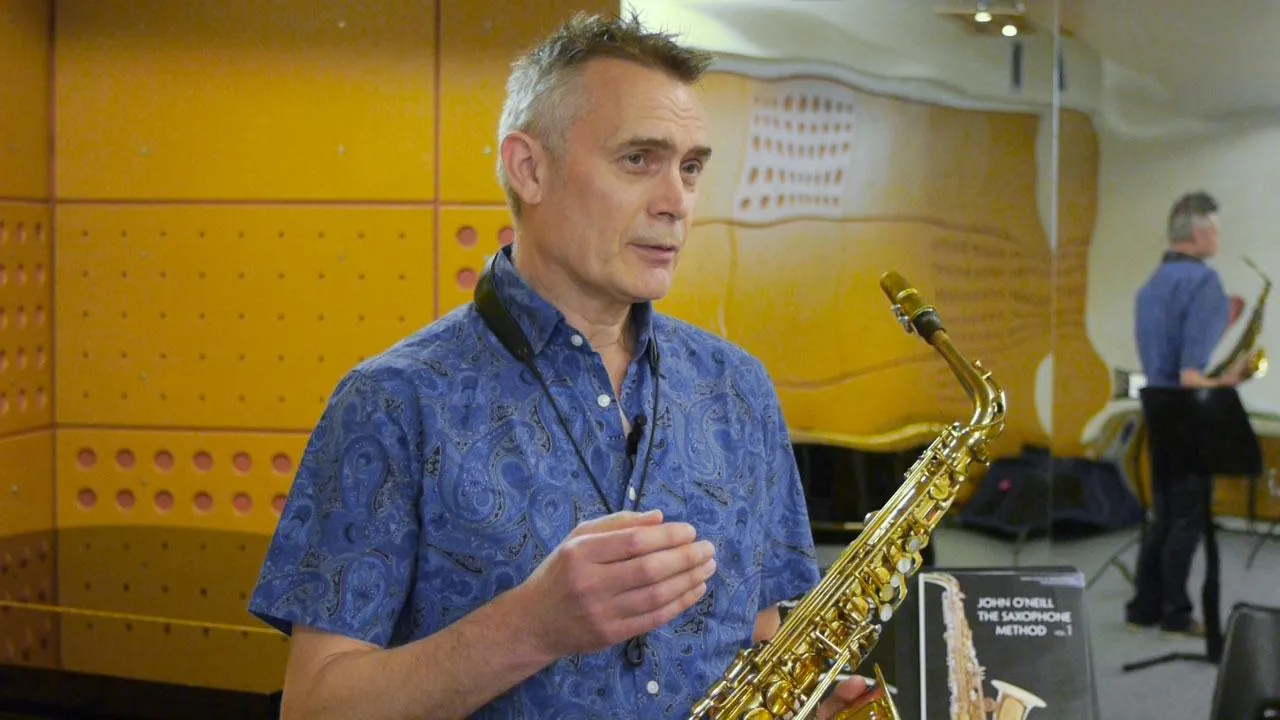
John O'Neill es el saxofonista detrás de The Jazz Method for Saxophone, la serie de Schott que ha enseñado a improvisar a toda una generación de intérpretes en todo el mundo. Publicada por primera vez en 1991, sigue siendo uno de los métodos de jazz más vendidos jamás escritos, junto a sus métodos complementarios para clarinete y flauta.Llegó al saxofón a los veinte años, mientras estudiaba francés y alemán en el Trinity College de Oxford, tras escuchar a John Coltrane. Después estudió con el gran tenor británico Don Rendell y aprendió improvisación con Lee Konitz, Warne Marsh y Peter Ind, herederos directos del legendario maestro Lennie Tristano. Músico profesional desde 1979, está especializado en jazz y bossa nova y ha tocado en las principales salas de Londres, incluido el Ronnie Scott's, además de componer música para cine, televisión, teatro y danza.Profesor titulado con décadas de experiencia, John ha enseñado saxofón, clarinete y flauta de forma privada y en escuelas, en el curso de jazz del Trinity College of Music de Londres y en cursos de verano en España y la República Checa. Sigue actuando y enseñando desde su casa en el norte de Londres. read more