



Fingering
With
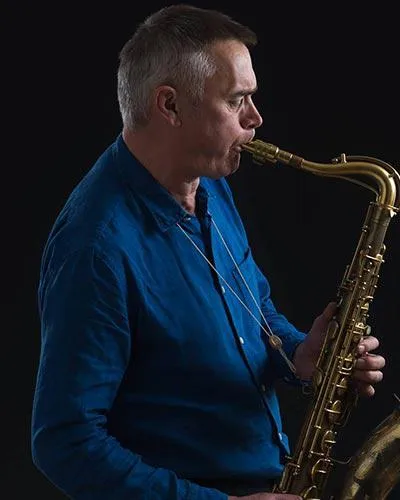
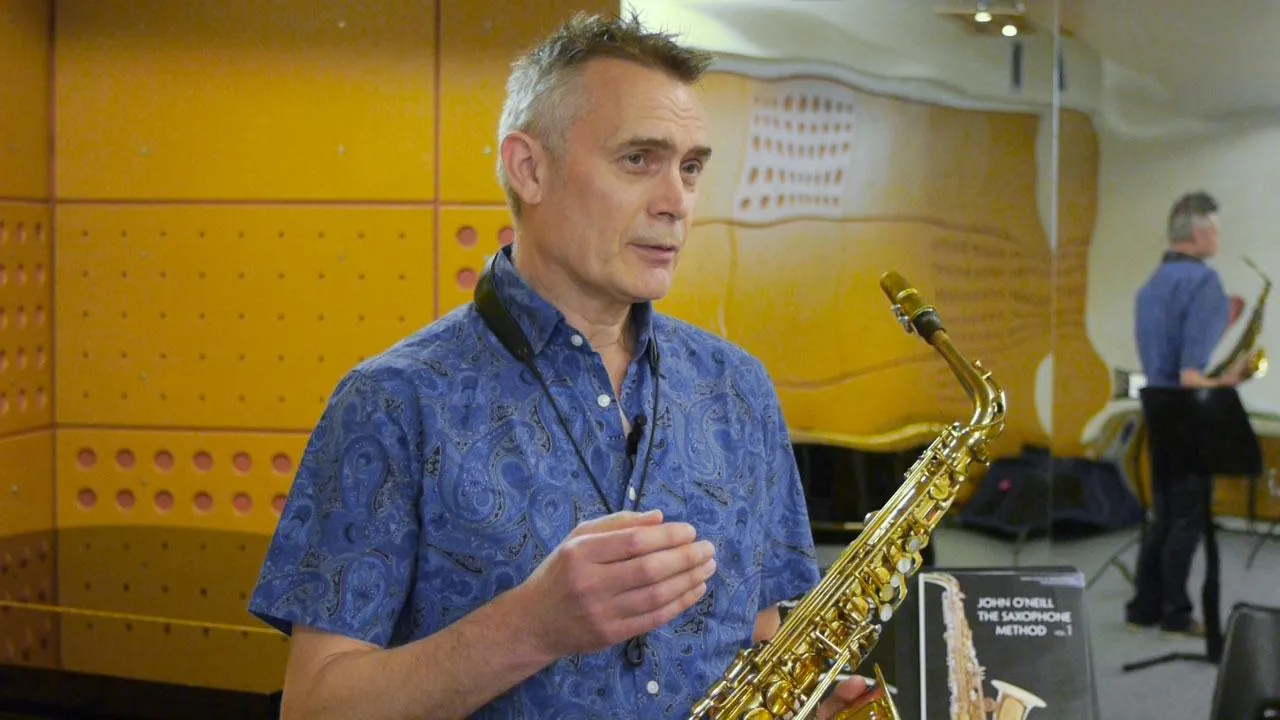
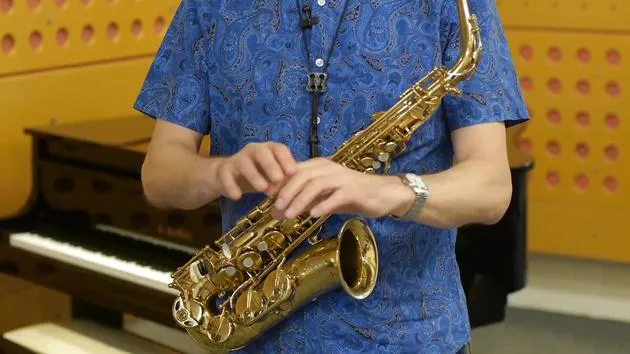
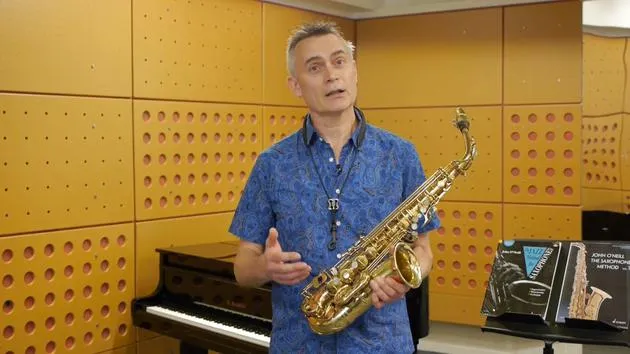
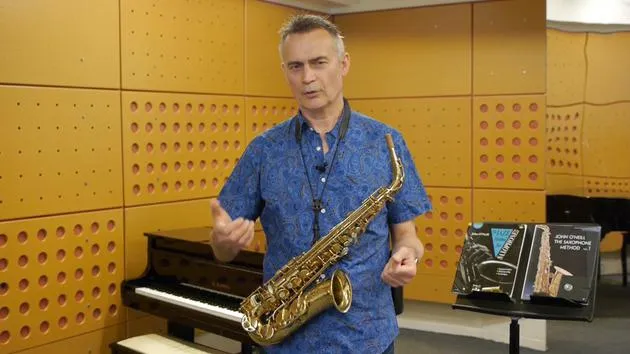
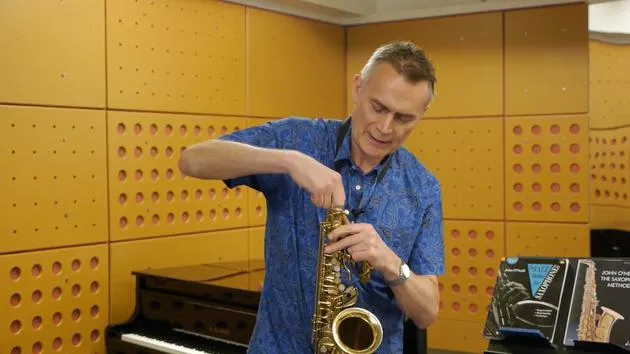
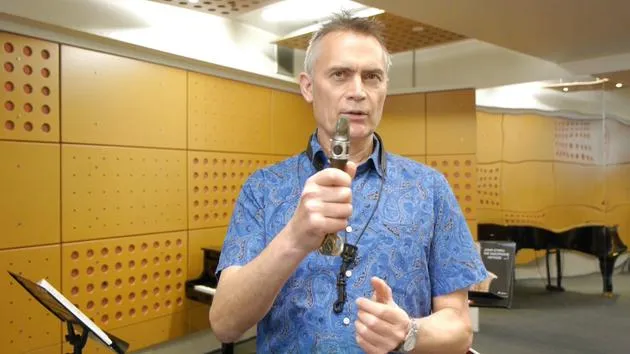
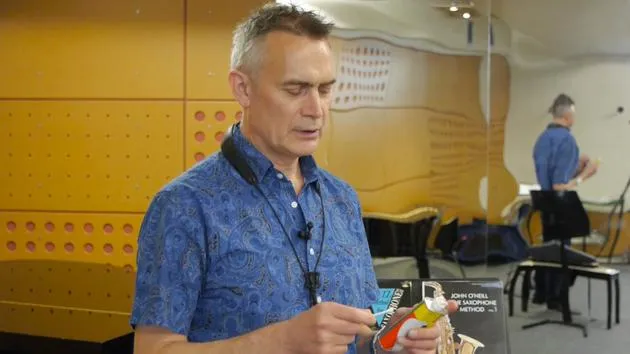
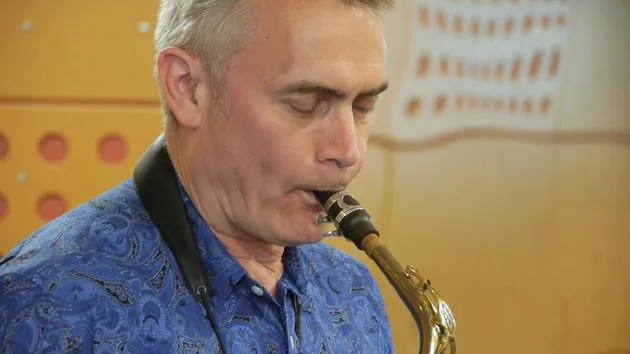
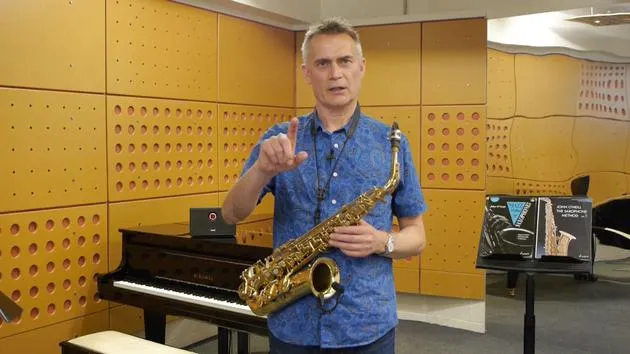
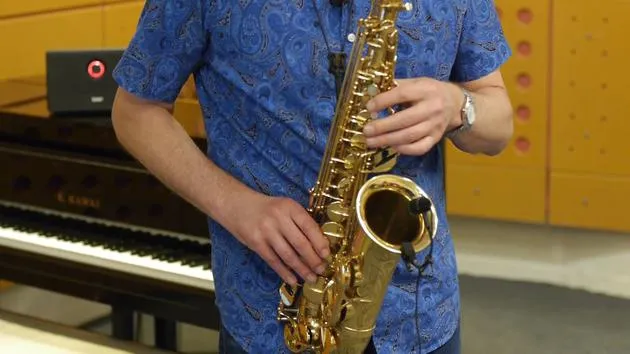
John O'NeillJohn O'Neill shows you how to hold the saxophone with relaxed, curving fingers, like holding a tennis ball, and how lightly to press the keys.
What's in the course
25 lessons (2h 10m) · 1 free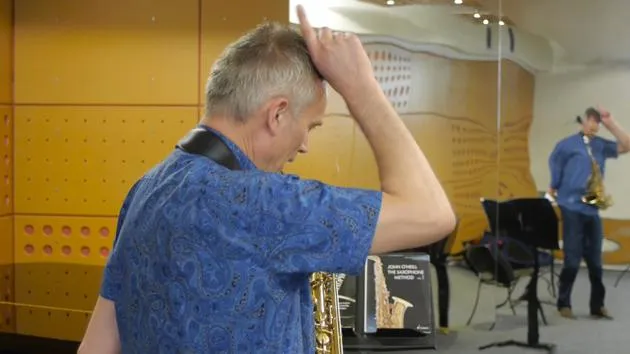
01. Posture
13:20
02. Fingering
You are here4:10
03. The breath
4:12
04. Breathing exercise #1
3:24
05. Breathing exercise #2
4:34
06. Breathing exercise #3
2:29
07. Breathing exercise #4
1:27
08. Breathing exercise #5
2:27
09. Embouchure & your first note
9:46
10. Troubleshooting your first note
9:34
11. Developing your sound
3:43
12. Tonguing exercise #1
4:36
13. Tonguing exercise #2
6:49
14. Final thoughts & practising
1:57
Lesson transcript
Fingering Techniques for Saxophone
When it comes to fingering, I generally tell my students to imagine that they're holding a tennis ball in each hand. This is important because I want the fingers to be:
- Nicely curving
- Not flat
- Not contracted like claws
- Just gently curving
Visualization of Proper Fingering
Let me demonstrate what I mean by this.
- If I'm fingering a low C and I take my hands off the saxophone, one after the other, you'll see that you could fit a tennis ball into my hand.
- The same applies to my left hand; if I lift it up, you can see that a tennis ball would fit comfortably there.
Key Insight: The fingers must be gently curving. Let the springs do the work for you!
Understanding Key Pressure
All keys operate on a spring mechanism, which means:
- If you relax, the spring will push your finger away from the key.
- Many beginners make the mistake of pressing much too hard and applying excessive pressure.
If the saxophone is well-adjusted (which it should be if it's new, and ideally in good condition if it's secondhand), you only need to use very moderate pressure to ensure that the pad seals correctly.
Important Note: If pressing hard is necessary to make a note sound, this is a sign that the instrument is not in good adjustment. You should take it to a technician for adjustments.
The Right Approach to Key Action
Rather than thinking about pressing down, consider allowing the springs to do the work by pushing your fingers away from the keys.
- As you play, notice how my fingers stay very close to the keys, touching or almost touching.
- It's a very light action, similar to a hammer action initiated at the knuckle joint.
Common Mistakes in Finger Positioning
I often see players using flat fingers, in this kind of position:
- This is not good!
- You will never be able to play quickly with your hands in that position.
Remember: Curve your fingers gently.
The Importance of Relaxation
As I mentioned earlier about the neck and shoulders, it's virtually impossible to have relaxed hands and fingers if your arms, neck, and shoulders are tense.
- It's crucial to stand correctly:
- Get your shoulders relaxed.
- Keep your neck relaxed.
This allows your wrists, hands, and fingers to be relaxed while playing.
Practice Tips for Fingering
One last point about fingering relates to your practice habits:
- Practice slowly.
- Playing at a slower tempo helps to relax your fingers.
- Trying to play too fast too quickly can encourage tension in your fingers.
Surprisingly, by practicing more slowly, you'll actually be able to play faster. I know that sounds strange, but it's true.
25 lessons
2h 10m of structured video lessons
Advanced video features
Slow down, loop a passage, follow along
Mobile, tablet & desktop
Practise wherever you are
100% satisfaction guarantee
30-day money-back guarantee
Meet your guru
Meet your guru
John O'Neill is the saxophonist behind The Jazz Method for Saxophone - the Schott series that has taught a generation of players around the world to improvise. First published in 1991, it remains one of the best-selling jazz tutors ever written, alongside his companion methods for clarinet and flute.
He came to the saxophone at twenty, while reading French and German at Trinity College, Oxford, after hearing John Coltrane. He went on to study with British tenor great Don Rendell, and took improvisation from Lee Konitz, Warne Marsh and Peter Ind - direct heirs of the legendary teacher Lennie Tristano. A professional musician since 1979, he specialises in jazz and bossa nova and has played London's leading venues, including Ronnie Scott's, while also writing music for film, television, theatre and dance.
A qualified teacher with decades of experience, John has taught saxophone, clarinet and flute privately and in schools, on the jazz course at Trinity College of Music in London, and at summer schools in Spain and the Czech Republic. He still performs and teaches from his home in North London.







