



Atemübung Nr. 5
Mit
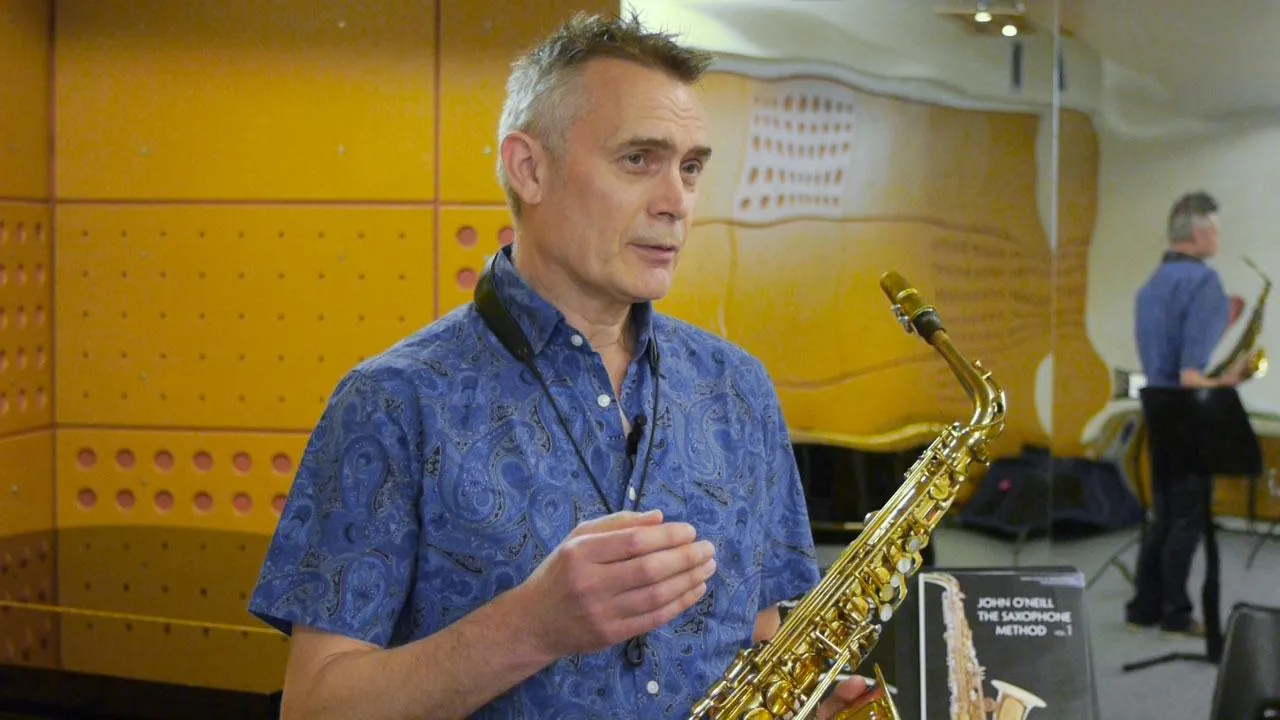
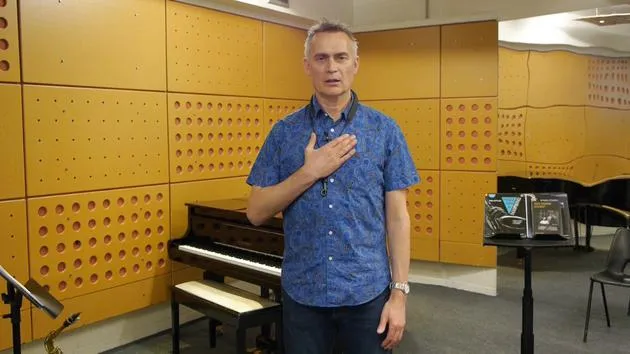
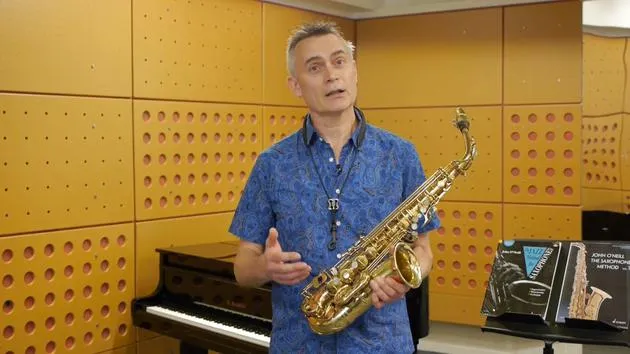
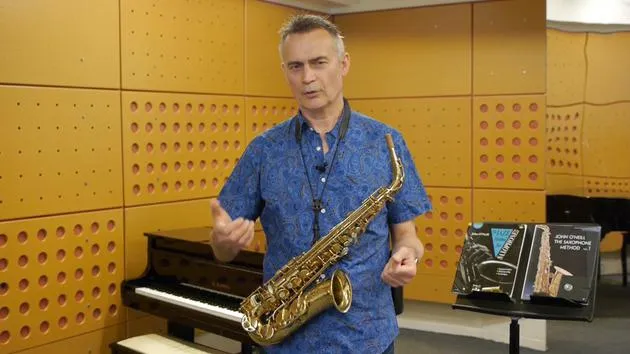
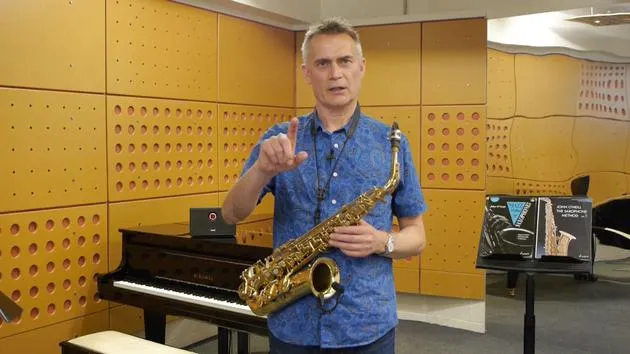
John O'NeillJohn O'Neills fünfte Atemübung: eine Hand auf der Brust, spüre, wie sie sich beim Einatmen weitet, ohne dass sich deine Schultern heben.
Das steckt im Kurs
25 Lektionen (2h 10m) · 1 gratis
01. Haltung
13:20
02. Fingersatz
4:10
03. Die Atmung
4:12
04. Atemübung Nr. 1
3:24
05. Atemübung Nr. 2
4:34
06. Atemübung Nr. 3
2:29
07. Atemübung #4
1:27
08. Atemübung Nr. 5
Du bist hier2:27
09. Der Ansatz und deine erste Note
9:46
10. Fehlersuche bei deinem ersten Ton
9:34
11. Deinen Klang entwickeln
3:43
12. Zungenstoß-Übung #1
4:36
13. Zungenstoß-Übung Nr. 2
6:49
14. Abschließende Gedanken & Üben
1:57
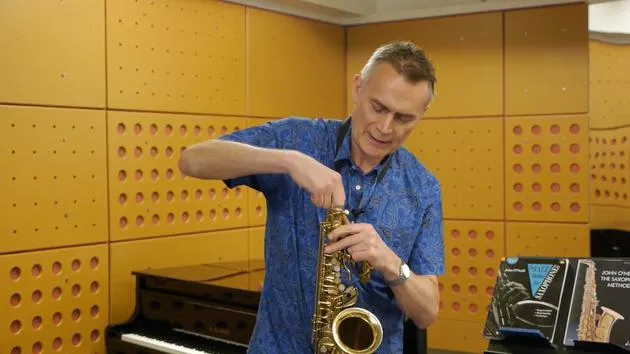
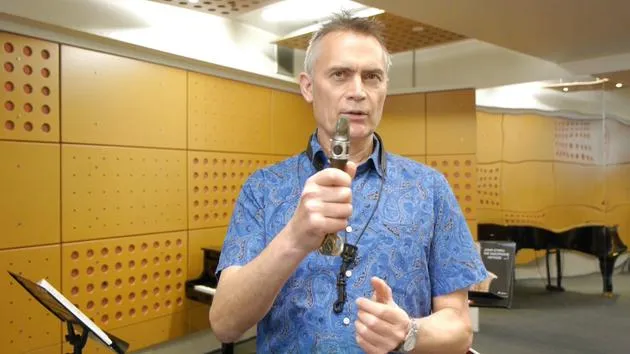
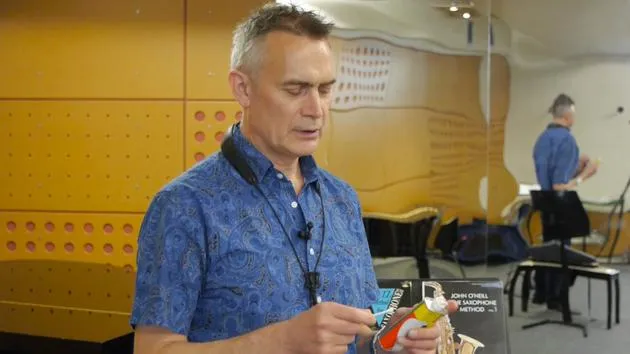
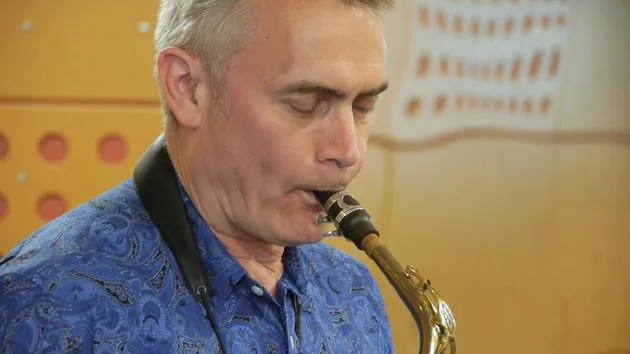
Transkript der Lektion
Final Exercise: Breathing and Relaxation
The final exercise involves you putting your hand flat on your chest.
- One hand on your chest.
- In this exercise, I want you to feel the expansion.
Important Note on Expansion
This is really important:
- The expansion is that way.
- It's not, as I mentioned earlier, this way.
So, this is wrong:
- Shoulders moving up.
But this is fine:
- Chest expanding without shoulder movement.
You see, in the second one, I'm not moving my shoulders up, but I can feel my chest expanding and that's absolutely fine.
Demonstration
Just to demonstrate:
- Hand on the chest.
- Breathe in through the mouth.
- Whispered "Ah."
Summary of Exercises
So just to summarize, we've done four exercises there. If you include the one on the floor, it's actually five:
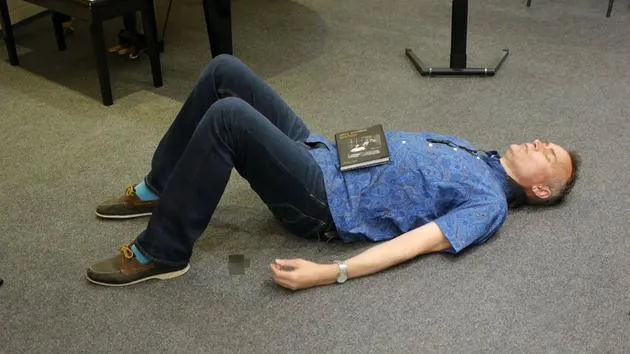
- Lying on your back with the book on your stomach with the whispered "R"
- Standing up, hands here
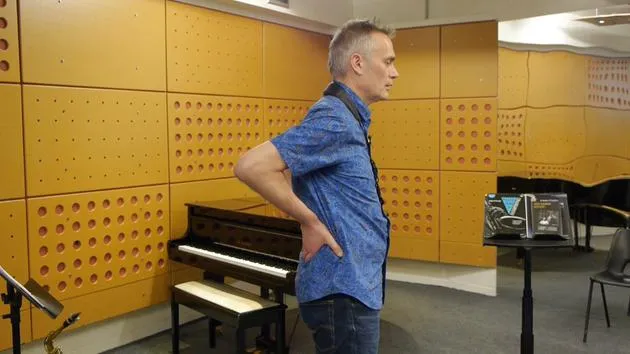
- Hands at the back
- Hands at the side
- One hand on the chest
Daily Practice Tips
You don't have to do all of these exercises every day.
- I think when you first start playing the saxophone, I really recommend especially the one lying on your back on the floor.
- Sometimes, what happens is, you've had a hard day at the office or a tough day at school, you come back feeling a bit stressed.
Lying on your back is a really nice way to just relax for two to five minutes before you start playing.
- It's a nice way of getting nicely relaxed.
- You can even listen to music while you're doing it and remind yourself about how you're going to breathe.
Remember, we want to avoid bringing all the stresses from your day-to-day life into your practice room. Get yourself feeling nice and relaxed before you try and make a sound.
25 Lektionen
2 Std. 10 Min. strukturierte Videolektionen
Erweiterte Videofunktionen
Verlangsamen, Passagen loopen, mitlesen
Handy, Tablet & Desktop
Üben, wo du willst
100 % Zufriedenheitsgarantie
30 Tage Geld-zurück-Garantie
Lern deinen Guru kennen
Lern deinen Guru kennen
John O'Neill ist der Saxofonist hinter The Jazz Method for Saxophone, der bei Schott erschienenen Reihe, die einer ganzen Generation von Musikern weltweit das Improvisieren beigebracht hat. Erstmals 1991 veröffentlicht, zählt sie neben seinen begleitenden Methoden für Klarinette und Flöte bis heute zu den meistverkauften Jazz-Lehrwerken, die je geschrieben wurden.
Zum Saxofon kam er mit zwanzig Jahren, während er am Trinity College in Oxford Französisch und Deutsch studierte, nachdem er John Coltrane gehört hatte. Anschließend studierte er beim großen britischen Tenoristen Don Rendell und lernte Improvisation bei Lee Konitz, Warne Marsh und Peter Ind, den direkten Erben des legendären Lehrers Lennie Tristano. Seit 1979 professioneller Musiker, ist er auf Jazz und Bossa Nova spezialisiert und hat in Londons führenden Clubs gespielt, darunter im Ronnie Scott's, und komponiert zugleich Musik für Film, Fernsehen, Theater und Tanz.
Als ausgebildeter Lehrer mit jahrzehntelanger Erfahrung hat John Saxofon, Klarinette und Flöte privat und an Schulen unterrichtet, im Jazz-Studiengang des Trinity College of Music in London sowie bei Sommerkursen in Spanien und der Tschechischen Republik. Von seinem Zuhause im Norden Londons aus tritt er nach wie vor auf und unterrichtet.







