



The breath
With
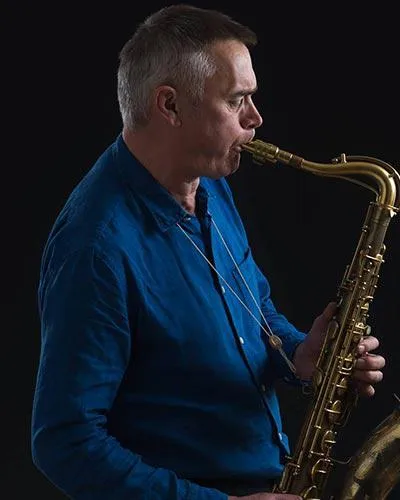
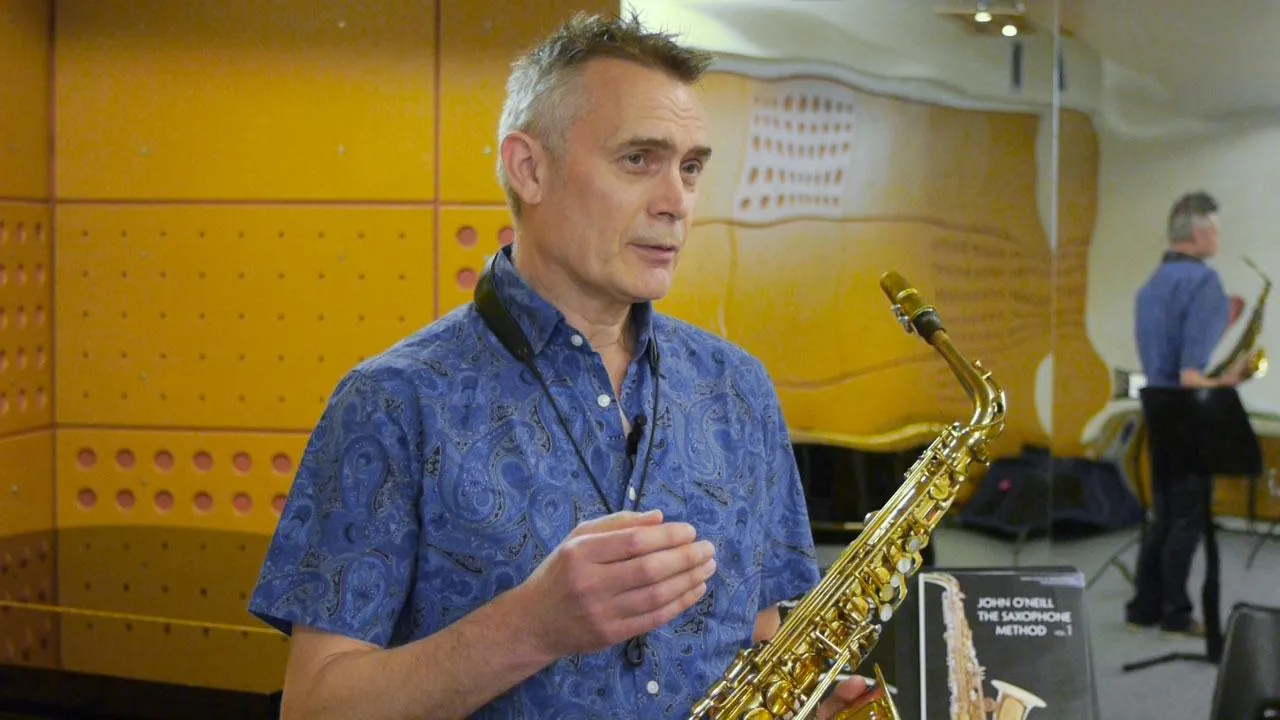
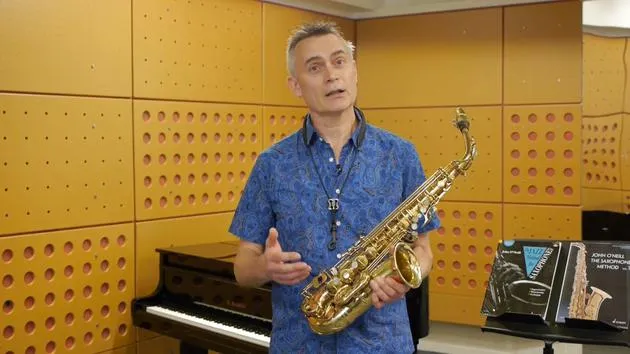
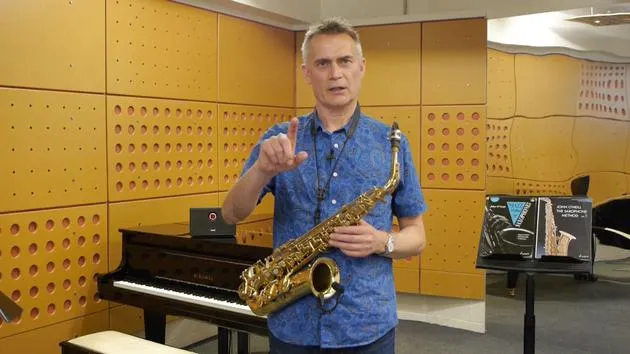
John O'NeillJohn O'Neill explains why the saxophone is really a breath instrument, and why learning to control your breath is the key to getting a good sound.
What's in the course
25 lessons (2h 10m) · 1 free
01. Posture
13:20
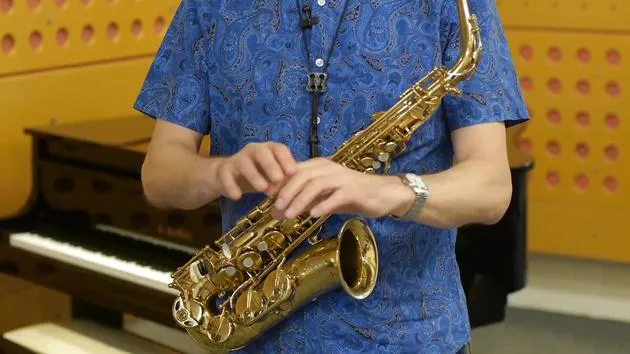
02. Fingering
4:10
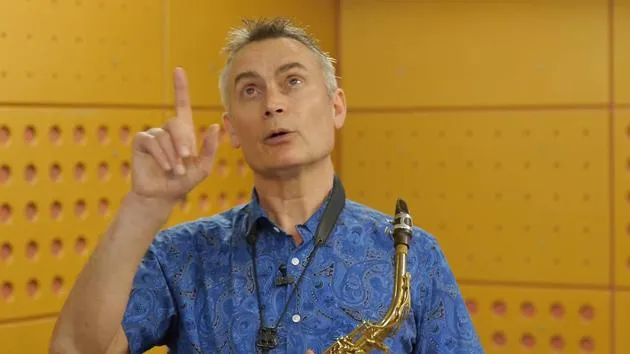
03. The breath
You are here4:12
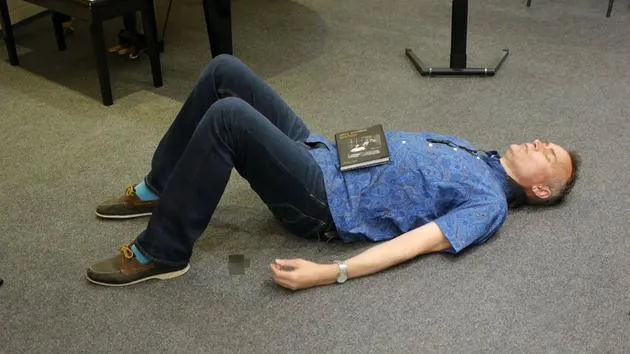
04. Breathing exercise #1
3:24
05. Breathing exercise #2
4:34
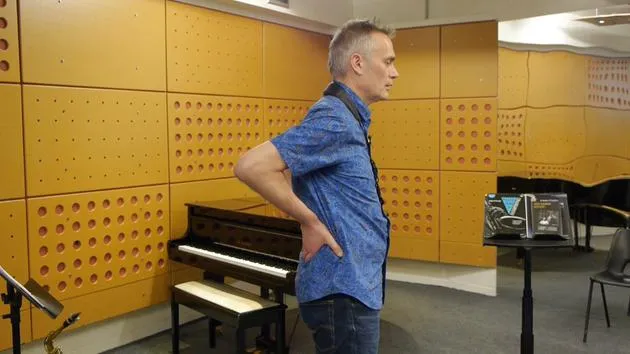
06. Breathing exercise #3
2:29
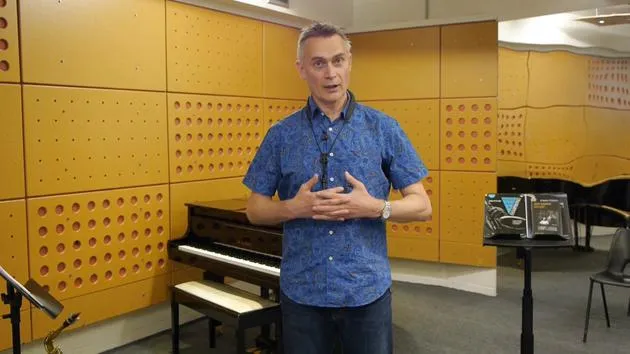
07. Breathing exercise #4
1:27
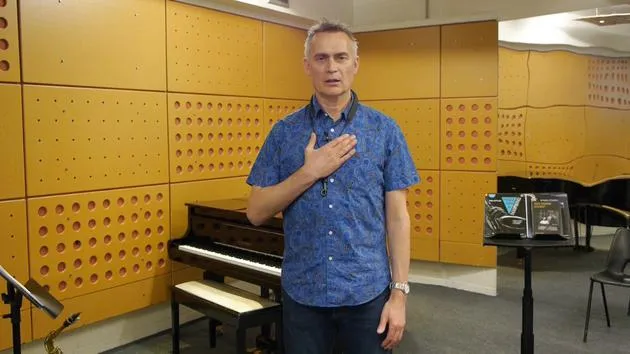
08. Breathing exercise #5
2:27
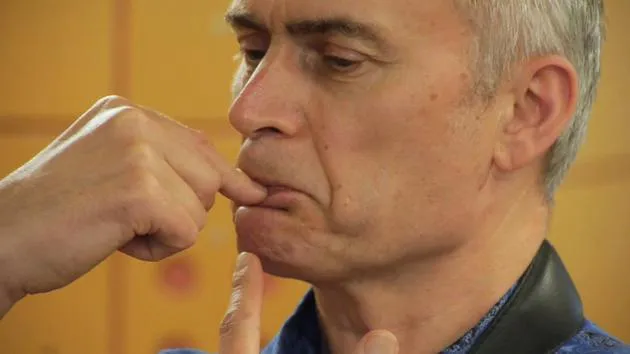
09. Embouchure & your first note
9:46
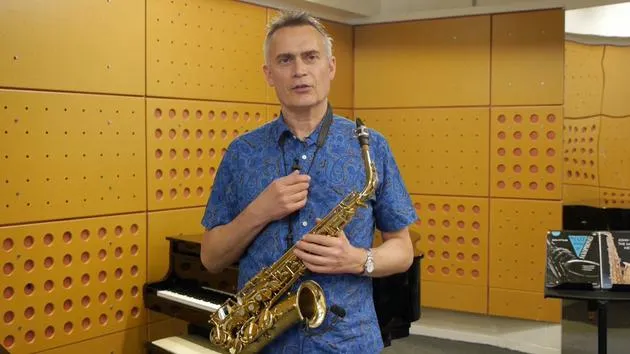
10. Troubleshooting your first note
9:34
11. Developing your sound
3:43
12. Tonguing exercise #1
4:36
13. Tonguing exercise #2
6:49
14. Final thoughts & practising
1:57
Lesson transcript
Understanding the Saxophone as a Breath Instrument
The saxophone is a wind instrument. So what does that mean?
It means it's a breath instrument. In fact, I'd really prefer it if they would refer to it as a breath instrument because it focuses you on what the essential thing is:
Learning to control your breath is absolutely key to playing the saxophone.
Common Experiences
Well, maybe some of you have had the experience where your friend says, "Oh, can I play your saxophone?"
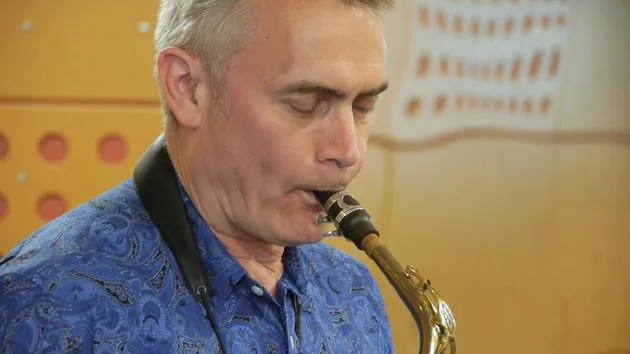
They try to blow it and they do something like this:
They go...
And that's a very common experience. The reason they don't get a great sound, of course, is because they're not controlling their breath.
The Balloon Analogy
Think of it like a balloon:
- You blow up a balloon. What happens if you let it go?
- Within a few seconds, the balloon flies around the room and then lands on the floor.
- Now imagine blowing up the same balloon and putting your fingers on the neck of the balloon so the air comes out really slowly.
- Then the balloon gradually, gradually, gradually deflates.
So what we're looking at here is learning to control the breath.
A Common Misconception
A big misconception about playing the saxophone, or any woodwind instrument for that matter, is that you need a large volume of air to make a good sound.
No, you don't need a large volume of air. What you need is to learn to control a small quantity of air.
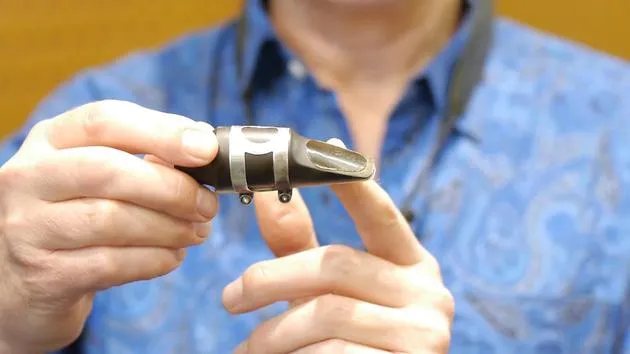
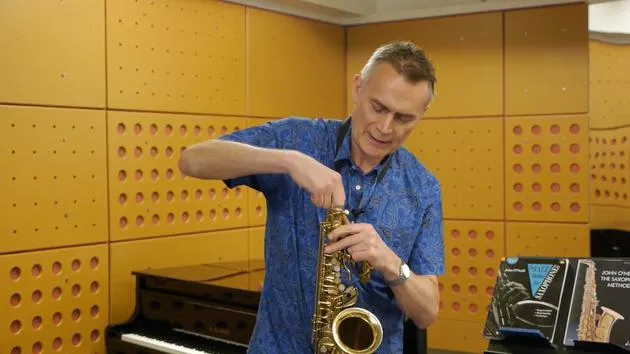
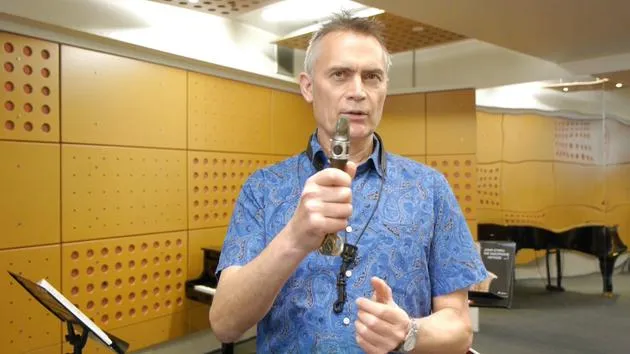
Don't forget, the sound is being generated from the reed vibrating on the mouthpiece. So even if I take the crook off of the saxophone, I'm still going to get a sound. w
Helpful Imagery
I think there are a couple of images that I tend to use to help people with this idea of controlling small quantities of air:
1. The Birthday Cake
Imagine a birthday cake with 20 candles on it.
- How are you going to blow so that you can blow the candles out in one go?
- This won't work because the candles will flicker, and many of them will still be lit.
What works effectively is this kind of breath. Even a small child can learn to do that.
2. The Floating Feather
Another image I use is imagining a small feather floating down from the ceiling.
- You're blowing to try and keep it in the air.
- It wouldn't work to blow hard.
What you need is a steady exhalation of a small quantity of air.
3. Air Escaping from a Tire
Finally, another image is air escaping from a bicycle or car tire.
- If you press on the valve, it can help you realize that although a small quantity of air is escaping, it's coming out under pressure.
- Imagine pressing on that bicycle tire's valve and getting that little, very concentrated escape of a small quantity of air.
In conclusion, understanding how to control your breath will greatly improve your saxophone playing experience!
25 lessons
2h 10m of structured video lessons
Advanced video features
Slow down, loop a passage, follow along
Mobile, tablet & desktop
Practise wherever you are
100% satisfaction guarantee
30-day money-back guarantee
Meet your guru
Meet your guru
John O'Neill is the saxophonist behind The Jazz Method for Saxophone - the Schott series that has taught a generation of players around the world to improvise. First published in 1991, it remains one of the best-selling jazz tutors ever written, alongside his companion methods for clarinet and flute.
He came to the saxophone at twenty, while reading French and German at Trinity College, Oxford, after hearing John Coltrane. He went on to study with British tenor great Don Rendell, and took improvisation from Lee Konitz, Warne Marsh and Peter Ind - direct heirs of the legendary teacher Lennie Tristano. A professional musician since 1979, he specialises in jazz and bossa nova and has played London's leading venues, including Ronnie Scott's, while also writing music for film, television, theatre and dance.
A qualified teacher with decades of experience, John has taught saxophone, clarinet and flute privately and in schools, on the jazz course at Trinity College of Music in London, and at summer schools in Spain and the Czech Republic. He still performs and teaches from his home in North London.







