



Navigating Ableton Live - Session and Arrangement

With
Isaac Cotec
What's in the course
20 lessons (2h 16m) · 1 free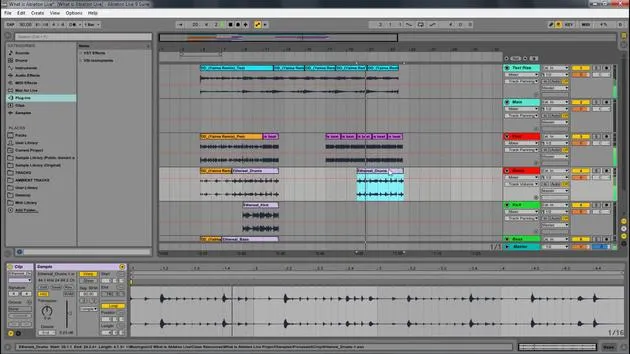

Lesson transcript
Session View vs. Arrangement View in Ableton Live
So to review, we have Session View and Arrangement View.
Session View
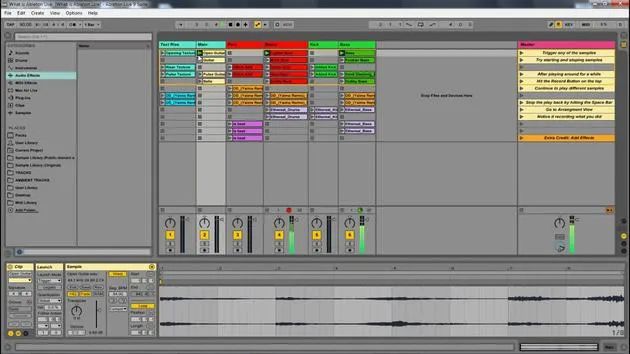
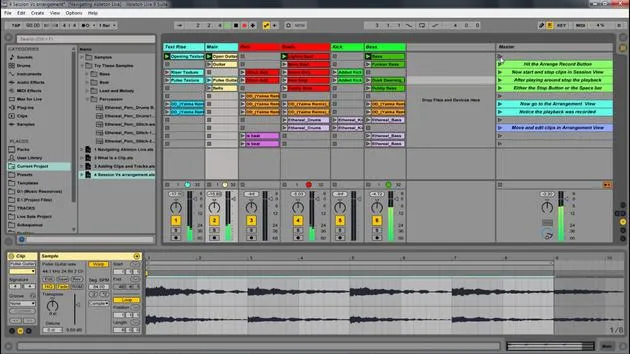
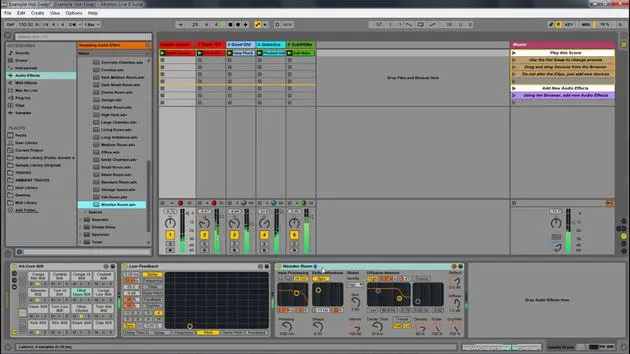
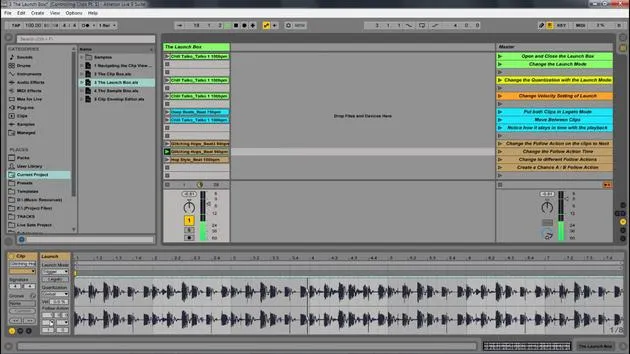
- In Session View, the different clips are arranged in a more horizontal fashion, allowing us to play different parts easily.
- This layout represents the Ableton logo, symbolizing how Session View runs "down," while Arrangement View runs "across" through time.
- Advantages of Session View:
- Easy to click to record.
- Ability to loop things and playback, which provides a real "playing" type of feel.
- Makes Ableton Live feel like an instrument by turning things on and off to create songs on the fly.
- Perfect for live performance.
Arrangement View
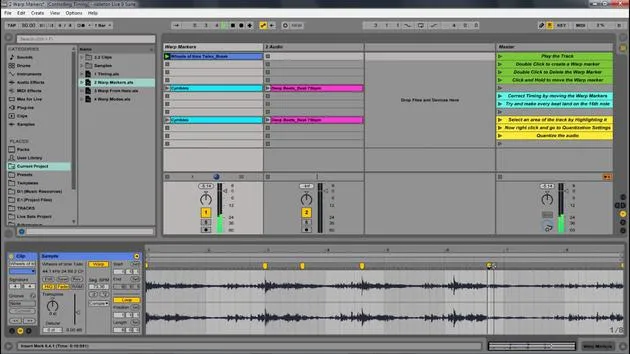
- Arrangement View offers a more linear approach.
- This is a way of creating a track from beginning to end.
- Advantages of Arrangement View:
- Better suited for epic swells or modulation, such as orchestral pieces where volumes and changes occur over large amounts of time.
- Provides better control for complex arrangements than Session View.
Transitioning from Session View to Arrangement View
Now let's look at how to transition between these two views:
-
Understanding the Clips:
- In this example, I have several different clips and tracks that I've already prepared.
- I know all these samples work well together.
-
Recording in Session View:
- Press the whole scene or start different parts.
- It's super playable, allowing you to change things on the fly.
-
Getting to Arrangement View:
- To create a song that can be edited and eventually released, you need to record your actions from Session View to Arrangement View.
- Just hit the Record button. This will capture everything you do and transfer it into Arrangement View.
-
Recording the Session:
- Hit the Tab key. There may not be anything here initially, but now I'm going to hit Record and start playing.
- Introduce other elements, hit the play button or select them and press Enter to play the entire scene.
-
Reviewing in Arrangement View:
- After recording, hit Tab to go to Arrangement View and press the space bar to stop playback.
- You'll see everything you did is now recorded.
-
Playback in Arrangement View:
- You might notice everything is grayed out initially because it prevents overwriting what was happening in Session View.
- To play back, press the little play buttons to load and play the samples or use the button to play everything in Arrangement View.
Working in Arrangement View
- Once in Arrangement View:
- You can duplicate, shrink, and grow elements.
- Changes in Arrangement View do not affect Session View; they are separate.
Closing Thoughts
- You can always return to Session View, hit the Record button, and bring in new sections while continuing to record in Arrangement View.
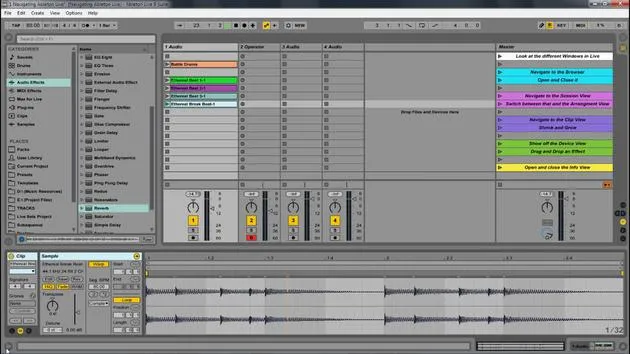
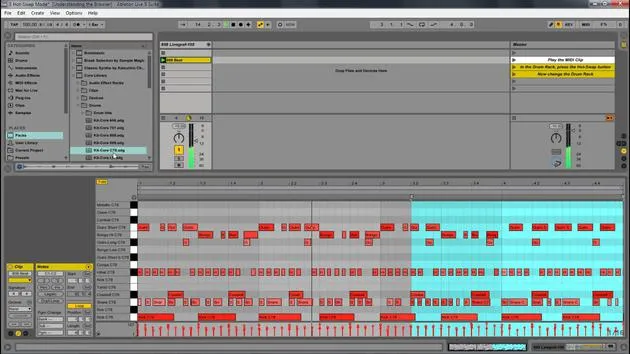
- We have various windows to navigate, including:
- The browser
- Info View
- Clip View
- Devices that show up if available
- Ability to switch between Session and Arrangement View.
That's the basic overview of navigating Ableton Live. Now that you know the parts, it's demystified, it's not as scary anymore! We can dive deeper into using the program and explore how to make music.
20 lessons
2h 16m of structured video lessons
Advanced video features
Slow down, loop a passage, follow along
Mobile, tablet & desktop
Practise wherever you are
100% satisfaction guarantee
30-day money-back guarantee
Meet your guru
Meet your guru
Isaac Cotec is, arguably, one of the best Ableton trainers in the world! While working on his own music, he began teaching recording techniques, sound design, and Ableton Live to private students, and since earning his certification as an official Ableton Certified Trainer he has helped thousands of producers step up their game and succeed as musicians.
Isaac started producing electronic music in 2005 with Psyche Sonics, an experimental group working with the science and research of binaural beats and altering consciousness through sound. After touring, he continued writing music under the alias Cotec and later emerged as the artist Subaqueous, blending his electronic past with both future and organic production techniques. To date, he has released 3 albums and 4 EPs.
Isaac is also the founder and manager of the record label Invibe Music, which represents some of the Pacific Northwest's best electronic music and specialises in midtempo dance music.
In his Ableton Live courses, Isaac shares the production, sound design and songwriting techniques he has spent years refining - the very skills he uses to turn a spark of an idea into a finished track.







