



Navigating Ableton Live - Tracks
With
Isaac CotecIsaac Cotec explains how tracks work in Ableton Live, each one holding unlimited clips but playing one at a time, and how to add, rename and play them.
What's in the course
20 lessons (2h 16m) · 1 free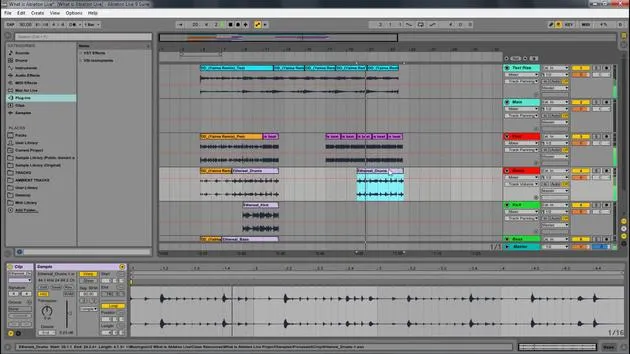
Lesson transcript
Understanding Tracks in Ableton Live
Now, let's look at what tracks are.
Overview of Tracks
Tracks are what host your clips and manage the flow of the signal. They are essential for:
- Creating new clips
- Recording
- Synthesis
- Effect processing
- Mixing
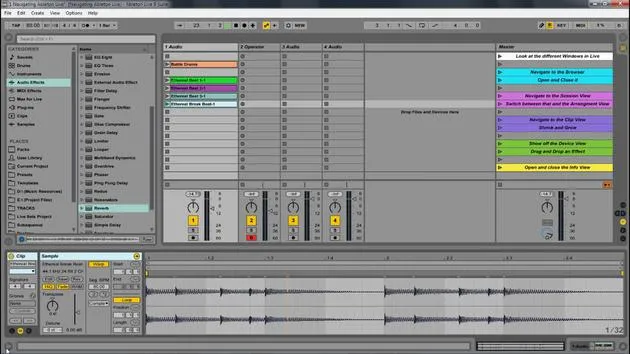
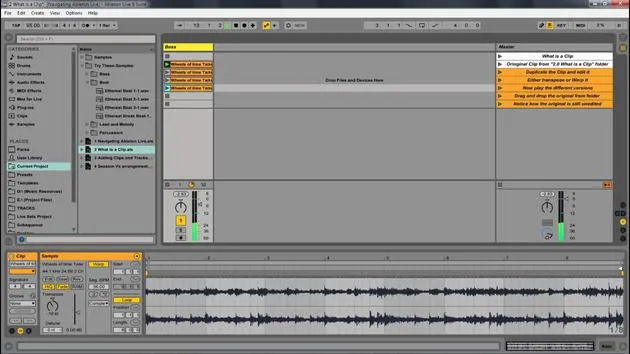
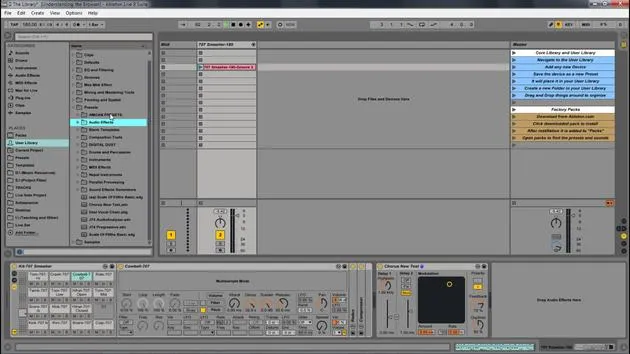
In the image, it represents the track taken from Ableton, where I have "Pads" as a track that goes down horizontally.
Multiple Tracks
I can have multiple tracks like:
- Pads
- 808 Drums
- And so on
Each track can hold multiple clips. Here are a few important things to know about tracks:
- Tracks can hold an unlimited number of clips.
- A track can only play one clip at a time.
- You can have any number of tracks.
Working with Tracks in Live
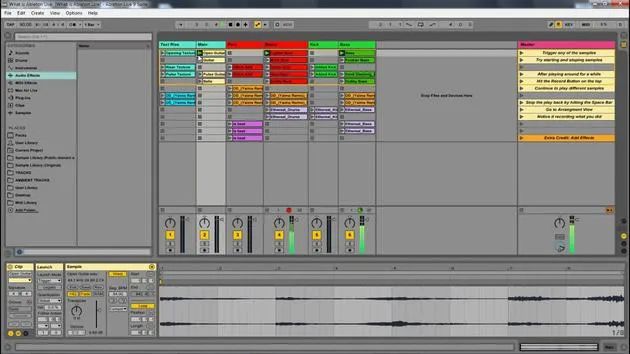
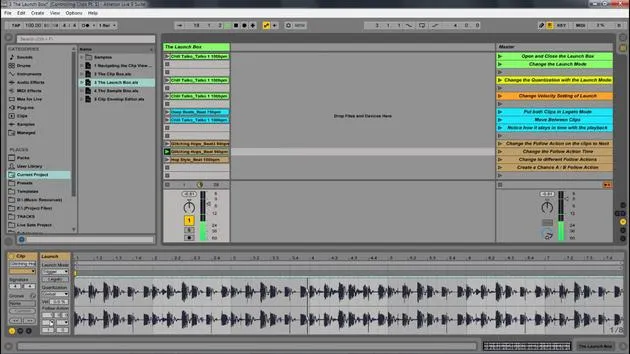
Now, within Ableton Live, if I look at my beats, for instance:
- I can drag my beats into a new place, which will create a new track.
- Rename it "Beats" by:
- Right-clicking and selecting Rename
- Pressing Control + R (PC) or Command + R (Mac)
Adding Tracks
Another way to add tracks is:
- Right-click or two-finger click (Mac) and select Insert Audio Track
- Use the shortcuts:
- Control + T (PC)
- Command + T (Mac)
Types of Tracks
You will notice different types of tracks:
- MIDI Track
- Return Track
These can be found under the Sends and Returns tab, which we'll cover at another time. For now, we're just playing with audio.
Playing Clips
With tracks created, here's how playback works:
- Pressing play on one track will play that clip, but playing another one takes over.
- A single track represents one instrument or one person playing at a time. You can't play multiple things simultaneously.
This allows you to:
- Adjust the volume
- Pan the track
- Turn it on or off
If multiple instruments were played, it could become confusing.
Building Your Track
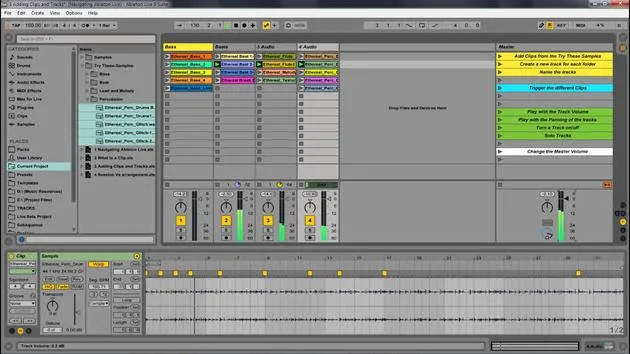
For example, with a bass track:
- Drag in the bass clips.
- Add a beat.
- Change the beat.
- Add a melody.
- Even include percussion.
Pressing play allows it all to start, showcasing the building blocks of live performance.
Mixer Functions
While clips are playing, there are several features available:
- Change volume and panning
- Turn tracks on and off with the bypass button
- Use the solo function, which turns off everything except the soloed tracks
We also have the record button, which we'll discuss later regarding recording audio and MIDI.
Master Volume
The master volume controls the overall output and can be compared to adjusting the speakers' volume.
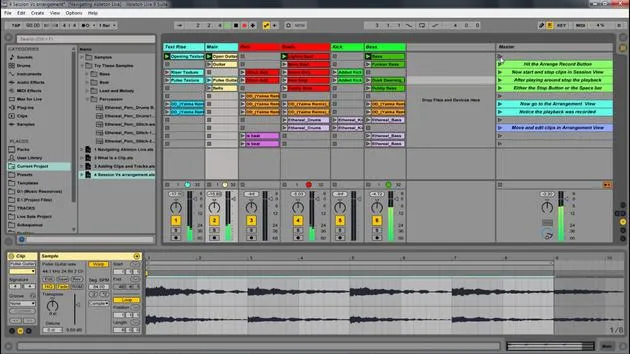
Session View and Scenes
An essential concept in Session View is the ability to:
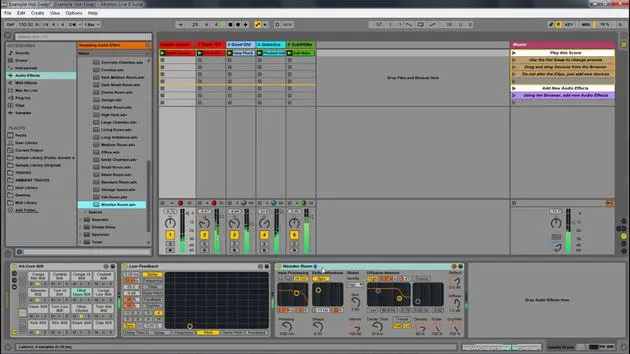
- Play clips separately or play an entire line, called a scene.
- Pressing play on a scene triggers everything within that space.
Stopping Clips
There are various ways to stop clips:
- Use the stop buttons on each track.
- For an entire scene, press the stop button for the scene.
- The master stop button stops everything.
While playing a whole scene, you can:
- Use the space bar to stop everything (this completely halts Ableton).
- Use individual stop buttons for more control over specific clips.
Plus, if you stop with the space bar while the metronome is running, everything turns off until you press play again.
Conclusion
This is the basics of clips and tracks within Ableton Live. You can bring things in and out as needed and raise or lower the volume to shape your mix effectively.
20 lessons
2h 16m of structured video lessons
Advanced video features
Slow down, loop a passage, follow along
Mobile, tablet & desktop
Practise wherever you are
100% satisfaction guarantee
30-day money-back guarantee
Meet your guru
Meet your guru
Isaac Cotec is, arguably, one of the best Ableton trainers in the world! While working on his own music, he began teaching recording techniques, sound design, and Ableton Live to private students, and since earning his certification as an official Ableton Certified Trainer he has helped thousands of producers step up their game and succeed as musicians.
Isaac started producing electronic music in 2005 with Psyche Sonics, an experimental group working with the science and research of binaural beats and altering consciousness through sound. After touring, he continued writing music under the alias Cotec and later emerged as the artist Subaqueous, blending his electronic past with both future and organic production techniques. To date, he has released 3 albums and 4 EPs.
Isaac is also the founder and manager of the record label Invibe Music, which represents some of the Pacific Northwest's best electronic music and specialises in midtempo dance music.
In his Ableton Live courses, Isaac shares the production, sound design and songwriting techniques he has spent years refining - the very skills he uses to turn a spark of an idea into a finished track.







