Doing it yourself - DIY and beyond

With
Katie MeluaWhy DIY doesn't mean doing everything alone, and how making things happen yourself, with creative friends pitching in, gets managers and agents to take notice.
What's in the course
40 lessons (2h 33m) · 1 free
01. Getting started, open mics and unpaid gigs
2:10
02. Becoming local heroes and booking tours
6:12
03. Getting creative about gigs
3:44
04. Stagecraft – Jeremy from Everything Everything
2:21
05. Capitalising on your audience
4:50
06. Engaging Direct to Fan
5:32
07. Knowing your online audience and using data effectively
10:31
Lesson transcript
The DIY Approach to Music
I think it's a really great time to make music because we have so many tools available to use. However, the term "DIY" can feel like a bit of a curse.
The Reality of the Music Industry
You've never been able to just lean back, make your music, and expect a limousine to roll up with someone handing you a record deal. I don't think that was ever the case. There's so much smoke and mirrors in the music industry that it often overshadows the hard work required to reach success.
To me, what DIY means is:
- You don't sit back and wait for something to happen.
- You have to get up and make things happen for yourself.
Taking Action
- Start playing shows.
- Start recording.
- Put things out into the world.
- Make connections: with musicians and with the people that like your music.
I believe these relationships are the most important, and everything else will follow.
The Role of Business Partners
We're not saying that artists should handle every single aspect of their careers on their own, certainly not forever. In most cases, that's not realistic from the beginning.
However, new artists, especially at the start of their careers, often must manage their own business. Eventually, most artists aspire to have:
- A manager to oversee the business side.
- A record label.
- A publisher.
- An agent and a promoter.
These business partners help with various aspects of the career, but initially, you'll have none of them.
The First Step: Getting Management
At our events, I often hear that new artists believe their first deal should be a record deal. I always say:
"No, the first person you need is a manager."
Before you even think about doing a label deal, you need to secure management.
Getting a Manager
When new artists ask, "How do I get a manager?" the typical response from managers is:
"When you're ready, we'll come and find you."
While this may not seem helpful, it does carry weight. It means that as a new artist, you need to start doing things both creatively and commercially to get noticed, not just by fans and bloggers, but also by managers and agents.
Building Your Career
This means:
- Writing your songs.
- Recording your songs.
- Distributing your songs, not only through SoundCloud and YouTube, but also through services like Spotify and iTunes. This is actually very easy to do.
The Importance of Gigging
Perhaps most importantly, gigging is essential.
- Get out there and play. This is your marketing platform.
- While you may not make much money gigging, it's important to understand the landscape.
Many new artists feel discouraged when they hear that pop stars make money from concerts because at the grassroots level, you often lose money playing to small audiences.
Learning and Building
- When you're gigging at pub level to 50 people, it's a learning experience.
- You hone your sound, build a fan base, and meet industry professionals.
For me, this is what the DIY bit is all about:
- Recording your music.
- Getting your content online.
- Having a social media setup.
- Gigging relentlessly to attract business partners.
Once those partners appear, you won't have to do everything on your own.
Collaboration is Key
But, as I say, when I mention doing it yourself:
- Find a photographer to take your photos.
- Find someone passionate about social media to manage your accounts.
- Find a writer to craft content for your website.
Work with other creative individuals who are also at the start of their careers. Realistically, you can't do everything alone.
40 lessons
2h 33m of structured video lessons
Advanced video features
Slow down, loop a passage, follow along
Mobile, tablet & desktop
Practise wherever you are
100% satisfaction guarantee
30-day money-back guarantee
Meet your guru
Meet your guru
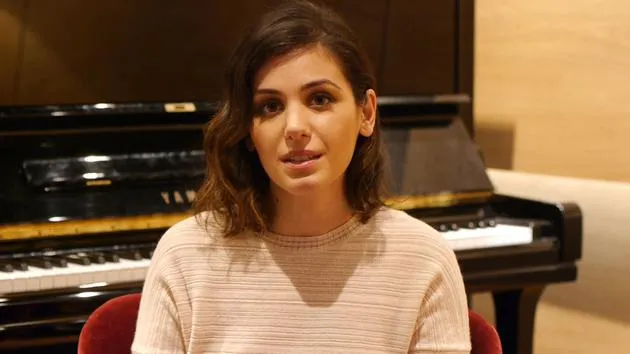
Katie Melua is one of the UK's most successful recording artists, with more than 11 million albums sold worldwide and a string of multi-platinum releases. Born Ketevan Melua in Kutaisi, Georgia, in 1984, she moved with her family to Belfast as a child and later studied at the BRIT School in London, where she was discovered by songwriter and producer Mike Batt.
Her debut album 'Call Off the Search' (2003), released when she was 19, spent six weeks at No. 1 in the UK and went six-times platinum, driven by the hit single 'The Closest Thing to Crazy'. Its follow-up 'Piece by Piece' (2005) topped charts across Europe and featured her signature song 'Nine Million Bicycles'. In 2006 she earned a place in the Guinness World Records book by playing the deepest underwater concert ever staged, 303 metres below sea level on a North Sea gas platform.
A remarkable run of top-ten albums followed — 'Pictures' (2007), the William Orbit-produced 'The House' (2010), 'Secret Symphony' (2012) and 'Ketevan' (2013) — as Melua refined a sound that moves effortlessly between jazz, folk and classic pop songwriting. 'In Winter' (2016), recorded in Georgia with the Gori Women's Choir and produced by Melua herself, revealed a new depth to her artistry.
Her recent work is her most personal: 'Album No. 8' (2020) and 'Love & Money' (2023) drew some of the strongest reviews of her career, and 'Live at the Royal Albert Hall' (2024) celebrated two decades at the top of British music. She remains a captivating live performer, touring extensively across Europe and beyond.