Blues basé sur 'Blue Bash' - Jimmy Smith

Avec
Joe Glossop
Le contenu du cours
45 leçons (3h 0min) · 1 gratuites
01. Interprétation : 'Green Onions' de Booker T
3:01
02. Sonorités : 'Green Onions' Booker T
3:08
03. Jouer le morceau : 'Green Onions' de Booker T
8:21
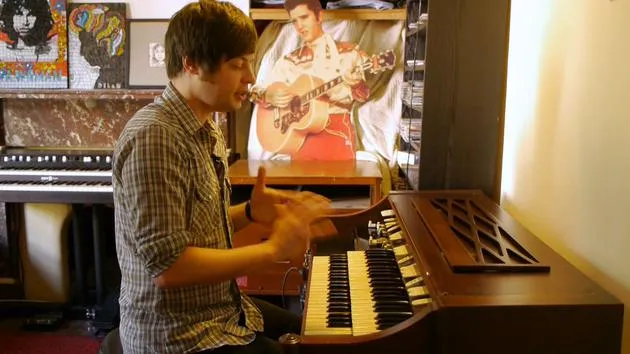
04. Lignes mélodiques : 'Green Onions' Booker T
4:43
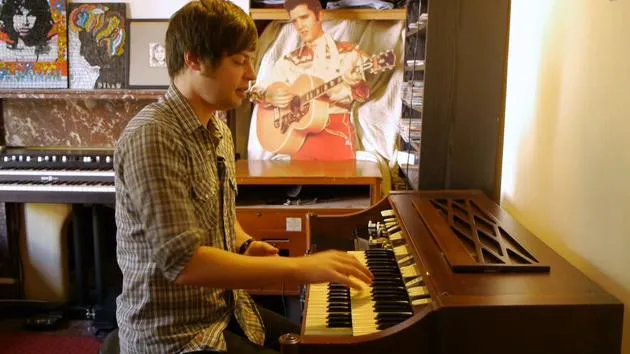
05. Ligne de basse : 'Green Onions' Booker T
2:01
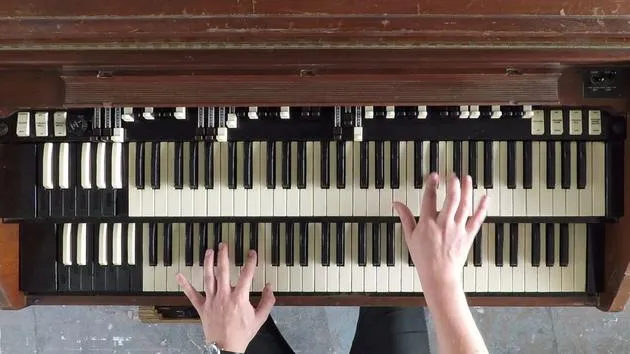
06. Interprétation : Jimmy McGriff - All About My Girl
3:43
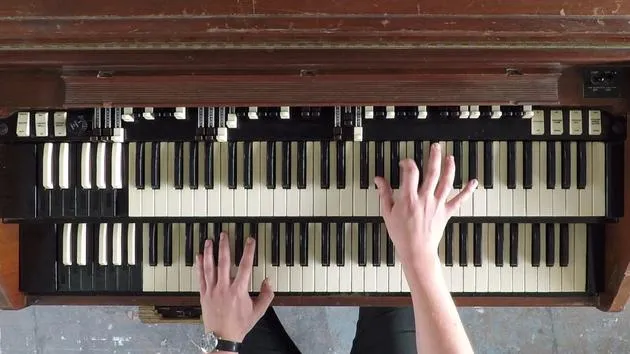
07. Interprétation vue clavier : Jimmy McGriff - All About My Girl
3:43
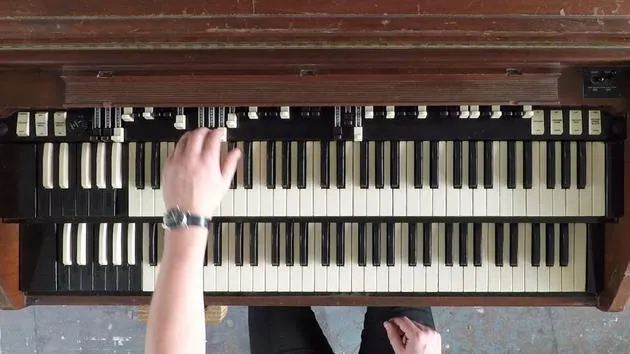
08. Sonorités : 'All About My Girl' - Jimmy McGriff
4:01
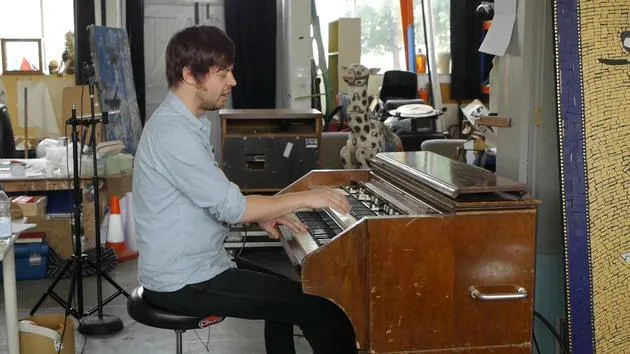
09. Intro : 'All About My Girl' - Jimmy McGriff
2:10
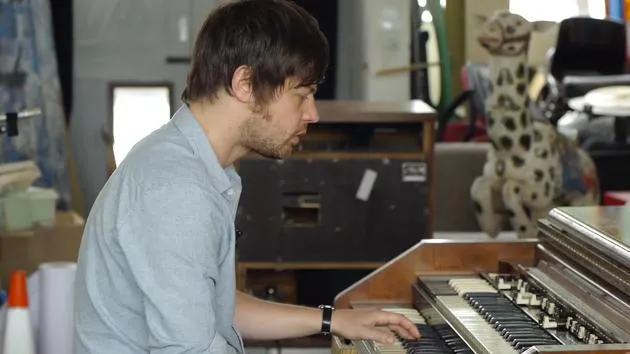
10. Jouer le thème : 'All About My Girl' - Jimmy McGriff
2:58
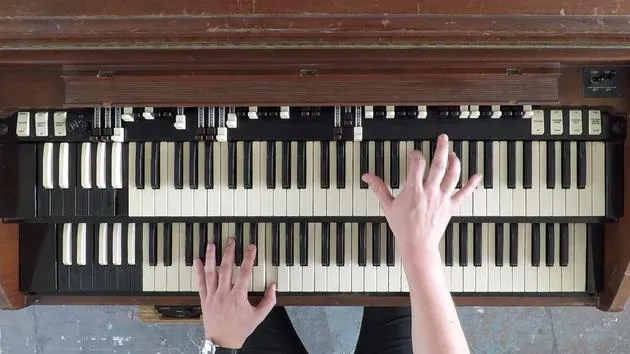
11. Ligne de basse : 'All About My Girl' - Jimmy McGriff
1:52
12. Fin : 'All About My Girl' - Jimmy McGriff
1:51
13. Improvisation et comping : 'All About My Girl' - Jimmy McGriff
4:38
01. A Change is Gonna Come' - Sam Cooke
7:46
02. Vue du clavier : 'A Change is Gonna Come' - Sam Cooke
1:20
03. La La means I love you' - Booker T
5:39
04. Vue du clavier : 'La La means I love you' - Booker T
2:25
05. Groovin' Booker T & the MGs
4:57
06. Vue du clavier : 'Groovin' ' - Booker T & the MGs
1:15
07. Time is Tight' - Booker T & the MGs
5:31
08. Vue du clavier : 'Time is Tight' - Booker T & the MGs
1:39
09. 'The Girl from Ipanema' - Antonio Carlos Jobim
6:17
10. Vue du clavier : ‘The Girl from Ipanema’ - Antonio Carlos Jobim
2:36
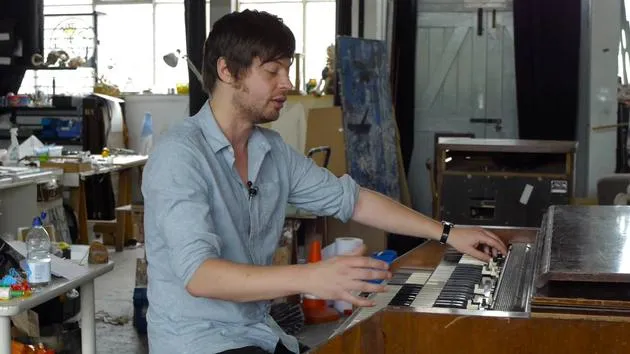
11. Blues basé sur 'Blue Bash' - Jimmy Smith
Tu es ici7:59
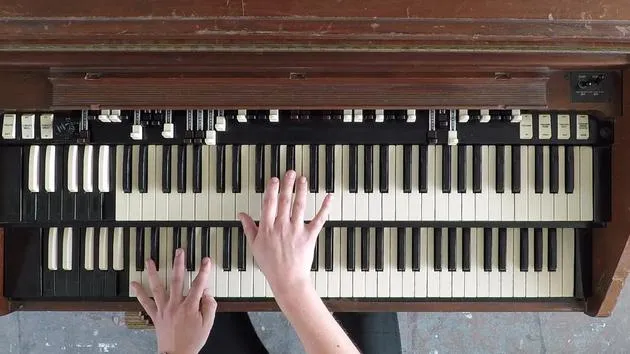
12. Vue du clavier : blues d'après 'Blue Bash' - Jimmy Smith
3:24
13. Walk on the Wild Side' jam sur la M series - Jimmy Smith
6:44
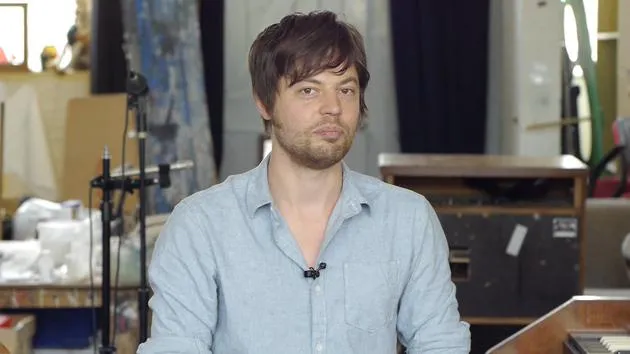
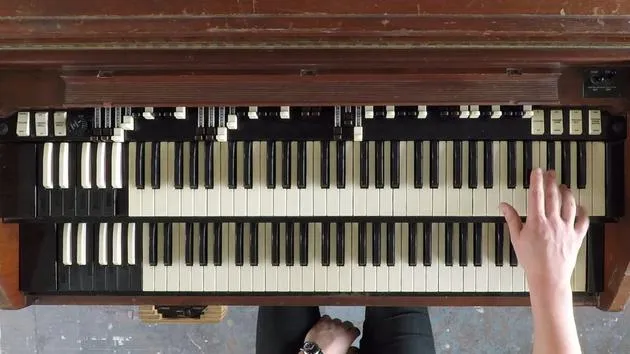
Transcription de la leçon
Blues Music Lesson
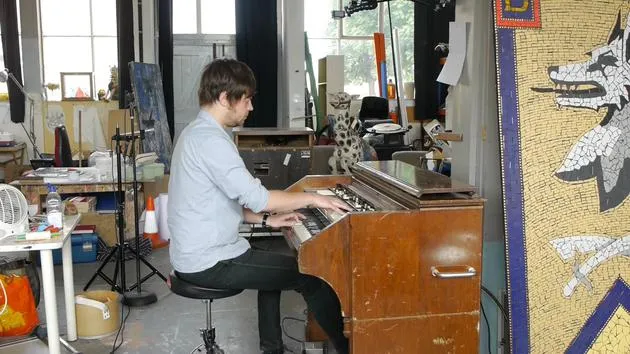
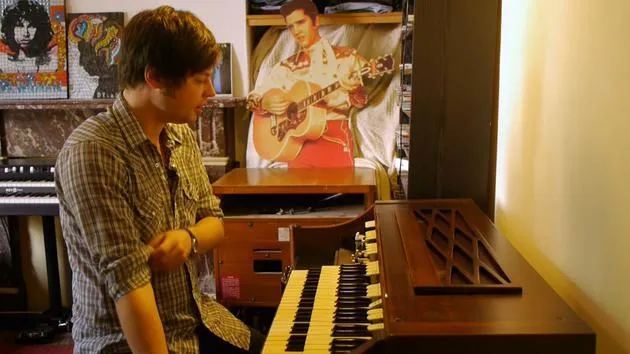
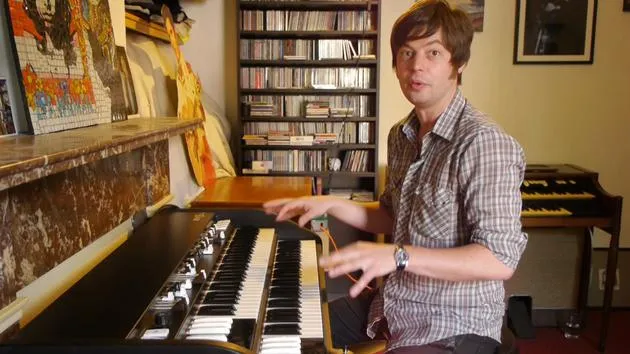
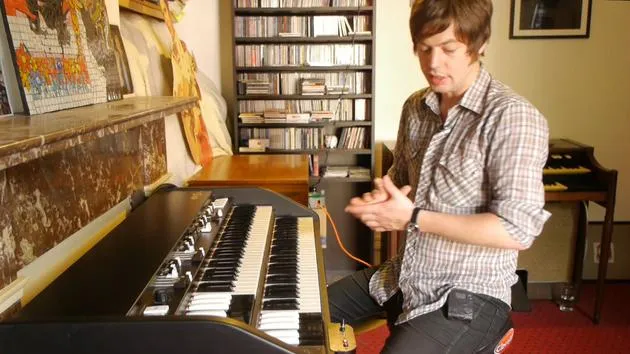
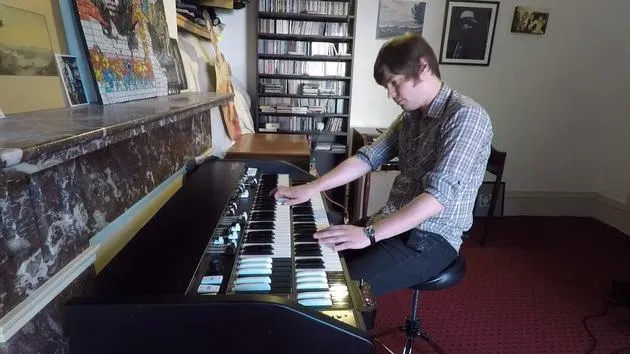
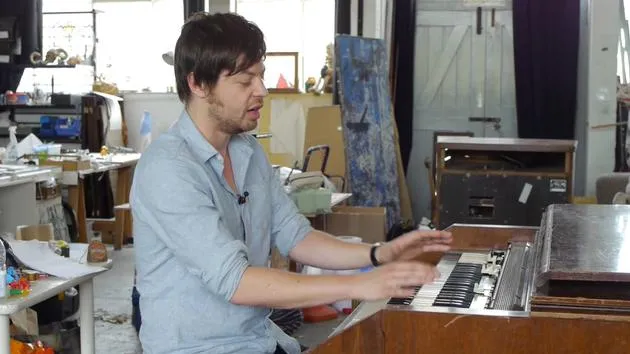
Introduction: Here's a bit of blues for you. I'm loosely using a Jimmy Smith head from "Blue Bash," but it's a bit of blues , swingy, slightly jazzy blues.
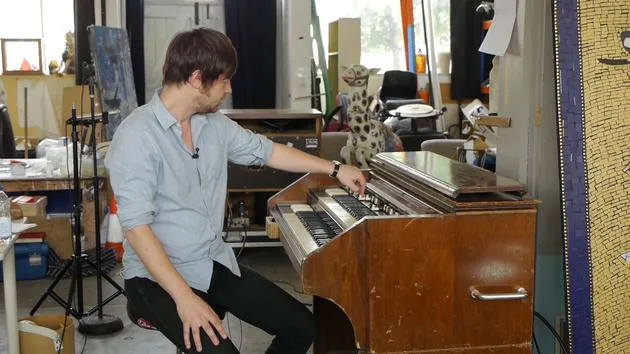
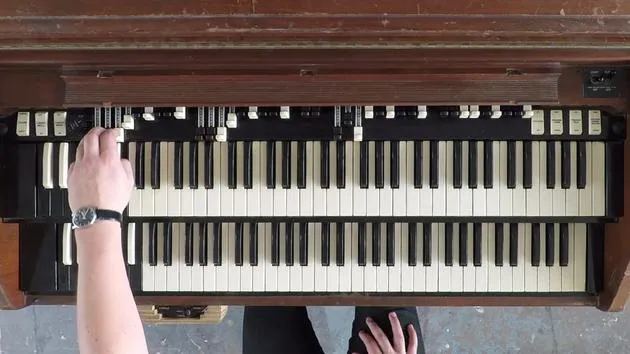
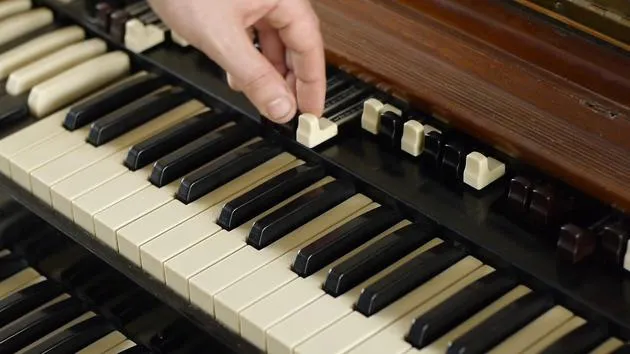
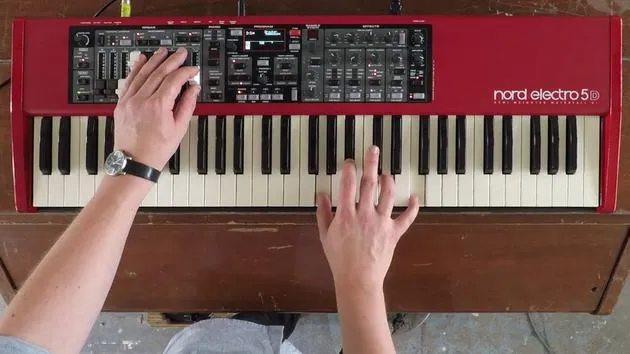
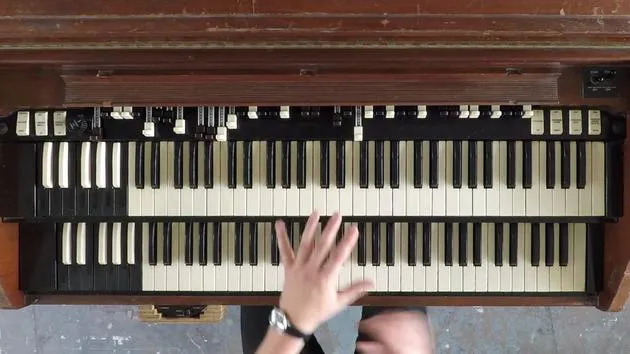
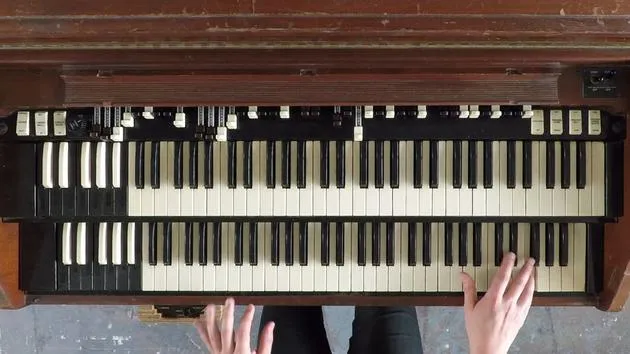
Lead Line: This tune you might have worked out already, the lead line there. A lot of the improv was based on the kind of Jimmy Smith jazz setting on this set of drawbars:
- Third harmonic chorus
- Vibrato number three
(Same as we've used before.)
So that's that sound. That's how you achieve it, and that didn't really change up until towards the end.
Sound Variation: I moved on to a completely different sound with a different set of drawbars. You couldn't have a more different sound, really.
- What Jimmy McGriff and Jimmy Smith used was kind of like to oppose that jazz tone with a stop, or they'd be on that sound stop, Leslie, then go fast for a very thin sound and voice things very big.
So, as before, we were playing mostly single notes with a big chunky sound. This, however, is a very thin sound and is voiced very big, wide and open.
Bass Line:
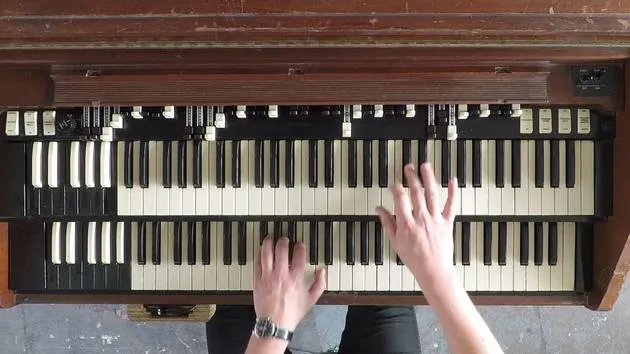
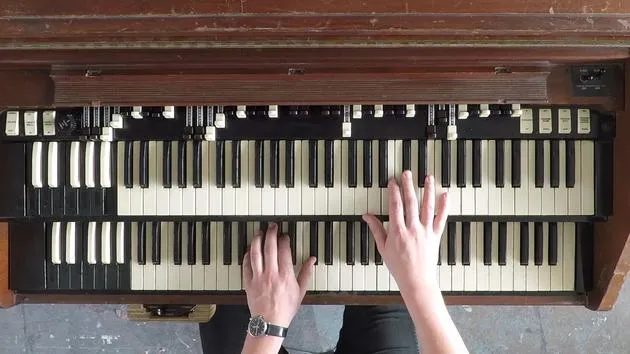
- Obviously, we've got a bass line here.
- So, it's just one hand.
That's how you can get a lot of slides involved. You can answer it with the tone you have on the bottom there. Your bass tone can also serve as a kind of percussion, responding to whatever line you're playing.
Improvisation Tips: If you want to play almost like a horn section line as an improv thing, you can do that. It's a way to punctuate and keep the impetus going, maintaining interest without getting too caught up in one thing.
- It's used a lot, in between lead lines.
- For instance, if you were doing something like the cat, those coughing or choking sounds underneath really help punctuate the phrasing of what you're trying to do.
This approach also aids in pulling the time back and placing things precisely where you want them.
Conclusion: Towards the end of that, after I'd used that sound, I started bringing those drawbars out, thickening the sound, and reaching a climax there, maybe with something repetitive that works really well.
- You could do that over the whole 12 if you wanted to.
- A lot of guys use that kind of thing and employ horn line riffs in big voicing.
Think of it like a horn section. It's quite a good mindset to adopt for that kind of improv.
45 leçons
3h 0m de leçons vidéo structurées
Fonctions vidéo avancées
Ralentissez, bouclez un passage, suivez la partition
Mobile, tablette et ordinateur
Pratiquez où vous voulez
Satisfaction garantie à 100 %
Garantie remboursement 30 jours
Rencontrez votre guru
Rencontrez votre guru
Joe Glossop est un claviériste de Sheffield qui s'est fait un nom à l'orgue Hammond. Il occupe actuellement le poste d'organiste dans le groupe de tournée de Tom Jones, et a joué avec Van Morrison et James Hunter, ainsi qu'au piano et au Rhodes. Ses cours permettent de tirer le véritable son Hammond de n'importe quel clavier : le réglage des drawbars, le Leslie, la basse walking à la main gauche, et le vocabulaire d'accompagnement et de solo des traditions de l'orgue soul-jazz, blues et rock, de Jimmy Smith à Booker T.