



PUSH 2
Lesson time: (6min 49sec)
Course preview
This lesson is part of the course Actuación en directo con Ableton Live
Watch a preview of the full course below.
Lesson transcript:
Using Push for Live Performance
Okay, so Push is a lot of fun to use live, but there are a few things that I've run into. I'd like to share a couple of problems I've encountered and the solutions I've found.
Note Mode Issues
When I go into Note mode, Push gives me the notes for whichever track I have selected. For example, as I'm going through my track selections, if I happen to select another track for whatever reason, my note mode disappears.
Flow Disruption
This is a problem because, during a performance, if I lose my note mode, I need to scroll back to where I was. This interrupts my flow and may force me to look at the computer screen, which is something I want to avoid.
Solution: Mapping Buttons
To work around this, I've mapped my Play, Stop, and Record buttons to certain tracks within my live instrument section.
- Play Button: Takes me to the drum track.
- Stop Button: Maps to one of my synths towards the middle (the third one in this case).
- Record Button: Takes me all the way to the right, which I've set up for any external gear.
This mapping is really handy if you lose track of which track you're currently on.
Dangerous Buttons
These button mappings also address another issue: If I'm playing and need to mess around with crossfade or vocal effects, I might accidentally hit Stop, which would kill the performance and result in total silence.
Imagine the embarrassment, the song is over, and everyone knows I made a mistake because the sound just cuts out.
Record Button Concerns
Similarly, if I'm recording my performance and accidentally hit the Record button while adjusting something, it may stop my recording, leading to the loss of the entire performance.
Optimized Mapping
To mitigate these risks, I customize my mappings:
- Play goes to the drums.
- Stop goes to a particular synth I use frequently.
- Record is mapped to the last track.
This way, I can easily access any track if I need to switch!
Select on Launch Setting
One additional setting to be aware of is Select on Launch located under the Record, Warp, and Launch settings.
With Select on Launch enabled, when I select a track or clip, it automatically selects the track it's on. This messes up my focus on Push because it may cause my instrument to disappear right from under my fingers.
Recommendation
To avoid this, I recommend turning off the Select on Launch feature. This modification allows you to play sounds without anything slipping out from under your fingers.
Result
When I launch a clip with this setting off, it doesn't change my current focus, enabling a seamless addition of parts during performance.
Conclusion
Using Push has been a lot of fun, especially for playing instruments. The layout is intuitive for guitar players, and I find it effective for collecting clips in session mode.
I can blend improvised stuff created on the fly with pre-recorded material, which enhances the excitement of live performances. I'm discovering more ways to engage in improvisation and live construction of tracks, making the process enjoyable. It's truly a great live instrument!
About the instructor
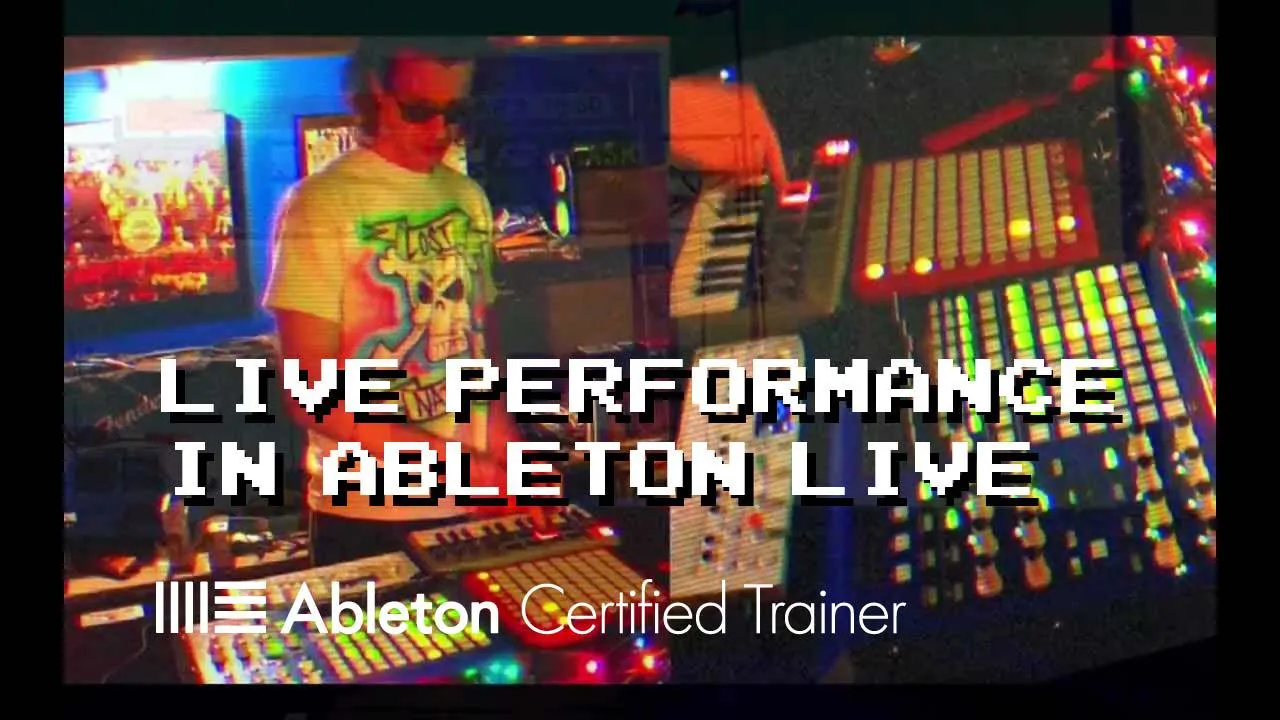
Brian Funk es músico, productor, compositor y Ableton Certified Trainer. Desde 2014 imparte el curso Advanced Music Production with Ableton Live para el Berklee College of Music. Ha tocado la guitarra, el bajo, la batería y los sintetizadores, y ha cantado en bandas de rock de gira, y hoy en día se centra en su directo electrónico en solitario, llevando al escenario sus experimentos de estudio.A Brian le encanta escribir, enseñar y el diseño de sonido. Produce tutoriales y Sound Packs de Ableton Live, y desde 2011 publica Packs gratuitos de Ableton Live: más de 125 hasta ahora. Como Ableton Certified Trainer ha dado clases y seminarios que abarcan cada fase del proceso de producción, y escribe con regularidad en su blog y para otras publicaciones.Influenciado por el rock and roll, los videojuegos, el primer hip hop, el punk y la electrónica, desde The Beatles, Neil Young, Nirvana y Aerosmith hasta Neon Indian, describe su propio sonido como 'futurista, aunque nostálgico'. En su curso de MusicGurus, Live Performance in Ableton Live, te muestra cómo convierte ideas de estudio en un directo real y práctico: sampleando sonidos y transformándolos en instrumentos tocables, pasando guitarras y sintetizadores por equipos electrónicos, y mezclando y componiendo sobre la marcha mientras toca en directo y canta. Acabarás siendo capaz de construir e interpretar tu propio directo electrónico con confianza. read more