



Ein Metronom benutzen
Das steckt im Kurs
114 Lektionen (3h 47m) · 1 gratis
01. Einführung ins Rock-Schlagzeug
7:55
02. Beispiel 1 - Single Strokes
2:44
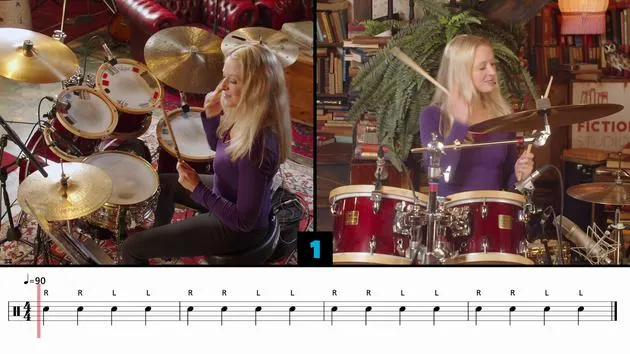
03. Beispiel 2 - Doppelschläge
1:28
04. Beispiel 3 - Paradiddles
2:37
05. Bonus - Single Strokes, Double Strokes und Paradiddles kombinieren
2:22
06. Rock-Lektion 2 - Pausen hinzufügen
1:48
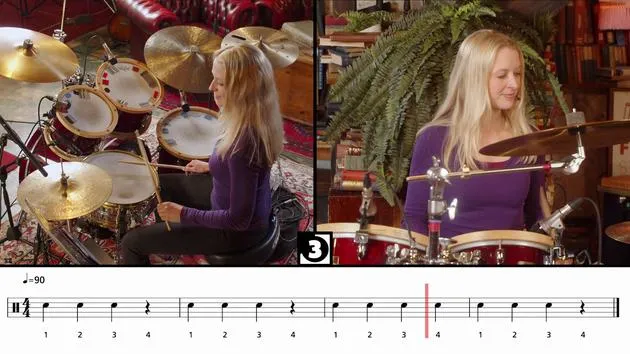
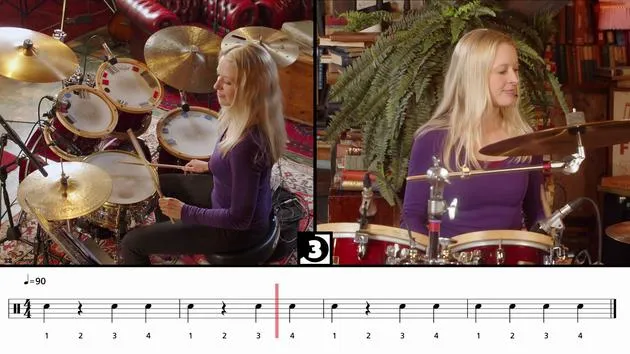
07. Beispiel 1 - Pause auf Schlag 4
1:56
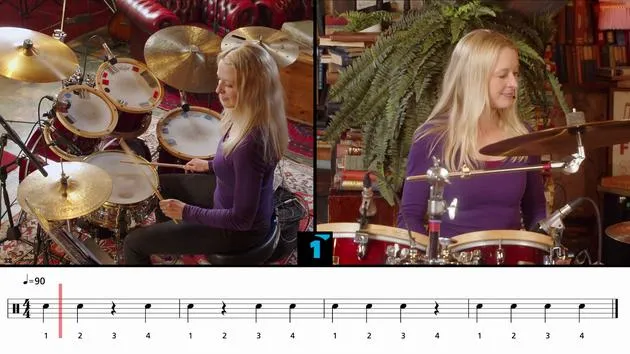
08. Beispiel 2 – Pause auf Schlag 2
1:36
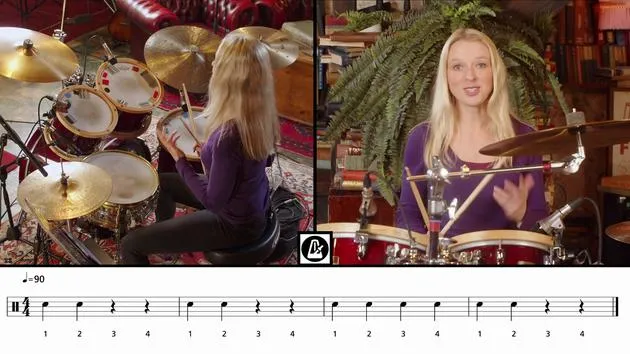
09. Beispiel 3 - Wandernde Pausen
1:05
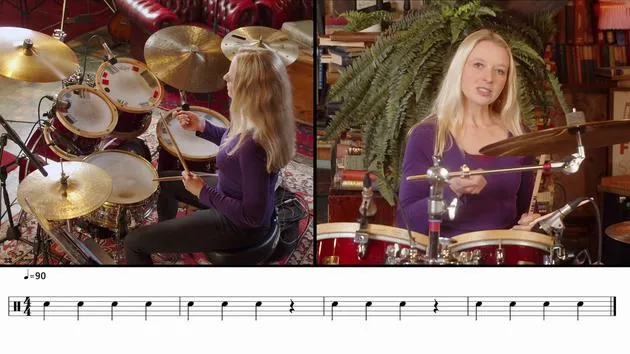
10. Beispiel 4 - Piston Takte 12-16
1:56
11. Bonusübung 1
1:49
12. Bonus-Übung 2
1:02
13. Zusammenfassung des Rock-Abschnitts
1:50
01. Pop - Die Hi-Hat hinzufügen
1:31
02. Beispiel 1 - Viertelnoten auf der Hi-Hat
1:40
03. Beispiel 2 - Pause auf Zählzeit 1
1:42
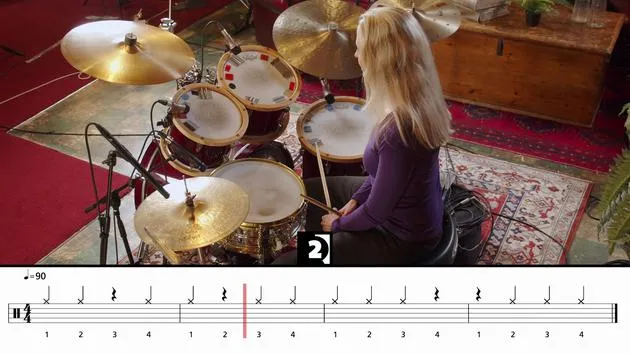
04. Beispiel 3 - Zwei aufeinanderfolgende Viertelpausen
1:28
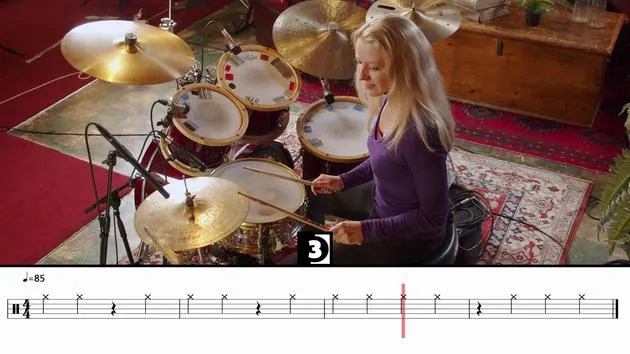
05. Bonus-Übung 1
1:11
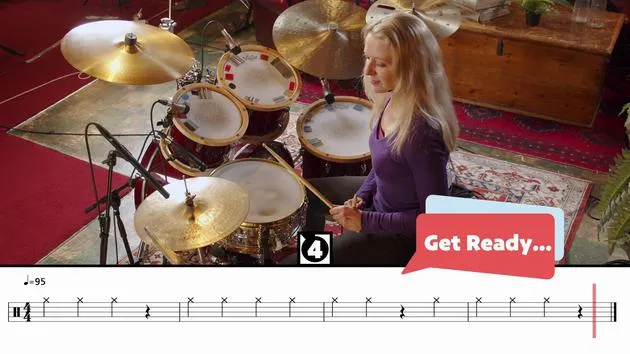
06. Bonusübung 2
1:10
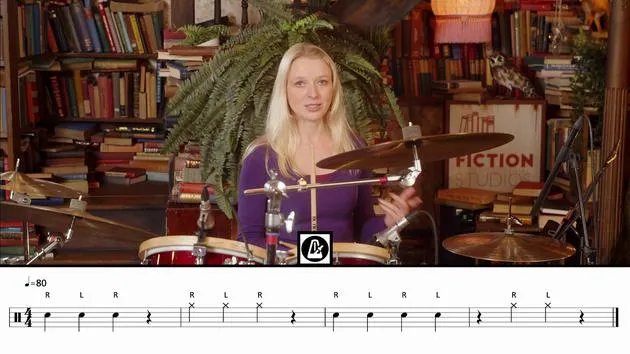
07. Pop Lektion 2 Beispiel 1 - Hi-Hat und Snare kombinieren
1:11
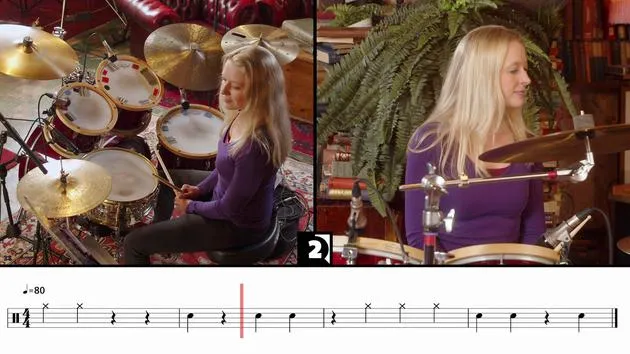
08. Beispiel 2 - Schnelles Wechseln zwischen den Schlagzeugstimmen
1:17
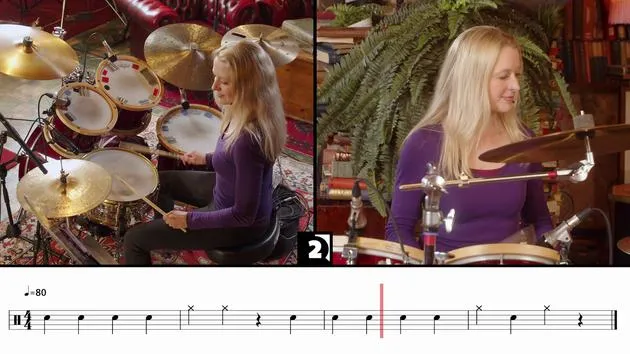
09. Beispiel 3 - Zwei Schlagzeugstimmen in einem Takt
0:59
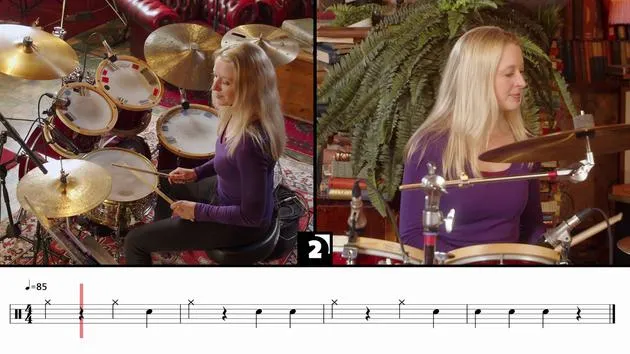
10. Beispiel 4 - Take It to the Top, Takte 1-4
1:10
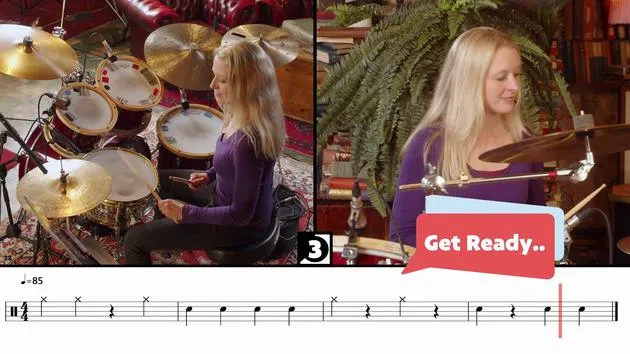
11. Bonusübung 1
1:08
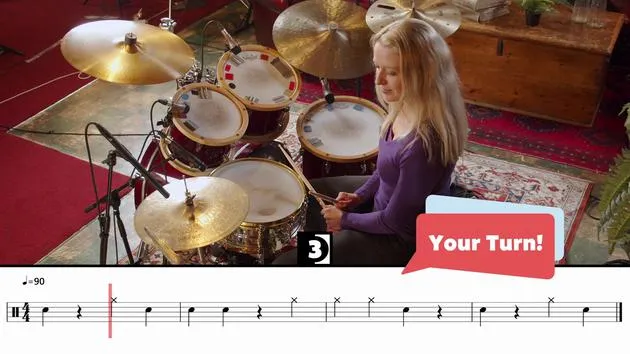
12. Bonusübung 2
1:04
13. Zusammenfassung des Pop-Musik-Abschnitts
0:51
01. Einführung in die Country-Musik
4:13
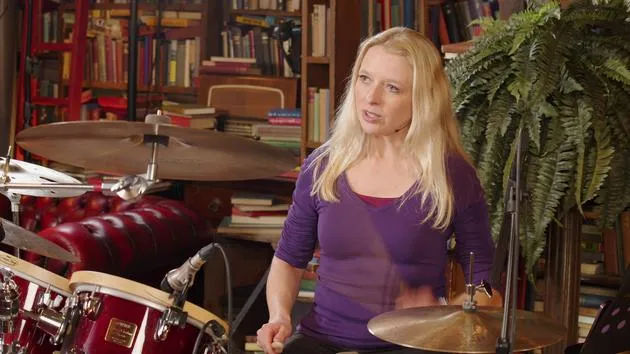
02. Skills-Checkpoint
1:54
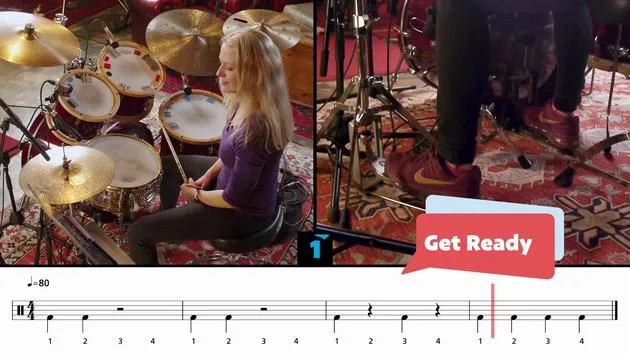
03. Beispiel 1 - Halbe Pause
1:18
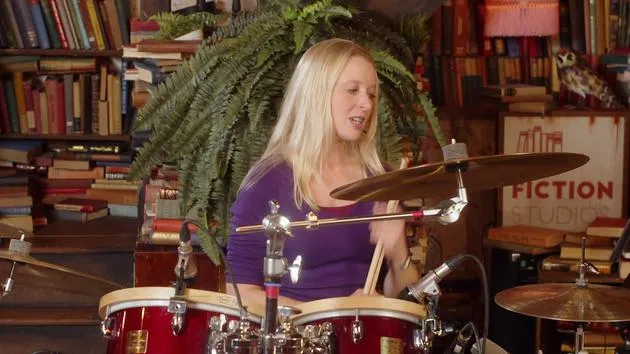
04. Beispiel 2 – Platzierung der Halbe-Pause
1:31
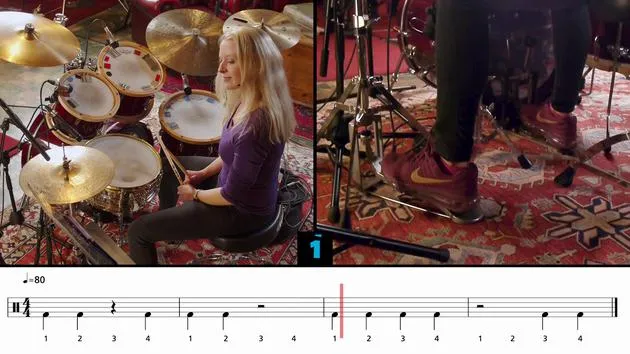
05. Beispiel 3 - Bassdrum-Phrasen
1:29
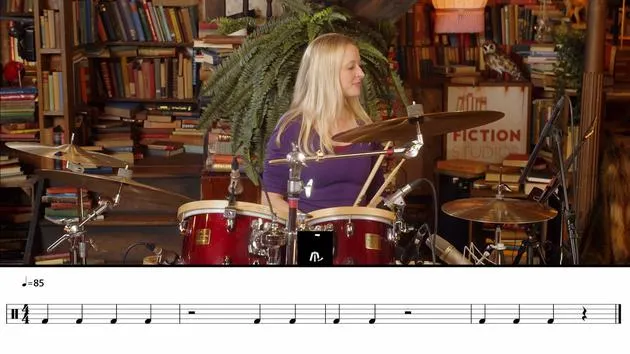
06. Bonusübung 1
1:27
07. Bonusübung 2
1:10
08. Country-Lektion 2 - Bassdrum, Snare und Hi-Hat kombinieren
3:07
09. Beispiel 1 - Bassdrum und Hi-Hat kombinieren
1:40
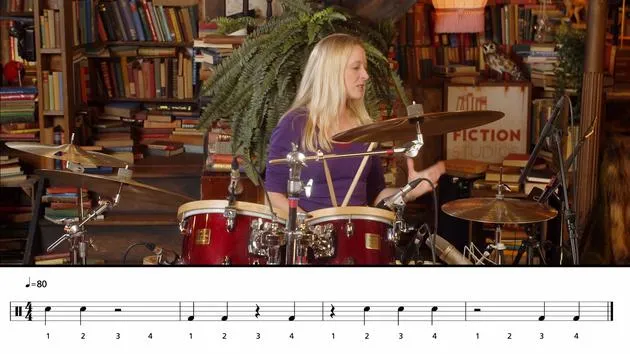
10. Beispiel 2 - Die Halbe-Pause an verschiedenen Stellen einfügen
1:10
11. Beispiel 3 - Schnelles Wechseln zwischen den Schlagzeugstimmen
1:10
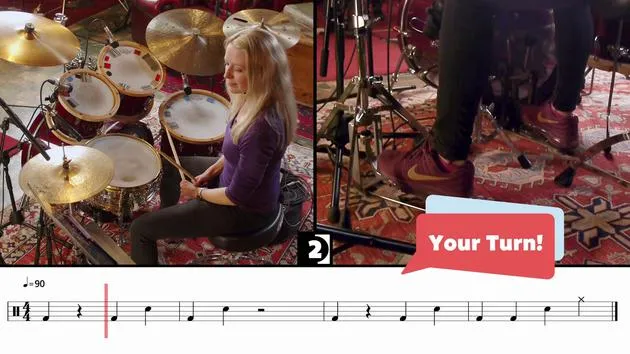
12. Beispiel 4 - Borderlands Takte 1-4
1:06
13. Bonusübung 1
1:30
14. Bonusübung 2
0:56
15. Zusammenfassung des Country-Music-Abschnitts
0:26
01. Metal-Einführung: zwei Schlagzeugstimmen spielen
3:35
02. Beispiel 1 - Fokus auf Koordination
2:19
03. Beispiel 2 - Bassdrum-Variationen
1:16
04. Beispiel 3 - Die Hände koordinieren
1:09
05. Bonus-Übung 1
1:05
06. Bonus-Übung 2
0:50
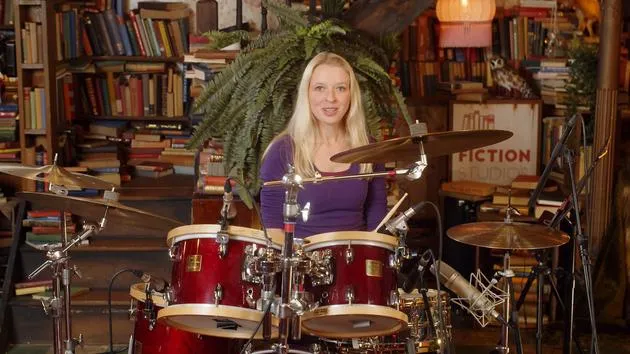
07. Zusammenfassung von Metal-Lektion 1
0:25
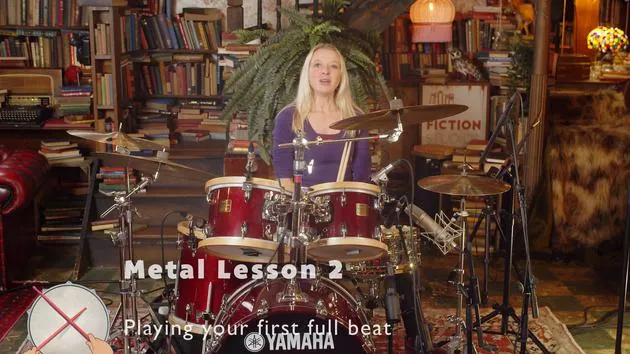
08. Metal-Lektion 2 - Deinen ersten vollständigen Beat spielen
1:56
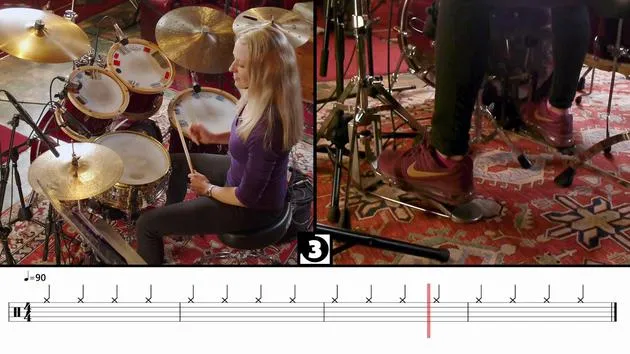
09. Beispiel 1 - Grundlegendes Hi-Hat-Pattern für den Rock-Beat
1:08
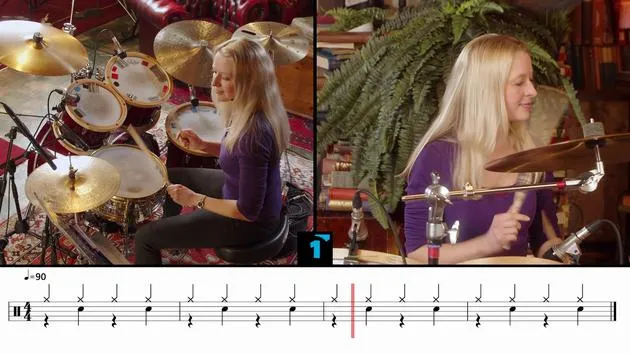
10. Beispiel 2 - Den Backbeat hinzufügen
0:58
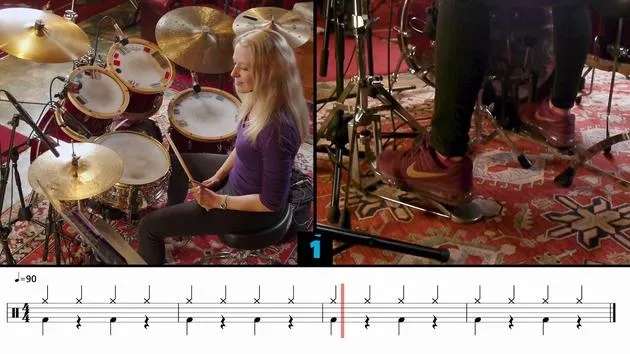
11. Beispiel 3 - Die Bassdrum hinzufügen
0:59
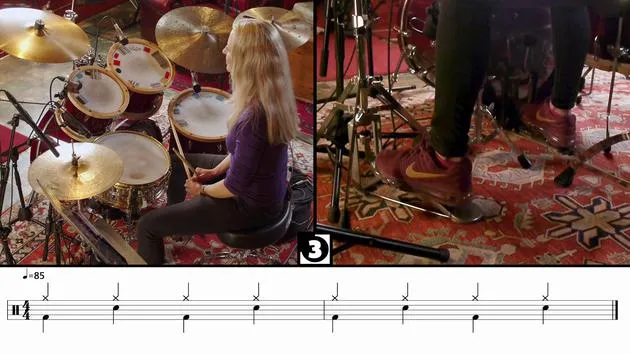
12. Beispiel 4 – Power Trip Takte 13-14
1:32
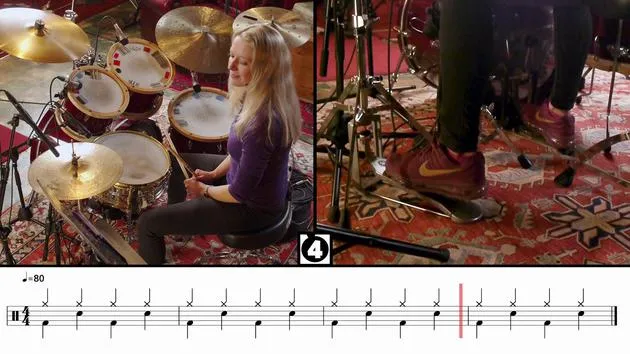
13. Bonus-Übung 1
1:10
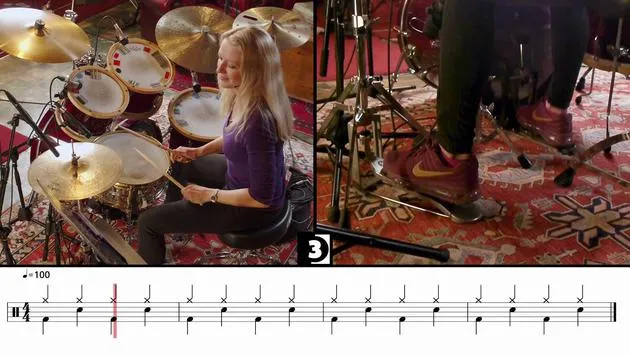
14. Bonus-Übung 2
0:53
15. Zusammenfassung des Metal-Abschnitts
1:05
01. Indie - Einführung in den Stil
1:26
02. Beispiel 1 - Pause auf Schlag drei
1:01
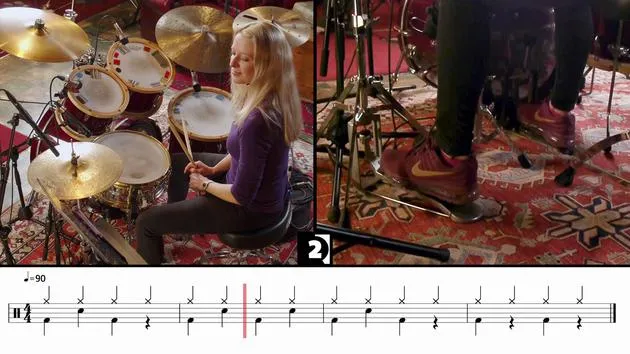
03. Beispiel 2 - Mehr Variationen
1:00
04. Beispiel 3 - Die Gliedmaßen koordinieren
2:16
05. Bonus-Übung 1
1:10
06. Bonusübung 2
0:50
07. Zusammenfassung von Indie-Lektion 1
0:25
08. Indie Checkpoint: Mallets
2:46
09. Indie-Lektion 2 - Einführung in Bassdrum und Snare in Achteln
1:25
10. Beispiel 1 - Snare mit Achtelnoten
1:36
11. Beispiel 2 - Bassdrum in Achteln
1:04
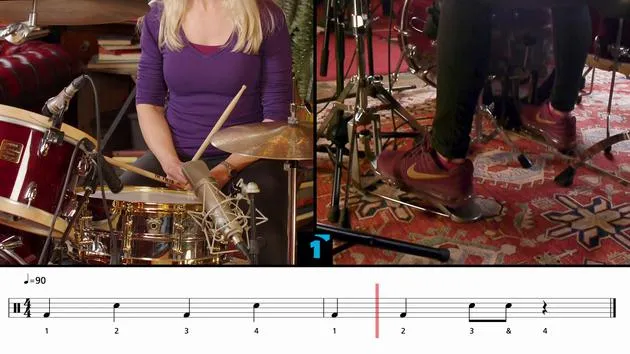
12. Beispiel 3 - Achtelnoten-Phrase
0:59
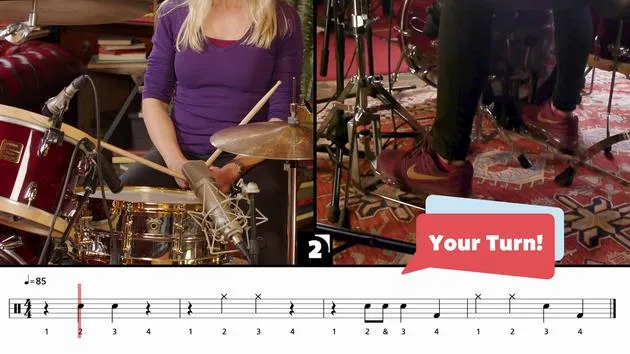
13. Beispiel 4 - 'Big Mouth' Takte 1-4
1:48
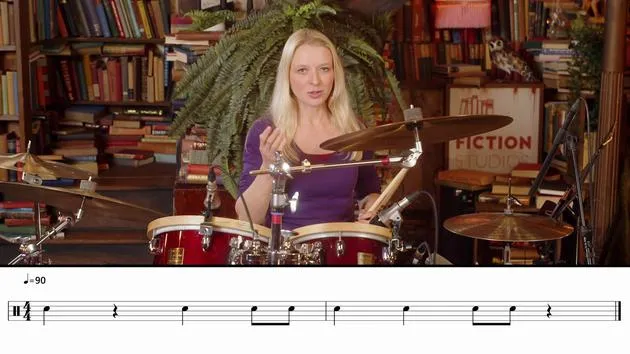
14. Bonusübung 1
0:38
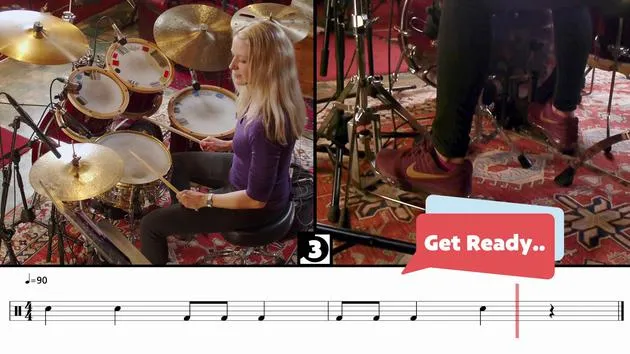
15. Bonus-Übung 2
0:59
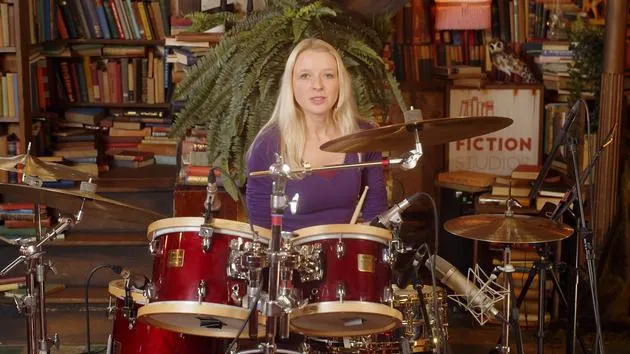
16. Zusammenfassung des Indie-Abschnitts
0:34
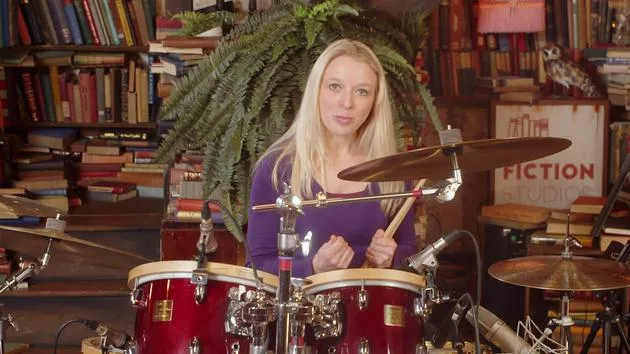
01. Hip-Hop-Einführung - Grundlegende Beats und Fills
1:33
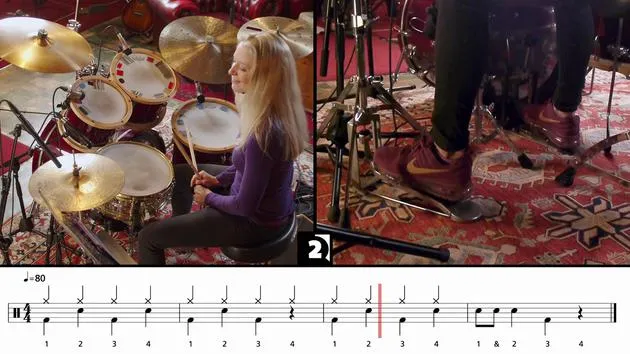
02. Beispiel 1 - Snare- & Bassdrum-Fill
1:10
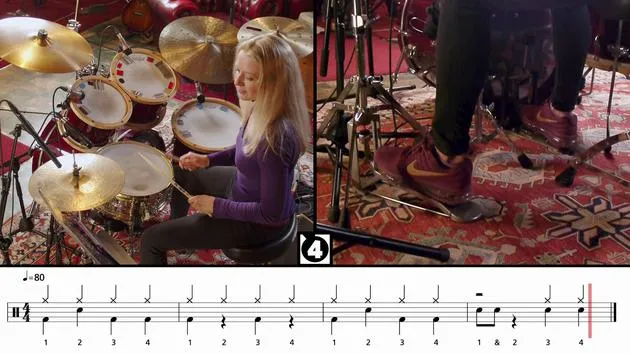
03. Beispiel 2 - Snare- & Hi-Hat-Fill
1:08
04. Beispiel 3 - Fill mit Snare, Hi-Hat und Bassdrum
1:09
05. Bonusübung 1
1:38
06. Bonusübung 2
0:47
07. Zusammenfassung der Hip-Hop-Lektion 1
0:32
08. Hip-Hop-Lektion 2 - Einführung in Achtel-Beats
3:53
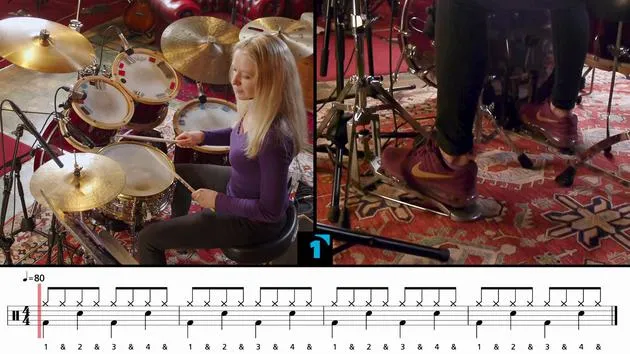
09. Beispiel 1 - Der grundlegende Achtel-Beat
1:19
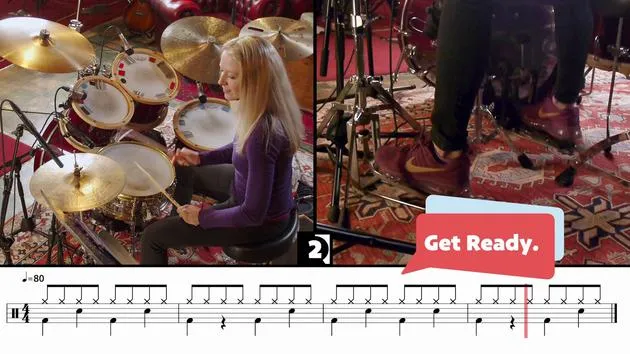
10. Beispiel 2 - Snare-Variationen
1:28
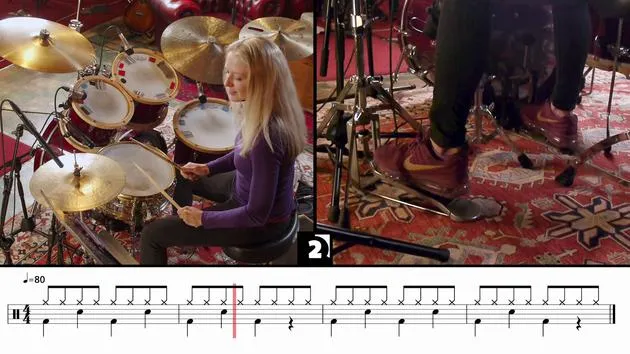
11. Beispiel 3 - Bassdrum-Variationen
1:09
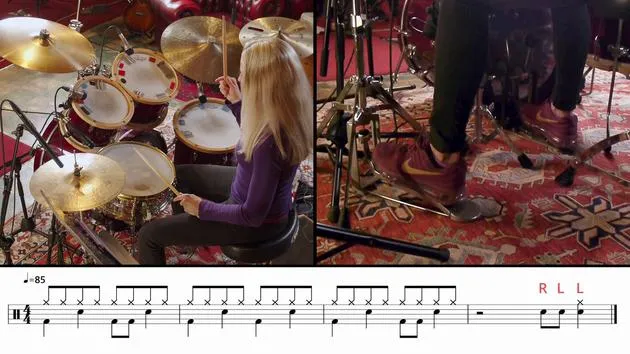
12. Beispiel 4 - 'The Dogg' Takte 13-16
1:56
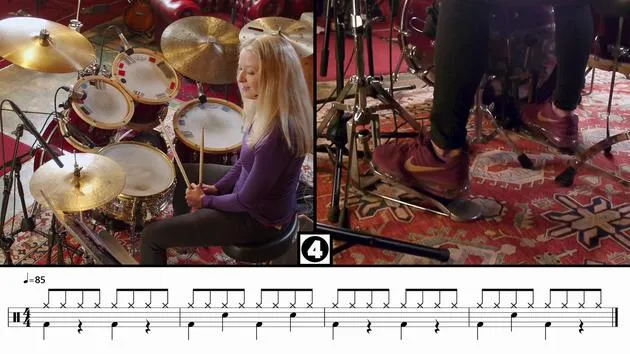
13. Bonusübung 1
1:04
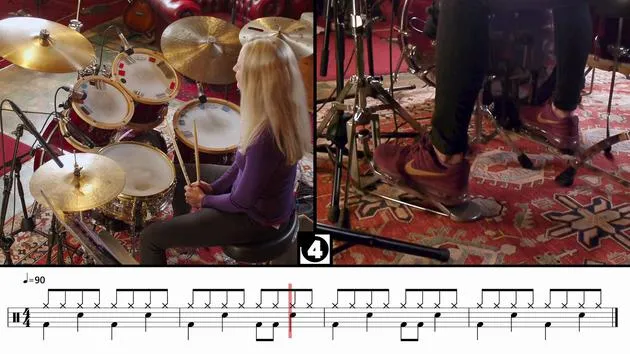
14. Bonus-Übung 2
1:09
15. Zusammenfassung des Hip-Hop-Abschnitts
0:32
01. Einführung in die Stücke
1:04
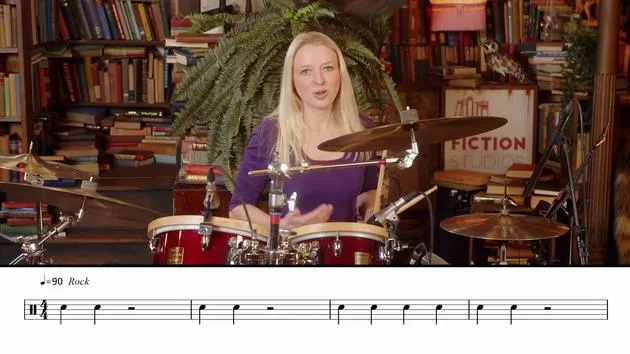
02. Piston (Rock) - Walkthrough
4:57
03. Piston (Rock) - Performance
0:46
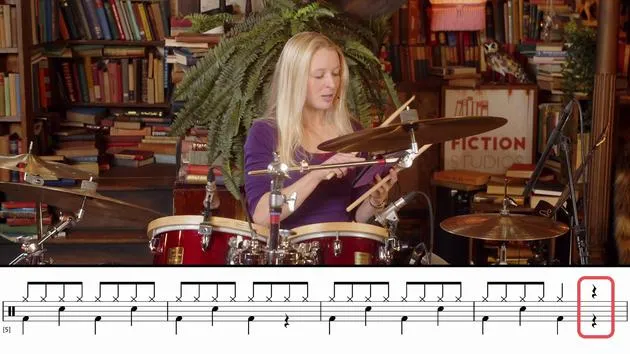
04. Take it to the Top (Pop) - Durchgang
3:58
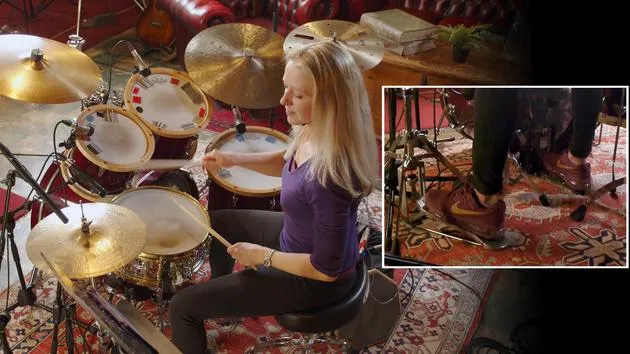
05. Take it to the Top (Pop) - Interpretation
0:50
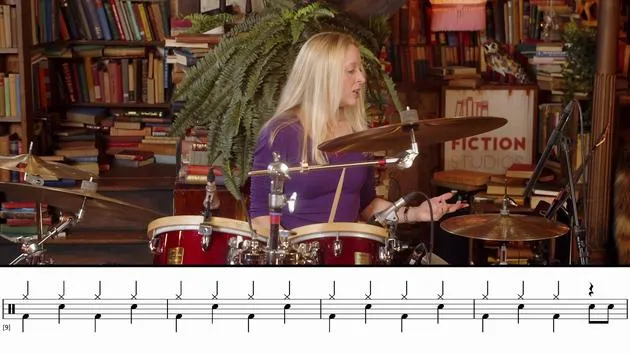
06. Borderlands (Country) - Walkthrough
3:49
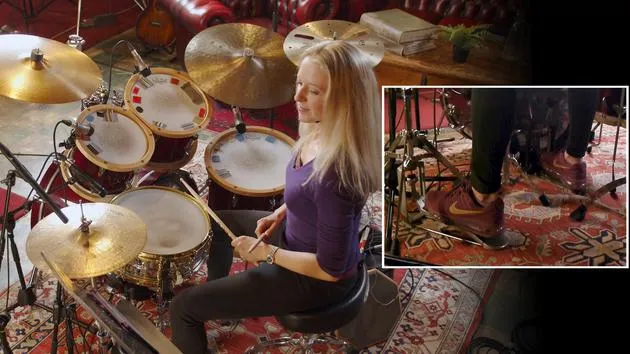
07. Borderlands (Country) - Aufführung
0:48
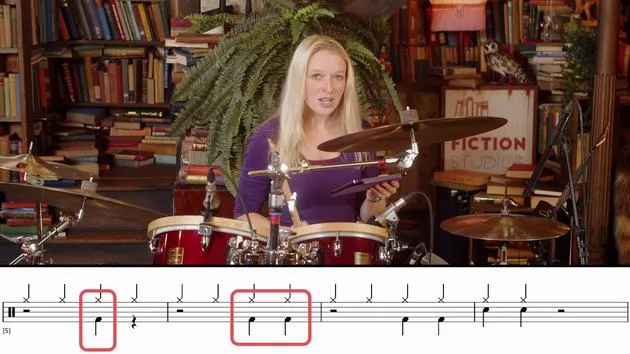
08. Power Trip - Durchgang
5:04
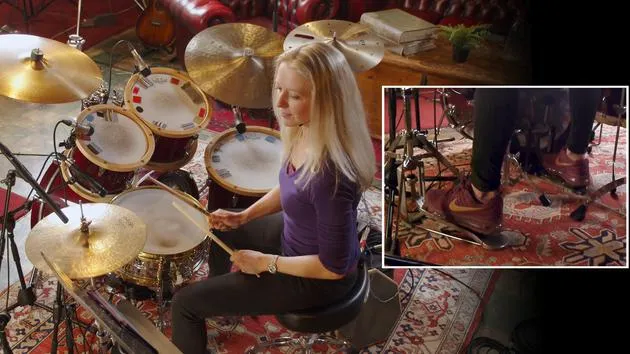
09. Power Trip (Metal) - Performance
0:51
10. Big Mouth (Indie) - Durchgang
5:26
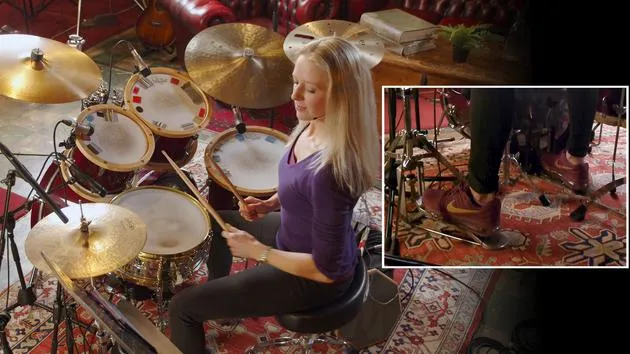
11. Big Mouth (Indie) - Performance
0:52
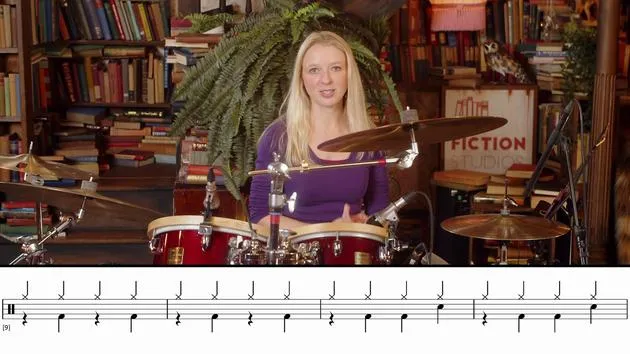
12. The Dogg (Hip Hop) - Durchgang
6:14
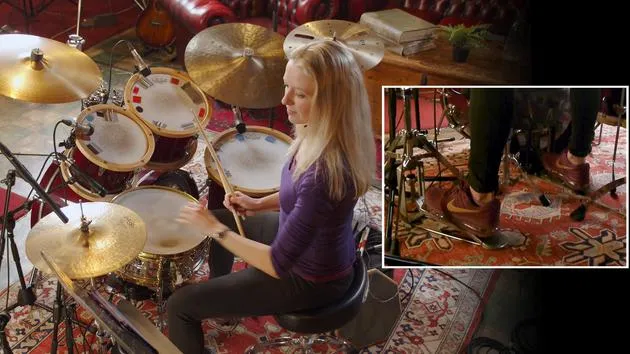
13. The Dogg (Hip Hop) - Aufführung
0:51
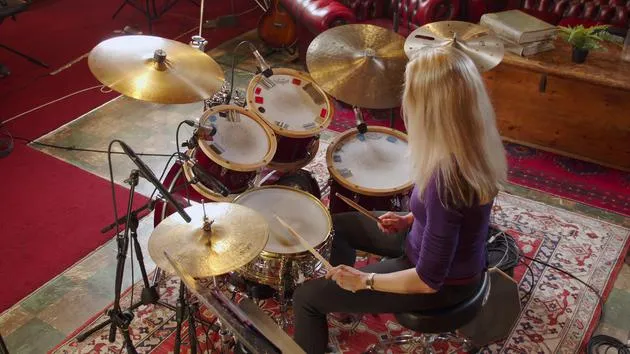
14. Overload (Rock) - Durchgang
5:23
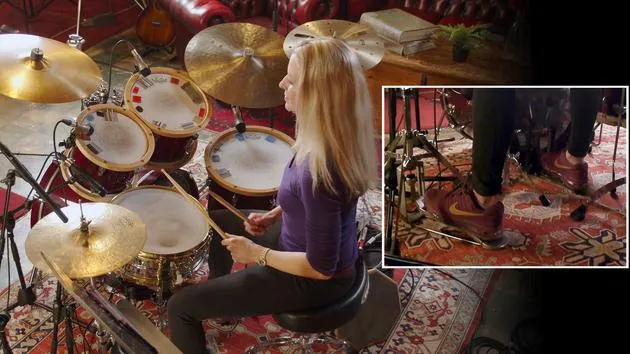
15. Overload (Rock) - Interpretation
0:50
16. Slam (Metal) - Durchgang
4:28
17. Slam (Metal) - Interpretation
0:51
18. Under the Radar (Indie) - Walkthrough
5:02
19. Under the Radar (Indie) - Interpretation
0:50
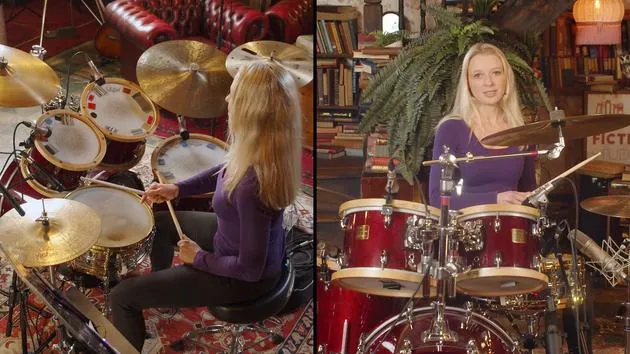
Transkript der Lektion
The Metronome: A Timekeeping Friend
So just to talk a little bit about our timekeeping friend, the metronome.
A Brief History
- It always used to be the case that we'd have an actual metronome.
- Maybe some of you remember the wooden ones that used to be on a piano with the tick, tock, tick.
- They had a weight at the bottom and they never quite stayed in time.
- Or maybe that was just me. Maybe I'm blaming the metronome for going out of time.
The weighted ones weren't great for drummers for a couple of reasons:
- They weren't loud enough.
- They didn't really keep consistent time.
Modern Solutions
We are very lucky now that we have super duper digital metronomes, either available on your device or you can definitely buy a metronome and plug in some headphones to it.
My Favorite Metronome
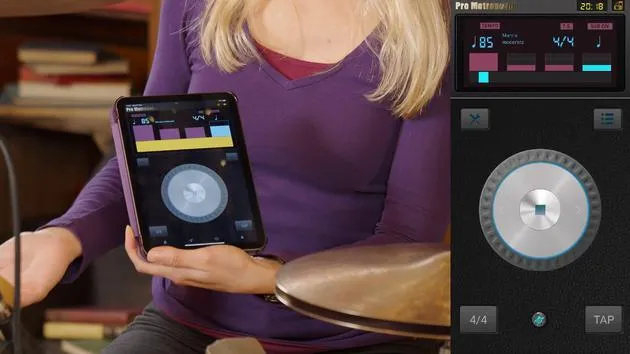
Let me show you the one that I use. There are lots of metronome apps out there:
- Free ones
- Paid ones
I really like Prometronome, mainly because it has a voice counting mode. Check this out:
"1, 2, 3, 4. 1, 2, 3."
I can go to eighth notes, or even sixteenth notes.
Okay, maybe that's enough of that. That one drives my students a little crazy when I put it onto sixteenth notes, but it provides a lot of laughter as well.
The Purpose of the Metronome
The primary function of the metronome is to help us develop good timekeeping.
- Each of us has our own natural sense of time that's built into us.
- Some of us are lucky and have a good natural sense of time.
- Others may have a tendency to speed up, especially with the adrenaline of playing or if we're nervous about performing.
Managing Performance Anxiety
If you're doing a drum exam or something similar, it's normal to feel a little nervous or excited. This can cause us to speed up unintentionally, or if we're tired, we might slow down a bit.
It's all variable.
Using one of these and practicing with a metronome is essential for fine-tuning our timekeeping.
Practical Tips for Using the Metronome
I should possibly do this more often, but I'm always very busy working and playing live. I do need to remind myself occasionally to put the metronome on at various tempos, especially those out of our comfort zone—those that feel really slow.
- Our comfortable speed might be about 85 or 90 beats per minute, which is featured a lot in this course.
- There are tempos of 80, 85, and 90 beats per minute.
Understanding the Pulse
- That's the quarter note pulse.
- If we were looking at our watches, 60 beats per minute would be just like watching that second hand go round.
However, that's quite slow for the kind of music we're playing.
Using the Metronome Effectively
So, how do we use the metronome?
-
Adjusting the Dial: You can change the tempo, for example, from 80 to about 90.
- If you're feeling brave, you can go all the way up to 200 or 300, but let’s stick to around 80 or 85 for now, as some of our exercises are set to that speed.
-
Listening for the Beat: It sounds like this:
"1, 2, 3, 4."
I like to have a different pitch on beat one because, if I'm playing something challenging and might get lost, it's comforting to identify that higher tone as beat one.
- You can also set it to quavers or eighth notes, which would sound like:
"1 and 2 and 3 and 4."
This is particularly helpful if you’ve been playing quarter notes on the hi-hat and want to practice locking in eighth notes.
A Balanced Approach
Now, we don’t want to get too neurotic or specific, chasing the metronome and worrying about not meeting it at the right time.
- Music is about feeling and expression.
- While it’s true that a lot of digitally produced music is very precise, there's something special about humans getting together in a room to play music.
Remember: If you get excited during a performance, it might speed up a little or slow down. That's okay—it's all natural.
Don’t be too hard on yourself if you’re trying to play exercises and they aren’t exactly in sync with the metronome. We’re all just doing our best, and that’s good enough.
114 Lektionen
3 Std. 47 Min. strukturierte Videolektionen
Erweiterte Videofunktionen
Verlangsamen, Passagen loopen, mitlesen
Handy, Tablet & Desktop
Üben, wo du willst
100 % Zufriedenheitsgarantie
30 Tage Geld-zurück-Garantie
Lern deinen Guru kennen
Lern deinen Guru kennen
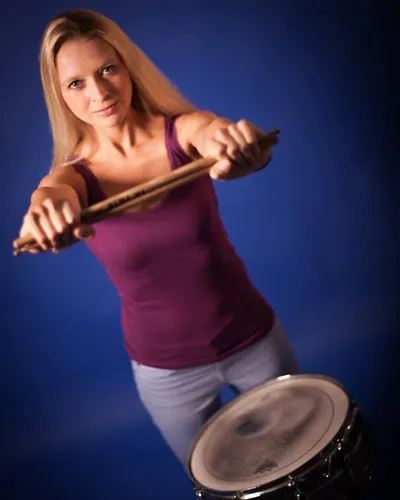
Sophie Alloway ist eine Session- und Tourschlagzeugerin im Herzen der Londoner Jazzszene. Sie ist mit Jason Rebello, Yazz Ahmed, Laurence Cottle und Tony Allen aufgetreten und spielte bemerkenswerterweise für Prinz Charles im Buckingham Palace, kurz bevor dieser König wurde.
Zu ihren Tour-Credits zählen Roots Manuva, das Musical Thriller und Paul Stacey (Oasis / The Black Crowes). Außerdem ist sie die Schlagzeugerin der Original-Fusion-Band Lydian Collective, die über sechs Millionen Streams auf Spotify verzeichnet.
Sophie hat Sessions in den Studios Abbey Road, AIR und Angel aufgenommen, und zu ihren Fernsehauftritten gehören Later… with Jools Holland, Glastonbury und zwei Staffeln von Adrian Dunbars Drama Ridley. Sie ist auf Abbey Road Masters: The Drum Sessions zu hören und spielte für die Finalisten des BBC Young Jazz Musician 2024, ausgestrahlt im BBC-Fernsehen und -Radio. Jon Newey von Jazz FM nannte sie die „Göttin des Grooves“.







