



Simpler
Madeleine Bloom recorre el sampler Simpler de Ableton - cargar samples, ajustar el marcador de inicio y moldear el sonido con envolventes, filtros y un LFO.
Qué incluye el curso
36 lecciones (5h 28m) · 1 gratis
Transcripción de la lección
Working with the Simpler
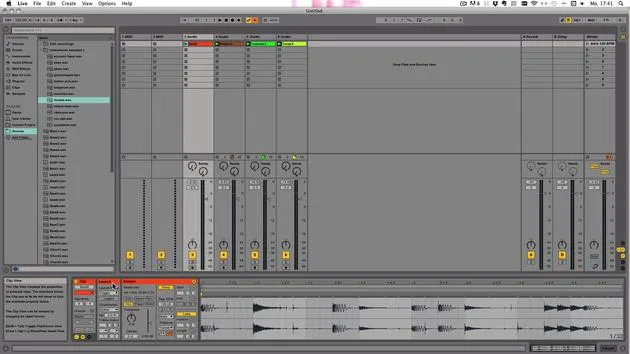
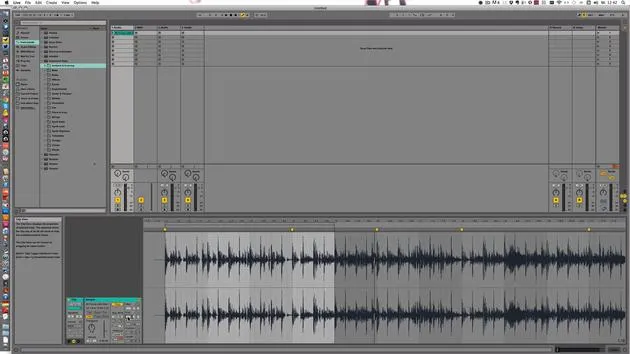
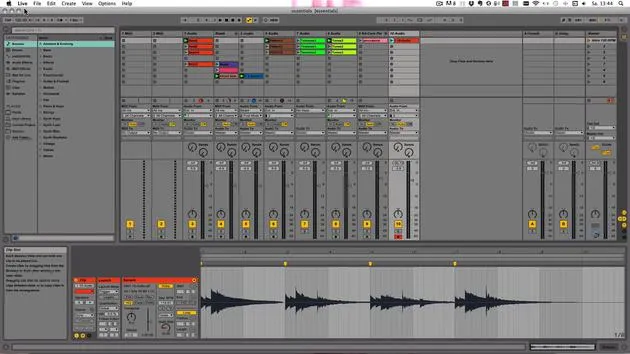
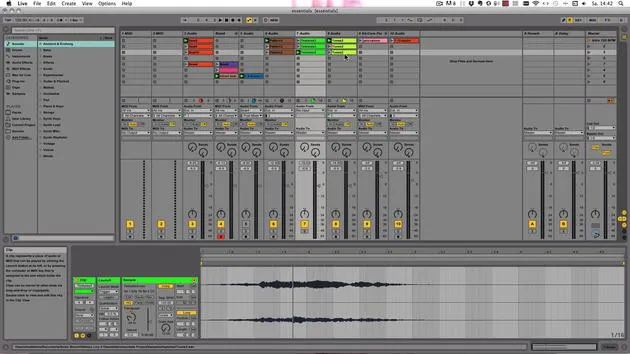
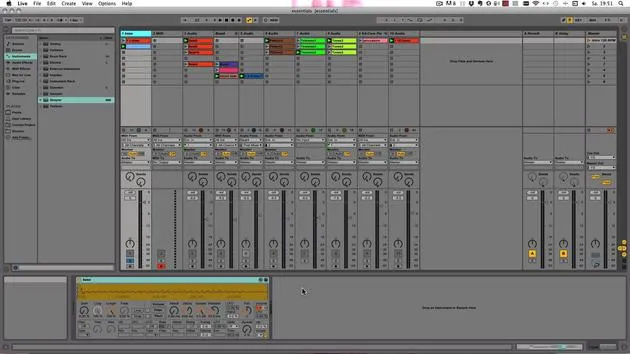
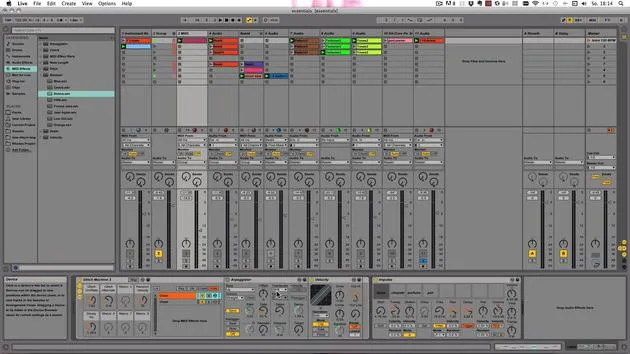
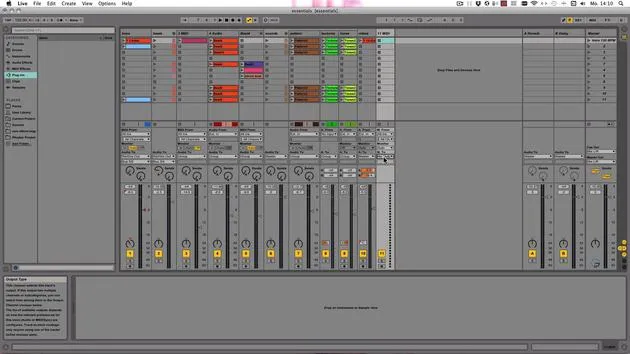
In this video, we'll be working with the Simpler. We already added the Simpler to the first track when we dragged the bass sample into the device view.
Overview of Simpler
The Simpler is a basic sampler with classic parameters of the synth, allowing you to process the sample using:
- Envelopes
- Filters
- LFO (Low-Frequency Oscillator)
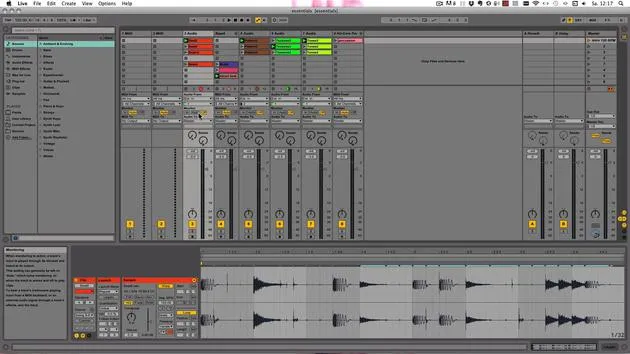
Sample View
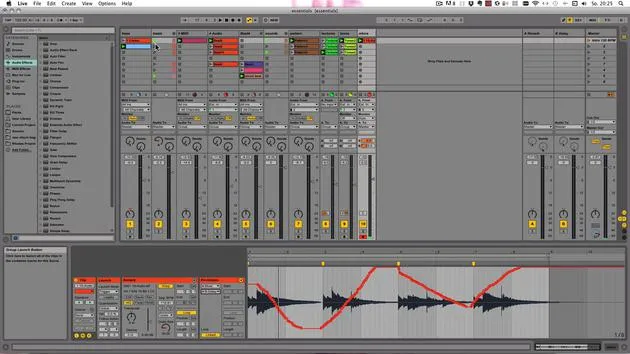
- You can drop a sample here if you, for example, add an empty Simpler by dragging the folder of a Simpler onto the view.
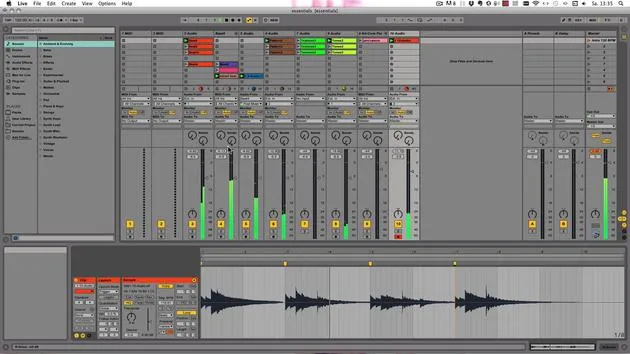
- Here, we have the Simpler for the bass sample loaded in.
Note: The magnifying glass icon allows you to enlarge the view, similar to how it works in the clip view.
Adjusting the Sample
- The sample doesn't start right away, so we simply drag the start marker.
- There is a snap button you can press to ensure that it snaps to the zero crossing.
Zero Crossing: This is when the waveform crosses the zero line. It helps to avoid clicking sounds in the audio.
- Drag the end marker or adjust the start marker.
- You can loop the sample by creating shorter loops or creating fades.
- Example: If you zoom out, you can see where it starts.
Modulation with ADSR Envelopes
Next up, you have three ADSR envelopes to modulate:
- Volume
- Filter frequency
- Pitch
ADSR Breakdown
- Attack: Adjusts the time to reach the peak value (the highest value).
- Example: Softer sound with less attack.
- Decay: Time until the level drops to the sustain level.
- Easier to hear if the sustain is not at 0 dB.
- Sustain: Adjusted in dB.
- Release: Time until the sound drops to zero (silence).
- You can sustain something for up to 60 seconds.
Working with Filters
Filters need to be turned on to function properly. There are:
- Two low pass filters (12dB and 24dB)
- Two band pass filters
- Two high pass filters
- One notch filter
Filter Types Explained
- Low Pass Filter: Only allows low frequencies to pass through.
- Band Pass Filter: A band of frequencies is allowed through.
- High Pass Filter: Lets higher frequencies through.
- Notch Filter: A very narrow filter.
Example: For a bass sound, we'll try the low pass filter.
- Set the cut frequency to 22kHz (which means it won't cut anything).
- Adjust the frequency to hear how the sound changes.
- You can also adjust the resonance and try the second low pass filter.
Pitch and Modulation
- Turn on pitch modulation if needed. If you're not using it, turn it off to save CPU power.
- The LFO can be turned on and set to different types of waveforms.
- Currently set to 0% means you can't hear anything.
Transpose and Detune
-
Transpose works like in clips, allowing you to transpose by ±48 semitones (four octaves).
- Default is C3.
-
Use Detune for slight out-of-tune samples.
- You can adjust these settings by an octave.
Voices and Panning
By default, the number of voices is set to six, meaning a maximum of six MIDI notes can play simultaneously.
- If you have more than six MIDI notes, the oldest will be dropped.
- Adjust the voices higher when dealing with numerous MIDI notes.
Additional Settings
- Panning: Set to center, left, right, or anywhere in between.
- Volume: Can be adjusted from +36dB to -36dB.
- Consider making it a bit louder based on recent changes in the sound.
- Volume can also be modulated with the LFO for a tremolo effect.
Adding Spread
The spread adds a stereo chorus with two voices, each panned hard left and right, and controls levels of detuning.
Final Notes
You can play with the sample and adjust all the settings until you find a sound you like.
Don't forget to save your work!
Let's quickly listen to how it sounds now with the rest of the clips.
36 lecciones
5h 28m de lecciones en vídeo estructuradas
Funciones de vídeo avanzadas
Ralentiza, repite un pasaje, sigue la partitura
Móvil, tablet y ordenador
Practica donde quieras
Garantía de satisfacción 100%
30 días de garantía de devolución
Conoce a tu gurú
Conoce a tu gurú
Madeleine Bloom es una música de formación clásica, productora, multiinstrumentista y cantante de Berlín, y fundadora del sello Quixotica Records. Estudió música electroacústica en el Conservatorio Franz Liszt con el Prof. Robin Minard, y lleva esos métodos a su propia mezcla de pop electrónico. Su música ha recibido elogios de los productores Guy Sigsworth y Rupert Hine, así como una invitación personal de Imogen Heap, cuya gira abrió como telonera.
Antigua agente de soporte técnico de Ableton, en 2012 fundó la plataforma online Sonic Bloom, donde enseña Ableton Live y producción musical mediante cursos, talleres y clases individuales. Ha ayudado a personas de todo el mundo con Ableton Live, Push y Max for Live, además de con ingeniería de sonido, teoría musical, composición y diseño de sonido.







