



Visión general de la pieza
Julia Zilberquit presenta 'April: Snowdrop' de Tchaikovsky, recorriendo la estructura ABA de la pieza, su ambiente y la imaginería primaveral que hay detrás.
Qué incluye el curso
27 lecciones (1h 57m) · 1 gratis
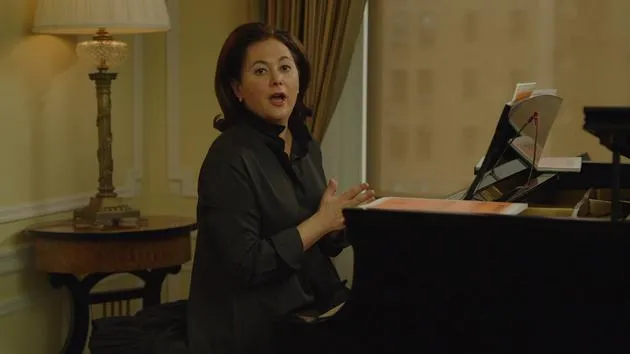
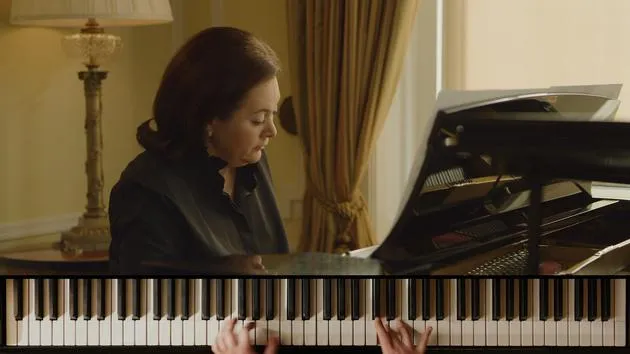
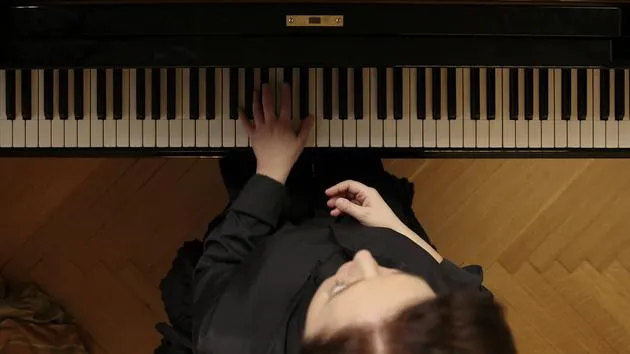
Transcripción de la lección
April: The Snowdrop
Here the publisher chose the poem by the same poet as March, Apollon Maikov, and I'll read it to you:
"The blue pure snowdrop flower. And near it last snow drops the last tears over the past griefs and first dreams of another happiness."
So spring month, April, is arriving. It's finally here, and we can certainly hear it in the piece.
Structure of the Piece
April, like March, is written in a three-part form, also known as ABA form.
-
First Part:
- The first 24 measures consist of three long phrases, each eight measures long.
-
Second Part:
- Contains 33 measures.
-
Third Part:
- Includes 27 measures and repeats the first part almost identically, but it's shorter.
Some people say it has a bit of a cadential conclusion, but it's really tied together with the third part. We won't delve into such details.
The Mood
There's a beautiful mood here, which is very hard to convey on the surface.
- It may seem like a simple piece:
- Right hand: Melody
- Left hand: Chords (Accompaniment)
But this combination creates an illusion; it's not an easy thing to convey the feeling of arrival, of spring.
A European Perspective
This is a very European notion. In the United States, we have a beautiful fall that is long and not as cold as it is, for example, in Russia. However, there tends to be no spring; we have a long winter followed by summer.
Our listeners and audience in Europe know there's a unique fragrance of spring, a beautiful experience we usually have in April. I think Tchaikovsky really portrayed it beautifully.
You can almost hear the wind, the little breeze in the left hand, and the excitement of nature waking up. Of course, the snowdrop, in Russia, is a symbol of spring; it's a flower that emerges from the snow. So, I think the poem here is very symbolic.
Historical Context
However, again considering what was occurring in the late 19th century, we experience winter and snowstorms. There's a famous saying:
"It's as surprising as the snowstorm in the spring."
We have that D minor middle section with passages that remind us almost of the howling of the wind or possibly some spring rains. It brings a quite different character to the piece.
27 lecciones
1h 57m de lecciones en vídeo estructuradas
Funciones de vídeo avanzadas
Ralentiza, repite un pasaje, sigue la partitura
Móvil, tablet y ordenador
Practica donde quieras
Garantía de satisfacción 100%
30 días de garantía de devolución
Conoce a tu gurú

Conoce a tu gurú
Nacida en Rusia y estadounidense de adopción, la pianista Julia Zilberquit ha cosechado el aplauso de la crítica como recitalista, música de cámara y artista de grabación. The New York Times la elogió como "una solista excepcional" tras su interpretación en el Carnegie Hall del poema sinfónico Les Djinns de Cesar Franck para piano y orquesta con Leon Botstein y la American Symphony Orchestra.
En 2014, Warner Classics publicó su CD Bach: Complete Solo Keyboard Concertos. Esta grabación presenta el estreno de dos Concerti Grossi de Bach-Vivaldi arreglados por la Sra. Zilberquit para piano y orquesta, y fue aclamada como una "magnífica interpretación" por la prestigiosa Gramophone Magazine. Su arreglo del Concertino para 2 pianos, Op. 94 de Shostakovich para piano y orquesta se estrenó en el Carnegie Hall; lo ha interpretado por todo el mundo con gran éxito de crítica y lo ha grabado con Vladimir Spivakov y los Moscow Virtuosi. Otras grabaciones incluyen un registro en solitario, The Mystery of Bagatelles, publicado por Naxos. El CD fue elogiado como una "soberbia interpretación" por The Washington Post, y descrito como un "programa audaz, que brilla con una claridad inusual y una luminosidad puntillista" en la Piano Magazine de Londres.
Sus recitales han tenido lugar en importantes salas de conciertos, entre ellas el Weill Recital Hall del Carnegie Hall de Nueva York, el 92nd Street Y y el Alice Tully Hall del Lincoln Center. Sus compromisos en grandes festivales internacionales de música incluyen actuaciones en Seattle, Colmar (Francia), Klangbogen (Viena), las "White Nights" de Valery Gergiev (San Petersburgo), las "December Nights" de Richter (Moscú), "The Palaces of St. Petersburg", el Bard Music Festival de Nueva York y el Penderecki Festival (Polonia).
Natural de Moscú, Julia Zilberquit nació en el seno de una familia de músicos. Se graduó en la Moscow Gnessin School of Music y en The Juilliard School (clase de Bella Davidovich). Vive en Nueva York con su marido, su hijo y su hija.
En este curso recurre a ese arte para guiarte a través de cuatro movimientos de "Las estaciones" de Chaikovski -Marzo, Abril, Junio y Octubre- para que puedas dar forma tú mismo a su poesía y su color al teclado.







