



Sección central
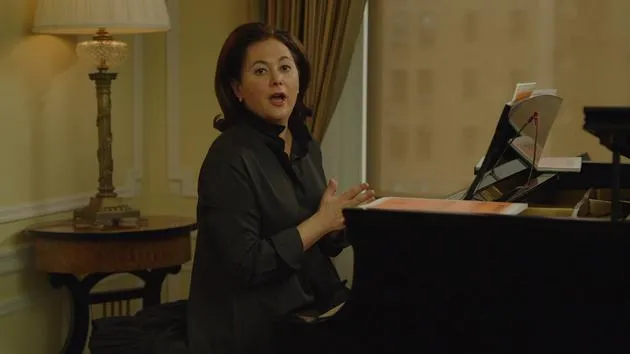
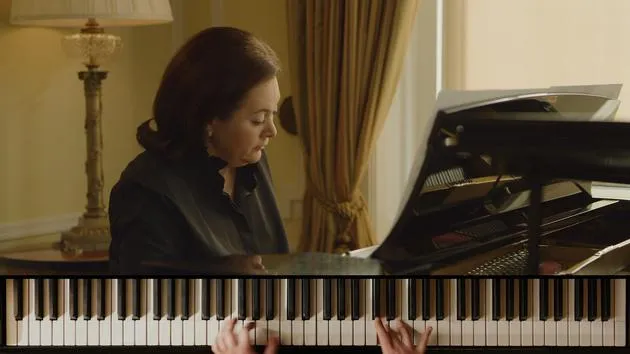
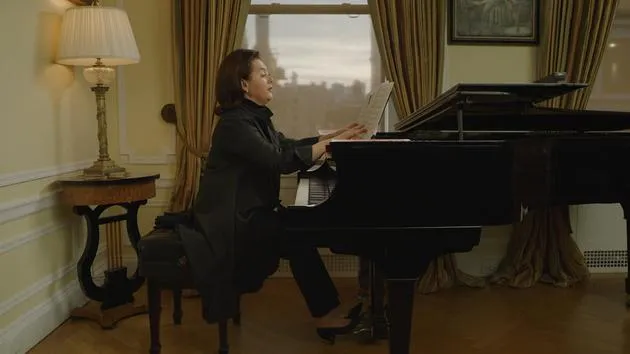
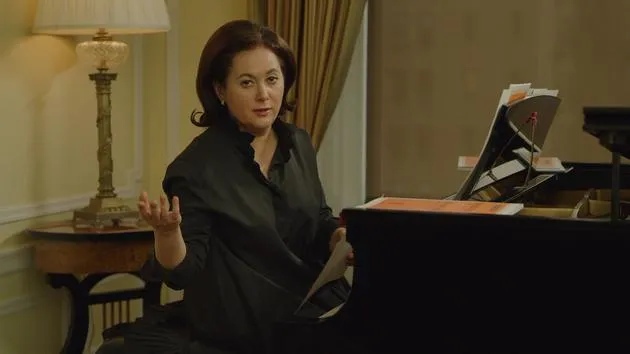
Julia Zilberquit desglosa la complicada sección central de April: Snowdrop de Tchaikovsky, con digitación y consejos de práctica para sus pasajes repetidos de semicorcheas.
Qué incluye el curso
27 lecciones (1h 57m) · 1 gratis
Transcripción de la lección
Music Lesson: Tchaikovsky's Middle Section Techniques
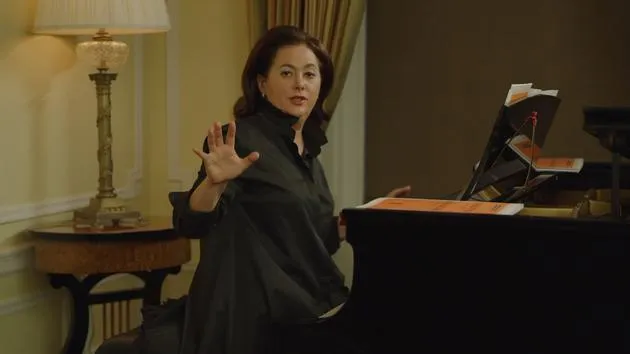
Now, the middle section ? the famous middle section ? poses a bit of a technical challenge with its well-known passages.
Repetition in the Second Section
The good news is that Tchaikovsky repeats the two bars over and over again, specifically eight times. Once you learn that one passage, you're set!
- The only difference? One passage ends on F, and the other on A.
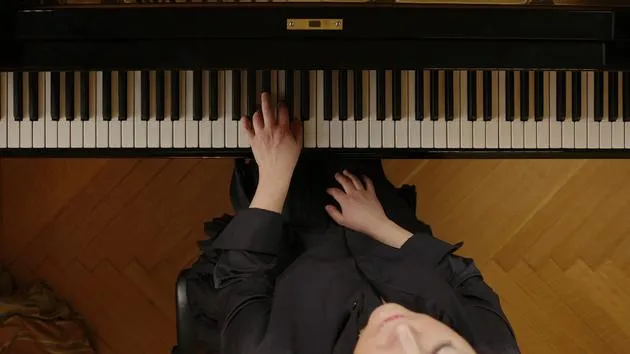
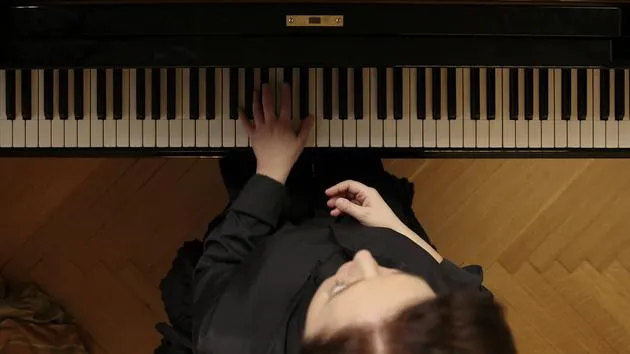
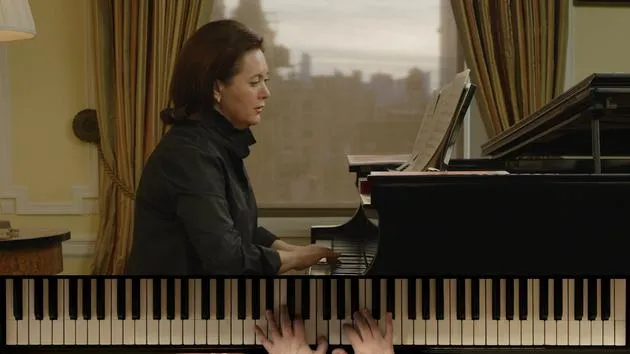
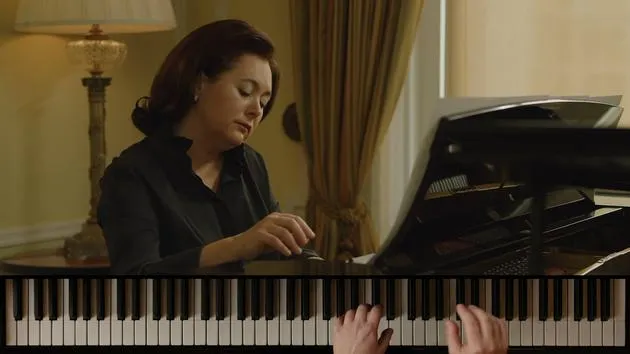
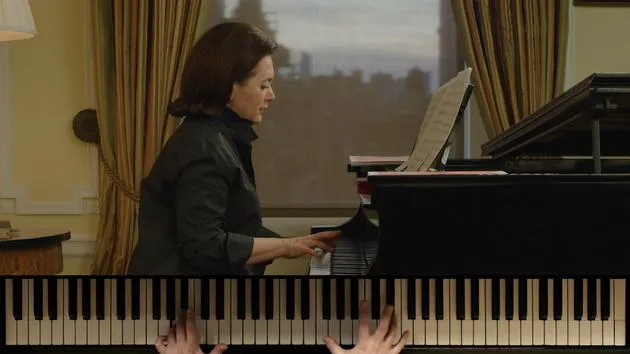
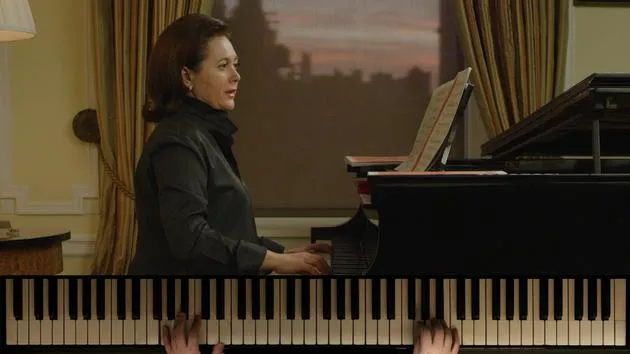
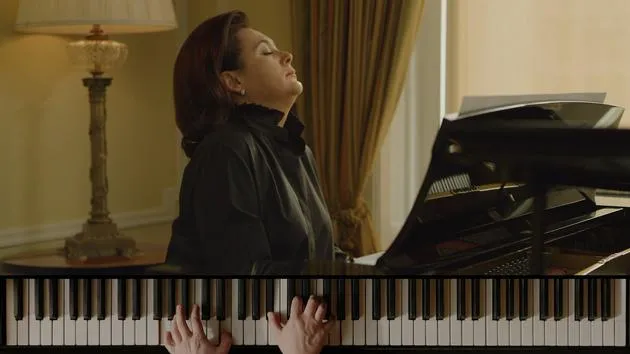
I personally prefer the fingers from that addition and always play them as follows:
- 2, 1, 2, 3, 4
- 1, 2, 3, 5
Practicing the 16th Notes
How to practice this challenging section? Here are some tips:
-
Practice Staccato:
Start quite slow, then gradually speed it up. -
Accents:
For practice, it's okay to accent it, but during performance, it's preferable not to. Think of it as a wind ? it's better to avoid strong accents. -
Old Practice Method:
Using stops (every other or every four notes) can also be effective here.
Left Hand Challenges
Now, let's address the tricky left hand jumps:
-
The left hand requires careful finger placement:
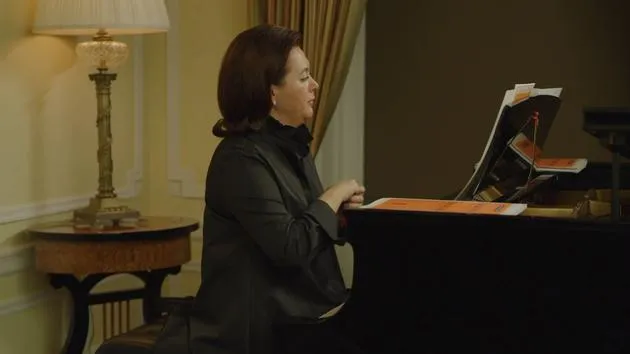
Always ensure that the fifth finger is on a D. -
Chord Practice:
Usually, you'd do four notes, either on the last chord.
Practice Steps:
- Practice the chords without the bass to gain confidence.
- Try with your eyes closed ? it's crucial to develop muscle memory!
- Focus either more on the right hand or the left hand, depending on where the challenge lies.
Suggested Exercises
To further aid in mastering this section:
-
Play just the lower notes:
e.g., 4, 5, 4, 5, 4 or 4, 5, 4, 5. -
Incorporate stops and reverse the order to solidify positions.
Performance Tips
Once you've learned it, pay attention to the piano start.
Here's a Slow Tempo Example:
- I will show it to you in a medium-slow tempo, focusing on the beautiful intonation.
A Little Secret:
- When you learn it, between measures 25 and 26, you can take a small moment to gather yourself.
Transitioning into the Second Movement
Once you've mastered that, you'll continue into the second movement.
-
Dynamics:
Pay attention to mezzo forte sections which are more dramatic and require more sound. -
Key Transitions:
You will experience a different color as we move into another key.
Important Measures to Note
- Measure 35 vs. Measure 51:
It's essential to recognize the differences in the left hand, which contains:- First section: three notes
- Second section: four notes and different three notes
Make a note of your endings:
- First Ending: Call it B1
- Second Ending: Call it B2
This distinction is important for the echo effect in music.
Recapitulation
Before repeating, Tchaikovsky wants us to adapt and read the notes carefully. The second time around brings a transition to a different key, incorporating question-and-answer phrasing.
- Final Suggestion:
Two measures before the recapitulation: take all chords into the left hand, leaving the right hand with only the melody.
Remember, this reflects Tchaikovsky's original writing style in measure 59, which is the same text as measure 1. We've come full circle!
27 lecciones
1h 57m de lecciones en vídeo estructuradas
Funciones de vídeo avanzadas
Ralentiza, repite un pasaje, sigue la partitura
Móvil, tablet y ordenador
Practica donde quieras
Garantía de satisfacción 100%
30 días de garantía de devolución
Conoce a tu gurú

Conoce a tu gurú
Nacida en Rusia y estadounidense de adopción, la pianista Julia Zilberquit ha cosechado el aplauso de la crítica como recitalista, música de cámara y artista de grabación. The New York Times la elogió como "una solista excepcional" tras su interpretación en el Carnegie Hall del poema sinfónico Les Djinns de Cesar Franck para piano y orquesta con Leon Botstein y la American Symphony Orchestra.
En 2014, Warner Classics publicó su CD Bach: Complete Solo Keyboard Concertos. Esta grabación presenta el estreno de dos Concerti Grossi de Bach-Vivaldi arreglados por la Sra. Zilberquit para piano y orquesta, y fue aclamada como una "magnífica interpretación" por la prestigiosa Gramophone Magazine. Su arreglo del Concertino para 2 pianos, Op. 94 de Shostakovich para piano y orquesta se estrenó en el Carnegie Hall; lo ha interpretado por todo el mundo con gran éxito de crítica y lo ha grabado con Vladimir Spivakov y los Moscow Virtuosi. Otras grabaciones incluyen un registro en solitario, The Mystery of Bagatelles, publicado por Naxos. El CD fue elogiado como una "soberbia interpretación" por The Washington Post, y descrito como un "programa audaz, que brilla con una claridad inusual y una luminosidad puntillista" en la Piano Magazine de Londres.
Sus recitales han tenido lugar en importantes salas de conciertos, entre ellas el Weill Recital Hall del Carnegie Hall de Nueva York, el 92nd Street Y y el Alice Tully Hall del Lincoln Center. Sus compromisos en grandes festivales internacionales de música incluyen actuaciones en Seattle, Colmar (Francia), Klangbogen (Viena), las "White Nights" de Valery Gergiev (San Petersburgo), las "December Nights" de Richter (Moscú), "The Palaces of St. Petersburg", el Bard Music Festival de Nueva York y el Penderecki Festival (Polonia).
Natural de Moscú, Julia Zilberquit nació en el seno de una familia de músicos. Se graduó en la Moscow Gnessin School of Music y en The Juilliard School (clase de Bella Davidovich). Vive en Nueva York con su marido, su hijo y su hija.
En este curso recurre a ese arte para guiarte a través de cuatro movimientos de "Las estaciones" de Chaikovski -Marzo, Abril, Junio y Octubre- para que puedas dar forma tú mismo a su poesía y su color al teclado.







