



Time is Tight' - Booker T & the MGs
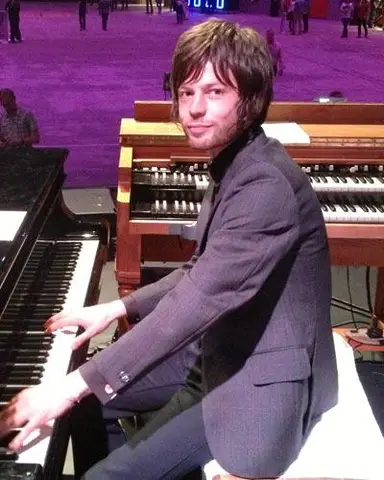
Lesson time: (5min 31sec)
Course preview
This lesson is part of the course Spiele die Hammond-Orgel authentisch
Watch a preview of the full course below.
Lesson transcript:
Music Lesson: Time Is Tight
Introduction
Okay, this is a tune called Time Is Tight, another big hit of T in the mid-60s. There are a couple of verses of that for you. Very cool tune! He uses swell a lot in that. I'm trying to hold down a bass line on this to give it a bit of context. He wouldn't have been Duck Dunn, but does a pretty good job of that in the Book of the CMGs.
The Melody Line
On that first melody line where he comes in, what he's doing together is:
- Using the swell
- Using the brake switch on the floor
- Stop to fast.
- Stop to fast a lot.
At the same time, he's using that width with the swell. He kind of teases in all these melody lines that come in. They sort of ghost in and stay there, and then they ghost out in conjunction with that Leslie effect changing.
That's a big part of playing the organ: the two things working together like that.
Remember: There's no right way to do it. There's no right time to change the speed. It's all about taste and using your own judgment.
Example of Foot Switch Technique
To give you one example of using the foot switch for fast and stop in conjunction with the swell pedal to get that effect, I'll give you one of the riffs he uses in between the chains, between the one and the four.
It sounds alright on its own, but when you kind of tease it in, suddenly it's a Hammond part. Suddenly it's got that essence. He uses that a lot with the melody.
Playing the Bass Line
Maybe, on the top, the way we're playing this tune here, we're giving it a bass line mainly. I'm doing that to put it in context for you because on the track, the bass player would be playing the bass line, and T is just looking after the organ.
It's a good chance to show you what a bass line setting might be. If you're on your own at home, it sounds more like a tune when you play a bass line.
Classic Bass Line
At the minute, I'm on this B preset up here.
- That's this set of draw bars on the bottom manual.
- I've got them all the way out on the bottom one.
Depending on your taste, you can add some degree of that. I just give it a little bit, very simple baseline on this.
Note: What you can't control is if you're intending to swell in with a melody, riff, or lick. Your bass line is going to swell as well, and that's not ideally what you want.
That kind of really expressive playing is best done when you're not doing a bass line. You don't want the whole thing swelling like that. You really want to be able to control those elements separately.
In terms of playing on your own, that's the compromise you have to make.
About the instructor
Joe Glossop ist ein Keyboarder aus Sheffield, der sich an der Hammond-Orgel einen Namen gemacht hat. Derzeit hat er den Orgelplatz in Tom Jones' Tourband inne und hat mit Van Morrison und James Hunter gespielt, ebenso an Klavier und Rhodes. Seine Kurse holen den echten Hammond-Sound aus jedem Keyboard heraus: die Zugriegel-Registrierung, das Leslie, den Walking Bass der linken Hand und das Begleit- und Solovokabular der Soul-Jazz-, Blues- und Rock-Orgeltraditionen, von Jimmy Smith bis Booker T. read more