Groovin' Booker T & the MGs

Mit
Joe GlossopEin Blick auf die Sounds eines weiteren Booker-Hits aus den '60ern namens 'Groovin'
Das steckt im Kurs
45 Lektionen (3h 0m) · 1 gratis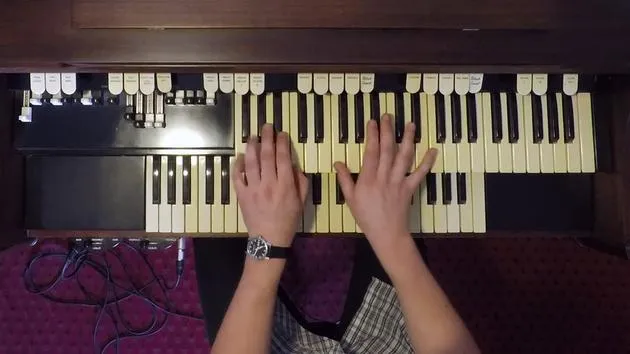
01. Interpretation: 'Green Onions' von Booker T
3:01
02. Sounds: 'Green Onions' Booker T
3:08
03. Das Stück spielen: 'Green Onions' von Booker T
8:21
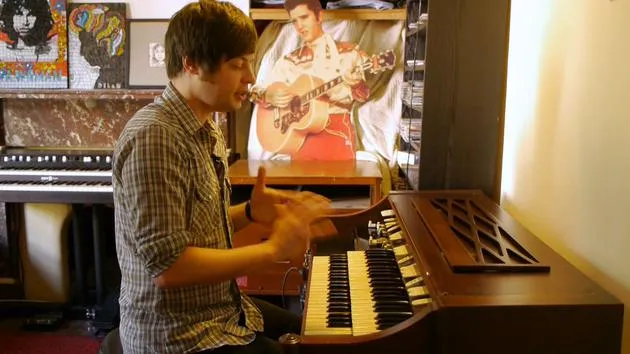
04. Lead-Lines: 'Green Onions' Booker T
4:43
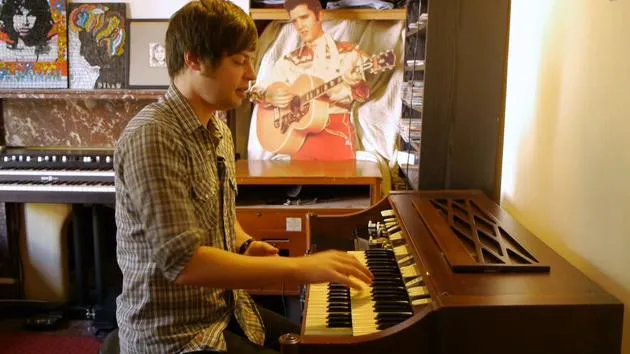
05. Basslinie: 'Green Onions' Booker T
2:01
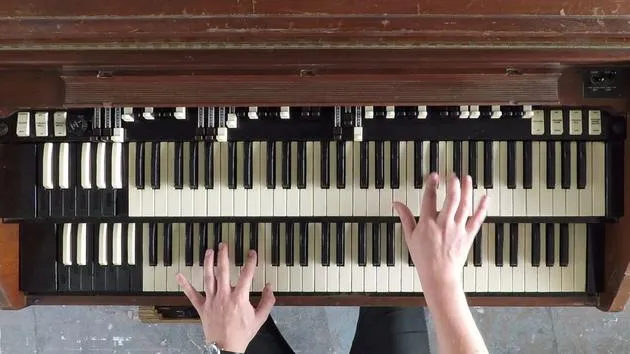
06. Aufführung: Jimmy McGriff - All About My Girl
3:43
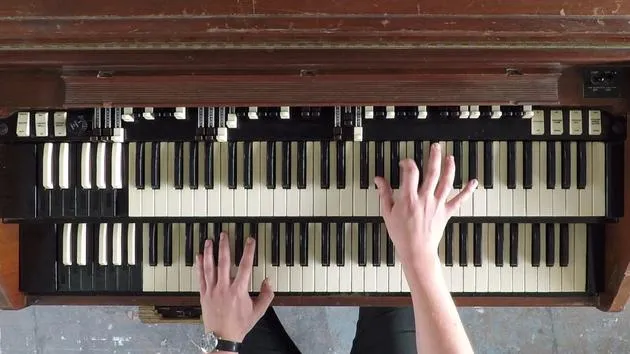
07. Aufführung aus Keyboard-Sicht: Jimmy McGriff - All About My Girl
3:43
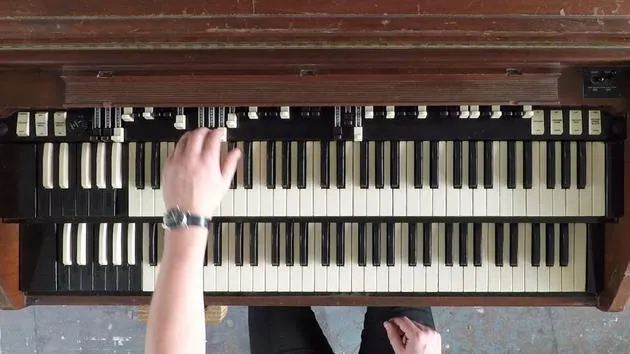
08. Sounds: 'All About My Girl' - Jimmy McGriff
4:01
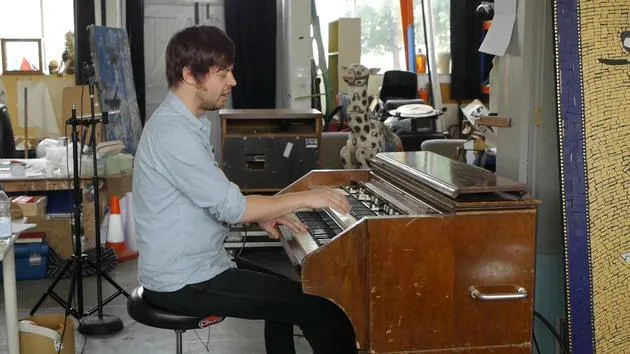
09. Intro: 'All About My Girl' - Jimmy McGriff
2:10
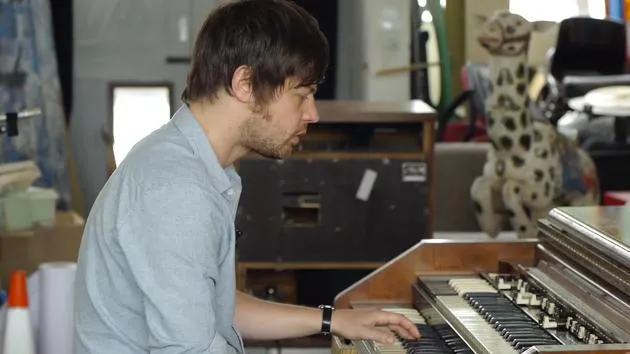
10. Das Thema spielen: 'All About My Girl' - Jimmy McGriff
2:58
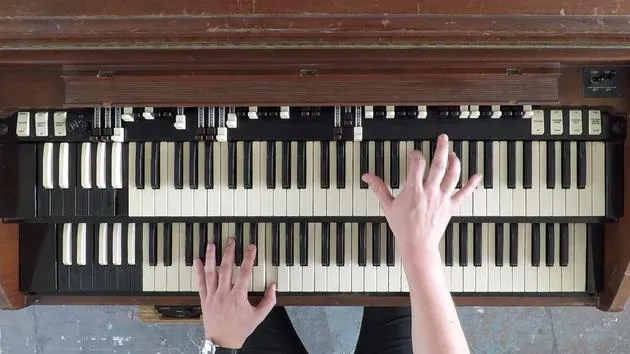
11. Basslinie: 'All About My Girl' - Jimmy McGriff
1:52
12. Schluss: 'All About My Girl' - Jimmy McGriff
1:51
13. Improvisation und Comping: 'All About My Girl' - Jimmy McGriff
4:38
01. A Change is Gonna Come' - Sam Cooke
7:46
02. Keyboard-Ansicht: 'A Change is Gonna Come' - Sam Cooke
1:20
03. La La means I love you' - Booker T
5:39
04. Keyboard-Ansicht: 'La La means I love you' - Booker T
2:25
05. Groovin' Booker T & the MGs
Du bist hier4:57
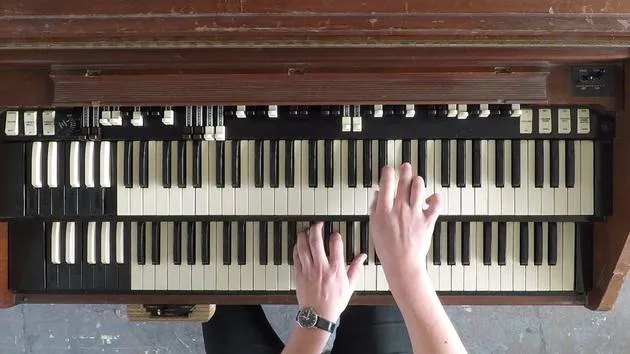
06. Keyboard-Ansicht: 'Groovin' ' - Booker T & the MGs
1:15
07. Time is Tight' - Booker T & the MGs
5:31
08. Keyboard-Ansicht: 'Time is Tight' - Booker T & the MGs
1:39
09. 'The Girl from Ipanema' - Antonio Carlos Jobim
6:17
10. Keyboard-Ansicht: ‘The Girl from Ipanema’ - Antonio Carlos Jobim
2:36
11. Blues nach 'Blue Bash' - Jimmy Smith
7:59
12. Keyboard-Ansicht: Blues nach 'Blue Bash' - Jimmy Smith
3:24
13. Walk on the Wild Side' M-series-Jam - Jimmy Smith
6:44
Transkript der Lektion
Music Lesson: Grooving
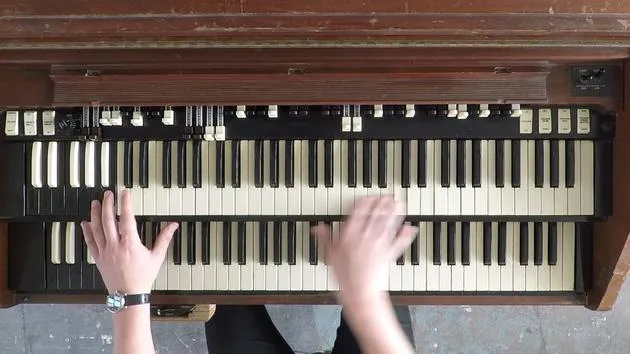
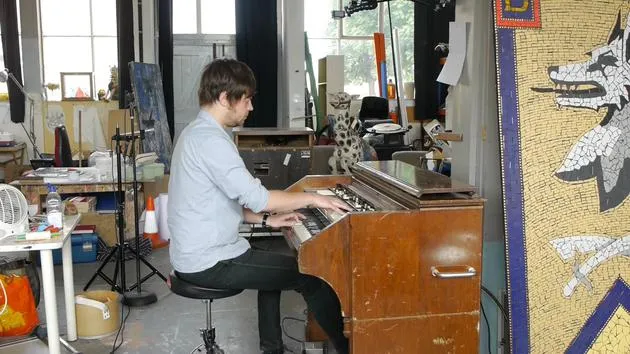
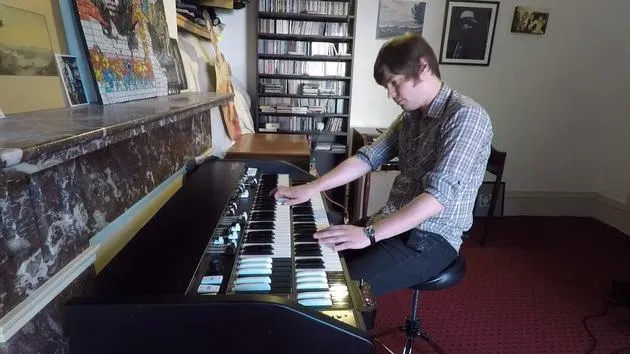
Okay, this is a little tune called Grooving. It was a big hit in the 60s, and Booker did a version of it.
Demonstration
I'll just play a couple of verses now. So that's a couple of verses, A and B section, Grooving.
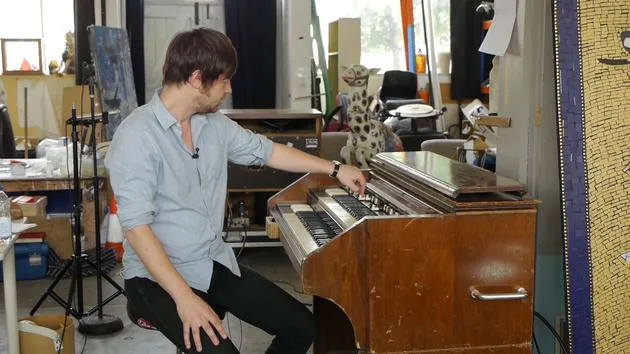
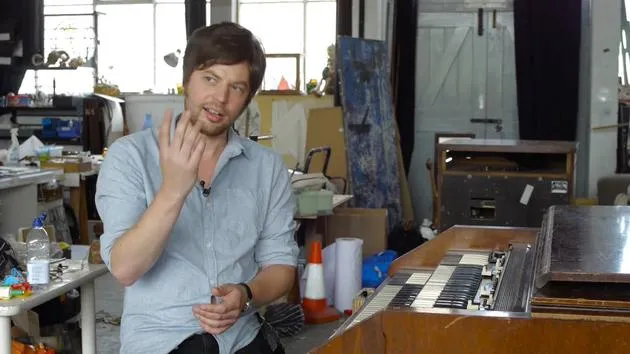
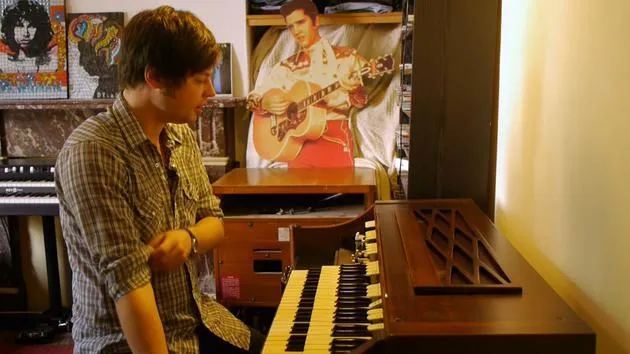
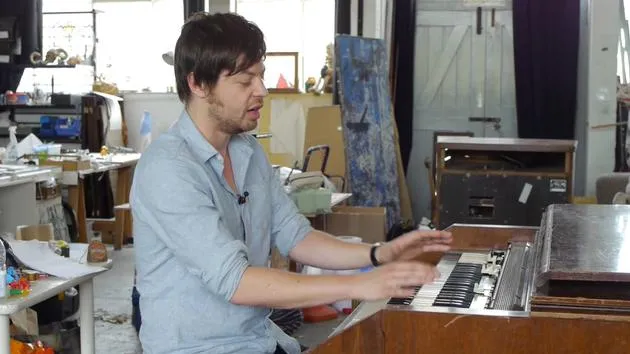
As you can see, he uses two very different tones to play the same melody, and I find that very interesting. It's a very effective use of the instrument.
You really kind of utilize all the different settings and tones you can get.
Similarity in Structure
It's very similar in its chordal structure and in its key. A lot of the same changes as the last tune. So, you can use a lot of the same techniques and settings, put them together, swap things around, and do what you want with them.
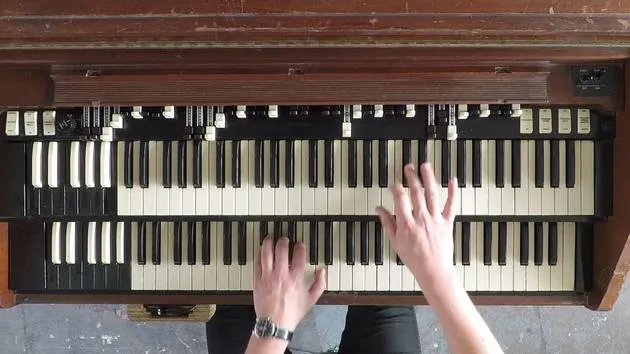
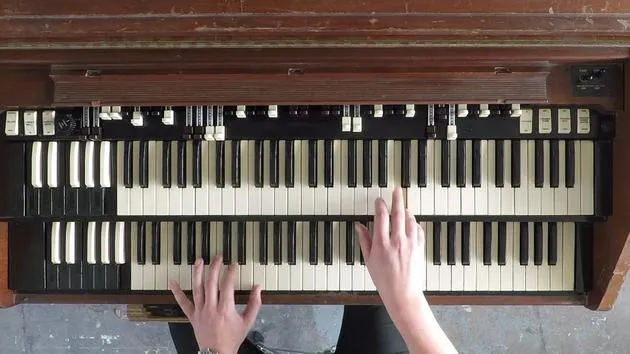
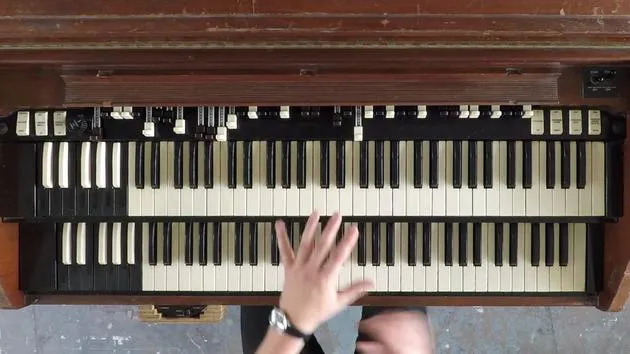
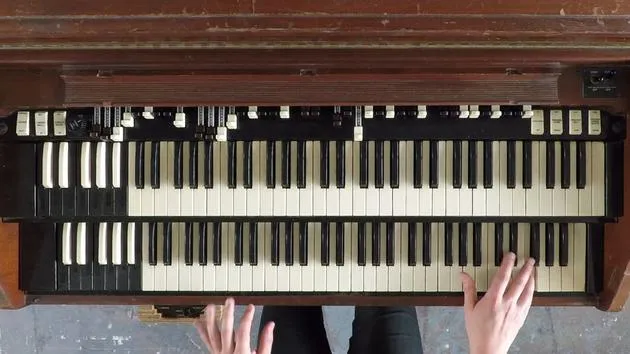
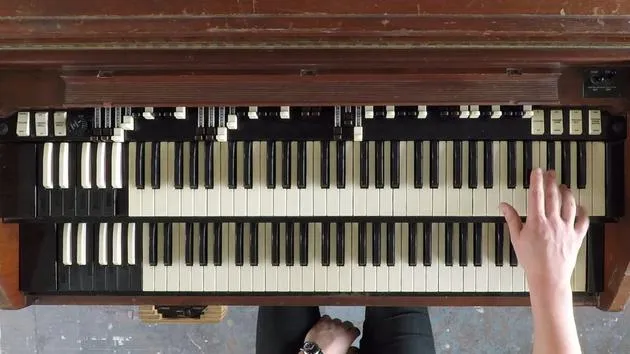
- Again, on the bottom, we've got the 8 and 4 as the pad setting.
- On the top, that clunky second harmonic comes in during the second verse, just like we had in the last song.
Tone Vocabulary
But on the first verse, he uses a kind of slightly nasal tone that cuts through.
What kind of vocabulary would you use for that?
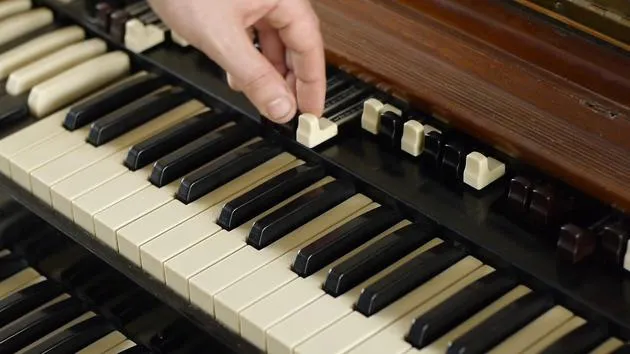
So, you can use some little slides, some little effects. That's a classic sort of Hammond thing.
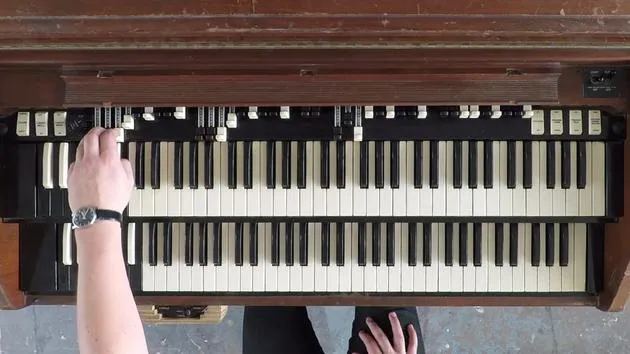
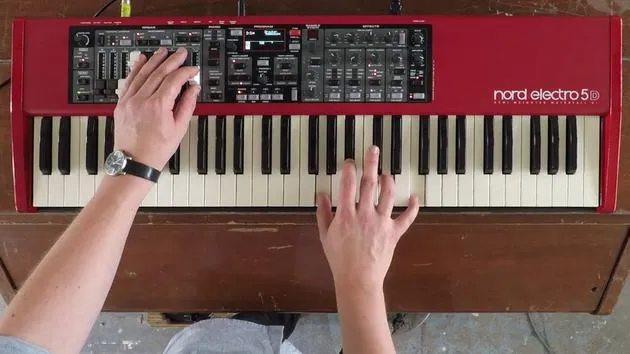
- You're not pressing the keys all the way down; you're just catching the first couple of contacts there with the drawbars.
- That sounds really good on fast passages as well.
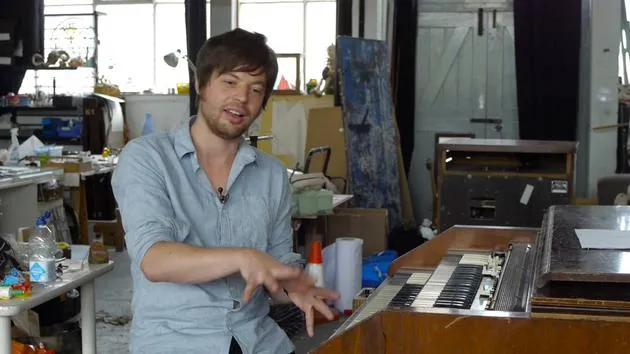
You can really drag the phrasing of that, if you want. That's quite nice to pull that back a little, roll like that on the melody, rather than switch to the other sound.
Transition Between Verses
In the second verse, if you want to, you could turn it up and really drive that. That would be quite nice.
So, we're just going to look at the transition between verses and the transitions between tones that we use on those.
At the end of the B section, there, the end of the first verse:
- We're still going to be on that tone, we're not going to be on Stop; we'll be on Fast.
So, what we need to do from there is get onto the percussion setting.
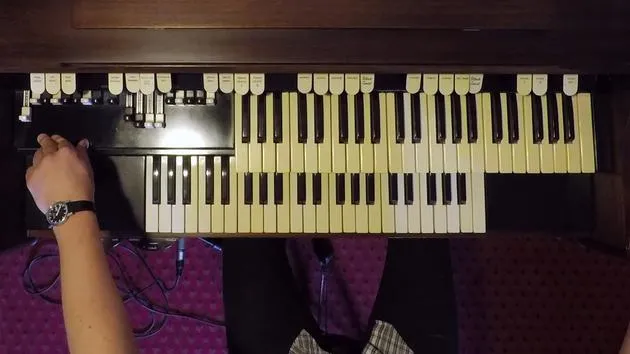
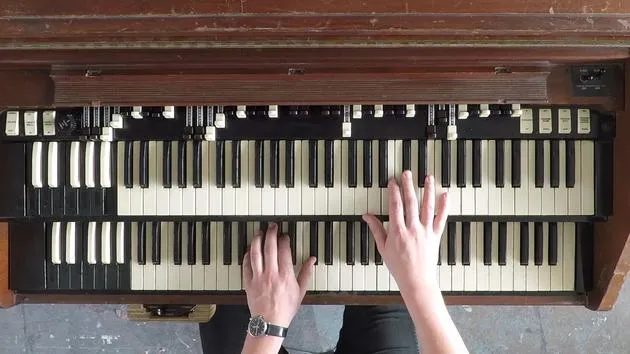
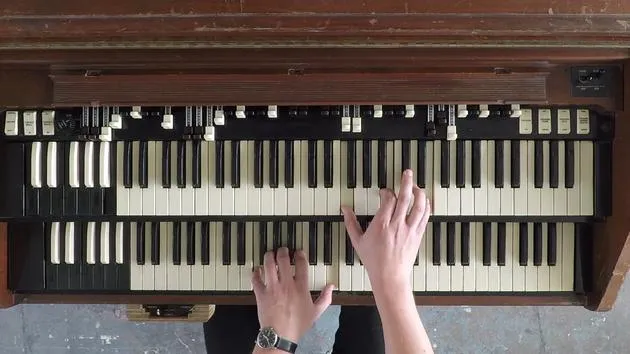
We need to switch from the B flat preset to the B. That moment might be something like this:
If I wasn't doing the pad, as Booker wouldn't have been at that moment, I'm just trying to give it the pad to provide some context.
You could do that change quicker because your left hand would be freed up. He might do it something like as quick as that in reality on the track.
Obviously, you can only do that if you've got a free hand, but that's what it looks like.
45 Lektionen
3 Std. 0 Min. strukturierte Videolektionen
Erweiterte Videofunktionen
Verlangsamen, Passagen loopen, mitlesen
Handy, Tablet & Desktop
Üben, wo du willst
100 % Zufriedenheitsgarantie
30 Tage Geld-zurück-Garantie
Lern deinen Guru kennen
Lern deinen Guru kennen
Joe Glossop ist ein Keyboarder aus Sheffield, der sich an der Hammond-Orgel einen Namen gemacht hat. Derzeit hat er den Orgelplatz in Tom Jones' Tourband inne und hat mit Van Morrison und James Hunter gespielt, ebenso an Klavier und Rhodes. Seine Kurse holen den echten Hammond-Sound aus jedem Keyboard heraus: die Zugriegel-Registrierung, das Leslie, den Walking Bass der linken Hand und das Begleit- und Solovokabular der Soul-Jazz-, Blues- und Rock-Orgeltraditionen, von Jimmy Smith bis Booker T.