



Walkdown in 'I'm a Man', Spencer Davis Group
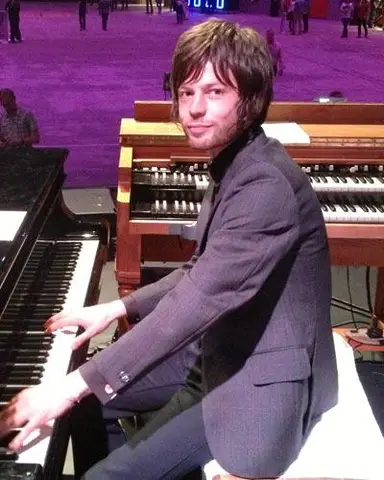
Lesson time: (5min 23sec)
Die Orgel eignet sich eher für 'Momente' in Tracks, als dass sie zwangsläufig durchgehend präsent ist. In diesem Kursabschnitt bringt uns Joe einige dieser klassischen Hammond-Momente bei, angefangen bei 'I'm A Man' der Spencer Davis Group, wo Steve Winwood einen klassischen Walkdown spielte.
Die klassischen Versionen der in diesem Kurs vorgestellten Stücke kannst du in Joes Spotify-Playlist hören schau sie dir hier an.
Course preview
This lesson is part of the course Spiele die Hammond-Orgel authentisch
Watch a preview of the full course below.
Lesson transcript:
Understanding the Role of the Organ in Music
So sometimes the organ isn't always a lead instrument or even an instrument which is throughout the track. It might be just a supporting instrument, or it might have a kind of impact moment that's very recognizable and then completely vanish out of the track until the next time that part happens.
Some of the tracks you think of when you think of Hammond organ are probably some of those tracks.
Key Focus Areas
We're going to look at some of those specific moments, tones, and phrasing, and try to nail them down because they'll be parts of records you know very well.
Spencer Davies Group
Firstly, I'm a big fan of the Spencer Davies Group. They were a sort of R&B British outfit in the 60s. The main guy in that was Steve Winwood, who's a big hero of mine:
- Great organ player
- Great piano player
- Great singer
- Great guitar player
We're going to look at a couple of their tracks.
"I'm A Man"
"I'm A Man" was a big hit in '66, I think '67. You might recognize that as part of that hit.
- There's a very cool approach in that track.
- A lot of percussion going on.
- A lot of wild things happening.
The theme that comes back is that kind of chord some people call the Hendrix chord (usually guitar players, but with good reason). Whether you call it a sharp minor or a flat 10 is up to you, it depends on what instrument you play and how you think about it.
Playing Techniques
- I'm playing it like that; you could choose your drawbar setting.
- You could do it more like that, but you might have noticed we're on stop there.
The Walk Down
What happens when you get to the walk down?
- You're walking down from G, F sharp, F back to the one.
- That's basically all that's happening.
Getting the tone and the walk down with the Leslie changing from stop to fast are the main characteristics of it.
Voicing and Inversions
Looking at the voicing of the walk down:
- Very simple:
- G major, got a 3 at the bottom (3, 5, 1).
- Exactly the same, just moving it down a semitone, same inversion, down to F.
This is the moment where you flip the Leslie when you go to the G there.
- You can also swell a bit into that to really accentuate the moment where the Leslie goes, and you're into the walk down.
Bassline Considerations
Baseline-wise, you can put a little skip in there, like I just did.
- It just helps move it along a little bit in the track.
- It's not going to be the organ playing the bass; it's going to be the bass player.
So he would have done whatever he might have done, but that's kind of how I would play it.
About the instructor
Joe Glossop ist ein Keyboarder aus Sheffield, der sich an der Hammond-Orgel einen Namen gemacht hat. Derzeit hat er den Orgelplatz in Tom Jones' Tourband inne und hat mit Van Morrison und James Hunter gespielt, ebenso an Klavier und Rhodes. Seine Kurse holen den echten Hammond-Sound aus jedem Keyboard heraus: die Zugriegel-Registrierung, das Leslie, den Walking Bass der linken Hand und das Begleit- und Solovokabular der Soul-Jazz-, Blues- und Rock-Orgeltraditionen, von Jimmy Smith bis Booker T. read more