



Letzte Ratschläge

Mit
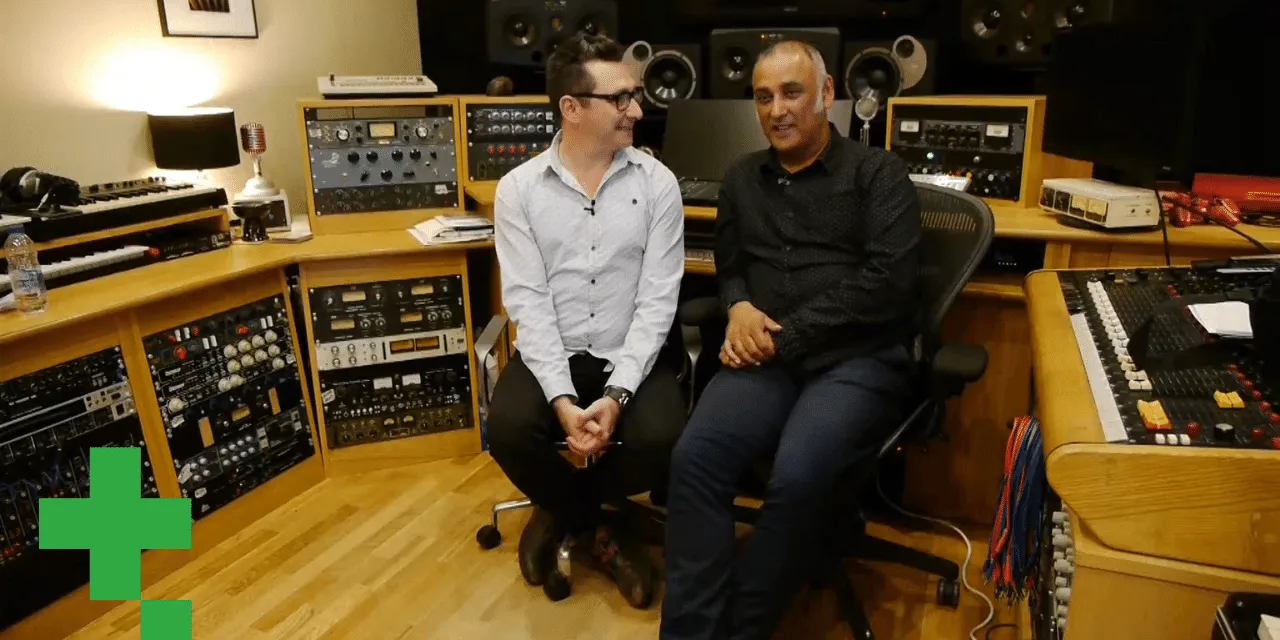
Jay MistryJay Mistrys abschließende Ratschläge zum Aufbau einer Karriere in der Musik: ob du auf deine Stärken setzt oder dich breiter aufstellst, wie du Mitstreiter findest und die rechtliche Seite richtig angehst.
Das steckt im Kurs
21 Lektionen (4h 21m) · 1 gratis
01. Einführung mit Harry Leckstein und Jay Mistry
11:37
02. Eine kurze Geschichte des Musikverlags
6:10
03. Copyright (Arten von Rechten) & Tantiemen
Gratis-Lektion11:19
04. Rat für Künstler: bezahlt werden & mit Verlagen arbeiten
15:35
05. Vorschüsse, Exklusivität und Arten von Verlagsverträgen
14:27
06. Auf eigene Faust loslegen
3:01
07. Der Games-Markt
2:55
08. Verlagsverträge verstehen
11:51
09. Die Welt des Sync
8:23
10. Sonic Branding und was ein Brief ist. Fallstudie: Ollie Raphael
3:54
11. Sync-Jargon-Entschlüssler & Mythen-Aufklärer
8:38
12. Die Rollen in der TV- und Filmbranche verstehen
11:43
13. Letzte Ratschläge
Du bist hier9:43

01. Interview mit Ollie Raphael – Delicious Digital & die Arbeit mit dem Radio
11:38

02. Interview mit Dan Mallender (Phase Music) - Musik, Promos und Trailer für die TV-, Radio-, Film- und Gaming-Branche
16:04

03. Interview mit Rachel Menzies - Musiksupervision
11:19
04. Interview mit Richard Ford (Anger Music) - Arbeiten mit Komponisten
16:23
05. Interview mit Stuart Belsham - PRS entdecken
37:15
06. Interview mit Alessio Nanni (via Skype) - Pianist & Komponist
15:02
07. Interview mit Rob Manning (per Skype) - Film- und TV-Komponist
15:23

08. Interview mit Xiaotian Shi (via Skype) - Film- & TV-Komponist
18:40
Transkript der Lektion
Music Composition and Collaboration
It sounds like there's so many broad and different ways that people can compose music for different styles. There is almost an endless variety. If you're going into this industry, do you play to your core strengths and be good at just what you're good at, or do you try to diversify and become a jack of many styles?
Core Strengths vs. Diversification
I think a lot of the composers I work with would say they could do everything, but I know that they are good at maybe two or three things.
- If the brief is reggae music and they are brilliant on a rock guitar, I wouldn't ask them to do a different genre.
- However, many composers need to be quite dexterous.
I know a few of them where the actual company is made up of two to five people, each having their strengths in different types of music.
Finding Collaborative Opportunities
When considering your circumstances, perhaps you don't have access to flying off to LA or you don't live in London, try to find like-minded people who don't do exactly the same thing as you but are talented in different fields.
- Collaborate: There's nothing stopping you from collaborating with someone else if you get a brief that's not your forte. You can say, "Look, I've got this brief; I know how to package it, but I can't play rhythm or lead, or I can't play the violin or whatever."
- This approach takes you back to being in a band in the studio. You can agree on a split of the work, and that becomes part of the registration.
Legal Considerations
It's very important to get the legalities sorted upfront. For example, if you're hiring someone to play a part in your music:
- Make it clear, "I'm going to give you a fee of £200 to play violin on this track."
- Ensure there's some sort of signed document where the talent acknowledges they've been compensated for their work.
Time Constraints in Music Composition
Let me ask you a little bit about time. When it comes to briefs, how long do people generally have to complete them?
- With feature films, the lead times are longer, but with an advert, briefs can come in with next to no time.
The Challenge of Last-Minute Requests
This is the biggest bugbear of anybody in this business. Producers of films and TV programs often leave music to the last minute because they don't see it as a huge part of the actual production.
- They might think, "We can just get library music" or "The editor will just throw in bits and we'll forget about it."
If you're trying to create bespoke music, for films you'll generally have a lot more lead time. Especially if you're scoring for a significant project.
- If you're Hans Zimmer, and you're getting paid a million dollars to do a score, you will have ample time.
However, in TV or adverts, you might only have days. Sometimes, you'll receive a brief on a Friday and be expected to deliver it by Monday. You'd have to work on it over the weekend.
Different Approaches to Writing Music
It's a different discipline from writing a pop song, which is often based on personal emotions and experiences. For example:
- An artist like Adele or Ed Sheeran might take months to write a song, or it could come together in 30 seconds.
Whereas writing to a brief requires you to be regimented and disciplined to fit into a specific genre.
The Evolving Music Industry
This is really interesting because you mentioned a friend in a pop band who transitioned into the sync world. As the industry continues to change, different value propositions fluctuate, like the value of downloads or streams versus gigging.
- Composers and songwriters need to seek different ways to leverage their skills for various income streams.
They might wear a few hats:
- One month they're out touring as their brand, and another month they might operate under a different brand name that might deal with an agency.
- For example, the person I'm thinking of teaches, gigs, and writes music for film and TV, all while keeping these worlds separate.
Managing Composer Relationships
At the moment, with your consultancy, how many composers do you work with?
I think it's very important to maintain a small roster.
- Some agents work with up to 20 composers, but this depends on their experience.
- In this particular case I'm thinking of, the agency has been around for 25 years.
Ordinarily, I would say working with up to five composers at a time is optimal. Each composer should focus on different areas to avoid duplicating efforts.
- For example, I have composers who specialize in cartoons and animations, others work on trailers and film scores, and some focus on background music for TV.
The Future of Music Publishing
A final question, Jay: what's your vision for the future of publishing? Where's it going?
I think, like much of the industry, people are getting a bit scared because of the seemingly declining revenue from downloads and streaming.
- However, it depends on who you are.
I'm sure that artists like Drake and Rihanna are doing okay out of streaming.
Importance of Diversification
The future of publishing relies on diversification. It's crucial to:
- Work with other publishers or amalgamate companies to cut costs and efficiently utilize resources.
- Professionals are always pushing for better pay from broadcasters and other platforms where music is sold.
As long as creators are fighting for composers, and publishers ensure they are properly investing, finding better deals and co-writing opportunities, then the future can be optimistic.
In terms of income, we are looking more towards:
- Digital income
- Sync income
- Live performance income
While there will still be some sales, both digital and physical, the future isn't as bleak as some may suggest.
Jay, thank you very much indeed!
You're very welcome.
21 Lektionen
4 Std. 21 Min. strukturierte Videolektionen
Erweiterte Videofunktionen
Verlangsamen, Passagen loopen, mitlesen
Handy, Tablet & Desktop
Üben, wo du willst
100 % Zufriedenheitsgarantie
30 Tage Geld-zurück-Garantie
Lern deinen Guru kennen
Lern deinen Guru kennen
Jay Mistry ist ein Veteran der Musikbranche mit 30 Jahren Erfahrung und beherrscht die meisten Aspekte des Musikgeschäfts.
Jay begann seine Laufbahn bei der Performing Right Society, bevor er zu BMG Music Publishing wechselte, wo er gebeten wurde, die Abteilung für die Nachverfolgung von Einnahmen von Grund auf aufzubauen. 2003 gründete er Musical Sleuth Ltd, den ersten unabhängigen Royalty-Tracking-Dienst seiner Art, der Kunden wie Eric Clapton und The Beatles zählte.
Nachdem er die Feinheiten von Urheberrecht und Tantiemen gemeistert hatte, wurde Jay 2009 gebeten, Director of Music Services bei The Discovery Channel zu werden. Sein Erfolg bei Discovery bewog die New Yorker Unternehmer Jingle Punks, ihn zu holen, um ihr US-Verlagsgeschäft aufzubauen und zu stabilisieren und zugleich ihr globales Inkasso-Netzwerk auszubauen. Jay berät heute eine Reihe hochkarätiger Komponisten, Musikbibliotheken, Filmproduzenten, Verlage und Tech-Plattformen.
In A Guide To Music Publishing And Synchronization bringt Jay drei Jahrzehnte aus dem Innersten des Geschäfts auf klare, praxisnahe Ratschläge und zeigt dir, wie Verlagswesen, Urheberrecht, Tantiemen und Sync-Deals wirklich funktionieren – und wie du sie für dich arbeiten lässt.







