



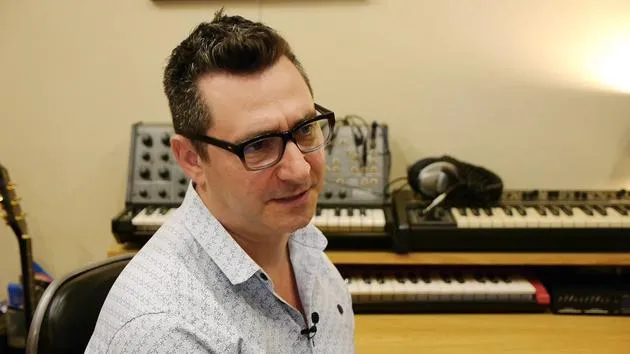
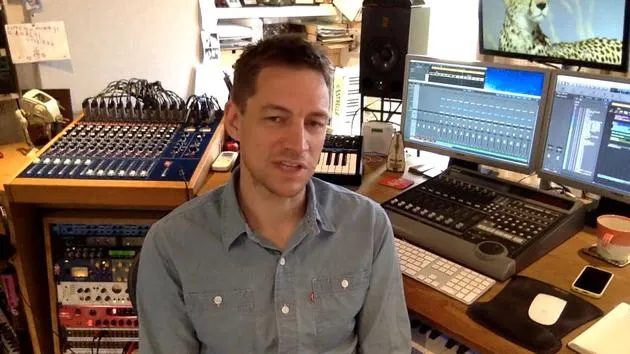
Interview mit Rob Manning (per Skype) - Film- und TV-Komponist
Mit
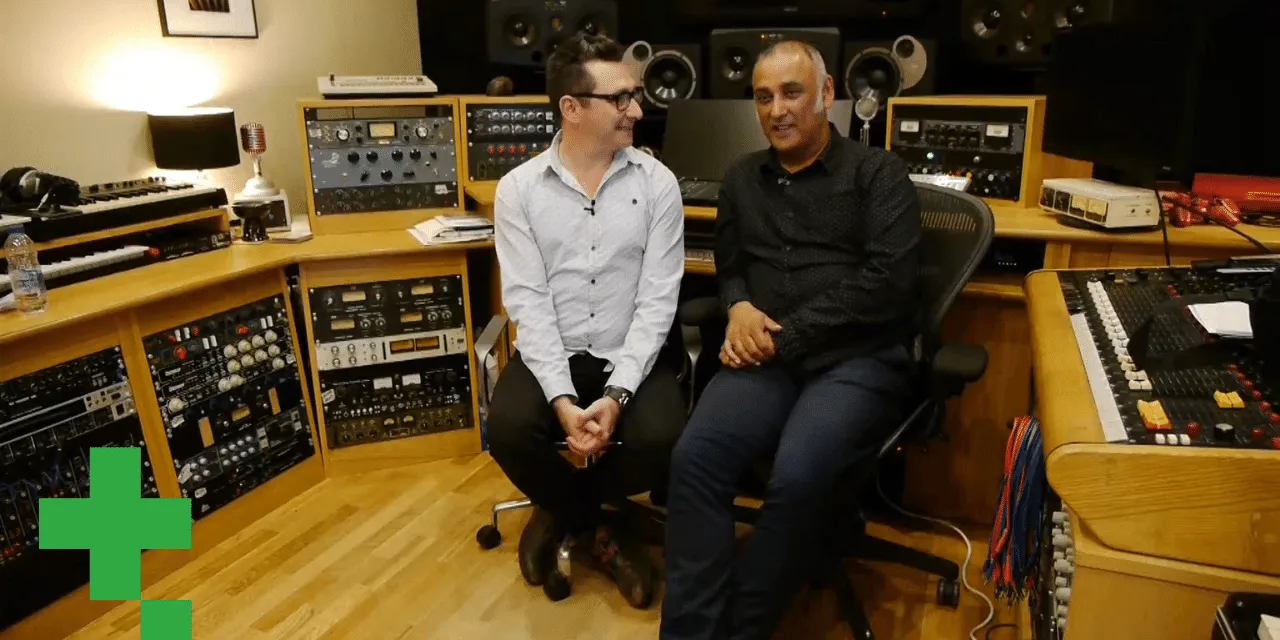
Jay MistryDer Film- und TV-Komponist Rob Manning spricht mit Jay Mistry über das Vertonen von Dokumentarfilmen - wie Projekte zustande kommen, wie er komponiert und Tipps für den Einstieg in die Branche.
Das steckt im Kurs
21 Lektionen (4h 21m) · 1 gratis
01. Einführung mit Harry Leckstein und Jay Mistry
11:37
02. Eine kurze Geschichte des Musikverlags
6:10
03. Copyright (Arten von Rechten) & Tantiemen
Gratis-Lektion11:19
04. Rat für Künstler: bezahlt werden & mit Verlagen arbeiten
15:35
05. Vorschüsse, Exklusivität und Arten von Verlagsverträgen
14:27
06. Auf eigene Faust loslegen
3:01
07. Der Games-Markt
2:55
08. Verlagsverträge verstehen
11:51
09. Die Welt des Sync
8:23
10. Sonic Branding und was ein Brief ist. Fallstudie: Ollie Raphael
3:54
11. Sync-Jargon-Entschlüssler & Mythen-Aufklärer
8:38
12. Die Rollen in der TV- und Filmbranche verstehen
11:43
13. Letzte Ratschläge
9:43
01. Interview mit Ollie Raphael – Delicious Digital & die Arbeit mit dem Radio
11:38
02. Interview mit Dan Mallender (Phase Music) - Musik, Promos und Trailer für die TV-, Radio-, Film- und Gaming-Branche
16:04
03. Interview mit Rachel Menzies - Musiksupervision
11:19
04. Interview mit Richard Ford (Anger Music) - Arbeiten mit Komponisten
16:23
05. Interview mit Stuart Belsham - PRS entdecken
37:15
06. Interview mit Alessio Nanni (via Skype) - Pianist & Komponist
15:02
07. Interview mit Rob Manning (per Skype) - Film- und TV-Komponist
Du bist hier15:23
08. Interview mit Xiaotian Shi (via Skype) - Film- & TV-Komponist
18:40
Transkript der Lektion
Music Composition Insights with Rob Manning
Introduction
Hi, Rob, thanks for joining us from your studio. How are you doing?
Rob: I'm doing well, thanks, Jay. How you doing?
Jay: I'm good, thank you.
Who is Rob Manning?
Jay: First of all, can you explain to everyone who you are and what you do?
Rob: Yeah. I'm Rob Manning and I am a film and TV composer. I specialize mainly in documentaries.
Path to Composing
Jay: How did you get into working in this business?
Rob: I kind of came in through the side door. I was working as a location sound recordist in TV for about 10 years before getting my first composing commission.
- While on a job somewhere in Europe, some of my music came on my iPod, and the director I was working with liked it and asked me to do some stuff they were doing.
- There were huge gaps between my composing commissions at first.
- As the bands I was in fell apart, I started to look at composing as another way to keep in music and enjoy music.
It took a long while to narrow the gaps between commissions, and I was juggling two jobs for quite a while, but eventually, I was able to retire the boom pole and concentrate on composing full-time.
Specialization in Documentaries
Jay: Is there a particular genre that you specialize in?
Rob: Yeah, I end up doing a lot of documentaries. I've done bits and bobs in commercials and dramas, but documentaries are what I tend to do a lot of, and I like them.
Documentaries are great; they are massively varied and you often learn a lot. They're often quite touching, which is a nice thing to be involved in.
Case Study: Deadly Islands
Jay: If we talk about one of your docs, for example, I think it's called Deadly Islands. How did that project come about?
Rob: One second, let me just do that. Deadly Islands was a series for Discovery.
- I had previously worked with the series producer on another fairly large-scale documentary series for Discovery.
- They took me from one job onto the next. It was as simple as that.
Jay: So, they knew you already and thought, "This is the guy for the job"?
Rob: Yes. My first meeting with that series producer was on a previous job, and the production company had brought me onto that initial job.
- That job obviously went well in the eyes of the producer.
- For her next project, she was doing another series with Discovery and asked me to take part in that as well.
You build relationships with these people, and as they move and take their next jobs, they often take you with them.
Starting a Project
Jay: After you got the job, where do you start? Do you have the finished versions and write the music to it, or do you do it as you go along? How does it work?
Rob: Well, within TV, there are slightly more organized jobs that call you in advance, and then there are others that, for some unknown reason, call you much later on.
In general:
- You start with an initial meeting, chatting through a brief, a style, and a sound.
- Whether it's a big orchestral dramatic piece or a very intimate acoustic sound will determine a different approach.
- If they have footage to show you, you can see the locations, characters, and pacing within the editing.
If they're not at that stage, and you're just talking about a script or ideas, you can start working with whatever references they've got.
Importance of References
Jay: We've heard a lot in previous conversations about references. How important are they when you're composing?
Rob: References are key and really important because music is subjective and can be hard to discuss.
- Some people might interpret a piece of music as "blue," while others might feel it is "green."
- It can lead to long lists of adjectives being exchanged without clarity.
Having something to look at or some temp music as a reference can help clarify preferences.
Deadly Islands: The Process
Jay: With regard to Deadly Islands: you started working on it. How long does that process take?
Rob: Deadly Islands was a five-part wildlife series.
- From our initial conversations, it was clear they wanted something fairly epic, cinematic, and dramatic.
- We had a budget to record with a live orchestra, which meant considering practical aspects, like amount and type of musicians, recording dates, and bookings.
As the editing progresses, the score develops hand in hand with it.
We probably worked on it for about three to four months.
Working Multiple Projects
Jay: If you've composed a piece of music for a particular part of a show and you're waiting for feedback, what do you do? Do you work on multiple projects?
Rob: Yes, you're more than likely going to have more than one job on the go.
- Generally, no one job pays enough to work solely on one.
- Even if you're busy with a series, you're likely to be catching up and working on multiple scenes until the end, up to the post-production phase.
Favorite Projects
Jay: Let's end with your favorite program you've worked on, one that you enjoyed both the process and the outcome.
Rob: My favorite jobs change fairly regularly. Recently, I worked on a feature doc called Chuck Norris versus Communism, which I co-composed with my friend Annikitin.
- It was informative and enjoyable, with a film noir score and rich sound design.
I've also done a small-scale BBC3 documentary that was touching and memorable.
Advice for Aspiring Composers
Jay: Any advice for budding composers out there?
Rob: For anyone starting in composing: just keep going if it's something you know you want to do.
- Gain real experience.
- Learn the equipment, terminology, and creative language.
- Make connections with filmmakers, look at universities or filmmaking courses to connect with new filmmakers.
Building relationships with emerging filmmakers might be more fruitful than trying to break into established networks.
Jay: Great advice. Thank you, Rob.
Rob: Pleasure very much. Good luck with all your future projects!
Jay: Thanks a lot. Take care.
Rob: Cheers. Bye.
21 Lektionen
4 Std. 21 Min. strukturierte Videolektionen
Erweiterte Videofunktionen
Verlangsamen, Passagen loopen, mitlesen
Handy, Tablet & Desktop
Üben, wo du willst
100 % Zufriedenheitsgarantie
30 Tage Geld-zurück-Garantie
Lern deinen Guru kennen
Lern deinen Guru kennen
Jay Mistry ist ein Veteran der Musikbranche mit 30 Jahren Erfahrung und beherrscht die meisten Aspekte des Musikgeschäfts.
Jay begann seine Laufbahn bei der Performing Right Society, bevor er zu BMG Music Publishing wechselte, wo er gebeten wurde, die Abteilung für die Nachverfolgung von Einnahmen von Grund auf aufzubauen. 2003 gründete er Musical Sleuth Ltd, den ersten unabhängigen Royalty-Tracking-Dienst seiner Art, der Kunden wie Eric Clapton und The Beatles zählte.
Nachdem er die Feinheiten von Urheberrecht und Tantiemen gemeistert hatte, wurde Jay 2009 gebeten, Director of Music Services bei The Discovery Channel zu werden. Sein Erfolg bei Discovery bewog die New Yorker Unternehmer Jingle Punks, ihn zu holen, um ihr US-Verlagsgeschäft aufzubauen und zu stabilisieren und zugleich ihr globales Inkasso-Netzwerk auszubauen. Jay berät heute eine Reihe hochkarätiger Komponisten, Musikbibliotheken, Filmproduzenten, Verlage und Tech-Plattformen.
In A Guide To Music Publishing And Synchronization bringt Jay drei Jahrzehnte aus dem Innersten des Geschäfts auf klare, praxisnahe Ratschläge und zeigt dir, wie Verlagswesen, Urheberrecht, Tantiemen und Sync-Deals wirklich funktionieren – und wie du sie für dich arbeiten lässt.







