



Introduction + leaving town demonstration

With
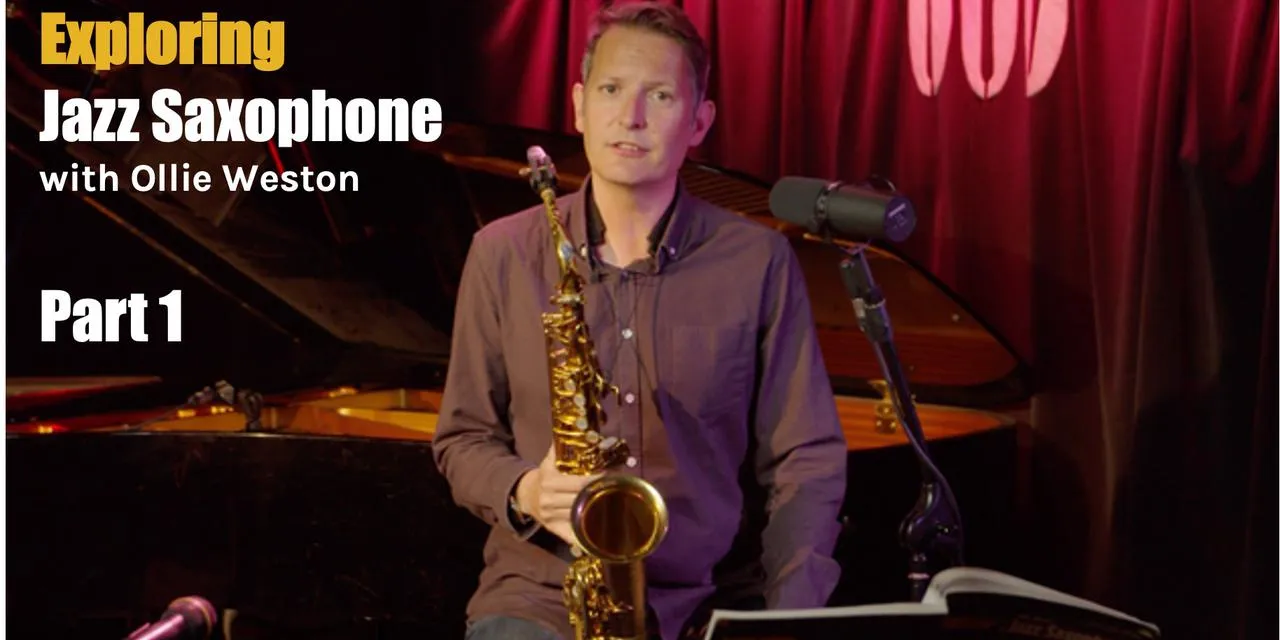
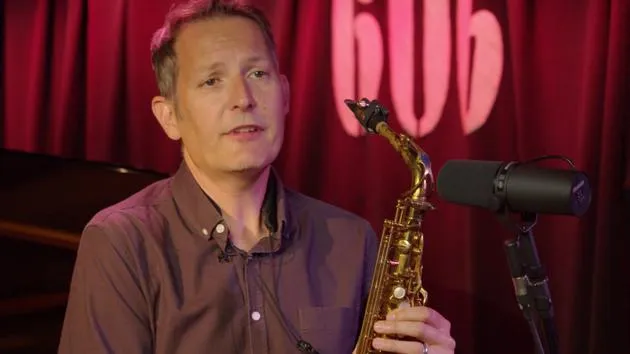
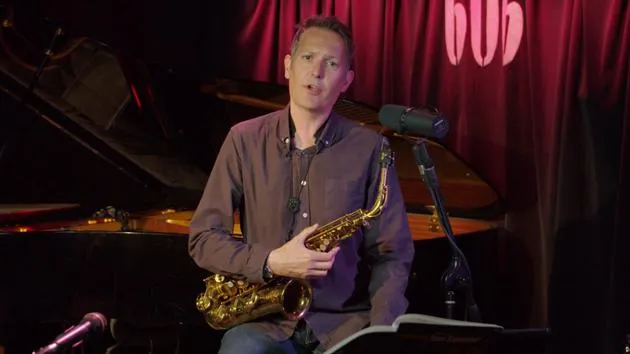
Ollie WestonOllie introduces The Blues and demonstrates the tune Leaving Town
What's in the course
51 lessons (2h 9m) · 1 free
01. Introduction + leaving town demonstration
You are here3:02
02. The Blues Scale
2:48

03. Swing Quavers
1:42

04. Combing the Blues Scale and Swing Quavers
3:57

05. Playing through the Blues form using root notes
1:18

06. Writes Your Own Blues
0:59

07. Leaving Town Blues - Improvise
4:13

08. Improvisation recap
0:49

01. Introduction to Minor 7th Chords
3:32

02. Dorian Scale Workout
1:40
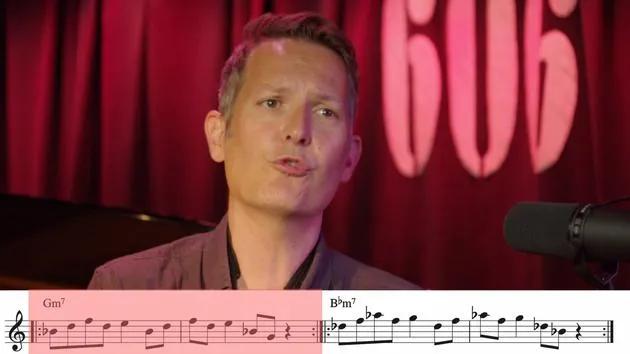
03. Minor 7th Chord Lick
2:22

04. Minor Pentatonic Patterns
3:51
05. Minor Pentatonic Workout
1:52
06. Pentatonic vs Blues Scale
1:59
07. So Far so Good - Introduction
1:09

08. So Far so Good - Head
1:37

09. Minor Chord Extensions
2:45
10. Rhythmic Ideas
2:13

11. So Far so Good - Performance with Solo
3:50

01. Introduction to Modes
6:09

02. Diatonic Modes Exercise
4:04

03. Modes with a Static Root
1:58

04. Modes with Static Root Exercise
1:06

05. Modes with Static Root Recap
0:34

06. Phrase Exercise for Modes
1:07

07. Phrase Exercise for Modes (Demonstration)
1:29

08. Song Examples
1:56

09. First Impresssions - Chords and Harmony
4:06

10. First Impresssions - Performance
4:06

11. First Impresssions - Introduction and Analysis
3:30














Lesson transcript
Exploring the Blues
In this lesson, we're going to look at the blues. A study of jazz would be incomplete without some background knowledge of the blues, like a kind of musical DNA that runs through the music of the last hundred years.
Influence of the Blues
Very few styles of popular music have not been touched by the blues. Genres such as:
- Rock and roll
- Soul
- R&B
- Funk
- Hip hop
All bear the influence of the blues.
Some notable artists who have absorbed this style include:
- Jimi Hendrix
- The Rolling Stones
- B.B. King
- Prince
- James Brown
The list of icons is endless!
The Legend of Robert Johnson
Legend has it that guitarist Robert Johnson met with the devil, selling his soul in exchange for guitar prowess in return for a new style of music: the blues.
Lesson Focus
In this lesson, we will:
- Build a blues scale
- Use it as an improvisational tool to incorporate an authentic, gritty, wailing sound into your playing.
Listening Exercise
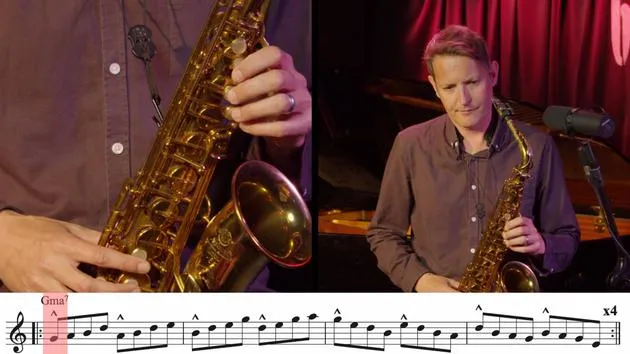
I will start by playing two versions of a tune called "Leaving Town," which is influenced by the great blues musicians Robert Johnson and singer Bessie Smith. We will contrast these two versions and examine how the blues can be used effectively.
Play along: 1, 2, 1, 2, 3, 4.
So that's a blues in D. It's called a 12-bar blues, which we'll explore a bit later.
Key Signature & Structure
It is in D, so I'm playing F sharps and C sharps according to the key signature. Notice the structure of the blues as well, it's divided into three four-bar sections:
- A melody to start
- The melody repeated for the second four bars
- A concluding phrase for the third line
Now, I will play a bluesed-up version of "Leaving Town." Hopefully, you'll hear the blues sound that I've referred to with Robert Johnson and his meeting with the devil.
Play along: 1, 2, 3, 4.
Authenticity in Sound
I hope you agree that the second version sounds more authentic and more bluesy.
Next Steps
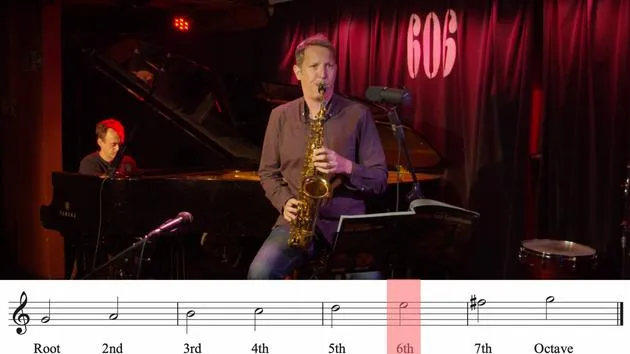
So why is that? Let's have a look at how a blues scale is constructed and create some bluesy-sounding lines.
51 lessons
2h 9m of structured video lessons
Advanced video features
Slow down, loop a passage, follow along
Mobile, tablet & desktop
Practise wherever you are
100% satisfaction guarantee
30-day money-back guarantee
Meet your guru
Meet your guru
Since graduating from the Leeds College of Music (BA Hons) and the Guildhall School of Music (Post Graduate Diploma in Performance), Ollie has built a busy and varied career in music. As a saxophonist he has performed in live and studio settings with artists as diverse as Amy Winehouse, Tim Minchin, Bonobo, Frank Turner, the London Jazz Orchestra, the Hackney Colliery Band, the Ambient Jazz Ensemble and the Nelson Riddle Orchestra. He is also the co-leader of the jazz quartet 'Time Is Of The Essence', and composes and arranges material for this and other ensembles.
Ollie is active in music education, currently as course leader for the jazz department at the Guildhall School of Music and Drama (junior school), where he runs jazz ensembles, big band and theory classes. He has written a series of 'Exploring Jazz' books for Schott Music that are published worldwide and feature on exam syllabuses in the UK. Ollie has also run workshops for Oxford University, Pro Corda Strings and BABSWE, as well as the Guildhall School of Music summer schools.
In his Exploring Jazz Saxophone courses, Ollie takes you from getting started right through to soloing confidently over songs and chord sequences, building the improvising skills that put a real jazz player's vocabulary at your fingertips.







