



Major 7th Heaven

With
Ollie WestonOllie Weston breaks down Major 7th Heaven, a 32-bar AABA tune built entirely from major seventh chords, using its lead sheet.
What's in the course
51 lessons (2h 9m) · 1 free
01. Introduction + leaving town demonstration
Free lesson3:02
02. The Blues Scale
2:48
03. Swing Quavers
1:42
04. Combing the Blues Scale and Swing Quavers
3:57
05. Playing through the Blues form using root notes
1:18
06. Writes Your Own Blues
0:59
07. Leaving Town Blues - Improvise
4:13
08. Improvisation recap
0:49
01. Introduction to Minor 7th Chords
3:32
02. Dorian Scale Workout
1:40
03. Minor 7th Chord Lick
2:22
04. Minor Pentatonic Patterns
3:51
05. Minor Pentatonic Workout
1:52
06. Pentatonic vs Blues Scale
1:59
07. So Far so Good - Introduction
1:09
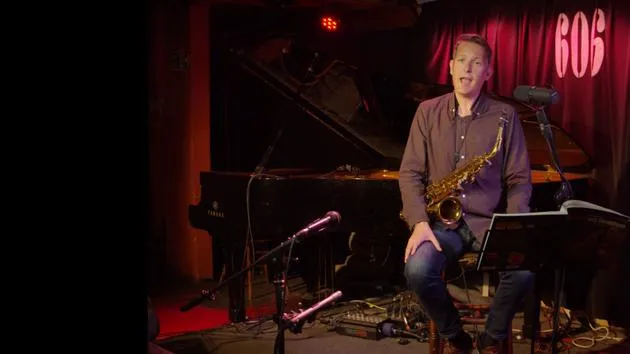
08. So Far so Good - Head
1:37
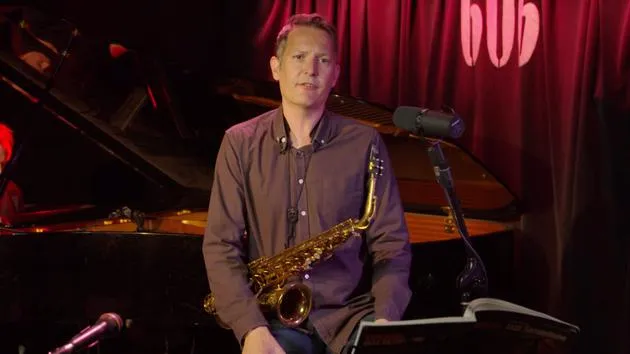
09. Minor Chord Extensions
2:45
10. Rhythmic Ideas
2:13
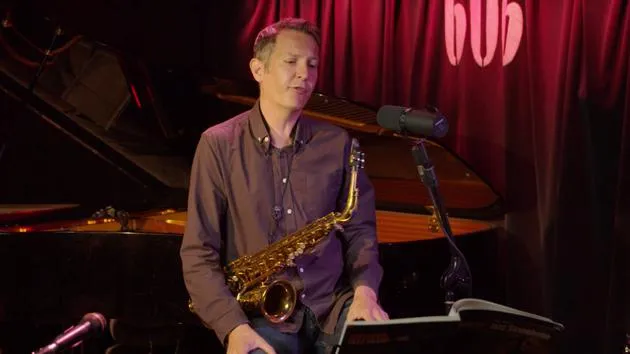
11. So Far so Good - Performance with Solo
3:50
01. Introduction to Modes
6:09

02. Diatonic Modes Exercise
4:04
03. Modes with a Static Root
1:58
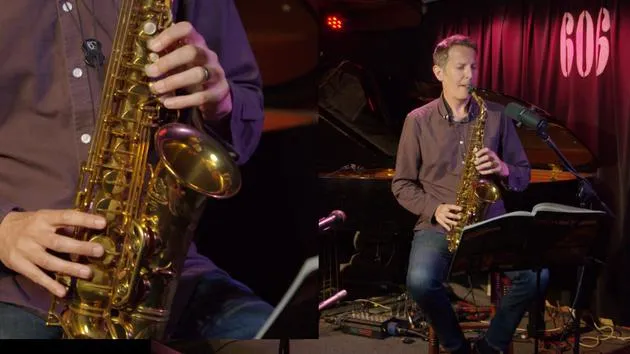
04. Modes with Static Root Exercise
1:06
05. Modes with Static Root Recap
0:34
06. Phrase Exercise for Modes
1:07

07. Phrase Exercise for Modes (Demonstration)
1:29
08. Song Examples
1:56
09. First Impresssions - Chords and Harmony
4:06
10. First Impresssions - Performance
4:06
11. First Impresssions - Introduction and Analysis
3:30
Lesson transcript
Major Seventh Heaven: Lesson Overview
Introduction
Today, we'll explore a tune called Major Seventh Heaven, which is entirely built up of major seventh chords.
Understanding the Lead Sheet
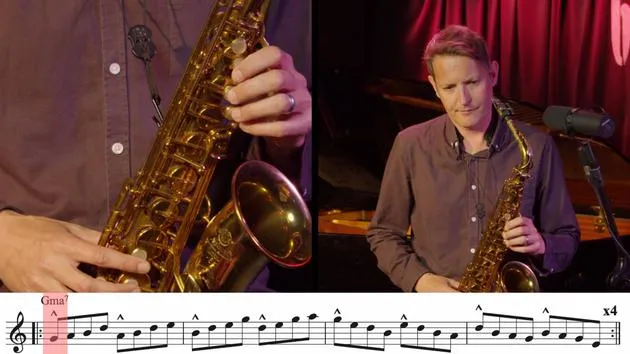
I've written what's called a lead sheet. This condensed score contains all the essential information musicians need to follow along. Here are a few components to look out for:
-
Form of the Tune:
- This piece has a 32-bar chord sequence, structured into sections.
- It follows an AABA form:
- A section: Main melody (8 bars, repeated for the second melody)
- B section: Bridge (8 bars)
- Final A section: Repeat of the main melody
-
Melody and Harmony:
- The top line of the score contains the melody, which you, as a saxophone player, will perform.
- Beneath it, I've provided the chords for the backing band (piano, bass, and drums).
- The backing band will see the chords and some rhythms. For example, those crosshead notes indicate a G major 7 chord in a specific rhythm.
Tips for the Rhythm Section
- The musicians don't need the notes of G major explicitly written; they'll understand the voicing needed.
- As you listen to Duncan on the backing track, you'll notice he plays different voicings for the major seven chords, making the piece come alive with lush chords across various registers of the piano.
Performance Guidelines
After exploring the piece, I'll perform one chorus of a solo. This includes:
- Use of pentatonics
- Emphasis on chord tones of the major seventh chords
- Incorporation of a bit of blues
Now, here's how to perform Major Seventh Heaven:
- Play the head all the way through the AABA structure.
- Follow with one chorus and another AABA section (32 bars of solo).
- Conclude by returning to the head.
Note:
- There is a pause marked on the final chord.
- The rhythm section will also include those written hits throughout the piece.
Enjoy your practice!
51 lessons
2h 9m of structured video lessons
Advanced video features
Slow down, loop a passage, follow along
Mobile, tablet & desktop
Practise wherever you are
100% satisfaction guarantee
30-day money-back guarantee
Meet your guru
Meet your guru
Since graduating from the Leeds College of Music (BA Hons) and the Guildhall School of Music (Post Graduate Diploma in Performance), Ollie has built a busy and varied career in music. As a saxophonist he has performed in live and studio settings with artists as diverse as Amy Winehouse, Tim Minchin, Bonobo, Frank Turner, the London Jazz Orchestra, the Hackney Colliery Band, the Ambient Jazz Ensemble and the Nelson Riddle Orchestra. He is also the co-leader of the jazz quartet 'Time Is Of The Essence', and composes and arranges material for this and other ensembles.
Ollie is active in music education, currently as course leader for the jazz department at the Guildhall School of Music and Drama (junior school), where he runs jazz ensembles, big band and theory classes. He has written a series of 'Exploring Jazz' books for Schott Music that are published worldwide and feature on exam syllabuses in the UK. Ollie has also run workshops for Oxford University, Pro Corda Strings and BABSWE, as well as the Guildhall School of Music summer schools.
In his Exploring Jazz Saxophone courses, Ollie takes you from getting started right through to soloing confidently over songs and chord sequences, building the improvising skills that put a real jazz player's vocabulary at your fingertips.







