



Spatial effects
With
John WatsonWhat reverb and delay are and how to apply them - John sets up reverb on a return track to add space to chords and percussion.
What's in the course
14 lessons (1h 39m) · 2 free
01. Getting started & gear setup
11:07
02. Generating ideas with MIDI - intro to MIDI
Free lesson6:12
03. Recording a simple rhythm guide track
7:41
04. Recording audio: setup & levels
6:21
05. Recording audio
6:25
06. Using an external instrument
3:27
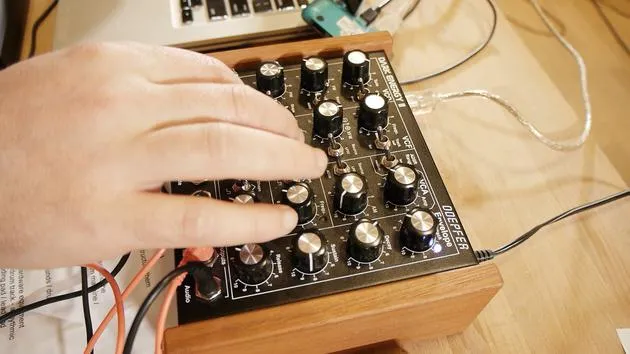
07. Creating the bassline
11:05
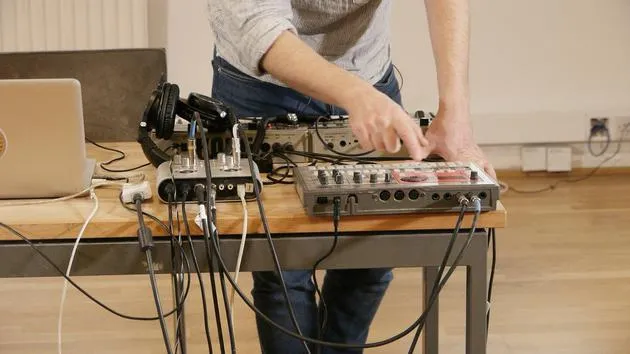
08. Adding one more rhythm part
2:50
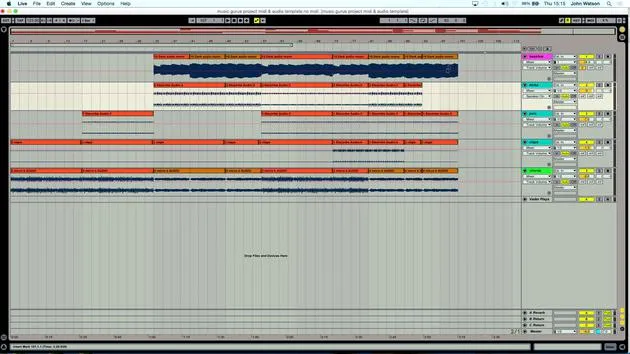
09. Premixing & session view
9:59
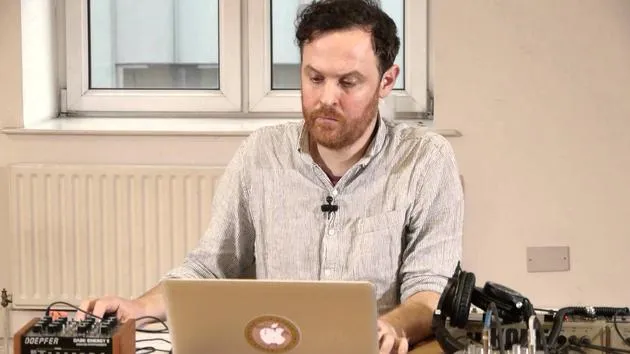
10. Song structure & arrange view
8:47
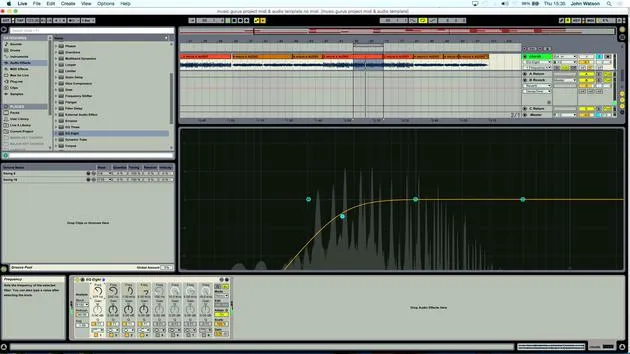
11. Mixing EQ and compression
7:37
12. Spatial effects
You are here4:40
13. Modulation effects
5:26
14. BONUS: Creating a bassline with Doepfer Dark Energy II
Free lesson7:26
Lesson transcript
Music Lesson: Enhancing Chords and Percussion
Okay, so next up, then, we've got our chords. Here's how we can enhance them:
Setting Up Reverb
-
Cycle Over the Chords
I'm going to come over to the chords section and cycle it like so. -
Creating a Return Track
- I want to think about some of the effects to add here.
- I'll set up a return track (auxiliary track) and place the reverb on it.
-
Loading the Reverb
Let's load up a reverb.- Set the dry/wet to 100% wet because I'm going to control the amount of reverb via the send dial.
Note: When setting up a return channel, we need to use the send to send the signal to that return track.
- Adjusting Reverb Level
I might have added just a little bit too much reverb, so I'm going to take the amount down a little bit here.
Enhancing Percussion
- I'm feeling that the percussion chugs along, but rhythmically, it could be more interesting.
- So, I'm going to load up the ping pong delay onto this percussion track.
- Already, I'm starting to get a little bit more rhythmic interest here.
EQ for Chords
- The chords haven't received any EQ treatment yet, which is quite important.
- I want to make room for the bass, kick, and other low-frequency elements.
- So, let's apply a low cut EQ like so.
Creating a Pumping Effect
The next thing I'd like to do is create a pumping (ducking) effect on my chords using the kick.
- Loading a Compressor
- On my chord track, I'm going to load up a compressor.
- I'm switching on the sidechain input.
Having everything labeled really helps here.
-
Setting the Sidechain Input
- I can come into the input now and set it to receive input from the kicks.
-
Adjusting the Threshold
- What will happen now is when I lower the threshold, the kicks will come through and duck the chords when they trigger.
-
Applying the Same to the Bassline
- I might even set a little bit here on my baseline as well.
- Again, just activate the sidechain input from the kicks channel.
Enhancing Claps
- I'm feeling that the claps just feel a little bit dead.
- Maybe they could have a sort of spatial element to them.
- Loading Reverb for Claps
- I'm going to load up a reverb and aim for a kind of small space for them to sit in.
Yeah, that's sounding better! Already a lot better.
14 lessons
1h 39m of structured video lessons
Advanced video features
Slow down, loop a passage, follow along
Mobile, tablet & desktop
Practise wherever you are
100% satisfaction guarantee
30-day money-back guarantee
Meet your guru
Meet your guru
After work experience with Depeche Mode and The Cure producer Dave Allen, John was inspired to study Music Technology in London. His music career took off after a successful signing to CookShop Records, releasing 9 singles and an album in 2007 that received rave reviews from Q, Uncut and Lowdown Magazine, plus radio play from XFM and Radio One.
John began training as an audio engineer at Bonafide studio in 2005, where he refined his talents, and later that year set up Jackdaw Recordings. He has collaborated with many successful artists, and in 2007 began playing for pop musician Patrick Wolf, performing at leading venues here in the UK and internationally - including The Astoria and Shepherds Bush Empire.
Based in his London studio, John now writes music, with two more releases on CookShop, does sound engineering for prominent artists, and creates sound design for TV ads, film, theatre and corporate video.
That rare mix of songwriter, producer and working studio engineer is exactly what John brings to his teaching. In Creative Composition & Production in Ableton Live and Creative Sampling & Production in Ableton Live, he shows you how he turns raw ideas into finished, release-ready tracks - the writing, the sampling, the sound design and the hands-on engineering know-how behind a professional record.







