



Recording audio

With
John WatsonRecord your strongest motifs into Ableton Live, then generate a bass pattern and extract its chords onto a fresh MIDI track.
What's in the course
14 lessons (1h 39m) · 2 free
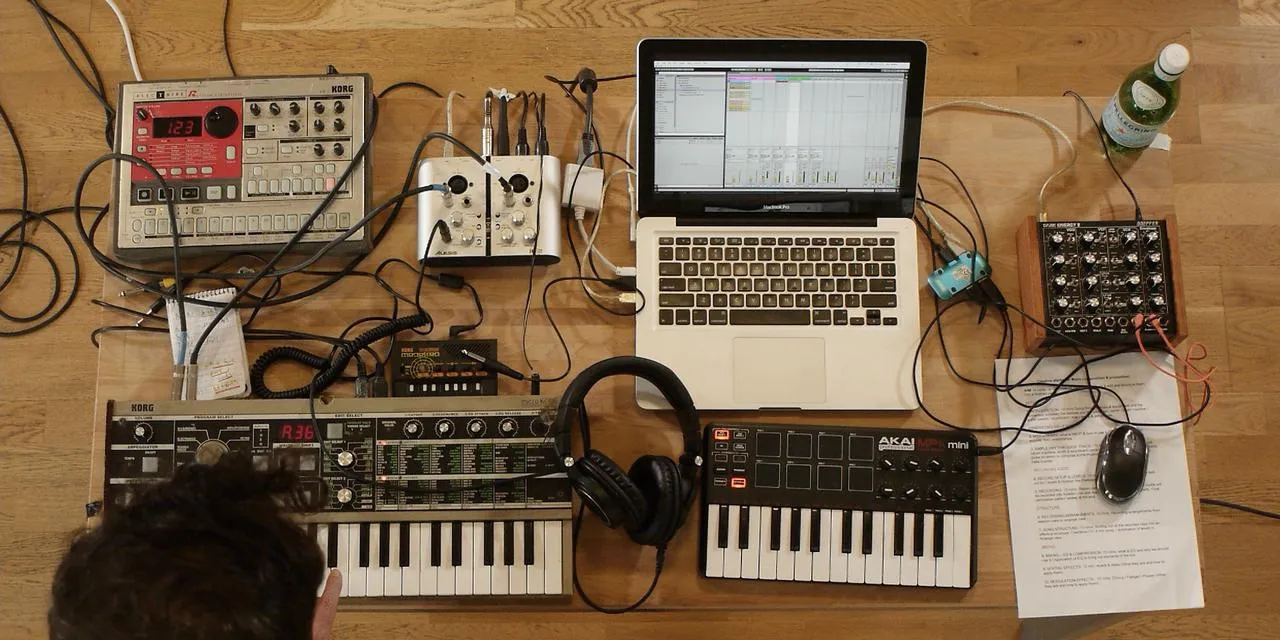
01. Getting started & gear setup
11:07
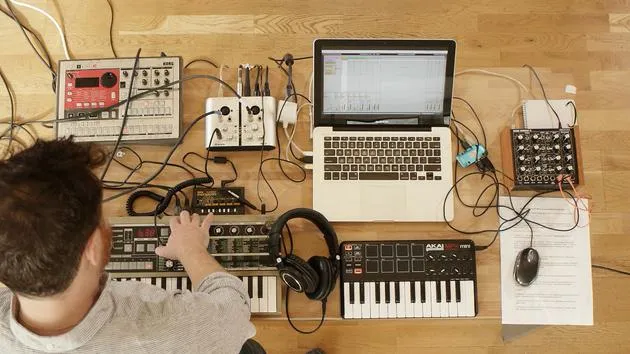
02. Generating ideas with MIDI - intro to MIDI
Free lesson6:12
03. Recording a simple rhythm guide track
7:41
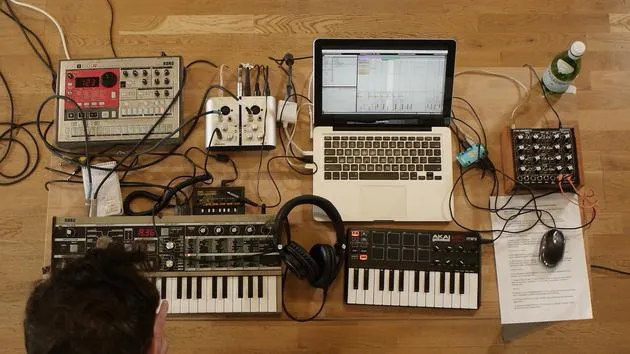
04. Recording audio: setup & levels
6:21
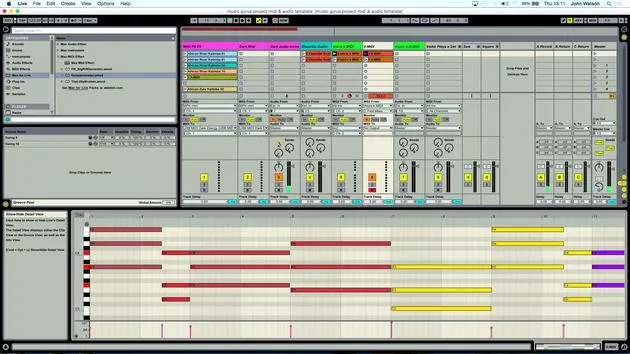
05. Recording audio
You are here6:25
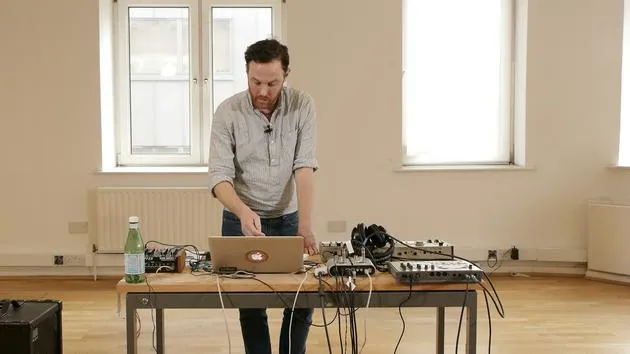
06. Using an external instrument
3:27
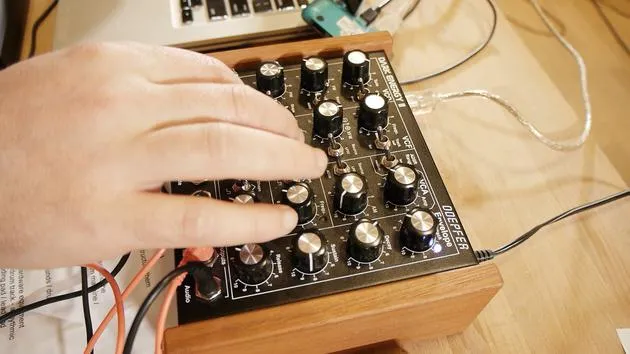
07. Creating the bassline
11:05
08. Adding one more rhythm part
2:50
09. Premixing & session view
9:59
10. Song structure & arrange view
8:47
11. Mixing EQ and compression
7:37
12. Spatial effects
4:40
13. Modulation effects
5:26
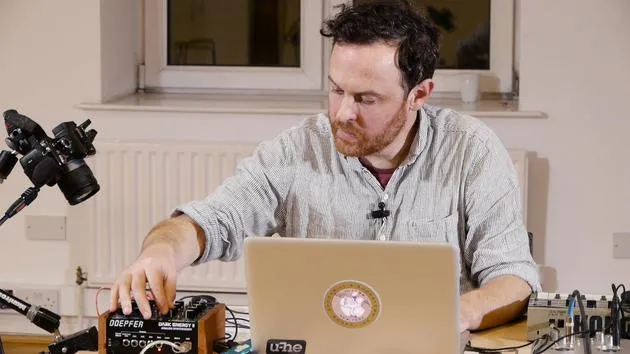
14. BONUS: Creating a bassline with Doepfer Dark Energy II
Free lesson7:26
Lesson transcript
Generating a Bass Pattern
So what I also want to do here is I'd like to generate a bass pattern that will work with this.
Creating Another MIDI Track
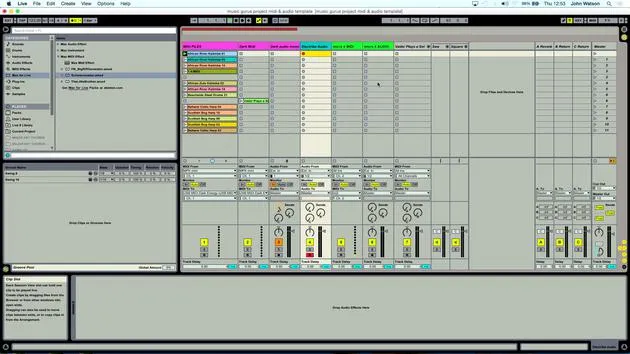
- I'm going to create another MIDI track, like so.
- I'm actually going to record the MIDI data that I've popped in here onto another track.
Extracting Chords
Okay, so this is where it might get a little bit confusing. Essentially, I've got here this MIDI device, the Schwarzenegger, and that is creating some chords.
- What I want to do is extract those chords onto a fresh MIDI track.
- Rather than just me individually playing notes that trigger chords, we're actually going to get the chords coming through as individual MIDI tracks.
Recording Chords
- I'm going to come in from the Microcorg MIDI and click the record button.
- I'll also click in, like so.
- Now, I'd like to record these two chords' MIDI information onto fresh MIDI tracks.
- Click Record like so.
- You can see my chords actually being inputted onto this track.
Continuing the Recording
- That's one set recorded.
- Now, I'm going to move up to the first MIDI track that I had, and I'm going to record these ones in.
Let me just stop everything, like so. Then, I'll come in and record this line here.
- Again, what we're actually getting is the chord data going into these new MIDI tracks.
- This is going to give us a lot of flexibility now in terms of structuring the music, where we can cut individual notes out and play around with the arrangement of some of these chords.
Finalizing Chord Recording
Okay, so I've probably got enough there. That's working fine.
Generating a Bass Line
Next, I'd like to generate a little bass line as well. But first, I need to actually record the audio in so that we've got space to put this bass instrument.
Note: Remember, this sound card has only two inputs, so I need to commit to recording this in as audio.
Recording Audio
- The first sound that I had was a 36, a much gentler chord. Let's play this.
- I've also got my beat, which I can use to keep variety.
I'm going to record the audio now from the Microcorg. I'm going to jump between a couple of different sounds again to keep variety in there and keep interest.
Setting Up for Recording
- I have my two MIDI parts ready.
- I'm going to go in with the first part.
Now I've got an audio track that I've already set up at the beginning.
- I'm going to come in and hit Record like so, and the MIDI notes will now play and come in as audio onto this track.
Counting the Bars
I'm just stopping there, counting in my head:
- 4 bars, 8 bars, I think I went for.
- How many have I got here at the minute? 4, 8, 12, 16 bars.
This has given me a little bit of variation. I was also adjusting some filter cutoff, just opening up the synth sound a little bit.
- But I've committed now, so I've got a piece of audio here.
Moving to the Second MIDI Clip
Now, I'm going to move on to the second MIDI clip and record this one in.
- I'm going to change the sound over; let's go for this one here.
Let's have a listen.
- Okay, so again, a brighter sound, it's just going to have a little bit more impact, a bit more positive, a bit more lift in the track.
- These two ideas are going to be great to play around with the structure.
Final Recording
I'm just going to hit Record.
- Okay, so there I've recorded the second part in.
- Again, what I've got here: 1, 2, 3, 4, 5, 6, 7, 8, another 16 bars from that clip.
14 lessons
1h 39m of structured video lessons
Advanced video features
Slow down, loop a passage, follow along
Mobile, tablet & desktop
Practise wherever you are
100% satisfaction guarantee
30-day money-back guarantee
Meet your guru
Meet your guru
After work experience with Depeche Mode and The Cure producer Dave Allen, John was inspired to study Music Technology in London. His music career took off after a successful signing to CookShop Records, releasing 9 singles and an album in 2007 that received rave reviews from Q, Uncut and Lowdown Magazine, plus radio play from XFM and Radio One.
John began training as an audio engineer at Bonafide studio in 2005, where he refined his talents, and later that year set up Jackdaw Recordings. He has collaborated with many successful artists, and in 2007 began playing for pop musician Patrick Wolf, performing at leading venues here in the UK and internationally - including The Astoria and Shepherds Bush Empire.
Based in his London studio, John now writes music, with two more releases on CookShop, does sound engineering for prominent artists, and creates sound design for TV ads, film, theatre and corporate video.
That rare mix of songwriter, producer and working studio engineer is exactly what John brings to his teaching. In Creative Composition & Production in Ableton Live and Creative Sampling & Production in Ableton Live, he shows you how he turns raw ideas into finished, release-ready tracks - the writing, the sampling, the sound design and the hands-on engineering know-how behind a professional record.







