



BONUS: Creating a bassline with Doepfer Dark Energy II

With
John WatsonLearn how to create a bassline in Ableton Live using an external synth, the Doepfer Dark Energy II.
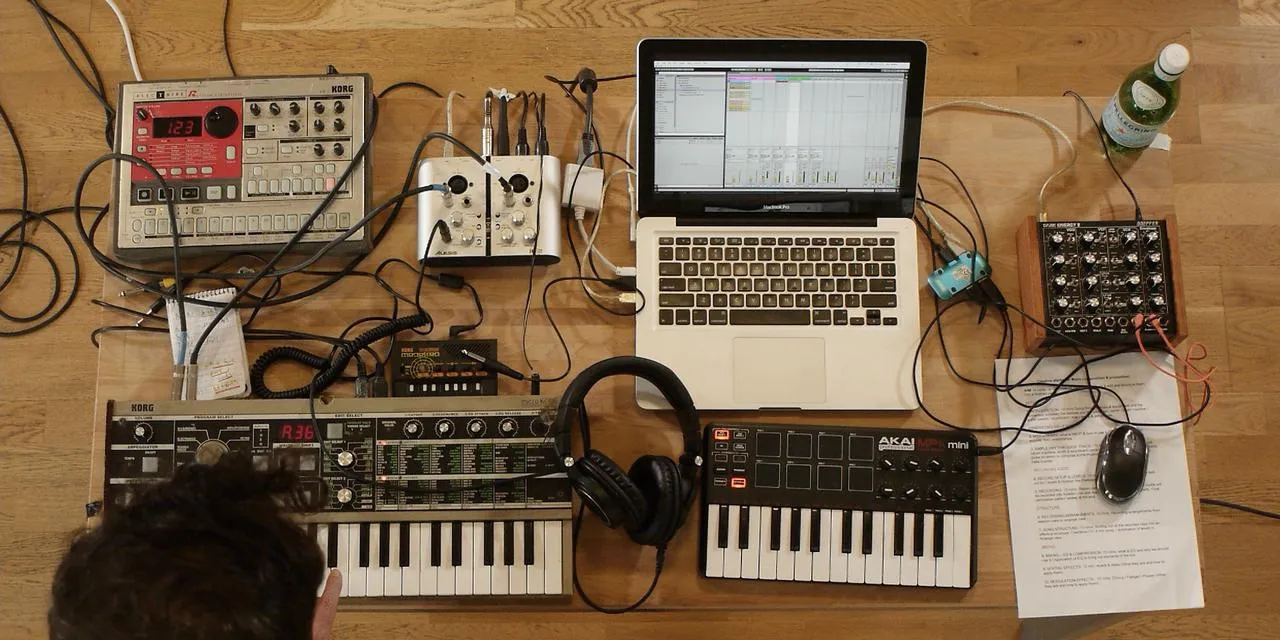
What's in the course
14 lessons (1h 39m) · 2 free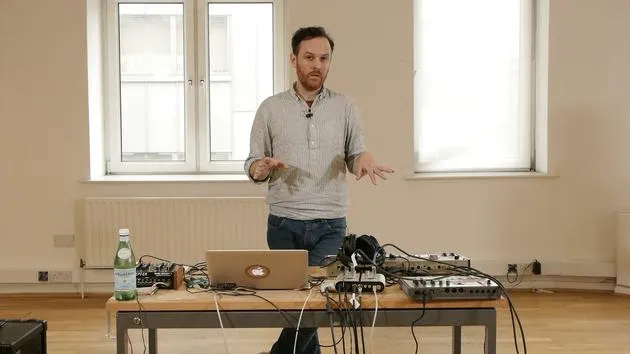
01. Getting started & gear setup
11:07
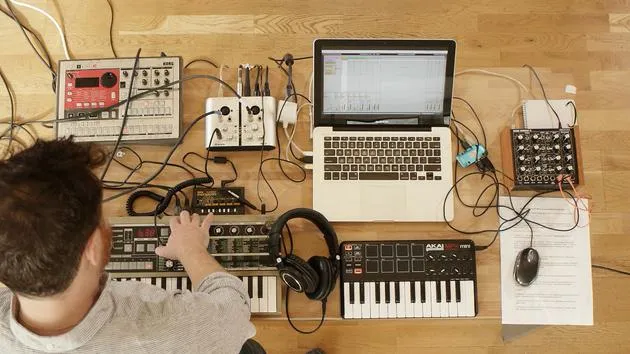
02. Generating ideas with MIDI - intro to MIDI
Free lesson6:12
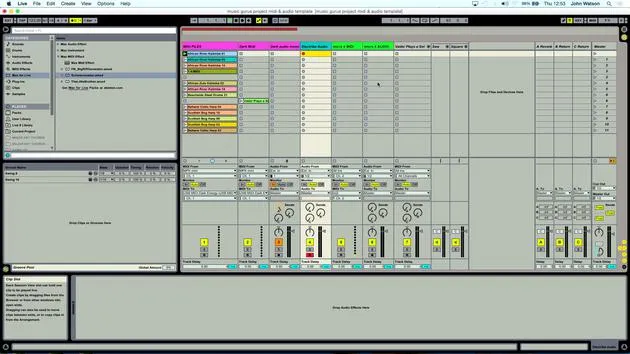
03. Recording a simple rhythm guide track
7:41
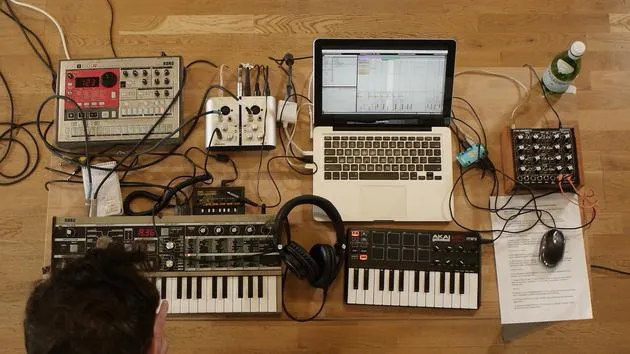
04. Recording audio: setup & levels
6:21
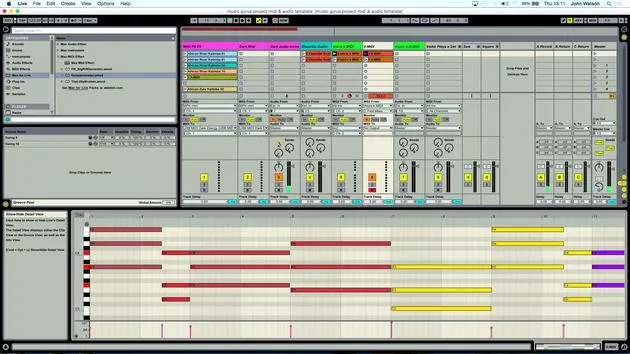
05. Recording audio
6:25
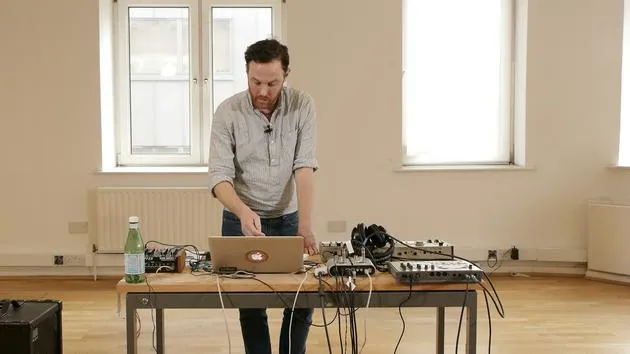
06. Using an external instrument
3:27
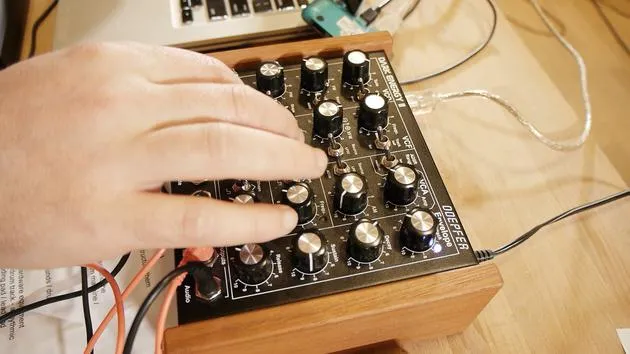
07. Creating the bassline
11:05
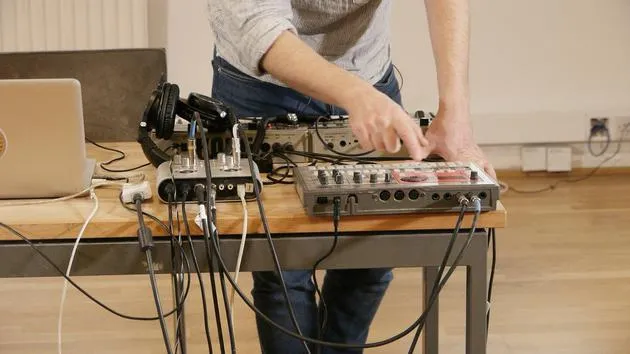
08. Adding one more rhythm part
2:50
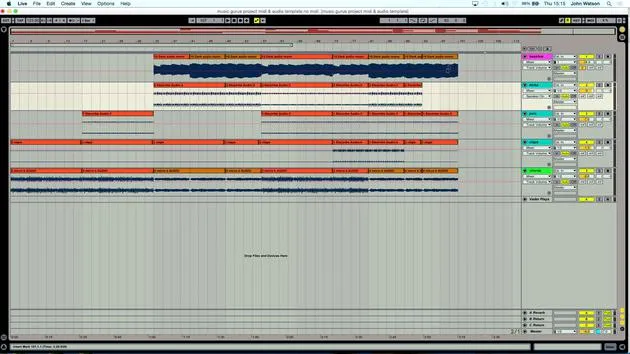
09. Premixing & session view
9:59
10. Song structure & arrange view
8:47
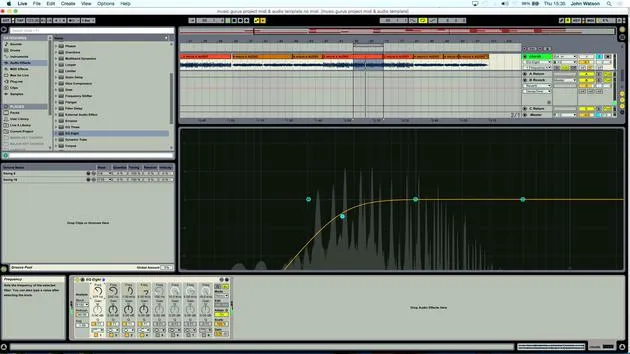
11. Mixing EQ and compression
7:37
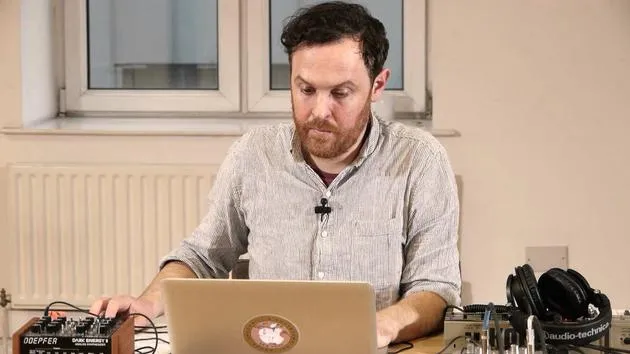
12. Spatial effects
4:40
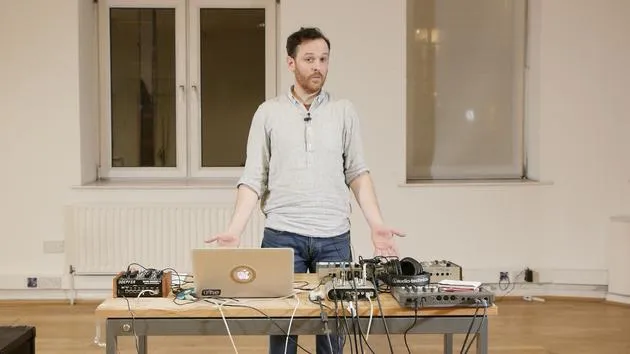
13. Modulation effects
5:26
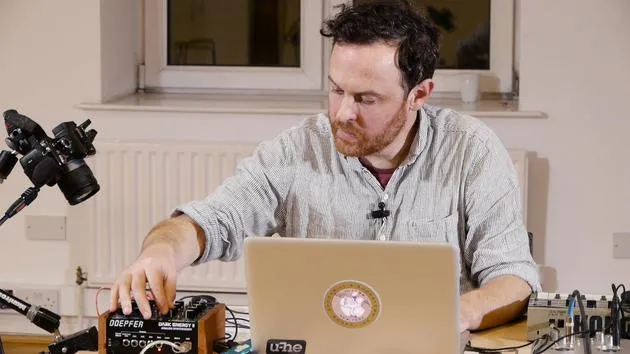
14. BONUS: Creating a bassline with Doepfer Dark Energy II
You are here7:26
Lesson transcript
Creating a Bass Line with Dark Energy
Hi there! My name is John Watson, and I've just recorded a track here at Music Gurus, one of my courses. In this lesson, I'll create a track from scratch in Ableton Live using three hardware devices.
Focus: Dark Energy and Bass Line Creation
In this little excerpt, I'll focus on using the Doepfer Dark Energy to create a bass line that works with one of my chords.
Generating Chords
- I've got a little MIDI part here, and I'm going to open this up.
- These are the chords that I generated to accompany my polyphonic synth (in this case, a MicroKORG).
Copying MIDI Clips
- Next, I'll copy the MIDI clips over to the Dark Energy MIDI channel.
- When I open this up, you can see a copy of all of the notes.
Monophonic Synthesis
What I'll point out here is that the Doepfer Dark Energy is a monophonic synth, so we can only hear one sound at a time.
- This means it won't play these chord notes.
- This is beneficial because I want to create a bass line, which ideally focuses on one note at a time.
- You don't often find many chords in typical bass lines.
Editing the MIDI Notes
- I'm going to grab the first two notes and remove everything except the root notes.
- You don't have to be exact with this. It's fun to play around, but I'll play it pretty by the book.
Raw Setting Playthrough
Now, it's going to play through on the raw setting that the Dark Energy has got at the moment.
- I have no idea what it's going to sound like, so I'll probably need to tweak it.
Adjusting Parameters
- Play Back: As I play back what we've got, you can hear that the notes aren't long enough.
- Add Sustain: I need to adjust a few parameters on the synth.
- First, I need to add some more sustain so that the notes play for the correct length of time.
- Shift Octave Down: It doesn't sound very bass-like at the moment; it sounds a bit buzzy and nasty.
Further Tweaks
- I'm going to take the filter frequency down to ensure only bass tones come through.
- Shift from a square wave to a sawtooth wave to achieve a deeper bass.
- I'll open up the filter a little bit and check the MIDI clip.
Adjusting the Bottom C
- The bottom C isn't actually playing because it's come too low for the allowed octaves on this synth.
- I'll shift it up an octave.
Aligning MIDI Notes
Some of the MIDI notes aren't aligned with the grid, so I'll adjust those as well to ensure they sound a little more organic.
Resonance & Glide:
- I can add a little bit of resonance for a vowel sound.
- To ensure a smoother flow of the bass notes, I'll add more release.
Final Adjustments
- I've got two filters: a high pass filter that adds texture.
- Overall, it's starting to sound really good!
Routing the Low Frequency Oscillator
To add a bit of fun, I can route the low frequency oscillator into the filter. Let's see what we get here!
Wow, there's lots of options to play around with, but I prefer just a straight-up bass here.
Recording the Bass Line
- I need to ensure my audio channel is receiving the Dark Energy bass, which it currently is.
- I'll set the corresponding channels correctly, ensuring that my monitor in button is enabled.
- Since I'm not recording any more MIDI, I'll record onto the audio track.
- As I hit record, I notice I'm clipping, so I'll back the volume down a little and come in again.
Monitoring Levels
Keep an eye on the volume levels; we don't want to hit the amber or red at any point.
- After making adjustments, I'm fairly happy with the recording now.
Finalizing the Process
- I'll switch the monitor back to auto and mute the MIDI part to avoid playback through the Dark Energy.
- The bass line is now recorded!
Conclusion
In the excerpt, you can hear how the sound is shaped as it's being recorded. That's how we record our bass line!
Feel free to check out my courses at MusicGurus.com. You can download this project file for free to see what I've done here.
Thank you for joining me, and I hope you enjoy the process!
14 lessons
1h 39m of structured video lessons
Advanced video features
Slow down, loop a passage, follow along
Mobile, tablet & desktop
Practise wherever you are
100% satisfaction guarantee
30-day money-back guarantee
Meet your guru
Meet your guru
After work experience with Depeche Mode and The Cure producer Dave Allen, John was inspired to study Music Technology in London. His music career took off after a successful signing to CookShop Records, releasing 9 singles and an album in 2007 that received rave reviews from Q, Uncut and Lowdown Magazine, plus radio play from XFM and Radio One.
John began training as an audio engineer at Bonafide studio in 2005, where he refined his talents, and later that year set up Jackdaw Recordings. He has collaborated with many successful artists, and in 2007 began playing for pop musician Patrick Wolf, performing at leading venues here in the UK and internationally - including The Astoria and Shepherds Bush Empire.
Based in his London studio, John now writes music, with two more releases on CookShop, does sound engineering for prominent artists, and creates sound design for TV ads, film, theatre and corporate video.
That rare mix of songwriter, producer and working studio engineer is exactly what John brings to his teaching. In Creative Composition & Production in Ableton Live and Creative Sampling & Production in Ableton Live, he shows you how he turns raw ideas into finished, release-ready tracks - the writing, the sampling, the sound design and the hands-on engineering know-how behind a professional record.







