



Répétitions et préparation

Lesson time: (8min 56sec)
Course preview
This lesson is part of the course Du studio à la scène : comment Faithless a créé son son live
Watch a preview of the full course below.
Lesson transcript:
Music Performance and Rehearsal Insights
It might be a military operation, but it's still involving actual people and emotions.
The Challenge of Communication
I personally found it quite difficult in rehearsals sometimes because I had written the music. I kind of knew where I wanted things to fall, but people didn't necessarily know that. Maybe I didn't express myself in the way that I should have done.
- People found me brusque in the early days, but it was more like:
- "I don't want to have 15 different decisions about this."
- "This happens here and this happens there," and people need to not take that personally.
It depends on the context: If you're in a band with the people who made the record or you're working with session musicians, you have to find a way to speak to people that gets them on board and makes them feel part of it.
In our band, it's a very odd mix of an autocracy and a democracy all at the same time. We want the musicians to bring their A game and their musicianship and knowledge. And they do, which is really exciting!
- "Oh my God, I love that. Play that again."
- And it wasn't on the record, it wasn't something I played.
It's about letting go of ego and doing what's best for the music, which is really important.
The Rehearsal Process
That's something you find out in rehearsal. The more you do it, the more you become like a well-oiled machine. It was very exciting when we reached a certain level of playing where even in rehearsal, familiarity with the song meant that everybody would relax. They weren't just trying to remember what bit came next; it just flowed.
- Key to Success: Practice, practice, practice!
Recording Rehearsals
Another important thing was to record the rehearsals and listen back to see what was working.
- It usually took us about three weeks to prepare for an arena run.
- The next level would be to do dress rehearsals and production rehearsals with everything that would happen during the show:
- Lighting rig
- Lasers
- Staging
- Risers that they build
It's very different from playing in a room that probably doesn't have much reverb. You're all close, and you can all see each other. Suddenly you put in a strobe, a laser, and a whole wall full of video screens, changing the way you feel.
Navigating the Chaos
You can get lost in the moment, thinking, "Oh my God, what bar am I on? Are we at the end of the song or the beginning?" Some of our songs have very long, repetitive sections.
It was really hard to keep your place in the song, which is why learning it and getting it right in rehearsal was crucial. Once you bring in production elements, it changes everything.
- There's this sort of nervousness that comes when all these things are firing off, altering your perception.
- It changes the way I hear music when I hear it with flashing lights going off while trying to remember what I'm doing.
Prepping for a Show
The way of prepping for a show was making sure you actually played the show in a rehearsal space. We'd go to places like Light Structures in Wakefield or a big film studio in Acton.
- You need enough space to hang a whole show, considering all the rigging and production you'd take on tour.
For example, in venues like Brixton Academy, having a very high proscenium arch allows you to put on a big show, but you really need to be inside that show to know how to respond as a musician.
Safety Considerations
Even the positioning of the lights matters.
- "Mate, that's just flashing so much. I can't see what sound I'm pressing or my keyboards."
- If there's a strobe in the drummer's face, it can be very disorienting for him.
We had a tech with epilepsy who actually had a fit. This highlights the importance of being aware that some people might have underlying conditions you know nothing about.
Suddenly the lights are going, and you realize it's dangerous.
Testing the Waters
We often did shows in less important places where critics wouldn't necessarily be. For example, we went to Thessaloniki, which had a great reception.
- It was also a place where we could tweak the show in front of a live audience, knowing that when we played at Wembley Arena, it would be amazing.
In a way, we deliberately played in slightly more obscure cities at the beginning of a tour to get the machine running. We knew that when we came into the full glare of the media in other countries, the show would be firing on all cylinders.
The Importance of Timing
It's crucial not to schedule your major show where critics would be writing about you at the start of the tour, straight out of rehearsals.
- Everything can change in front of an audience.
- You can see them getting engaged in something you thought might be a bit boring in rehearsals.
We often lengthened sections based on audience reaction, running it a bit longer, going back, and reprogramming.
A Responsive Show
Our show needed to be responsive. We used to create variations on the fly, adapting elements based on live feedback.
- "Sometimes as a musician, you're inside it, and it's very hard to make decisions."
You may love what you're playing, but getting lost in your own musicality can cause you to lose the audience's interest. Maintaining engagement throughout the show is vital.
Reflecting on the Performance
Different moods, tempos, and energies are important. You can be introspective and heartfelt, then shift to something punky and explosive.
However, it's essential not to be self-congratulatory, as that can read poorly to a crowd.
I tend to be hypercritical; I often only heard what was wrong with the show.
- After a performance, we could all get excited, but I would list things we could improve, which wasn't the right time to do it.
Tip: Save your pointers for later.
- If you notice things, bring them up the next day.
- Make notes or mental reminders to address concerns without being a downer immediately after the show.
Sometimes, you all have had an awful show and can vent together, but even then, timing matters.
- Over-criticism can drain the energy from the excitement of a performance.
I know that from bitter experience.
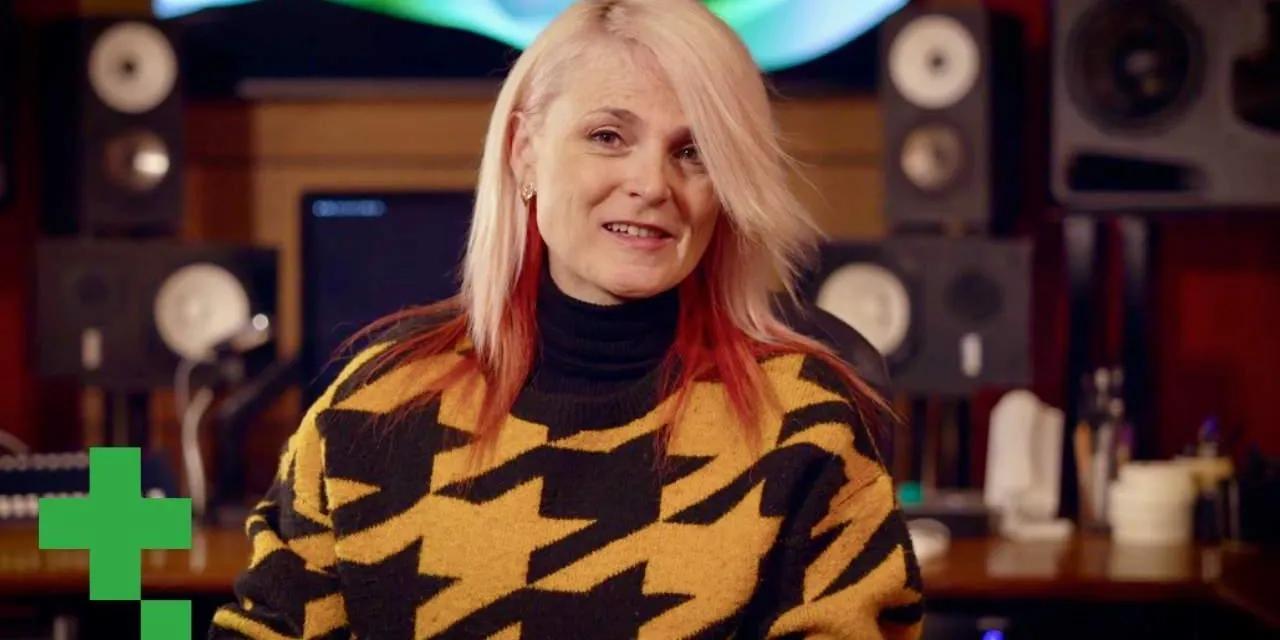
About the instructor
« Sister Bliss n'a jamais cessé d'écrire de la musique. C'est une compositrice accomplie pour le cinéma et la télévision, une DJ de club et une défenseure des industries créatives ». Billboard L'une des artistes de musique dance britanniques les plus à succès de ces 25 dernières années, Ayalah Bentovim, alias Sister Bliss, est la force musicale derrière Faithless. Avec l'emblématique chanteur Maxi Jazz et le producteur Rollo Armstrong, elle a formé Faithless : l'un des projets électroniques les plus marquants de sa génération, avec une carrière s'étalant sur plus de deux décennies, comprenant 8 albums (dont 3 numéro 1) et six singles dans le top 10. À ce jour, Faithless a vendu plus de 15 millions de disques dans le monde et s'est produit devant des millions de personnes à travers la planète, en tête d'affiche de festivals, de stades et d'arénas. Le groupe a collaboré avec des artistes tels que Jazzie B, Boy George, Cat Power et Dido, sans jamais se conformer et en naviguant avec aisance à travers un éventail éclectique de genres. Au fil d'une carrière de 25 ans qui l'a menée de la scène underground des clubs britanniques à des concerts à guichets fermés dans des arénas et des têtes d'affiche de festivals à travers le monde, Sister Bliss est devenue l'une des artistes électroniques féminines les plus anciennes et les plus influentes de la musique dance britannique. Elle arrive au lendemain de la sortie du premier album studio de Faithless en dix ans, le très attendu 'All Blessed', la lettre d'amour de Faithless à la musique électronique qui les présente sous leur meilleur jour. L'album a atteint la 6e place des charts et les singles, avec leurs remixes inédits, ont bénéficié d'un large soutien sur BBC Radio 1, Radio 2 et BBC 6, ainsi que sur Kiss FM et Capital. Multi-instrumentiste de formation classique, elle a également composé la musique de nombreuses productions pour la télévision, le cinéma et le théâtre. Parmi ses crédits figurent le film Knife Fight de 2012, avec Rob Lowe et réalisé par Bill Guttentag, deux fois oscarisé, des commandes pour Sex & The City 2, Chasing Amy, The Beach de Danny Boyle, A Life Less Ordinary, le film britannique acclamé The Hide, Crossing The Line et les séries télévisées primées aux BAFTA Life Begins (ITV) et The Poison Tree (ITV). Pour le théâtre, Bliss a écrit la musique de The Black Album et The Emperor Jones au National Theatre de Londres, et a composé une pièce originale pour le London Sinfonietta, interprétée au Fuse Festival, au Royaume-Uni. Elle a récemment tenu un rôle principal dans la grande émission de prime time de BBC1 'This is My Song', encadrant les participants et produisant leurs enregistrements finaux. En 2019, elle a sorti un nouvel album en collaboration avec Rollo et Dido sous le nom 'R PLUS' - 'The Last Summer', après un été bien rempli de têtes d'affiche en DJ set dans des festivals du monde entier, notamment à Bestival, Exit Festival, Glastonbury, Creamfields, Ibiza et au-delà. Son émission de radio et podcast hebdomadaire à grand succès 'Sister Bliss in Session' est diffusée dans plus de 100 stations et 43 pays à travers le monde. Elle a récemment présenté en tant qu'invitée l'émission acclamée de Gilles Peterson sur BBC 6 Music et remplace régulièrement Ana Matronic dans l'émission Dance Devotion sur BBC Radio 2. Elle a également présenté une série en 5 épisodes sur la station Scala Radio de Bauer Media, reliant musique classique et musique électronique, qui a remporté le prix Bronze aux New York Festival Radio Awards, face à 30 pays. Elle enseigne actuellement dans le cadre du master MA de Tileyard Studios, avec des modules sur la composition, la production et l'écriture sur commande commerciale, et accompagne individuellement des étudiants en master : le même savoir concret qu'elle partage dans Studio to Stage, où elle explique précisément comment Faithless a transformé ses disques en un spectacle live capable de remplir des stades. read more