



Jouer avec un chanteur
Avec
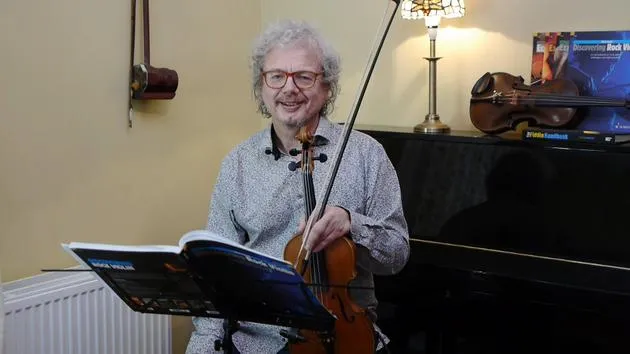
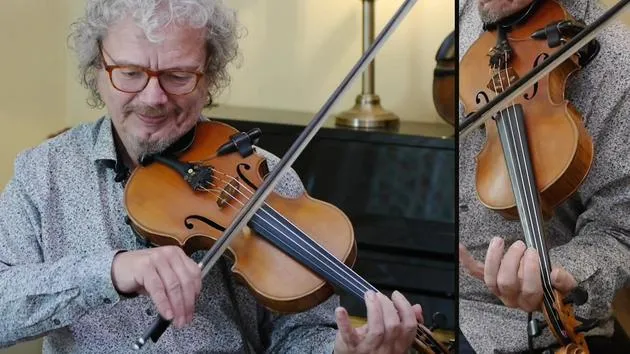
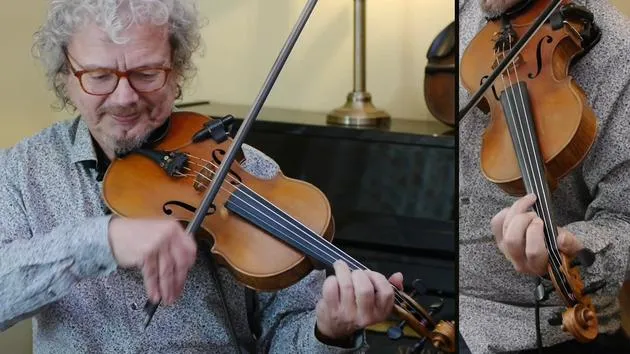
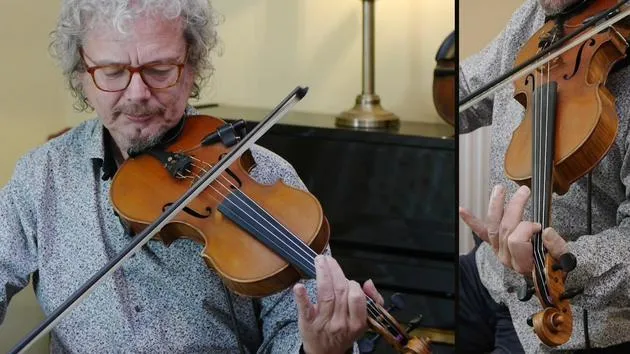
Chris HaighChris Haigh partage des stratégies concrètes pour jouer du violon aux côtés d'un chanteur, de la façon de combler les espaces entre les phrases vocales à la raison pour laquelle il vaut mieux éviter l'unisson.
© 2011 Schott Music Ltd, London

Le contenu du cours
28 leçons (2h 28min) · 1 gratuites
Transcription de la leçon
Working with a Singer
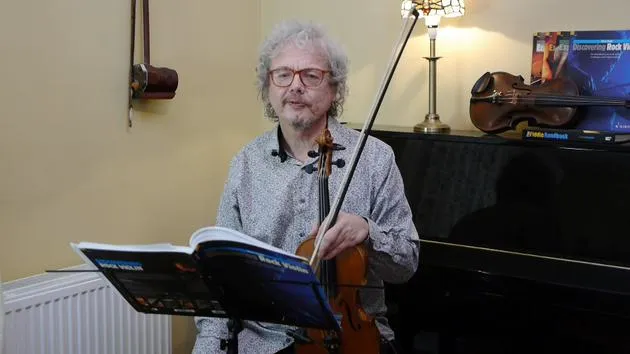
Hi. In this lesson, we're going to talk about working with a singer.
Understanding the Conflict
Now, no matter what kind of band you're in, if you've got a singer in the band, then there's a potential conflict between what you want to do and what the singer wants to do. You have to find various successful strategies for navigating this.
- The singer wants to be the center of attention.
- They want to be at the front and do not want you stealing the spotlight.
- To succeed as a band, you need to find ways around this problem.
Example Melody
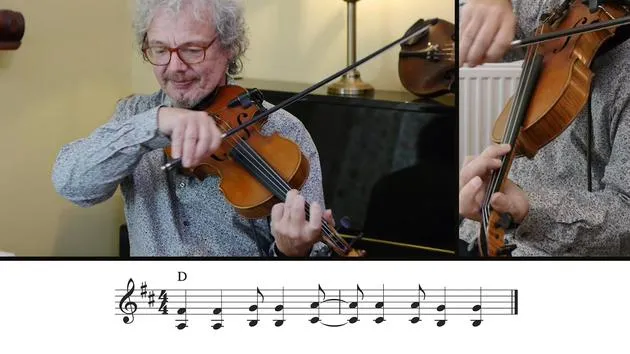
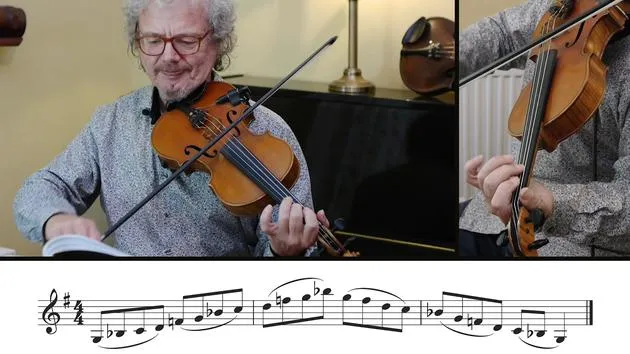
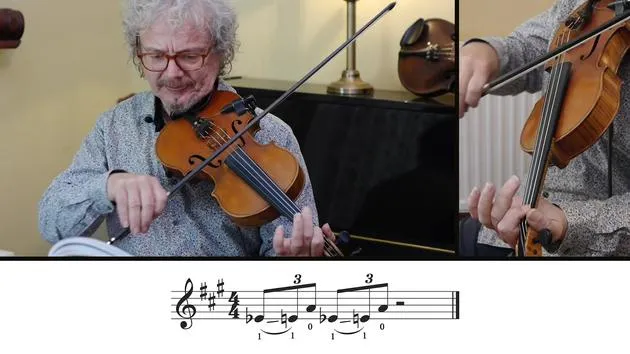
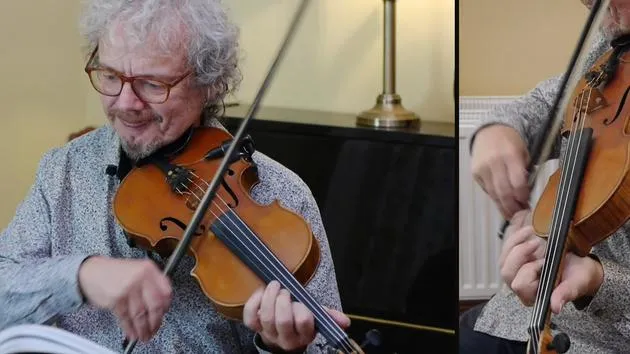
We're going to use an example of a simple little melody where the vocal line is taken here by a keyboard. So just have a listen to this.
Unison Playing
The simplest and most unimaginative approach a violinist could take is to play in unison with the vocalist. Generally, this is not something I recommend for a few reasons:
- Chances are, one of you is going to deviate slightly from the melody.
- If you're playing separately, this is not a problem. But if you're in unison, it's a big problem.
- One of you might be slightly out of tune (and it'll always be the singer).
If you have two things going in unison and one is out of tune, you're both going to sound bad. You will be blamed by the singer, and you will blame the singer. Thus, unison has its place occasionally, but it should not be your general strategy.
Successful Strategies
Playing in the Gaps
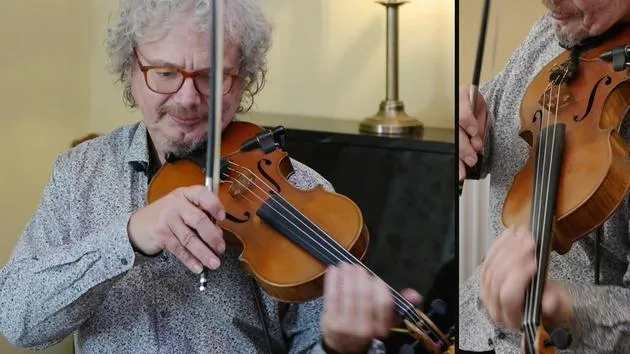
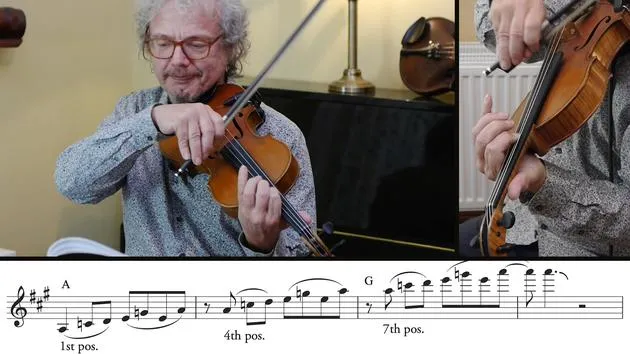
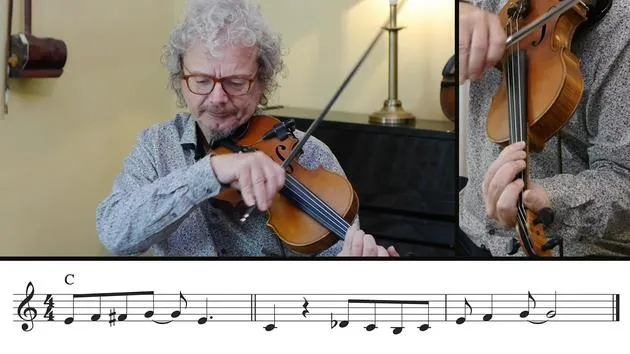
Probably the simplest successful strategy is to play in the gaps between the singer's phrases. Let me give you an example of that.
- Listen for the ends of those phrases.
- Come in quickly after the phrase ends.
- Be snappy about coming out when the vocal phrase starts again.
Repeating a Hook
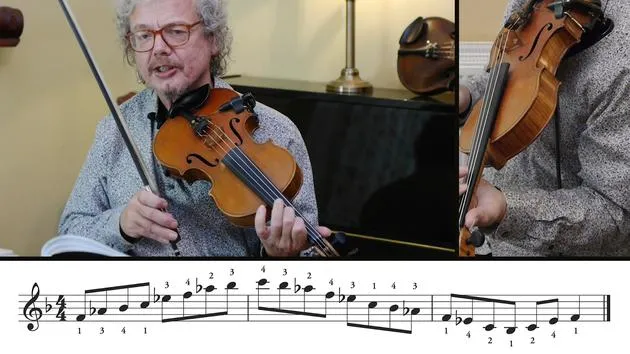
Another approach is to find a little hook or melody that you can repeat in those gaps. Let's try that.
- This method works well, but it might not always be effective if the chord sequence is complex.
- It's good to have some flexibility.
Consider a mixture of the two: use a similar phrase, but alter it slightly as you go through.
Longer Lines in Vocal Phrases
You don't always have to stop when the singer is singing. You can play long, fairly low lines during the vocal phrases and become busier in the gaps. Let's try that out.
Playing Harmony
Another approach is to play harmony with the singer. This helps alleviate a couple of problems:
- If intonation is not exact, being in harmony is less problematic than unison.
- Slight alterations to the melody are again less of an issue.
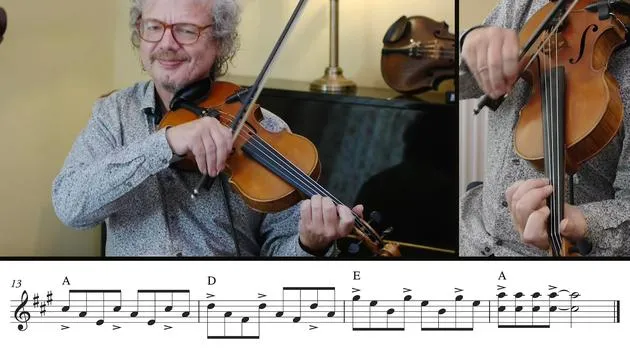
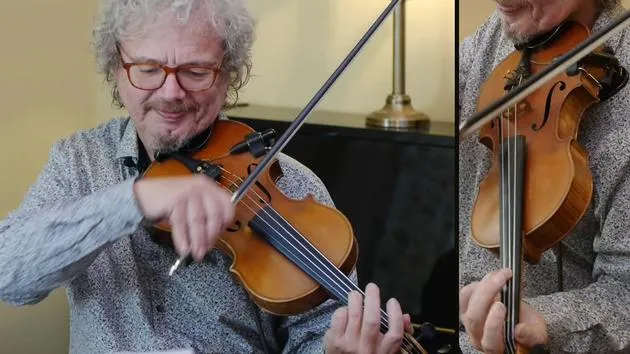
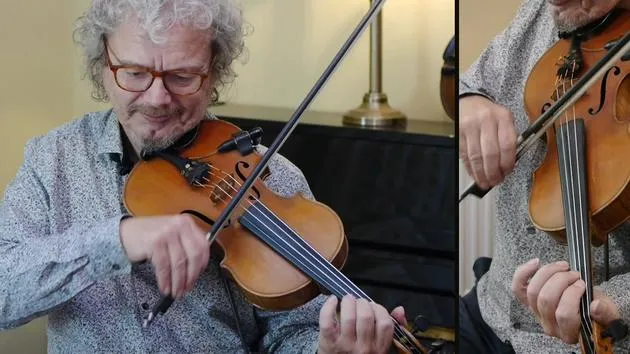
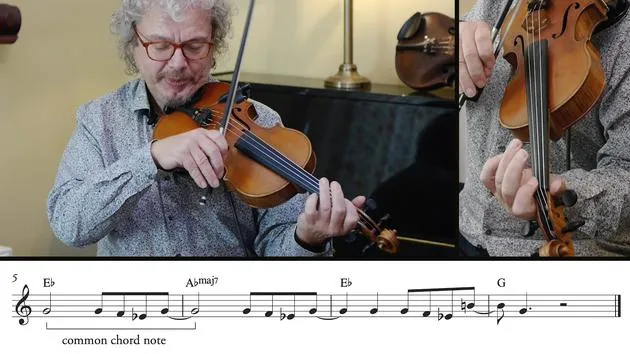
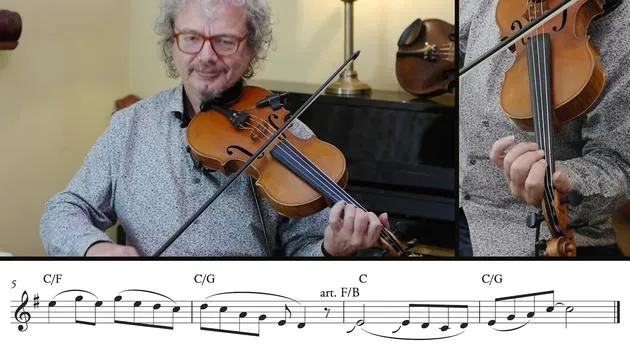
Let's try playing a third above the melody line.
- On one note, I didn't follow an absolute harmony. In bar six, the melody note is a G, and the harmony would have been a B. However, because it's a C chord, I played a C note (this is the major seventh note I was avoiding).
- It's important, when harmonizing, not to mechanically follow the harmony all the time. Be aware of what the chords are doing and what notes might not be appropriate.
Mixture of Strategies
Now let's try a mixture of harmonizing and doing improvised fills.
Conclusion
That is a series of different strategies you can use when working around a singer.
It's crucial to understand all of them and to use them to some extent. You may find yourself, as I have over many years, playing the same songs with the same singers countless times.
If you are playing the same part every time, you'll likely get bored.
- Always try to find new ways of backing without annoying the singer or the audience.
- You'll discover you can play the same song repeatedly without losing interest.
Assignment
Your assignment for this lesson is to find one or two songs from other sources that feature just a singer and a very simple backing (maybe just guitar or piano).
Try to work out, using these different strategies, the kinds of parts you could play in that song.
28 leçons
2h 28m de leçons vidéo structurées
Fonctions vidéo avancées
Ralentissez, bouclez un passage, suivez la partition
Mobile, tablette et ordinateur
Pratiquez où vous voulez
Satisfaction garantie à 100 %
Garantie remboursement 30 jours
Rencontrez votre guru
Rencontrez votre guru
Chris Haigh est violoniste professionnel depuis 25 ans et possède une expérience dans de nombreux genres. Il a joué sur plus de 75 albums, aux côtés d'artistes comme Alison Moyet, Bob Geldof, All About Eve, Michael Ball, David Soul, Oumou Sangare, The Quireboys, Riverdance, Morcheeba, James Galway et Steps.
Il a joué du swing et du jazz avec The Kimbara Brothers, Diz Disley, Le Jazz, The Hot Club of London et les Quecumbar Allstars, et dirige un ensemble de swing soviétique à sept musiciens, The Kremlinaires.
Chris donne des cours et des ateliers sur la technique du violon jazz et a enseigné le violon jazz aux universités de Middlesex, Brunel et Newcastle ainsi qu'au Truro College. Parmi ses ouvrages figurent neuf livres consacrés au violon, dont The Fiddle Handbook.
Il anime également Fiddling Around (fiddlingaround.co.uk), sans doute la source d'information sur le violon la plus complète et la plus consultée du web.







