



Rythme de base 2
Avec
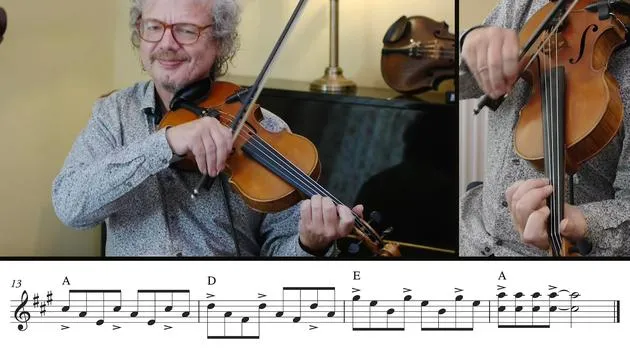
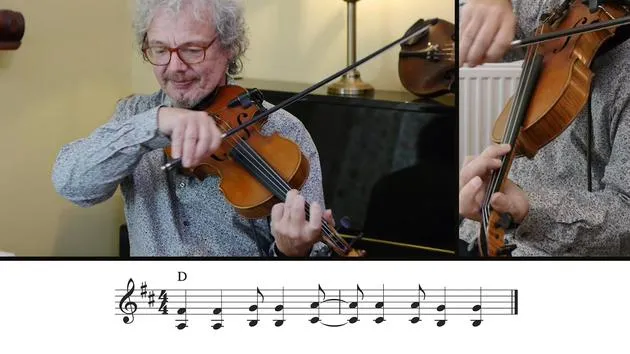
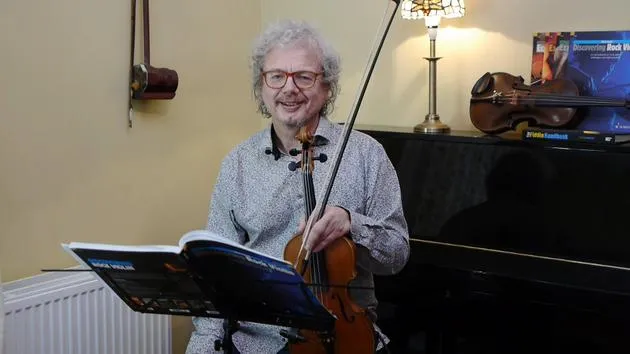
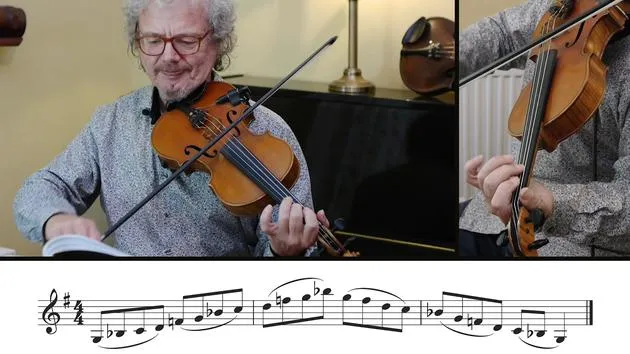
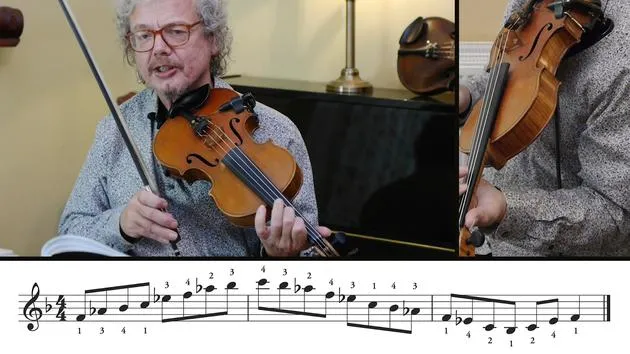
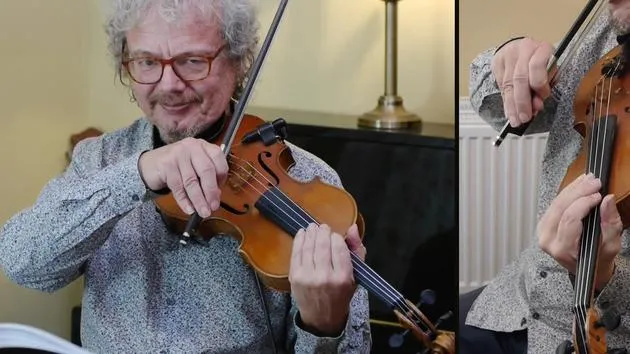
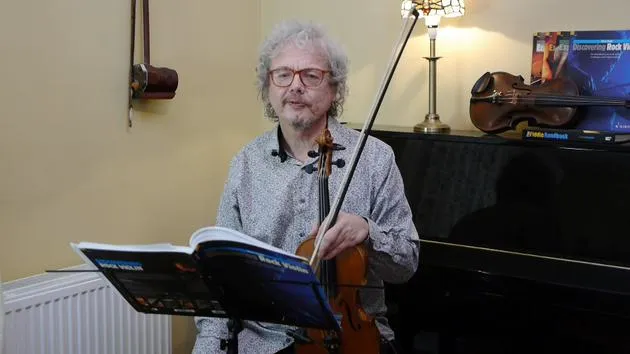
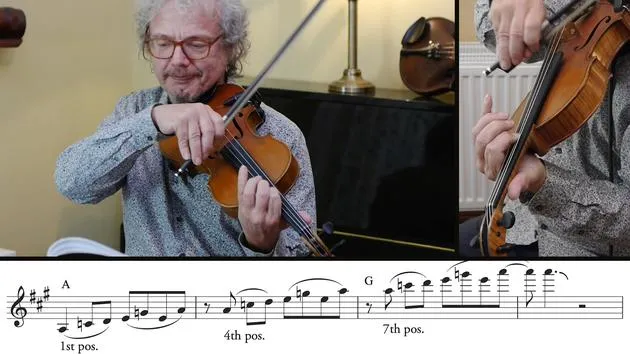
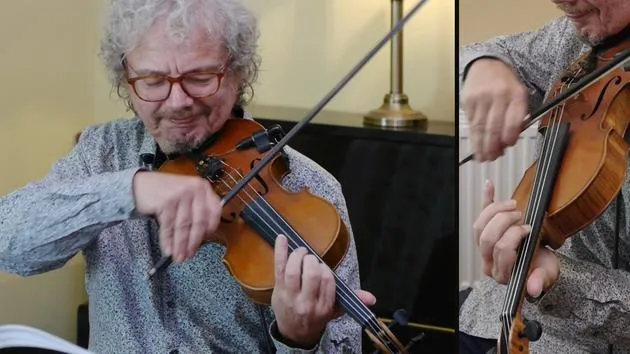
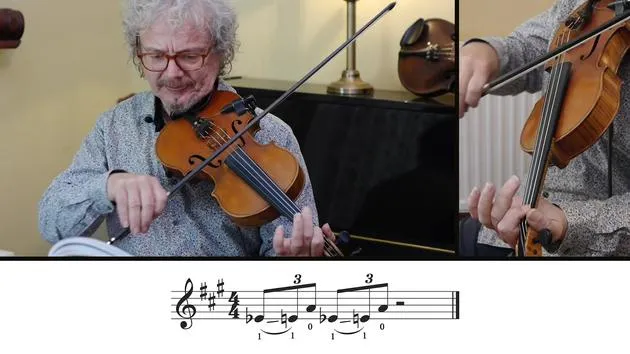
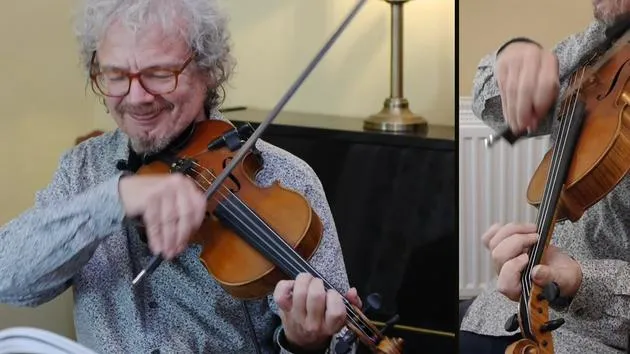
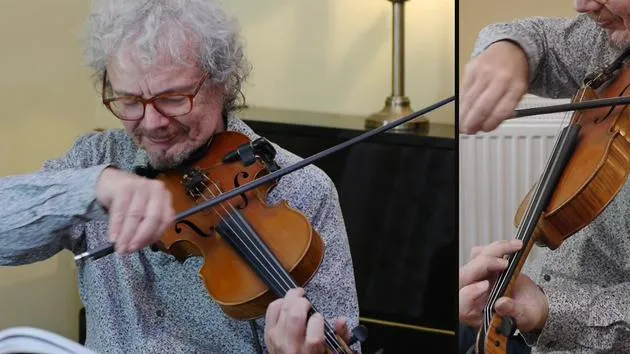
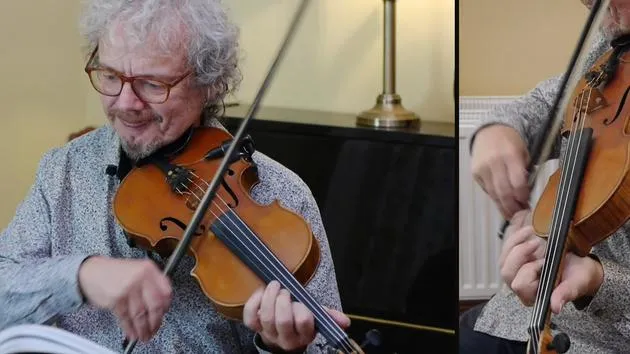
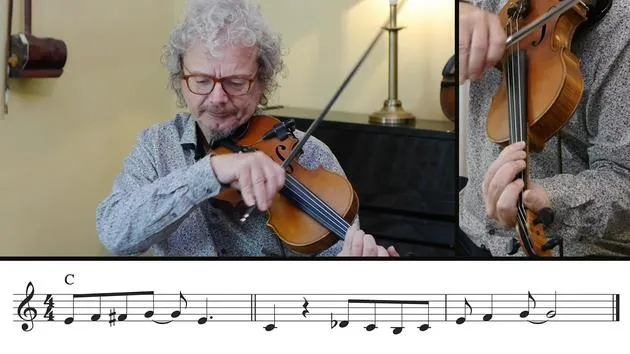
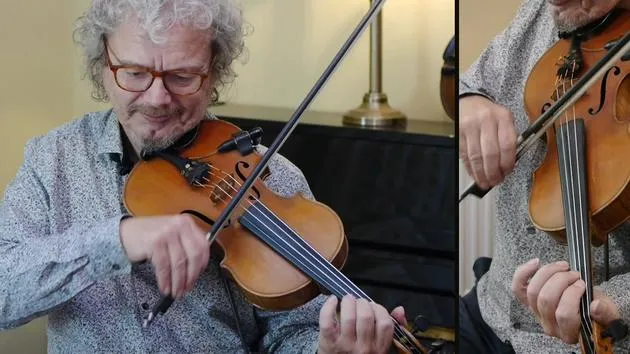
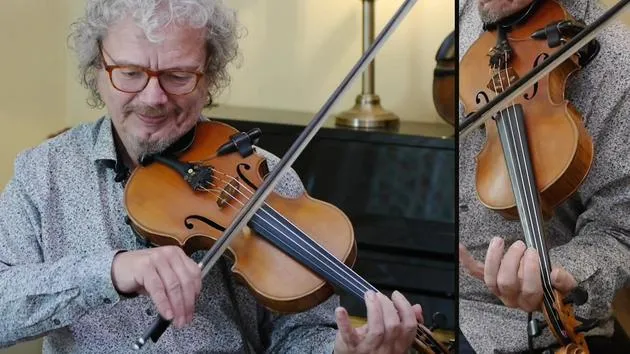
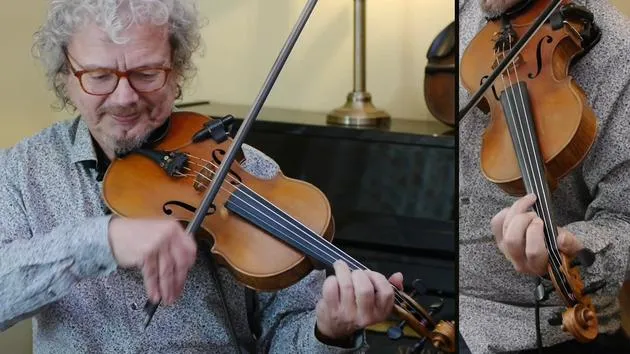
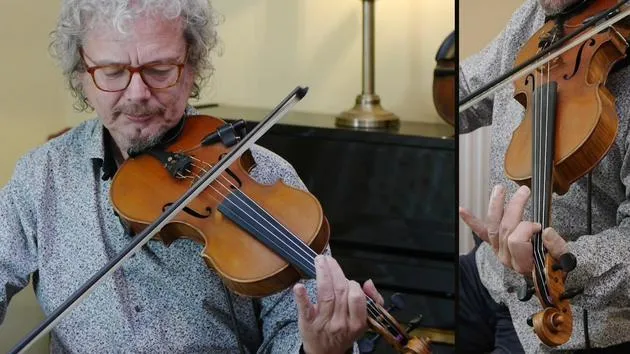
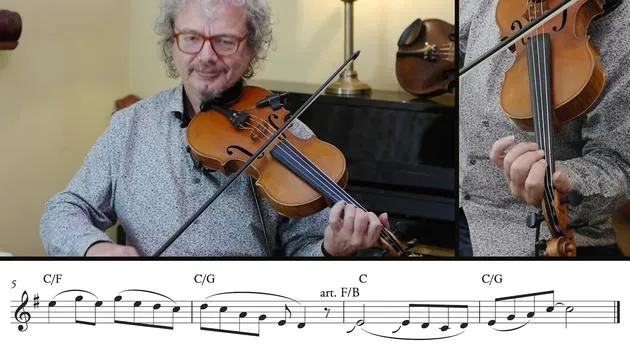
Chris HaighChris Haigh applique le rythme de base aux doubles cordes, en montrant quelles paires de notes -fondamentale, tierce et quinte- composent l'accord de La d'une corde à l'autre.
© 2011 Schott Music Ltd, London

Le contenu du cours
28 leçons (2h 28min) · 1 gratuites
Transcription de la leçon
Lesson: Exploring Double Stops and Chord Patterns
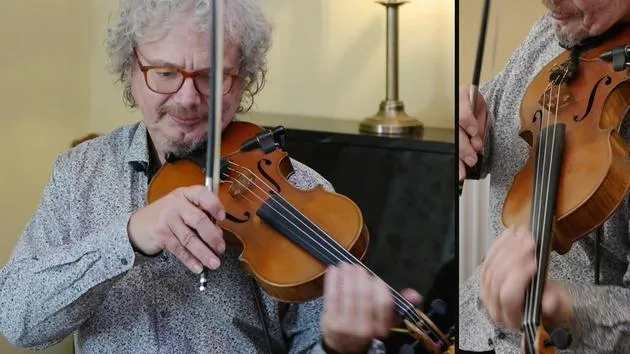
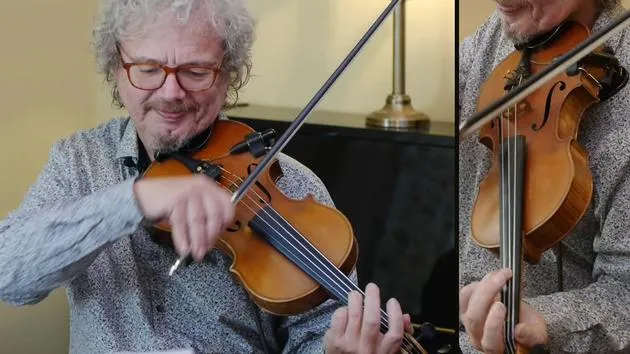
In this lesson, we're going to continue with basic rhythm, but this time we're focusing not just on single notes, but on double stops, or two notes at a time. This requires experience in knowing which two notes make up a chord.
Understanding the Chord of A
Let's take the chord of A as an example. We have various double stops that allow you to play parts of an A chord:
- Root and Fifth
- Third and Fifth
- Fifth and Root
- Fifth and Third
- Root and Third
For all of these, you're playing different combinations of root, third, and fifth on alternate strings. It's essential to be familiar with all these combinations. The ideal situation is to know that you're in the key of A, think of one note, and automatically recognize the adjacent notes that complete your chord.
Just like a guitarist recognizes multiple inversions of an A chord, you need to learn two-note inversions for each chord.
Moving to Other Chords
Now, let's apply the same principle to the chord of D and the chord of E.
Learning Strategy
To learn this effectively:
- Learn Physically: Practice these exercises until you feel comfortable with them.
- Understand Theory: Know how to identify the root, third, and fifth so you can work it out for any chord.
- Final Execution: Aim to play without having to think about it.
The difference between learning and executing without conscious thought can vary from hours to years.
Setting Goals
When learning the violin, it's important to set realistic, individual goals for how long things will take. Familiarizing yourself with all the double stops for an A chord, for example, should ideally take a week or a month. If you think it will take six months, you might be being lazy. If you think it can be done in an hour, you're likely overly optimistic.
Practicing Chord Sequences
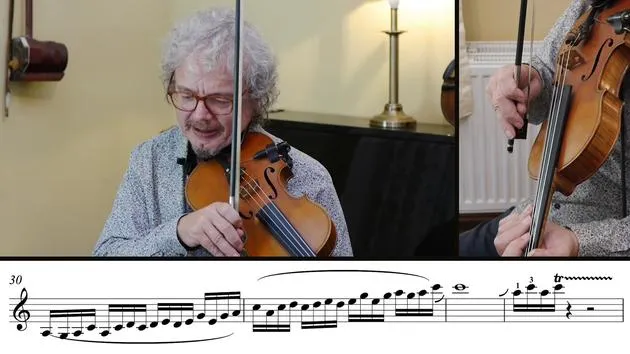
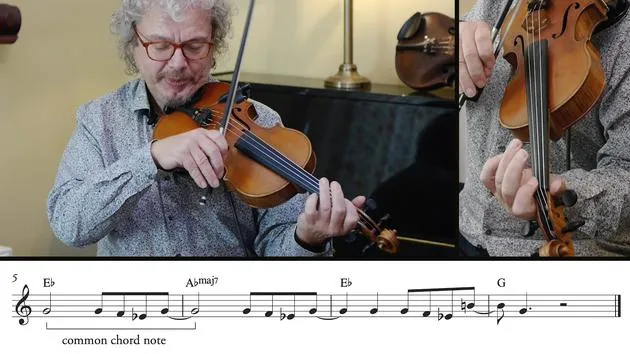
Let's now play over a chord sequence and practice what I call broken chords, which are parts of arpeggios or these two-note patterns.
We'll go through this sequence four times, each time approaching it differently in terms of note choices:
- Choose a Different Pattern: For example, use one pattern for the first half of the verse, another for the second half, different for the chorus, and yet another for the middle eight. This structure keeps it interesting for both you and your audience.
Economical Movement Between Chords
When moving from one chord to another, it's best to select adjacent pairs of notes.
For instance, transitioning from an A chord to a D chord can be done economically by:
- Using your first and second fingers for A
- Following with your second and third fingers for D
Avoid making large jumps; always look for the easiest way to shift between chord shapes.
Two Patterns for Each Chord
Here's a method for working through the three chords A, D, E, A, where you will use two different patterns for each chord:
- For A, emphasize strong notes (root, third, fifth).
- For D and E, maintain that emphasis but introduce a suspension with weaker notes before returning to the strong notes.
Experiencing Tension and Release
This creates an interesting dynamic where you build tension and then relieve it. Think of the guitar part in "Honky Tonk Woman" by the Rolling Stones, which incorporates this concept of chord suspension.
Let's practice this with the chords:
D - G - A - D
Now, we can expand by moving:
- Two Steps Forward: Instead of moving one step back, let's practice moving two steps away from the original pair of notes.
Broken Chords and Pizzicato
Now let's transition into doing some broken chords. Finally, we can explore this concept through pizzicato.
Assignment Overview
In this lesson, we've explored various approaches to playing simple backing music using not just single notes, but different combinations of two notes comprised of roots, thirds, and fifths.
Your assignment is to:
- Review the three exercises we practiced.
- Work out all the different two-note variations for A, D, and E.
- Ensure that you understand the different notes and can identify them independently.
- Explore additional chords and find similar sets of combinations.
- Over weeks, months, or even up to a year, aim to reach a point where you can play all possibilities for common keys without thinking about them.
28 leçons
2h 28m de leçons vidéo structurées
Fonctions vidéo avancées
Ralentissez, bouclez un passage, suivez la partition
Mobile, tablette et ordinateur
Pratiquez où vous voulez
Satisfaction garantie à 100 %
Garantie remboursement 30 jours
Rencontrez votre guru
Rencontrez votre guru
Chris Haigh est violoniste professionnel depuis 25 ans et possède une expérience dans de nombreux genres. Il a joué sur plus de 75 albums, aux côtés d'artistes comme Alison Moyet, Bob Geldof, All About Eve, Michael Ball, David Soul, Oumou Sangare, The Quireboys, Riverdance, Morcheeba, James Galway et Steps.
Il a joué du swing et du jazz avec The Kimbara Brothers, Diz Disley, Le Jazz, The Hot Club of London et les Quecumbar Allstars, et dirige un ensemble de swing soviétique à sept musiciens, The Kremlinaires.
Chris donne des cours et des ateliers sur la technique du violon jazz et a enseigné le violon jazz aux universités de Middlesex, Brunel et Newcastle ainsi qu'au Truro College. Parmi ses ouvrages figurent neuf livres consacrés au violon, dont The Fiddle Handbook.
Il anime également Fiddling Around (fiddlingaround.co.uk), sans doute la source d'information sur le violon la plus complète et la plus consultée du web.







