



Les "chemins jumeaux du destin"
Avec
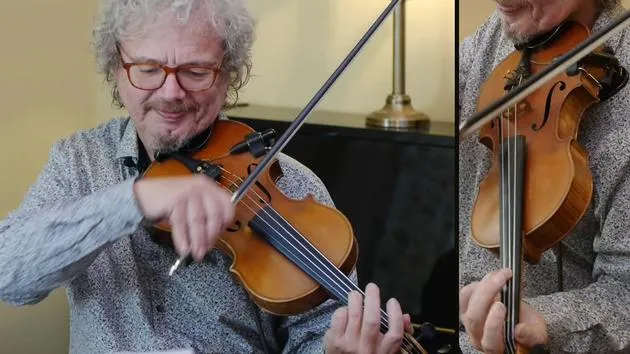
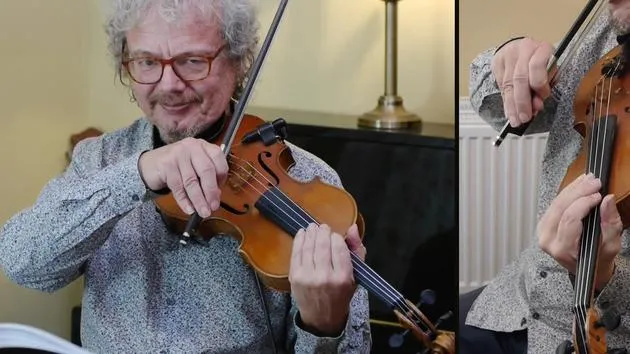
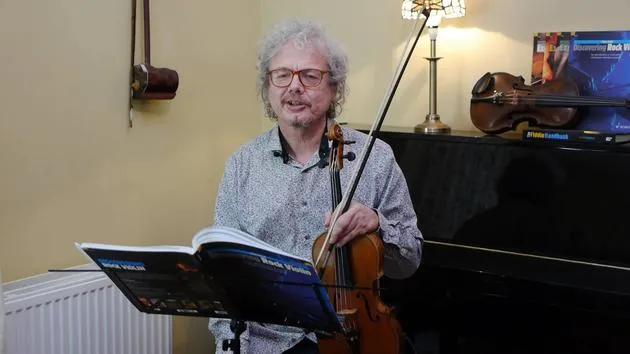
Chris HaighChris Haigh construit la 'gamme de sixtes' au violon rock, en associant chaque note de la mélodie à une harmonie une sixte en dessous pour harmoniser toute une gamme.
© 2011 Schott Music Ltd, London
Le contenu du cours
28 leçons (2h 28min) · 1 gratuites
Transcription de la leçon
Music Lesson: The Twin Paths of Destiny
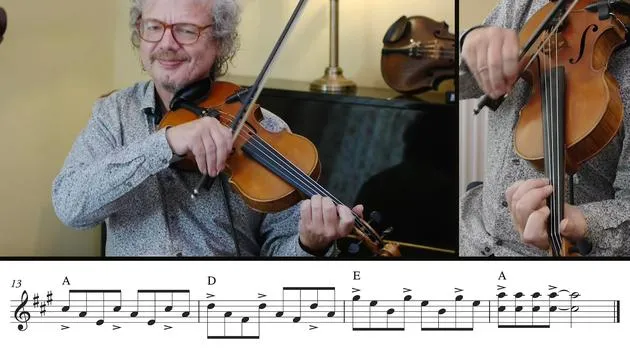
In the last lesson, we looked at the idea of playing two notes per chord. For example, we started with an A chord, then extended that to an adjacent pair and then to another adjacent pair.
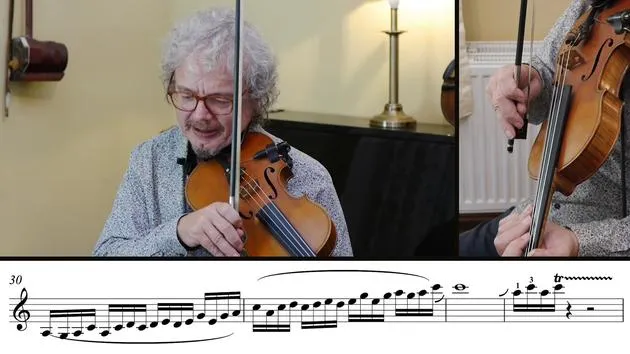
What this leads to is, in fact, a whole scale of harmony.
Understanding the Scale
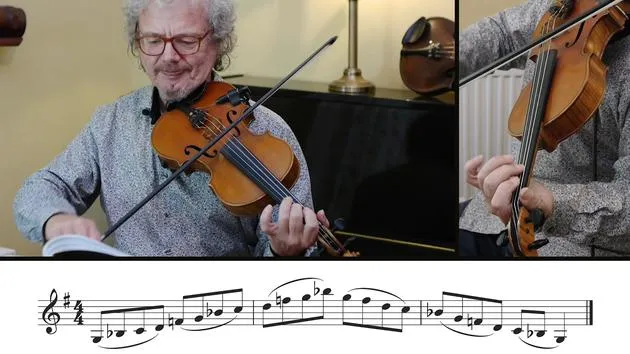
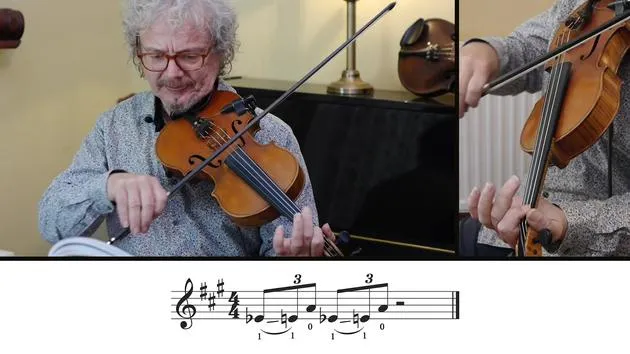
For the chord of A, you could have:
Now, with this scale, we have a melody note, which is the upper of the two notes. So that note, for example, is:
- The easiest harmony you can get for that is always a third above, which in this case will be an E.
But if the harmony is above, then that will dominate, and we don't want it to dominate. So we place that below.
- The harmony is a third above but stuck a third below, creating an interval of a sixth.
One name for this scale is the scale of sixths, which is quite hard to say and isn't very rock. So, because this is such an awesome, powerful scale, we're going to call this the Twin Paths of Destiny, which I think is more suitable for a rock violinist to learn.
The Twin Paths of Destiny
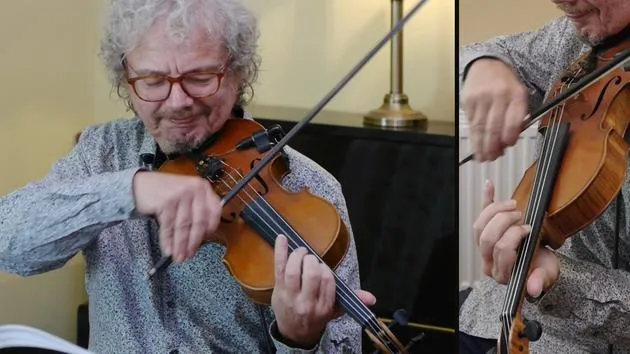
The Twin Paths of Destiny is the automatic harmony that you can get by learning this finger pattern. Let me give it to you again. If you spend two or three weeks learning that scale, it's going to pay off big time in the long run, believe me.
Practicing with Changing Chords
Let's hear how that scale sounds, not just played over an A chord but over changing chords.
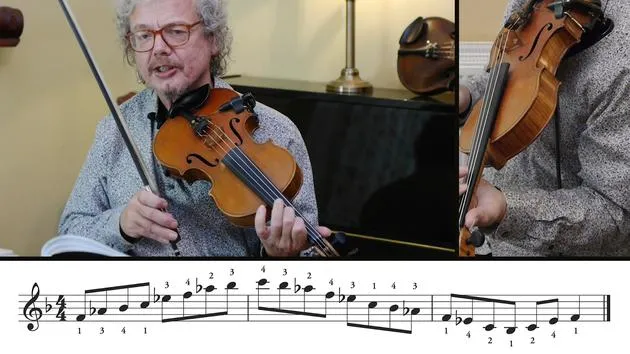
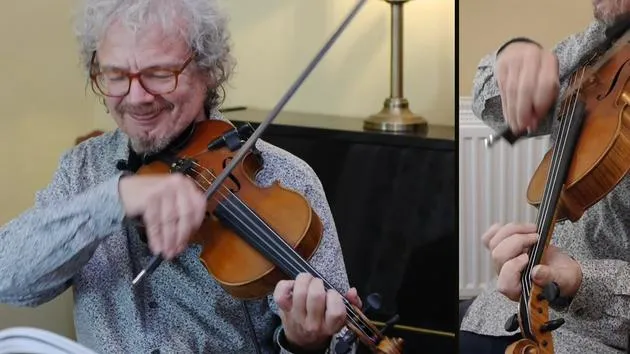
What we need to do next is learn it not just in one key, but in all the keys. I'm going to give you B flat, and then we have a whole lot of others to learn, but I'll just give you the B flat:
- Notice that when we do this kind of scale, we're not necessarily starting on the root and we're not necessarily finishing on the root.
- However, I do like to end the scale by finishing on something that sounds like an ending.
The beginning doesn't have to start on a B flat note at the bottom. In fact, we're starting this one on an F note with an A under it.
Let me just give it one more try:
Once you've memorized that, then whatever note you happen to be playing in that key, you will automatically be able to find the note that's going to harmonize with it.
If you want to go up and down two or three notes, the harmonies will follow properly. However, it isn't something you can work out in your head quickly enough. Hence, you need to spend a lot of serious time practicing this.
Moving Smoothly Between Chords
Another step in this journey is to move smoothly from one chord to the next. Rather than just ignoring the chord changes, we want to move.
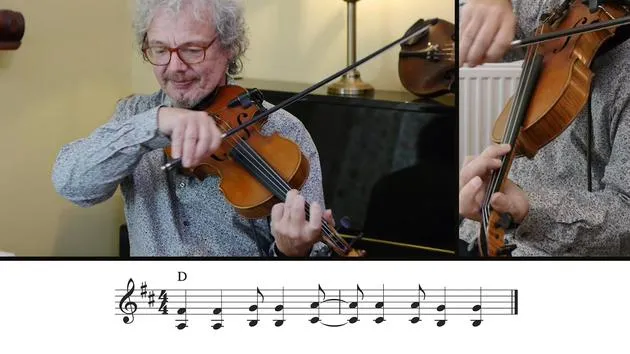
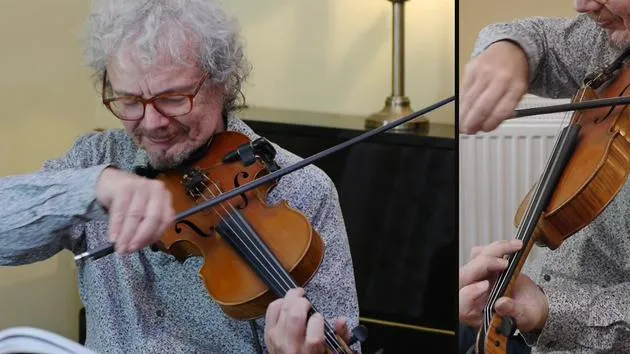
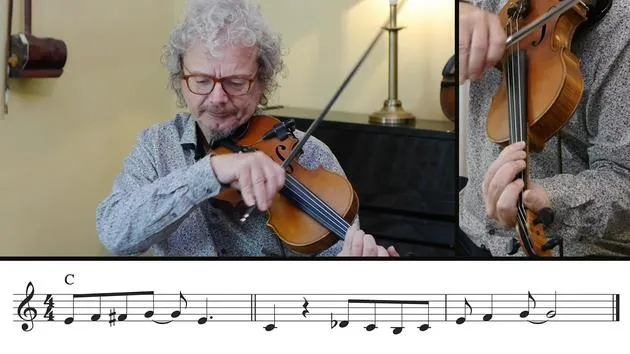
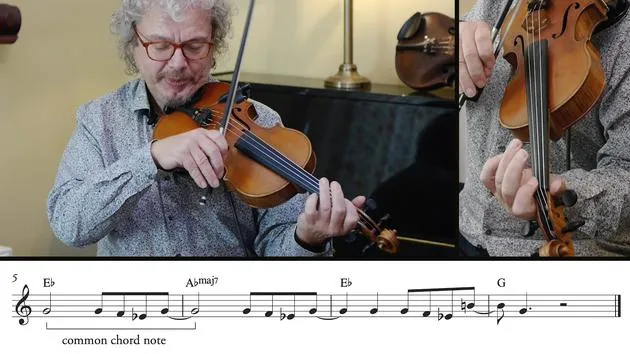
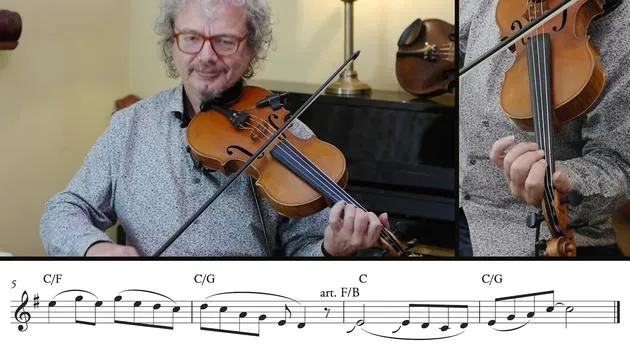
For example, moving from C to F to G and back to C, we might have something like this:
- We're using different parts of the scale to have a target note and to move toward that note, so we're moving smoothly with the chords.
The Weakness of the Twin Paths
Now, every superhero has to have a weakness. With Superman, it was kryptonite. With Achilles, it was his heel. Unfortunately, the Twin Paths of Destiny is not the all-powerful creature that we hoped it might be.
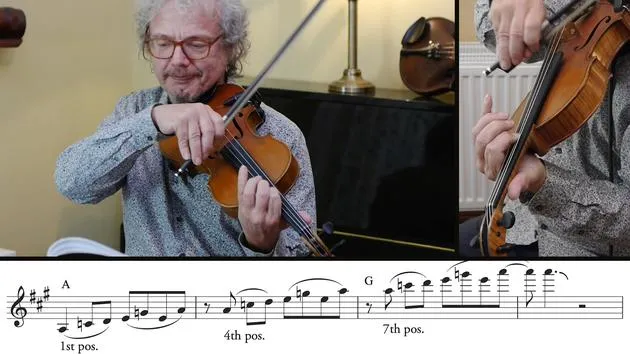
Let's just play a little lick and see if we can demonstrate what it is. You can probably hear that when we play that note, the C sharp, it is a major seventh, which is not a rock sound.
Whereas, a flattened seventh is. Our mighty Twin Paths of Destiny will always fall down whenever that note appears.
We have to take evasive action if that is going to happen. Let me play you a lick where we flatten the seventh:
That sound is so much better than the previous one!
So, we're no longer sitting on a lounger by the pool; we are now spitting into the pool and sipping a double whiskey instead of a pi?a colada. The flattened seventh is very important, and we'll be talking a lot more about it.
Here's another example of the same kind of thing played up an octave. Again, we are going to flatten that seventh, and then down an octave, that's over a C.
Summary of Learning
What we've got now is a whole load of different ways of playing more than one note at once. Effectively, we have a low-budget string section.
I've been asked on many recording sessions to provide what is effectively a low-budget orchestra. People often have in mind a kind of string quartet backing like in Eleanor Rigby, that amazing sound of the pulsing strings.
You can very effectively use these double stops and the Twin Paths of Destiny to achieve this kind of sound.
Assignment for This Lesson
- Learn the Twin Paths for the following chords: C, D, A, and E.
- Work out three-note patterns that are included within each of those Twin Paths.
- Choose a few songs from elsewhere and try to work out ways of moving with the Twin Paths from chord to chord, as we did in the previous example.
See you in the next lesson!
28 leçons
2h 28m de leçons vidéo structurées
Fonctions vidéo avancées
Ralentissez, bouclez un passage, suivez la partition
Mobile, tablette et ordinateur
Pratiquez où vous voulez
Satisfaction garantie à 100 %
Garantie remboursement 30 jours
Rencontrez votre guru
Rencontrez votre guru
Chris Haigh est violoniste professionnel depuis 25 ans et possède une expérience dans de nombreux genres. Il a joué sur plus de 75 albums, aux côtés d'artistes comme Alison Moyet, Bob Geldof, All About Eve, Michael Ball, David Soul, Oumou Sangare, The Quireboys, Riverdance, Morcheeba, James Galway et Steps.
Il a joué du swing et du jazz avec The Kimbara Brothers, Diz Disley, Le Jazz, The Hot Club of London et les Quecumbar Allstars, et dirige un ensemble de swing soviétique à sept musiciens, The Kremlinaires.
Chris donne des cours et des ateliers sur la technique du violon jazz et a enseigné le violon jazz aux universités de Middlesex, Brunel et Newcastle ainsi qu'au Truro College. Parmi ses ouvrages figurent neuf livres consacrés au violon, dont The Fiddle Handbook.
Il anime également Fiddling Around (fiddlingaround.co.uk), sans doute la source d'information sur le violon la plus complète et la plus consultée du web.







