



Tierce bémol, septième bémol et power chords
Avec
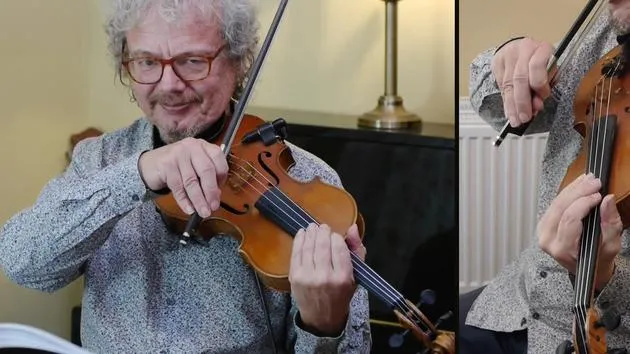
Chris HaighChris Haigh montre comment bémoliser la tierce et la septième (des notes qui sortent de la tonalité) donne à tes lignes de violon une véritable couleur rock, et comment les power chords viennent la renforcer.
© 2011 Schott Music Ltd, London
Le contenu du cours
28 leçons (2h 28min) · 1 gratuites
Transcription de la leçon
Music Lesson: The Importance of Flattened Thirds and Flattened Sevenths
Hi. In this lesson, we're going to talk about the importance of flattened thirds and flattened sevenths.
Major Seven: The Achilles Heel
Now, in the lesson where we discussed the twin paths of destiny, we identified the Achilles heel as what's called a major seven.
- In the key of G, it's that note which is the offending note.
- We found that by flattening it, we achieve a much more rock sound.
Rock Lick Demonstration
Let's remind ourselves of what a rock lick sounds like with a major seven.
"Now, that sounds pretty weird, but let's flatten the seventh."
And now it suddenly sounds rock. Although we're playing over the chord of G in the key of G, that different note, which doesn't belong in the key of G, is the one that gives it the rock sound.
Importance of Flattening the Seventh
We have also examined pairs of notes and how crucial it is to flatten the seventh again.
Example Lick in C
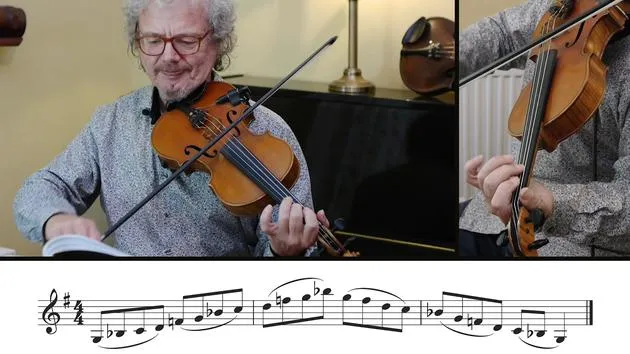
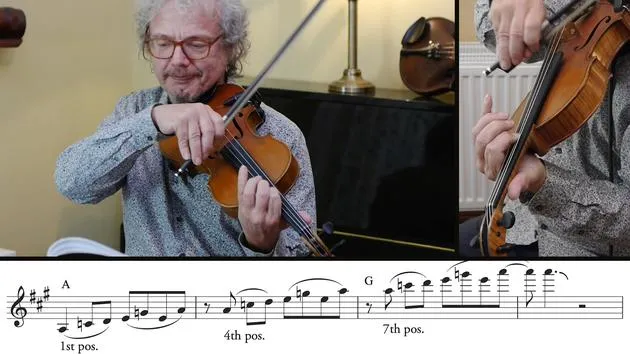
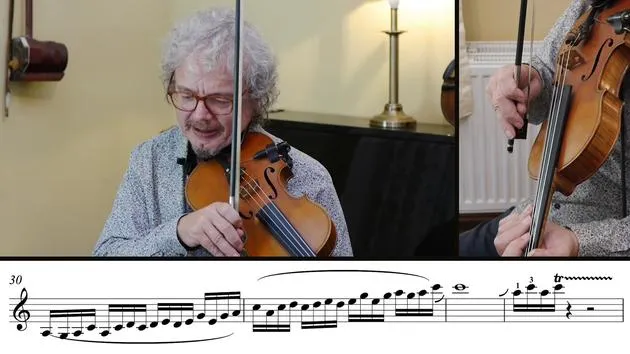
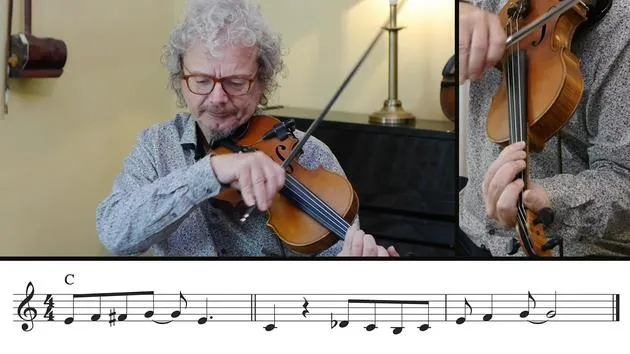
Here's a little lick in C where we're going to flatten that seventh:
- From here to here, as opposed to.
And here's the same thing in a higher register.
Limp Rock Licks
Now, we've already demonstrated how limp licks can sound, but I can't resist playing some more limp rock licks.
"So here we go. And finally."
So if there was a rock tribunal for crimes against rock, then those three would get me into serious trouble.
Transition to Flattened Thirds
To get myself out of trouble, I'm going to play the same three licks, this time with flattened thirds.
"And finally, I think I can walk free from that particular problem."
Now, we've talked about the flattened seventh. Let's look at the flattened third.
Flattened Third in G Major Chord
For a G major chord, one of the first rules that you'd learn in classical theory is that a G major chord has to have a major third.
- In rock, we often flatten that third, even while keeping a G major chord behind it.
Example Licks with Flattened Thirds
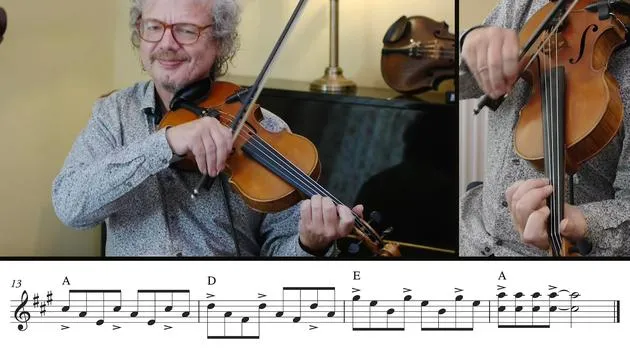
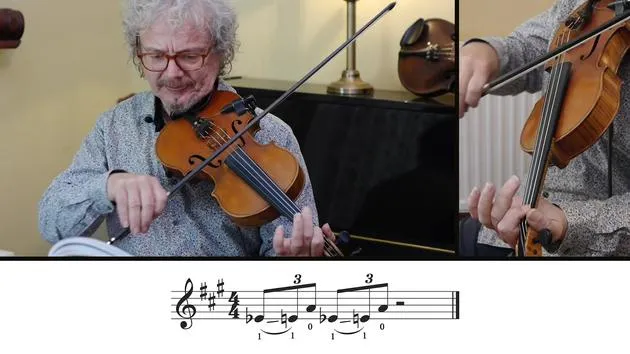
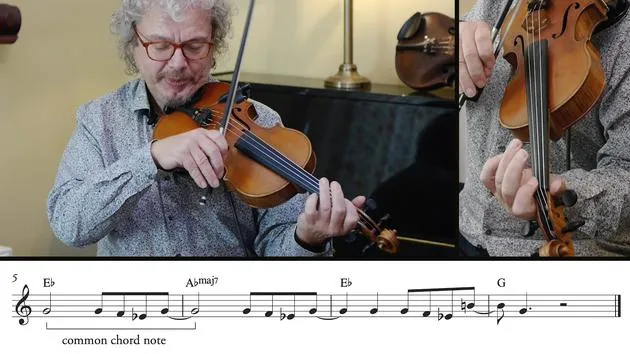
Here's a little lick which uses both a flattened seventh and a flattened third.
- And here's another one.
- And finally.
All of these had flattened thirds, and some of them had flattened sevenths as well. You can see how important it is to get those notes in there.
Conflict Between Major Chord and Flattened Notes
The conflict between the major chord and the flattened notes that we play in these kind of licks is a problem for guitarists in particular, and they have found two ingenious ways around it.
Power Chords
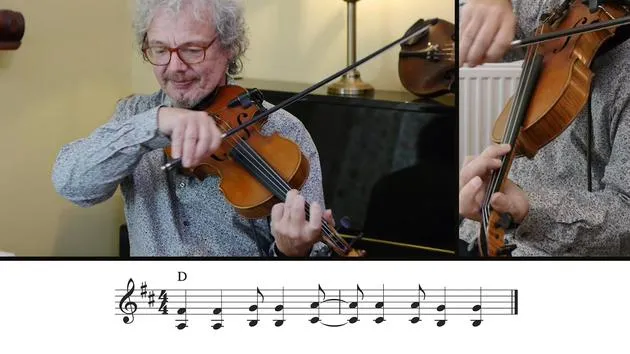
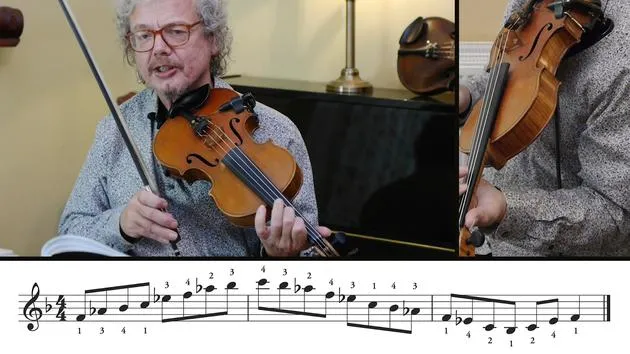
One solution is to play what's called a power chord, which consists of the root and the fifth and no third.
- This sidesteps the problem completely.
For example, if you play something like that, you've got a root and a fifth with no third in between, or that kind of thing. That's what's called a power chord, and guitarists use them all the time.
Fingering Technique for Fiddlers
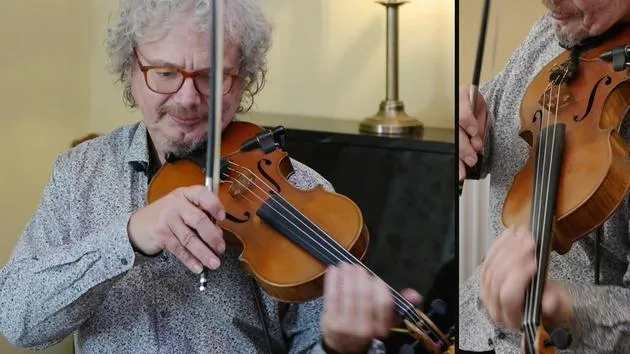
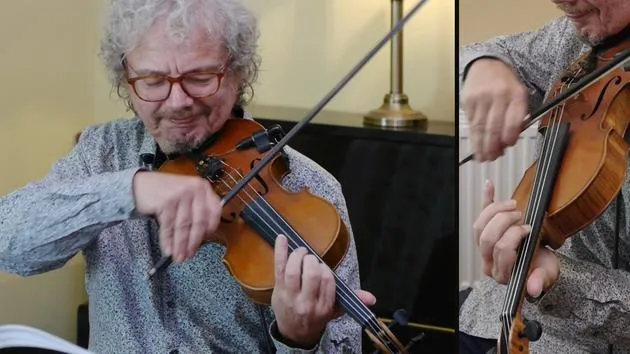
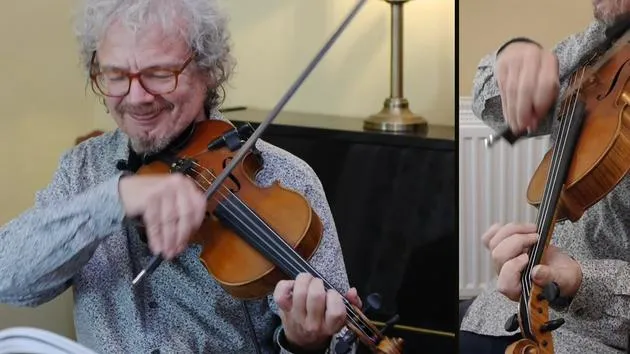
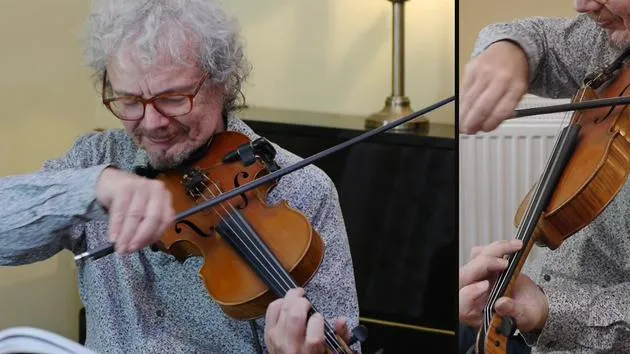
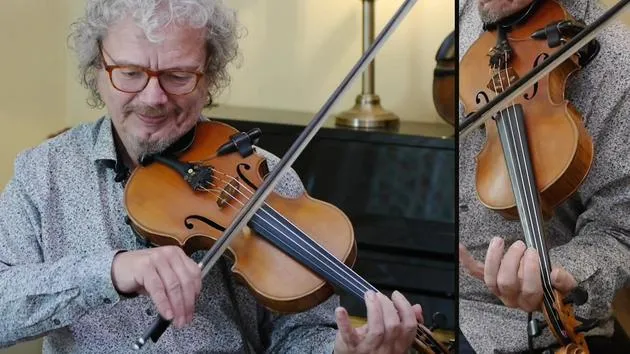
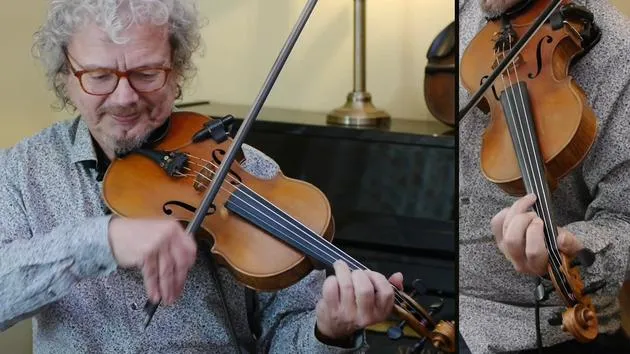
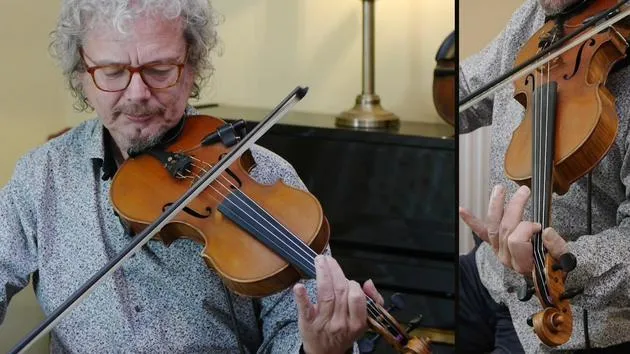
It's very useful for a fiddler. You think of the lower note as your melody note, and you place your finger across both strings.
- The first few times you do that, it might be difficult, but it's really pretty easy.
So your finger is playing both the melody note and the fifth above, without having to think about what that upper note is. It will sort itself out.
Example of Power Chord Lick
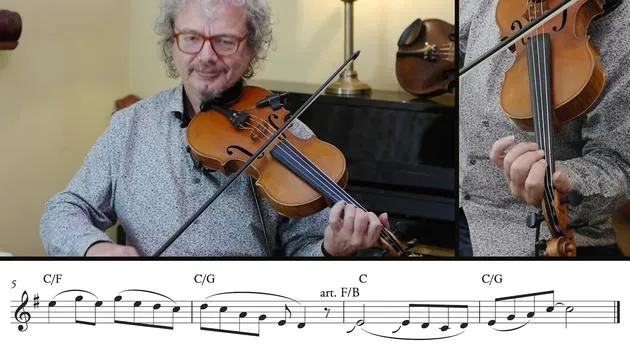
Here's a lick that demonstrates the power chord.
"If that doesn't get the heart beating and the juices flowing, then nothing will."
Hendrix Chord
Finally, there's another approach that guitarists have taken, particularly one guitarist: Jimi Hendrix.
He came up with a wonderful chord called the Hendrix chord, which has a sharpened ninth.
- An E7 sharp nine has a normal sharpened third and a flattened third at the top, which is also called a sharpened nine.
This allows you to be both major and minor at the same time.
Listening to the Hendrix Chord
Let's have a listen to what that sounds like.
"So that's a really distinctive and funky chord. It's a great chord to play with."
Personal Practice Suggestions
So, starting with the examples of the licks we've played:
- Try making up some of your own licks using the flattened third and the flattened seventh.
- Experiment with those licks using your finger across both strings to create power chords.
- Finally, find a few classic heavy guitar riffs and see if you can play those yourself with the power chords.
28 leçons
2h 28m de leçons vidéo structurées
Fonctions vidéo avancées
Ralentissez, bouclez un passage, suivez la partition
Mobile, tablette et ordinateur
Pratiquez où vous voulez
Satisfaction garantie à 100 %
Garantie remboursement 30 jours
Rencontrez votre guru
Rencontrez votre guru
Chris Haigh est violoniste professionnel depuis 25 ans et possède une expérience dans de nombreux genres. Il a joué sur plus de 75 albums, aux côtés d'artistes comme Alison Moyet, Bob Geldof, All About Eve, Michael Ball, David Soul, Oumou Sangare, The Quireboys, Riverdance, Morcheeba, James Galway et Steps.
Il a joué du swing et du jazz avec The Kimbara Brothers, Diz Disley, Le Jazz, The Hot Club of London et les Quecumbar Allstars, et dirige un ensemble de swing soviétique à sept musiciens, The Kremlinaires.
Chris donne des cours et des ateliers sur la technique du violon jazz et a enseigné le violon jazz aux universités de Middlesex, Brunel et Newcastle ainsi qu'au Truro College. Parmi ses ouvrages figurent neuf livres consacrés au violon, dont The Fiddle Handbook.
Il anime également Fiddling Around (fiddlingaround.co.uk), sans doute la source d'information sur le violon la plus complète et la plus consultée du web.







